
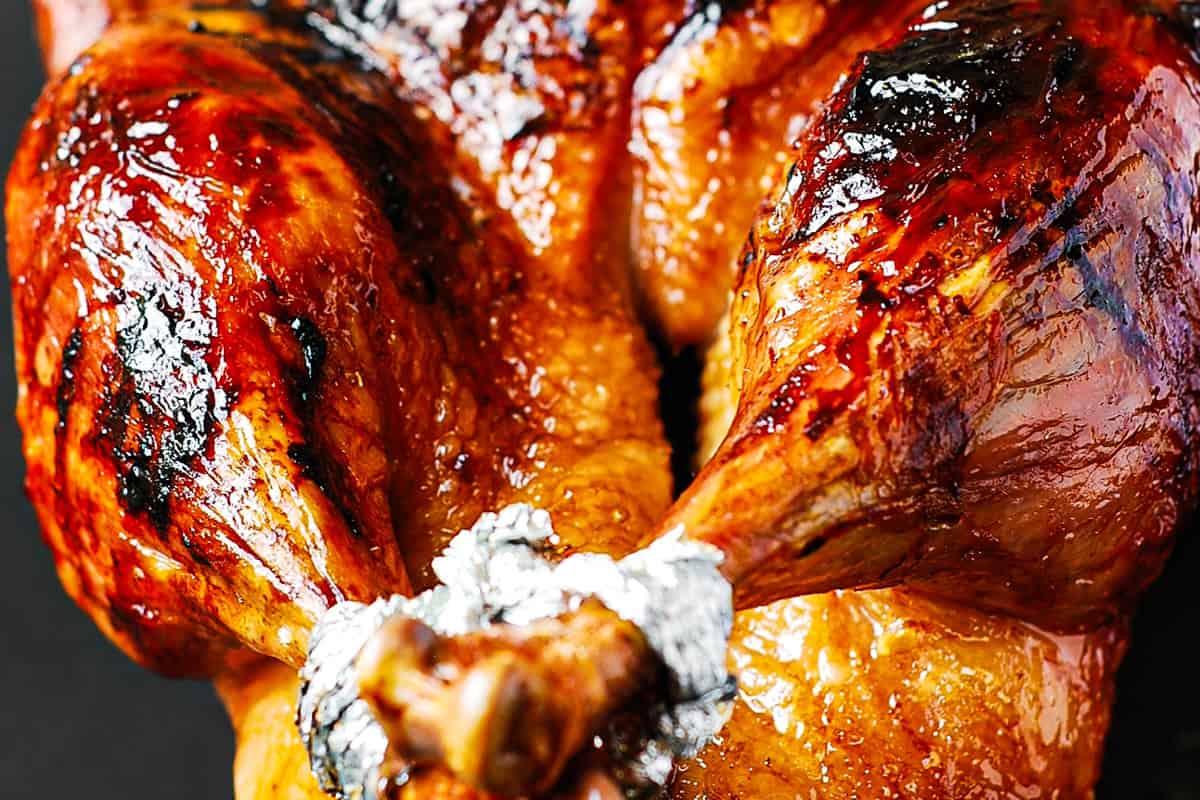
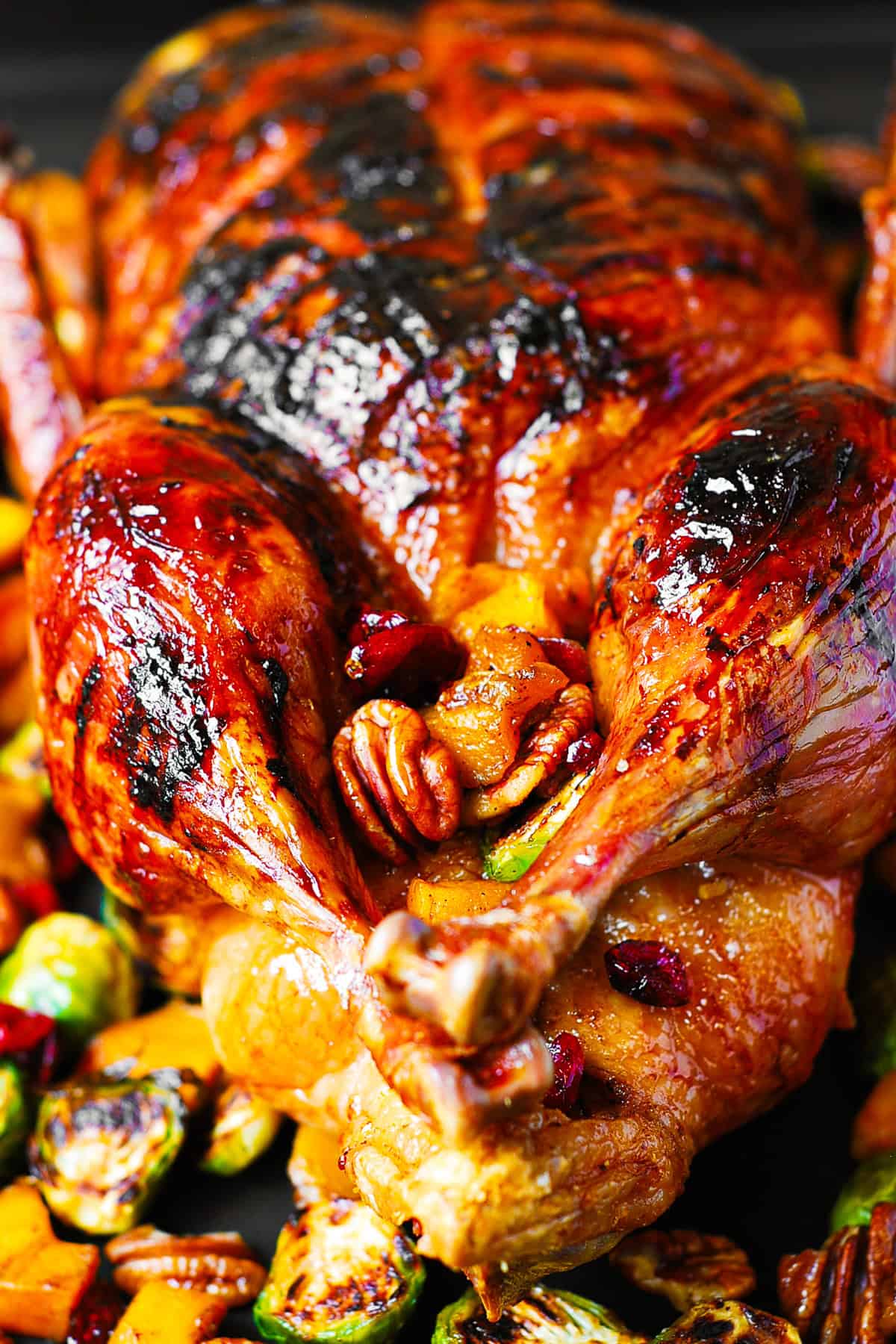
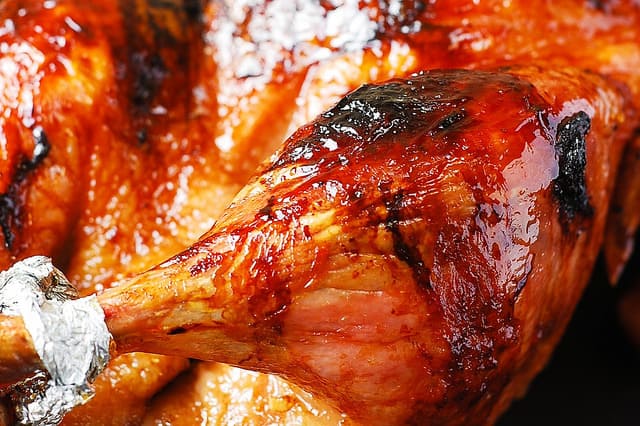
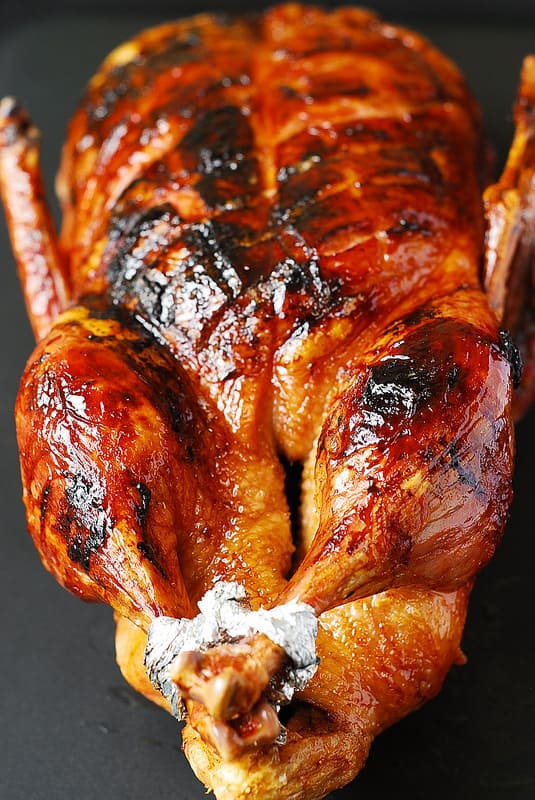
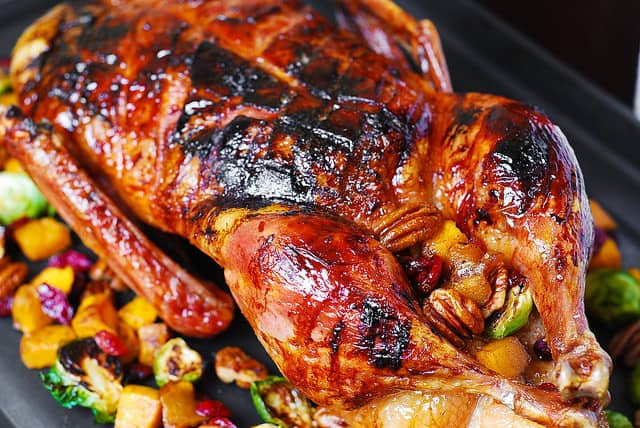
Ever wondered how to cook duck? It's much simpler than most people think. This roast duck has crispy, crackly skin, juicy meat, and a glossy honey balsamic glaze that turns the whole bird a deep mahogany color. It makes a stunning holiday main course for Thanksgiving, Christmas, New Year's Eve, Easter, or any other special occasion!
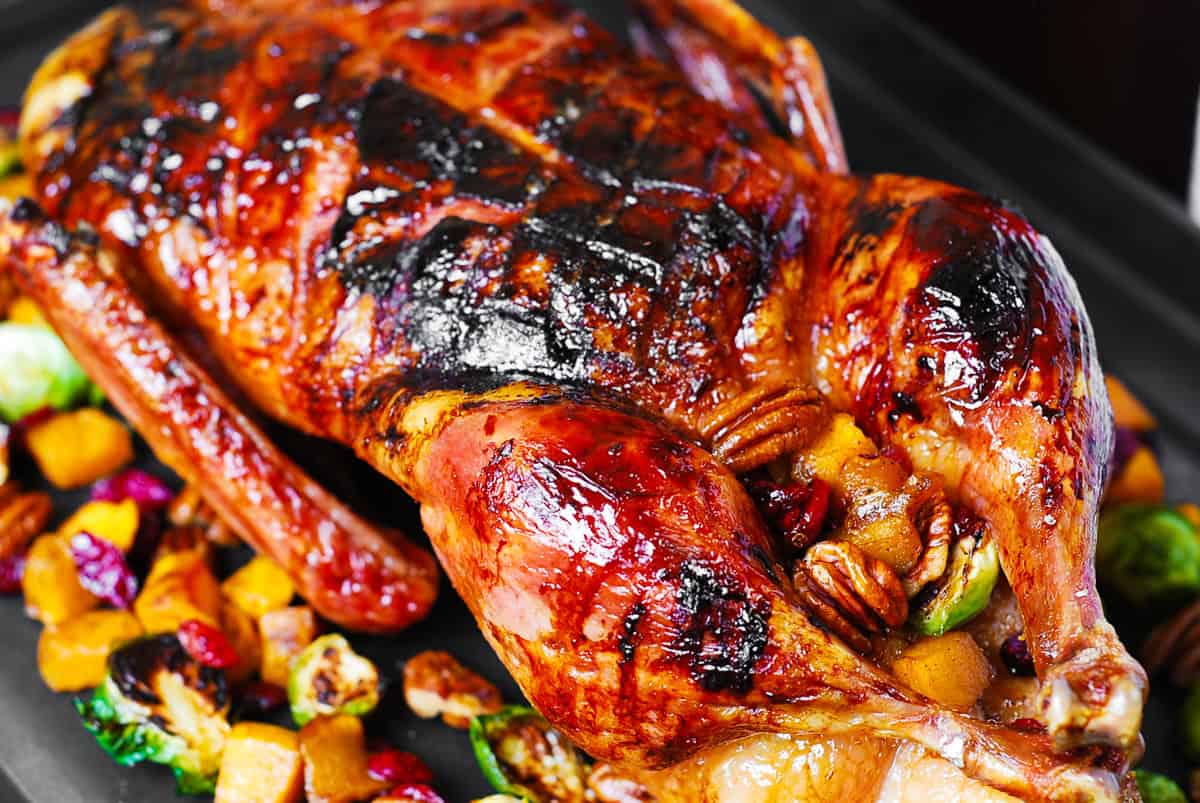
Roast Duck with Crispy Skin and Honey Balsamic Glaze
I first shared this recipe in 2015, and it has been one of the most popular recipes on my site ever since. Readers have made it for Thanksgiving, Christmas, and New Year's Eve for over a decade, and many of you have told me in the comments that it became your holiday tradition.
I've roasted more ducks than I can count while testing it. This latest version brings back the original method you loved. I shortened the roasting time and moved the honey to the very end, so the skin gets glossy and caramelized without burning. Note: The full recipe (with exact amounts and recipe instructions) is in the recipe card below.
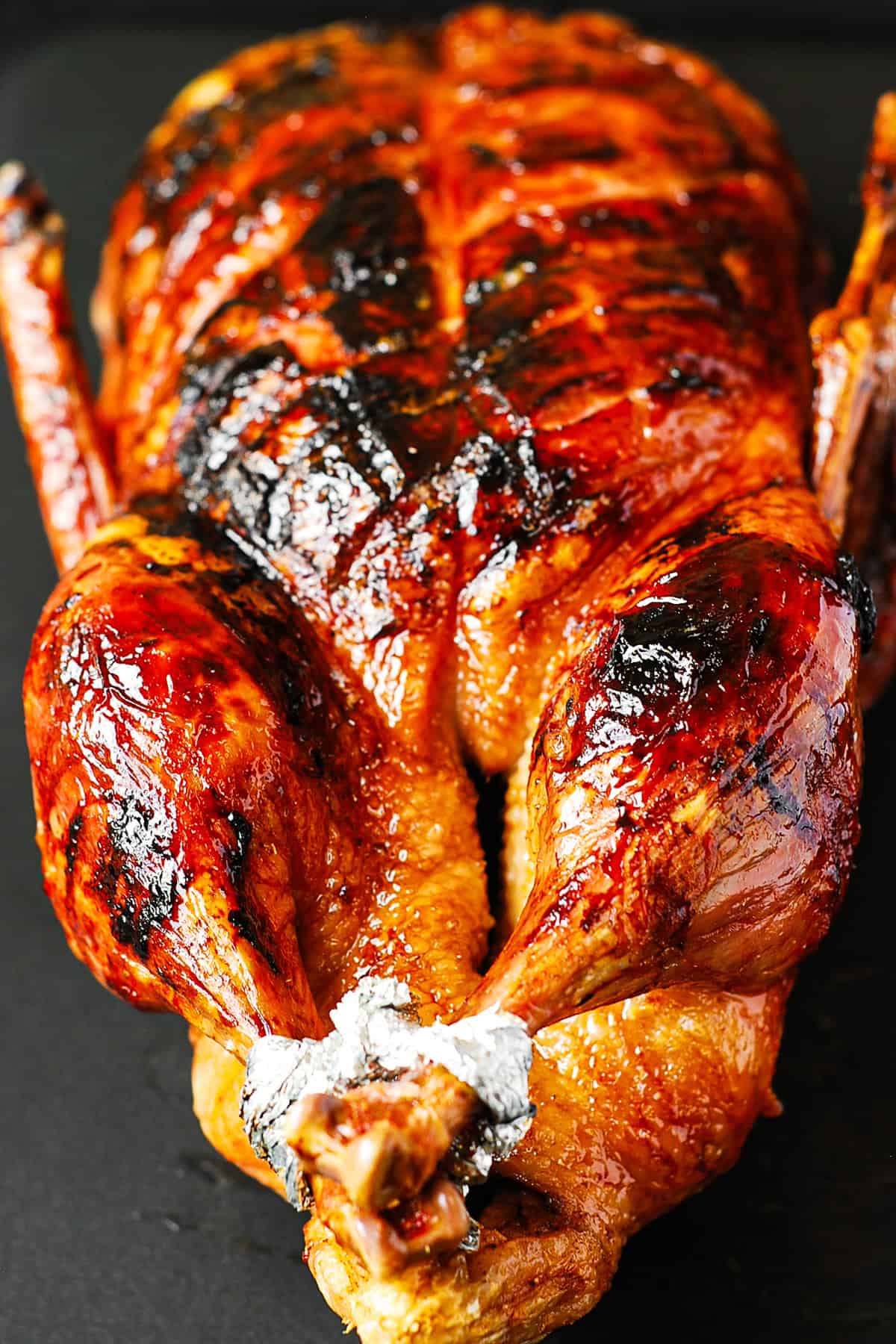
If you're hosting a big holiday dinner, duck works beautifully next to my Thanksgiving turkey with garlic herb butter, or on its own for a smaller gathering. Serve it with my signature holiday side dish, Roasted Butternut Squash and Brussels Sprouts with Pecans and Cranberries. Make my gorgeous Pecan-Cranberry Cheese Ball or holiday Cheese Log as appetizers!
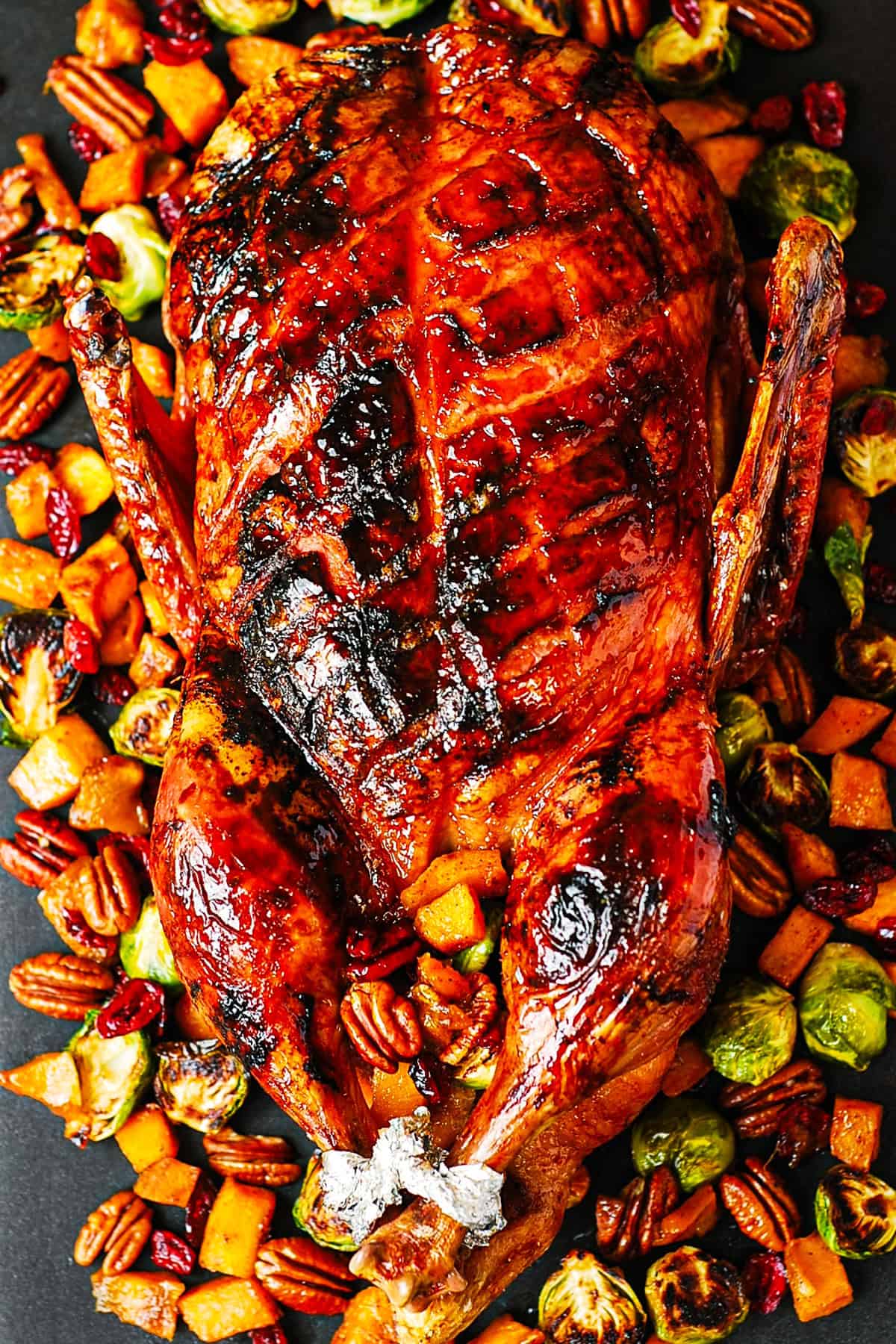
I also recommend my other festive holiday side dishes, like Sausage Stuffed Butternut Squash or Apple Stuffed Acorn Squash. For more traditional sides, try my epic Thanksgiving stuffing, the most stunning homemade cranberry sauce you'll ever make, sweet potato gratin with pecans, and sweet potato casserole with pecan topping, and you'll have a holiday table your guests will remember.
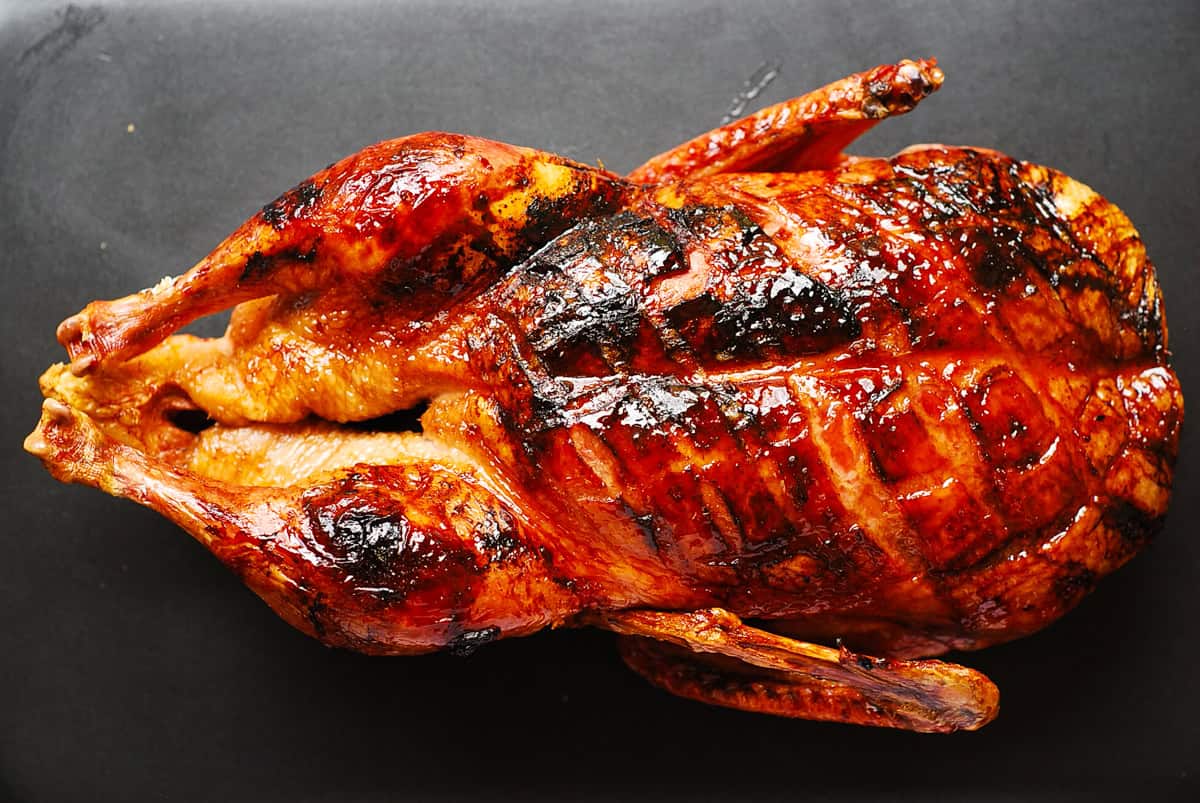
Why You'll Love This Roast Duck
- Crispy skin, every time. Scoring the skin and roasting the duck low and slow renders out the fat, so the skin turns thin and crackly instead of chewy.
- Only 7 ingredients. Duck, salt, garlic, lemon, balsamic vinegar, lemon juice, and honey. That's it.
- Mostly hands-off. The oven does the work. You flip the duck once, pour off the fat, and brush on the glaze.
- Two glazes, no burning. The balsamic-lemon glaze goes on first for color. The honey goes on last, for just 20 minutes, so it caramelizes without scorching.
- A bonus jar of duck fat. You'll pour off plenty of rendered fat. I save it to roast the crispiest potatoes you'll ever eat.
Ingredients and Substitutions
- Note: The full recipe (with exact amounts and recipe instructions) is in the recipe card below. I encourage you to read through all my helpful advice here, or skip straight to the recipe card and return later to review my recipe tips.
- Whole duck: I used a 6-pound Pekin duck (sometimes sold as Long Island duck), the most common duck in American grocery stores. If yours is frozen, thaw it in the refrigerator for 2 to 3 days. A smaller or larger duck works too. Adjust the roasting time and go by the thermometer.
- Salt: I season the duck very generously, inside the cavity and all over the skin. Salt draws moisture from the skin and helps it crisp. Kosher salt or coarse sea salt both work well.
- Garlic and lemon: I stuff chopped garlic and a chopped lemon into the cavity. They perfume the meat as it roasts and get thrown away after cooking. You can add a few sprigs of fresh thyme or rosemary if you like.
- Balsamic vinegar: I mix it with fresh lemon juice for the first glaze. It adds tang and gives the skin its rich, dark color. Use a regular supermarket balsamic here. There's no need for an expensive aged bottle.
- Honey: I stir it into the leftover balsamic mixture for the final glaze. It makes the skin glossy and lightly sweet. Maple syrup is a good substitute.
Tips for the Best Roast Duck
- Dry the skin well. Moisture is the enemy of crispy skin. Pat the duck dry with paper towels, then pat it again. If you have time, leave it uncovered in the refrigerator overnight.
- Score the skin carefully. Cut only through the skin and fat layer. If you cut into the meat, juices will leak out and the breast can dry out.
- Use a rack. The rack lifts the duck out of the rendered fat so the bottom roasts instead of frying.
- Save the honey for the end. Honey burns quickly at oven temperatures. Brushing it on only for the last 20 minutes gives you a glossy, caramelized finish with no charred spots. If the breast darkens too fast, tent it loosely with foil.
- Trust your thermometer. Ducks vary in size and ovens vary in heat. An instant-read thermometer is the only way to know for sure when your duck is done.
What to Serve with Roast Duck
Roast duck is rich, so I like to balance it with something sweet, something tart, and something green. Here are a few of my favorite pairings:
- Stuffing and potatoes: My Thanksgiving stuffing with pecans and cranberries soaks up the pan juices beautifully. For something creamy, serve mashed potatoes with roasted garlic or my new cheesy sweet potato gratin with toasted pecans.
- Something tart: Duck and cranberries are a classic pairing. A spoonful of cranberry sauce cuts right through the richness.
- Vegetables: Brussels sprouts with balsamic glaze echo the flavors of the duck glaze. Green beans with pine nuts and roasted carrots with cranberries and pumpkin seeds add color to the plate.
- Gravy and rolls: If your crowd loves gravy, my smooth, lump-free turkey gravy works well with duck too. Add a basket of garlic butter dinner rolls on the side.
Planning a Holiday Menu?
I've been publishing holiday recipes since 2012, and I've gathered my most popular ones into four collections:

Roast Duck Recipe (Crispy Skin, Honey Balsamic Glaze)
Ingredients
Roast Duck
- 6 lb whole Pekin duck
- salt
- 5 cloves garlic chopped
- 1 medium lemon chopped
Glaze
- ½ cup balsamic vinegar
- 1 medium lemon freshly squeezed juice
- ¼ cup honey
Instructions
- If your duck is frozen, thaw it in the refrigerator for a couple of days. Take it out of the refrigerator 30 minutes before cooking.
- Preheat the oven to 350°F (175°C) and set a rack inside a large roasting pan.
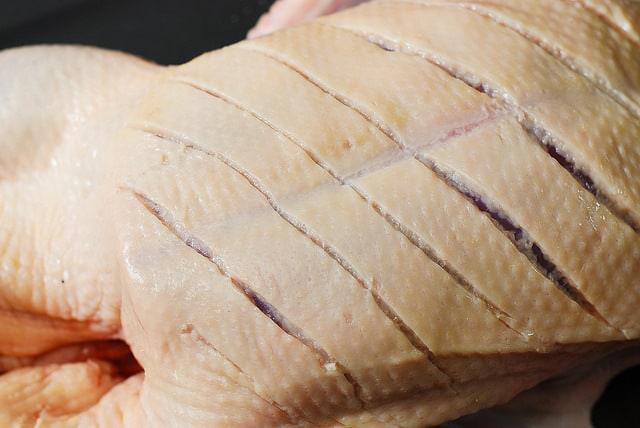
- Prepare the duck: Remove the giblets and pat the duck very dry with paper towels, inside and out. Score the breast skin in a diamond pattern, cutting only the skin and not the meat. Poke the other fatty areas all over with the tip of a knife, especially where the legs meet the body, so the fat can render. Season generously with salt inside and out.
- Stuff the garlic and lemon into the cavity (they're only there for flavor). Fold the loose skin at both ends inward to hold them in, then tie the legs with butcher's twine.
- Roast breast side up: Place the duck breast side up on the rack and roast for 1 hour.
- Roast breast side down: Flip the duck and roast for 40 minutes.
- Pour off the fat: Remove the pan from the oven and move the duck to a platter, keeping the cavity closed. Pour the rendered fat from the pan into a heat-proof container (save it for roasting potatoes).
- Balsamic-lemon glaze: Mix the balsamic vinegar and lemon juice in a small bowl. Return the duck to the rack breast side up, brush it all over, and roast for 30 minutes, brushing every 10 minutes.
- Honey glaze: Stir the honey into the leftover balsamic-lemon mixture. Brush it over the breast and roast for 20 minutes more, brushing once halfway. If the skin darkens too quickly, loosely tent the breast with foil.
- Check the temperature. An instant-read thermometer in the thickest part of the thigh should read at least 165°F (74°C). Let the duck rest for 15 minutes, then remove and discard the garlic and lemon. Carve and serve.
Notes
- Total roasting time: about 2½ hours at 350°F (175°C) for a 6 lb duck. For a smaller or larger duck, adjust the time by about 25 minutes per pound, and go by the thermometer. As a general rule, a whole duck needs about 25 or 30 minutes of roasting time per pound when cooked at 350°F (175°C). Be aware that the USDA considers the internal temperature of 165 °F (74 °C) the safe minimum for poultry.
- Don't let the glaze burn: Honey scorches fast, which is why it goes on only for the last 20 minutes. The glaze should give you plenty of color without broiling. In case it doesn't, see the next tip:
- Broil the duck (optional and if needed). Carefully broil the duck for about 5 or 10 minutes (check regularly to ensure it doesn't char too much). Broiling the duck is a great option if the skin is not crispy enough. It will speed up caramelization if your duck is already cooked to the desired internal temperature (as measured with a meat thermometer).
- Why the calories look so high: The nutrition estimate includes the rendered duck fat, which you pour off and don't eat.
- Updated Recipe: I originally published this recipe on October 24, 2015, and updated it in 2023 and 2025. In November 2026, I brought back the original method that so many of you loved, with a shorter roasting time and a later honey glaze to keep the skin from burning. Let me know in the comments how your duck turns out!
Nutrition
Nutrition Disclaimer:
The nutritional information on this website is only an estimate and is provided for convenience and as a courtesy only. The accuracy of the nutritional information for any recipe on this site is not guaranteed. It should not be used as a substitute for a professional nutritionist's advice.
How to Roast a Whole Duck
This is a helpful visual overview. For the full recipe, including all details and ingredient amounts, scroll up to the recipe card above.
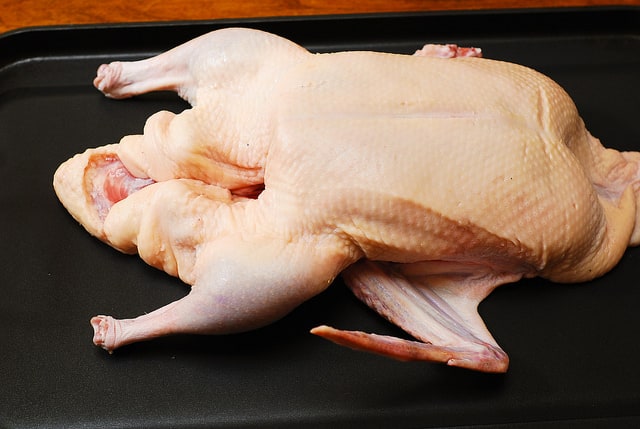
- Dry and score the duck. Remove the giblets and pat the duck very dry. Score the breast skin in a diamond pattern, cutting only through the skin and fat, never into the meat. Poke the fatty areas, especially where the legs meet the body.
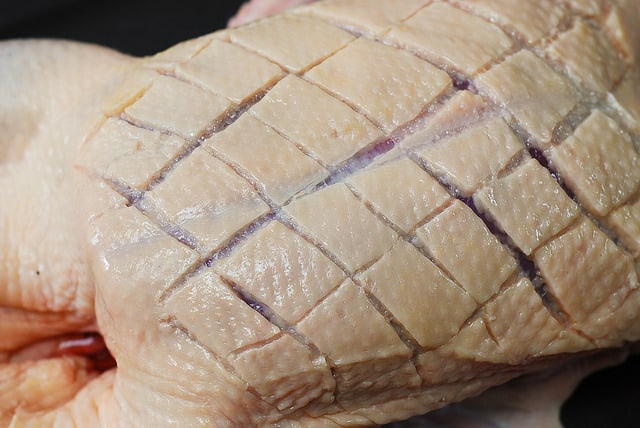
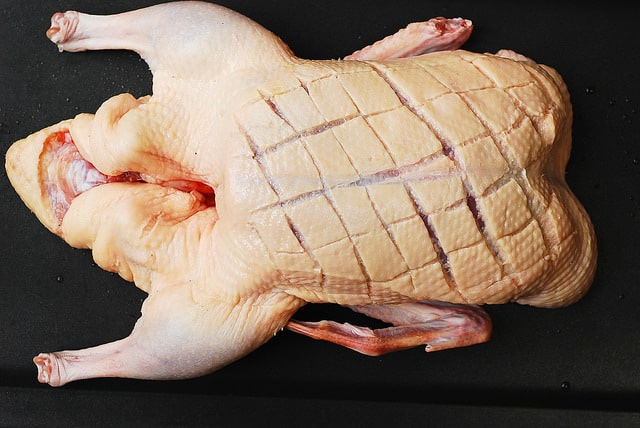
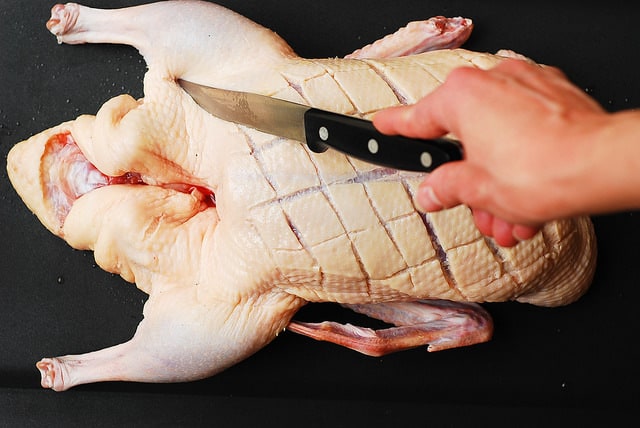
- Season and stuff. Salt the duck generously inside and out. Fill the cavity with garlic and lemon, fold the loose skin inward at both ends, and tie the legs with butcher's twine.
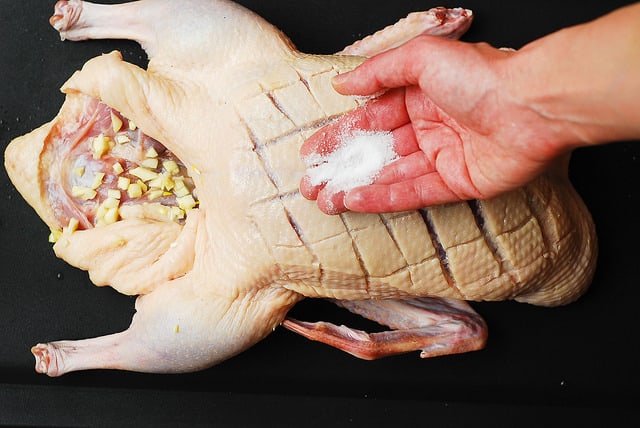
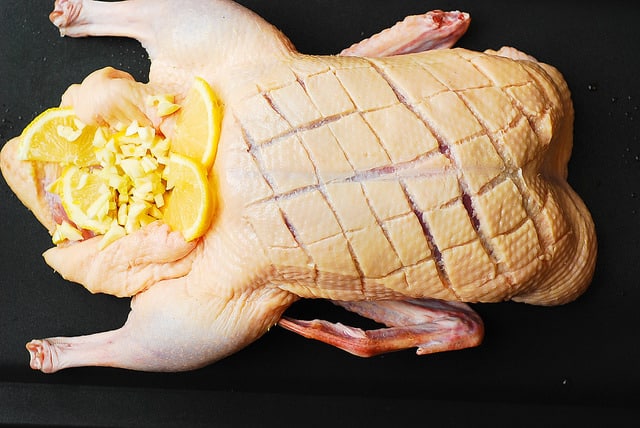
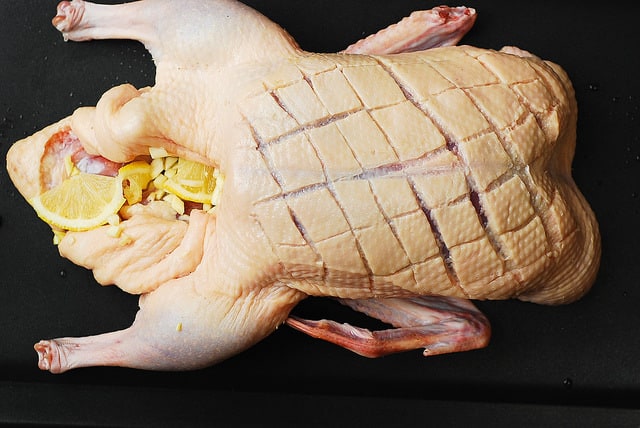
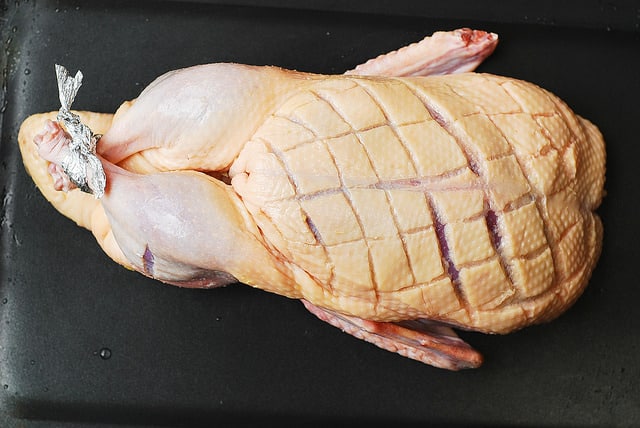
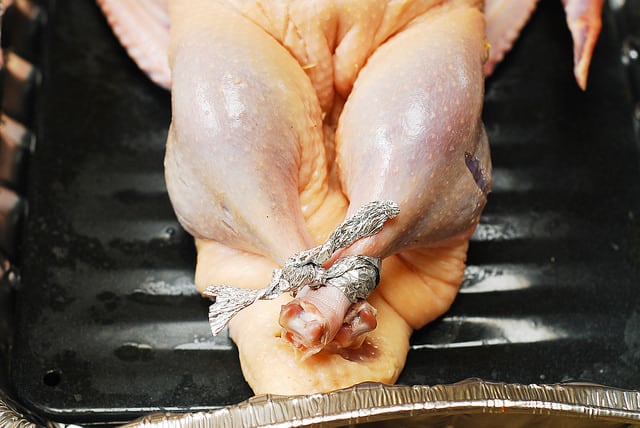
- Roast breast side up, then breast side down. Roast at 350°F (175°C) on a rack in a roasting pan for 1 hour. Flip it and roast for 40 minutes more so the back renders too.
- Pour off the fat. Move the duck to a platter and carefully pour the rendered fat into a heat-proof container.
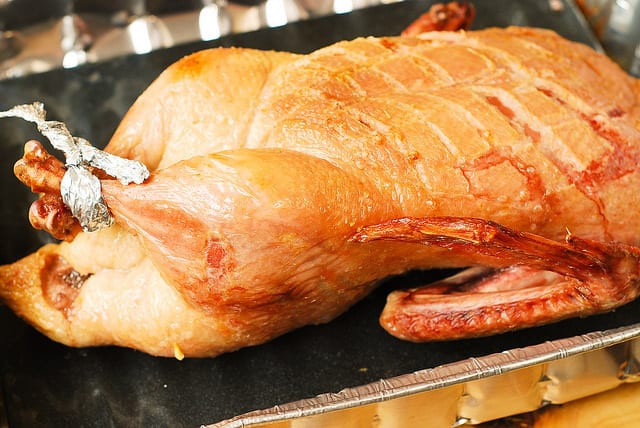
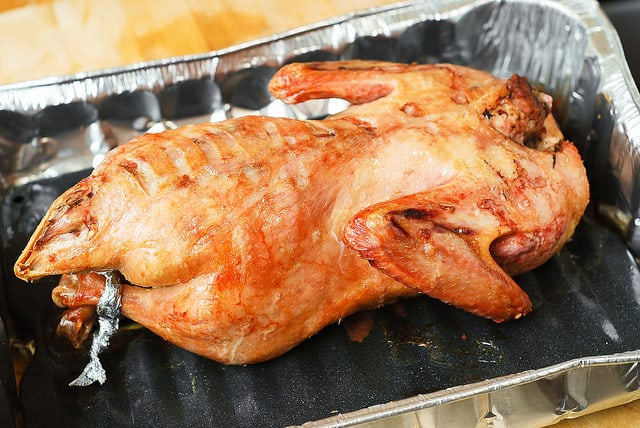
- Glaze twice. Brush the duck with the balsamic-lemon glaze and roast for 30 minutes. Then brush the breast with the honey glaze and roast for 20 minutes more.
- Check the temperature and rest. The thickest part of the thigh should read at least 165°F (74°C). Let the duck rest for 15 minutes before carving.
Roast Duck FAQ
- Why is the calorie count so high? The nutrition estimate includes all the fat that renders out of the duck during roasting. You pour most of that fat off and don't eat it, so the duck on your plate has far fewer calories than the label shows.
- Can I cook just duck breasts instead of a whole duck? Yes. Duck breasts cook in a skillet in under 30 minutes. Try my duck breast with cranberry sauce for a quicker holiday dinner.
- Can I make roast duck ahead of time? Roast duck is best served fresh from the oven, when the skin is at its crispiest. You can score, season, and stuff the duck a day ahead and keep it uncovered in the refrigerator. That actually helps the skin crisp even more.
- Do I have to roast the duck to 165°F (74°C)? That's the safe minimum for poultry according to the USDA. Some people prefer duck medium-rare or medium. I explain the other doneness temperatures in the recipe card notes.
- What's the best duck to buy? I recommend a Pekin duck. It's the most widely available duck in the US, it has a good balance of meat and fat, and it's ideal for roasting whole.
More Holiday Main Courses
- Thanksgiving Turkey with Garlic Herb Butter
- Ribeye Steak Dinner
- Filet Mignon with Mushroom Sauce
- Roasted Cornish Hens
- Beef Bourguignon
- Braised Short Ribs with Red Wine and Mushrooms
- Apple Cider Braised Pork Shoulder
- Stuffed Pork Tenderloin
More Thanksgiving Side Dishes
- Roasted Brussels Sprouts and Cinnamon Butternut Squash with Pecans and Cranberries
- Stuffed Butternut Squash with Spinach, Bacon, and Cheese
- Thanksgiving Stuffing
- Cranberry Sauce
- Sweet Potato Casserole with Pecan Topping
- Cheesy Sweet Potato Gratin with Toasted Pecans
- Turkey Gravy
- Sausage Stuffed Butternut Squash
- Hasselback Butternut Squash
- Apple Stuffed Acorn Squash
- Brussels Sprouts with Bacon, Pecans, and Cranberries
- Sausage Stuffed Acorn Squash
- Easy Scalloped Potatoes
More Holiday Salads
- Pomegranate Holiday Salad
- Christmas Salad
- Butternut Squash Pasta Salad with Brussels Sprouts, Pecans, and Cranberries
- Apple Spinach Salad
- Strawberry Spinach Salad
- Pear Salad with Walnuts and Honey-Mustard Dressing
Do we toss the duck fat from the bottom of the pan? Or is there a purpose for removing it?
Natalie, you can save the duck fat and use it as cooking oil for roasting potatoes, eggs, anything else you want to cook. Duck fat has a high smoke point, and it's great and safe cooking oil for high-temperature pan-roasting, frying, and searing. Keep it refrgerated and use it in small amounts like you would use cooking oil or butter.
No keep it! Duck fat is liquid gold!
Well-said, Chris! Love it!
Duck fat is HIGHLY flammable and there's a lot of it. Do not let the fat get away from you and spill over into the oven while cooking.
Tonya, thank you for this very important reminder. Yes, be very careful when pouring off the duck fat from the roasting pan. The fat will obvious be very hot. Follow these instructions in the recipe:
Remove the roasting pan with the duck from the oven, careful not to spill the juices (fat) in the roasting pan. Carefully remove the duck to a platter (making sure the lemons and garlic from the cavity do not fall out - keep the skin on both ends of the duck folded), and carefully pour off all the duck fat juices from the roasting pan into a large heat-proof bowl or container.
I've made this recipe every Thanksgiving for the last four years and it has yet to disappoint! It has turned out perfectly every time and results in a delicious, crispy, golden brown duck. Everyone loves it. This recipe is now a Thanksgiving staple and will be for years to come.
Abbe, wow, your comment really made my day! Thank you so much for taking the time to share your super positive feedback - it means a lot to me! ❤️❤️
I don’t get the timing… it says to cook it for 3 hours so I accounted for that but actually this new recipe without make it ready 1 hour earlier…? Very confusing.
Stephanie, I have updated this recipe recently - and I personally would cook the 6-pound duck for 3 hours. However, I received feedback from too many people that after 3 hours of roasting the 6-pound duck it comes dry and over-cooked. As a result, I have updated the recipe. Below I will paste my "regular" version of this recipe, but I believe the new version you see in the recipe card is much more comprehensive.
GENERAL GUIDLEINES
According to USDA, to safely cook the duck in the oven at 350 Fahrenheit you have to cook it for 30 minutes per pound, which equals 3 hours for a 6-pound duck. Of course, one should use a meat thermometer and cook the duck to one's preference (medium-rear, for example), but at your own risk.
MY OLD, "USUAL" RECIPE - THE INSTRUCTIONS
1) If you purchased frozen duck, make sure to defrost the frozen duck in the refrigerator for a couple of days. Once the duck is completely defrosted (in the refrigerator), take the duck out of the refrigerator 30 minutes prior to cooking to bring it more or less to room temperature.
2) Preheat oven to 350 degrees F. You will be roasting the duck for a total of 3 hours (3 hours will be divided into 4 time chunks where you will be flipping the duck, brushing it with glaze, etc. - see the instructions below).
PREPARE THE DUCK
1) Remove the giblets from inside the duck. Rinse the duck, inside and outside, with cold water. Pat dry with paper towels.
2) Set the duck on the working surface. Score the duck's skin on the breast in a diamond pattern, making sure you only cut the skin, without reaching the meat. Poke the other fatty parts of the duck with the tip of the knife all over, to ensure fat release, especially in very fatty parts. You don’t need to poke the duck legs as the skin is pretty thin there (except for where the duck legs connect to the duck body). Season the duck very generously with salt both inside the cavity of the duck and outside on the skin, legs, all over. Place the duck breast side up.
3) Put 5 chopped garlic cloves and lemon slices inside the duck cavity (these are just for flavor, not for eating - you will discard them after cooking). The duck will have flapping skin on both ends - fold that skin inwards, to hold the garlic and lemon inside. Tie up the duck legs with butcher's twine.
ROAST THE DUCK FOR 3 HOURS
1) Place the bird breast side up on a large roasting pan with a rack (roasting pan should have a roasting rack to lift the duck from the bottom of the pan and allow the fat to drip below the duck). Roast the duck, breast side up, for 1 hour at 350 F.
2) After 1 hour of roasting, flip the duck on its breast and roast it breast side down (roast the other side) for 40 minutes, at 350 F.
3) Remove the roasting pan with the duck from the oven (you now have roasted the duck for 1 hour + 40 minutes), carefully remove the duck to a platter (making sure the lemons and garlic from the cavity do not fall out - keep the skin on both ends of the duck folded), and carefully pour off all the duck fat juices from the roasting pan into a large heat-proof bowl or container.
4) Flip the duck breast side up again on a rack in a roasting pan (the pan will have no fat juices now). In a small bowl, combine ½ cup of balsamic vinegar with the freshly squeezed juice of 1 lemon. Brush all of the duck with the balsamic mixture (especially the scored duck breast) and cook the duck breast side up for another 40 minutes at 350 F, brushing every 10 minutes with the mixture.
5) Now, in a separate small bowl, combine ¼ cup honey and 3 tablespoons of balsamic vinegar lemon mixture that you will have left over from the previous step. Brush the breast side of the duck with this honey-balsamic mixture, and roast for another 40 minutes, brushing the duck breast side every 10 minutes with honey balsamic mixture. You can even carefully broil the duck for the last 10-15 minutes if you like (do it carefully, checking the duck regularly to make sure it doesn't char too much).
6) After the duck is cooked, remove it from the oven, let duck stand for 15 minutes. Then, carefully remove and discard the lemon from the cavity (being careful not to get burned). Carve the duck and serve!
7) TOTAL COOKING TIME: The duck should be roasted for a total of 3 hours at 350 F. These 3 hours of roasting are divided into 4 distinctive time chunks (1 hour breast side up + 40 minutes breast side down + 40 minutes breast side up brushed with balsamic-lemon mixture + 40 minutes breast side up brushed with honey-balsamic mixture).
We made this tonight. We had a 7lb duck We did not have to cook it for the entire time. We kept checking the temperature and it worked out fine. It was tender and juicy! Thank you for posting the recipe! Our duck looks just like yours!
Happy Thanksgiving to you!
Tamara, your comment made my day! ❤️❤️ So glad the duck turned out just like you expected it to be. Thank you for sharing this positive and constructive feedback!
Do you recommend brining the duck or is this not necessary?
Kathy, I did not brine the duck for this recipe and I don't think it's necessary. Enjoy! Happy Thanksgiving! ❤️
I feel this recipe would be improved by brining the duck, it was gamey. Tender but really not restaurant level. I found we did not need half the amount of balsamic I could not get the glaze to thicken enough to strongly adhere. This recipe did make me feel bold enough to cook duck and I appreciate roasting steps that make cooking duck clean and low smoke.
Lauren, thank you for your wonderful and honest feedback - so helpful to me and others! ❤️ Going forward, I definitely want to experiment with more ways to cook duck, including brining it.
Is the roasting rack a must . Please it's my first time cooking a duck with my fiance and I don't want to ruin it
Joshua, yes, the roasting rack is a must! Otherwise your duck will be swimming in duck fat and it will be difficult to handle that because halfway through roasting, you will have to carefully remove the very hot duck fat from the roasting pan.
Is it best to roast the duck with or without a roasting rack? Not sure that I saw that specified anywhere. Thanks!
Bailey, definitely use a roasting pan with a rack. The duck will release a lot of fat and that hot fat needs space and has to be separate from the duck. Using the roasting pan with the rack (with the duck lifted) accomplishes this objective. I will pour off the duck fat half-way through roasting as the instructions say.
I’m confused about the cooking time. In one place it says there should be 3 hours of cooking for 6lbs. But when I add up all the cooking steps, it’s only 2 hours. Which is right?
David, were you able to review all of my recipe instructions? In theory, the 6-pound duck should be cooked for 3 hours (according to USDA). But depending on your oven, your preference for doneness (medium-rare, medium, completely cooked through), the actual time will range from 2 hours to 3 hours. The recipe instructions explain all that in detail. 🙂 It all depends on your particular oven and your personal preferences. Enjoy! 🙂
Thanks for replying. It did indeed take closer to 2 hours to reach temperature. This was a great Thanksgiving alternative to Turkey (I was cooking for 2). Great recipe!
David, I am so glad this recipe turned out great! ❤️ Thank you for taking the time to share your positive feedback - it means a lot to me. 🙂
I love your recipe and use it every year for Thanksgiving. I noticed this year you changed it. I like the other way better but this way is good too. All my family loves the recipe.
Lisa, I am so happy your whole family loves this recipe. ❤️ If you like, I can repost the older version of my recipe in the comments here. 🙂
Julia, I'm not Lisa, but I'd like to see the older version of your recipe just to see how it differs. I plan on using one or the other for Thanksigiving.
Lori, Here is the old version of my recipe:
THE INSTRUCTIONS
1) If you purchased frozen duck, make sure to defrost the frozen duck in the refrigerator for a couple of days. Once the duck is completely defrosted (in the refrigerator), take the duck out of the refrigerator 30 minutes prior to cooking to bring it more or less to room temperature.
2) Preheat oven to 350 degrees F. You will be roasting the duck for a total of 3 hours (3 hours will be divided into 4 time chunks where you will be flipping the duck, brushing it with glaze, etc. - see the instructions below).
PREPARE THE DUCK
1) Remove the giblets from inside the duck. Rinse the duck, inside and outside, with cold water. Pat dry with paper towels.
2) Set the duck on the working surface. Score the duck's skin on the breast in a diamond pattern, making sure you only cut the skin, without reaching the meat. Poke the other fatty parts of the duck with the tip of the knife all over, to ensure fat release, especially in very fatty parts. You don’t need to poke the duck legs as the skin is pretty thin there (except for where the duck legs connect to the duck body). Season the duck very generously with salt both inside the cavity of the duck and outside on the skin, legs, all over. Place the duck breast side up.
3) Put 5 chopped garlic cloves and lemon slices inside the duck cavity (these are just for flavor, not for eating - you will discard them after cooking). The duck will have flapping skin on both ends - fold that skin inwards, to hold the garlic and lemon inside. Tie up the duck legs with butcher's twine.
ROAST THE DUCK FOR 3 HOURS
1) Place the bird breast side up on a large roasting pan with a rack (roasting pan should have a roasting rack to lift the duck from the bottom of the pan and allow the fat to drip below the duck). Roast the duck, breast side up, for 1 hour at 350 F.
2) After 1 hour of roasting, flip the duck on its breast and roast it breast side down (roast the other side) for 40 minutes, at 350 F.
3) Remove the roasting pan with the duck from the oven (you now have roasted the duck for 1 hour + 40 minutes), carefully remove the duck to a platter (making sure the lemons and garlic from the cavity do not fall out - keep the skin on both ends of the duck folded), and carefully pour off all the duck fat juices from the roasting pan into a large heat-proof bowl or container.
4) Flip the duck breast side up again on a rack in a roasting pan (the pan will have no fat juices now). In a small bowl, combine ½ cup of balsamic vinegar with the freshly squeezed juice of 1 lemon. Brush all of the duck with the balsamic mixture (especially the scored duck breast) and cook the duck breast side up for another 40 minutes at 350 F, brushing every 10 minutes with the mixture.
5) Now, in a separate small bowl, combine ¼ cup honey and 3 tablespoons of balsamic vinegar lemon mixture that you will have left over from the previous step. Brush the breast side of the duck with this honey-balsamic mixture, and roast for another 40 minutes, brushing the duck breast side every 10 minutes with honey balsamic mixture. You can even carefully broil the duck for the last 10-15 minutes if you like (do it carefully, checking the duck regularly to make sure it doesn't char too much).
6) After the duck is cooked, remove it from the oven, let duck stand for 15 minutes. Then, carefully remove and discard the lemon from the cavity (being careful not to get burned). Carve the duck and serve!
7) TOTAL COOKING TIME: The duck should be roasted for a total of 3 hours at 350 F. These 3 hours of roasting are divided into 4 distinctive time chunks (1 hour breast side up + 40 minutes breast side down + 40 minutes breast side up brushed with balsamic-lemon mixture + 40 minutes breast side up brushed with honey-balsamic mixture).
Love the recipe- miss the old format
Eli, I just added my old version in the comments in case other people miss it and to see the feedback. Enjoy and Happy Thanksgiving! ❤️
Can't wait to try this for Thanksgiving! About how much fat is rendered? Gotta plan my storage container accordingly.
Liz, it's quite a lot of fat. For a 6-pound duck, I think I filled 2 regular size mason jars once the fat cooled off, of course. The duck fat is very hot right out of the roasting pan and you have to be very careful not to get burned and not to spill it when pouring it off into a large heat-proof container. Once the fat cools off, you can fill mason jars with it.
The roasting rack instruction saved my day. I am used to do roast chicken, turkeys, pork shoulder. None had that much dripping fat. The diamond cuts also very helpful. I used glazed vinager.
I did marinate all sides, and inside of my duck for 24h in "vinhod'alio": a crushed garlic, white wine and salt common Brazilian marinate. It was very tasty.
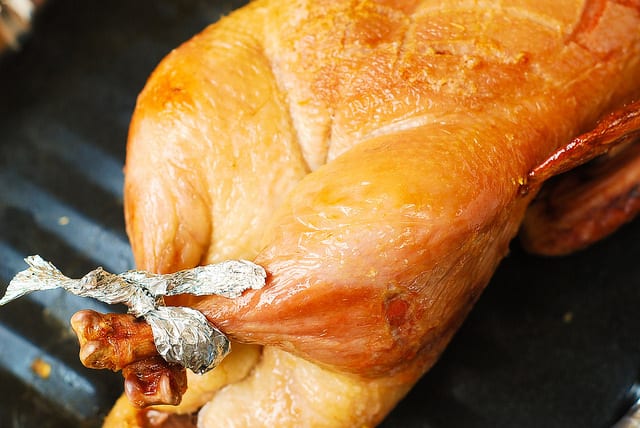
Next time I will protect the wings wrapping them in foil, and part of the legs also.. They became too dry with that cooking time.
Thank you!
I have a bone in duck breast. Do I bake at same temperature and for the same amount of time? What should the internal temperature be when it is finished?
Irene, I just updated my recipe (on October 28, 2023) - please review it - it should answer your question!
Grace, thank you for trying this recipe! Yes, duck renders a lot of fat - much more than chicken or turkey. I love your tip about wrapping wings and some of the legs with foil to protect them from getting dry - I might update my recipe with that helpful recommendation! ❤️❤️
Can I use a brined duck?
Total success. From 4 years to 64, we all adored this crispy skinned feast. Thank you.... we will be eating if again. Bless you, Julia!!!
Bettina, I am so glad this recipe was a success! ❤️
Is the nutritional information for the whole duck?
2800 calories per serving?!
The nutritional info definitely does not make sense. When you look at the ingredients and compare to other duck recipes
kittenknit - the nutritional info includes the huge amounts of duck fat that is rendered from a 6-pound duck. Duck fat is very high in calories - but it's removed from the roasting pan half-way through baking - so you won't eat it. Just save it as cooking oil for potatoes, eggs, and other veggies.
Very disappointing. First of all, duck tastes just okay, not very tasty, this method doesn’t worth to be picked. But the main problem in this recipe - I saw red when I understood that all the oven inside is covered in duck fat, I’m not sure will I clean it myself, or pay for a cleaner.
Did you render the duck fat at regular intervals? Not doing so will cause incredible "spattering" of the pan fat and mess up your oven. There is nothing amiss with the recipe; it is important to remove the accumulated duck fat during the cooking time.
Pour the fat into s container and save it for future cooking and baking... I have been doing this for many years with great success... You won't be sorry.
Elaine, thank you for your helpful, detailed, and thoughtful comment - I really appreciate it! ❤️
You can't clean your own oven?
Mortimer, I appreciate your humor! 🙂 Most importantly, if she drained all the fat from the roasting pan in time (as instructed in the recipe) that problem wouldn't happen in the first place! 🙂
Wow. You really are spoiled and whiny. Lol.
Does the duck have to be covered during the cooking?
Joanna, no cook the duck uncovered.
question: in step 3 you say " carefully pour off all the duck fat juices from the roasting pan into a large heat-proof bowl or container." but you never mention the duck fat juices or the large container again. What to do with these juices?
You save it and freeze it. Duck fat is liquid gold.
Well-said, Evelyn!
Don, you can save the rendered duck fat in a mason jar and keep it refrigerated. Use it as cooking oil for cooking vegetables, eggs, meats, etc. Freeze the unused portion for future use!