
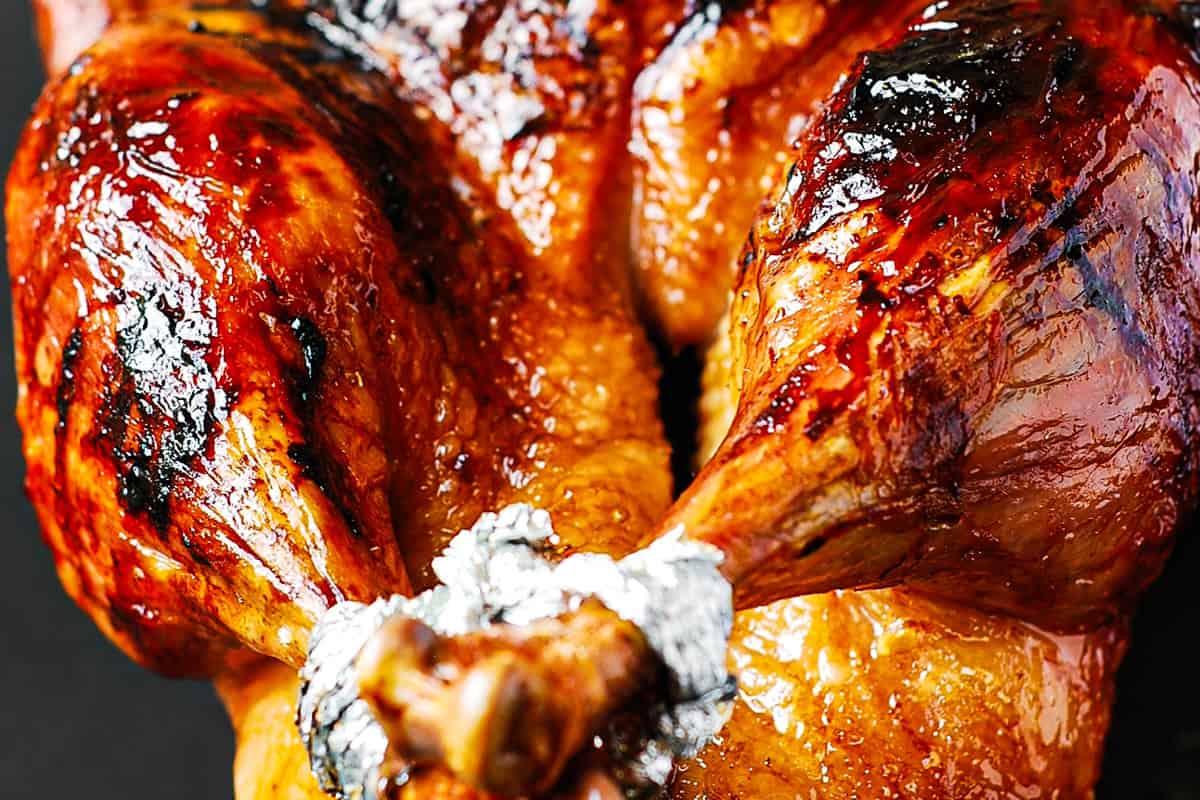
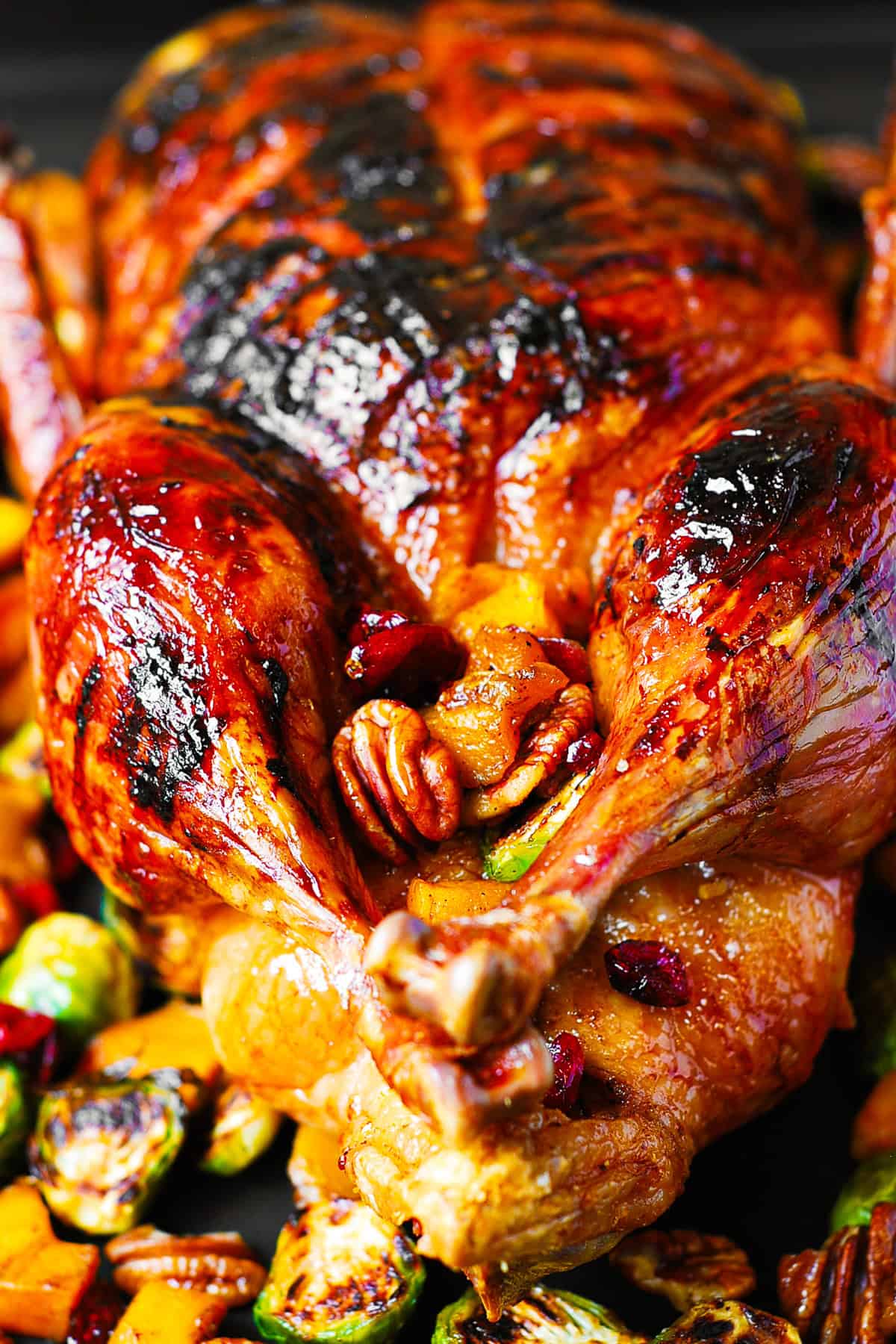
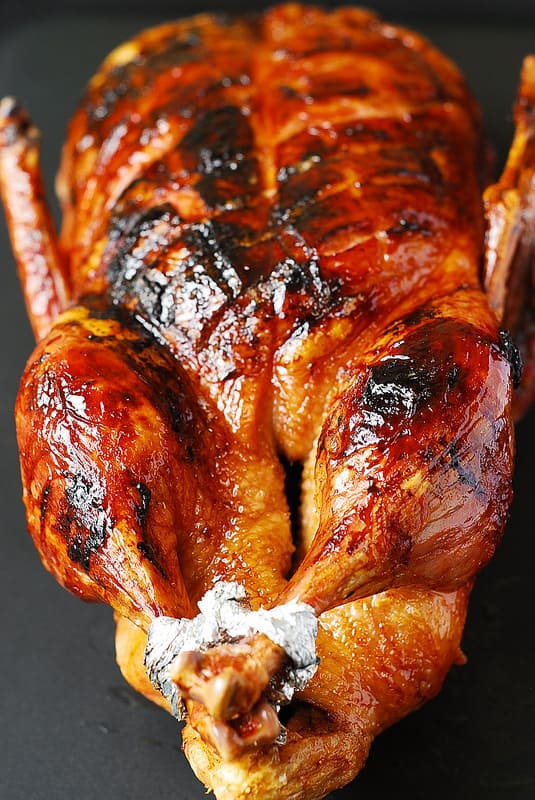
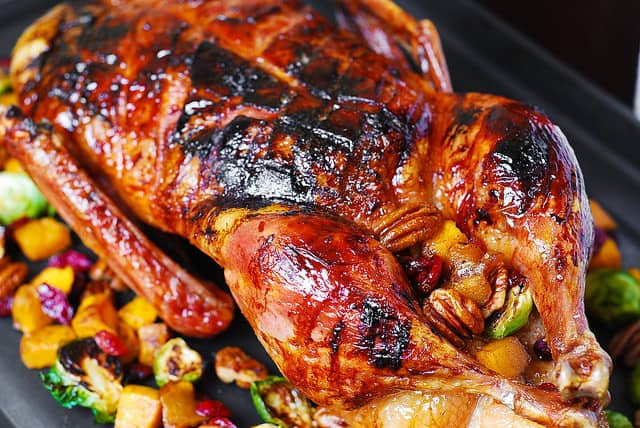
Ever wondered how to cook duck? It's much simpler than most people think. This roast duck has crispy, crackly skin, juicy meat, and a glossy honey balsamic glaze that turns the whole bird a deep mahogany color. It makes a stunning holiday main course for Thanksgiving, Christmas, New Year's Eve, Easter, or any other special occasion!
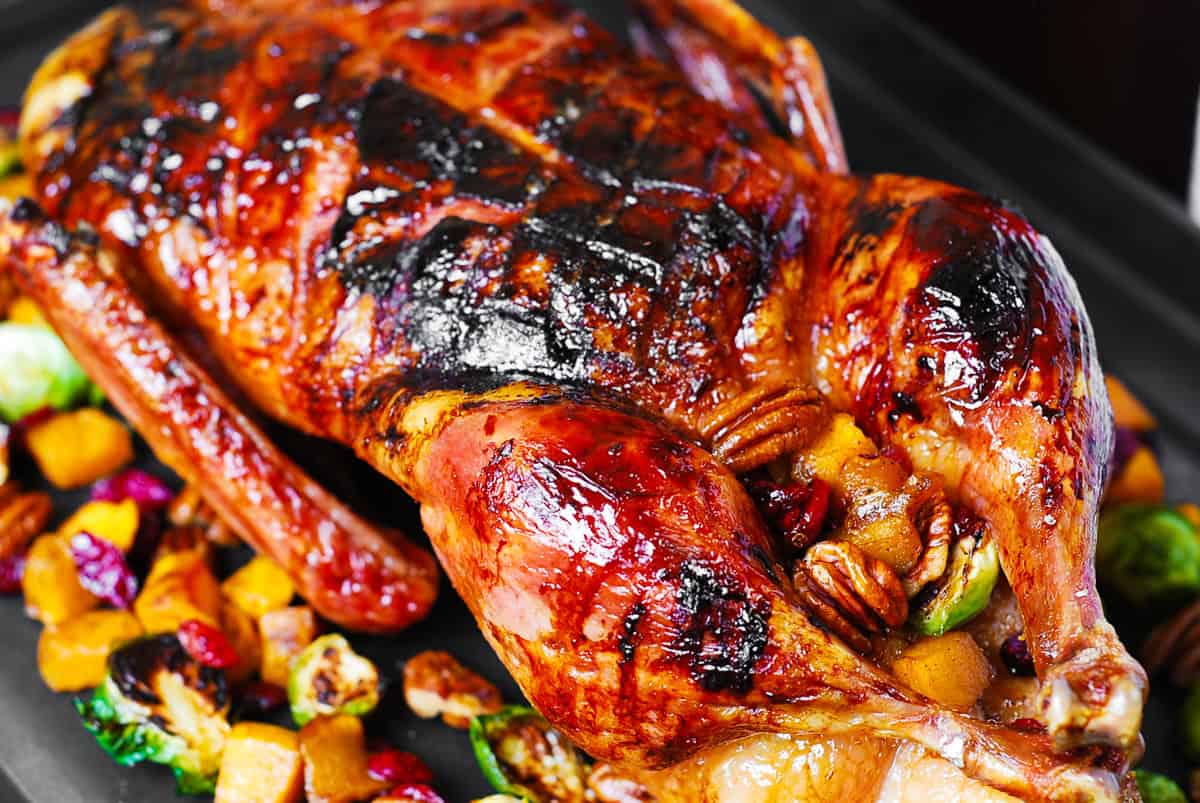
Roast Duck with Crispy Skin and Honey Balsamic Glaze
I first shared this recipe in 2015, and it has been one of the most popular recipes on my site ever since. Readers have made it for Thanksgiving, Christmas, and New Year's Eve for over a decade, and many of you have told me in the comments that it became your holiday tradition.
I've roasted more ducks than I can count while testing it. This latest version brings back the original method you loved. I shortened the roasting time and moved the honey to the very end, so the skin gets glossy and caramelized without burning. Note: The full recipe (with exact amounts and recipe instructions) is in the recipe card below.
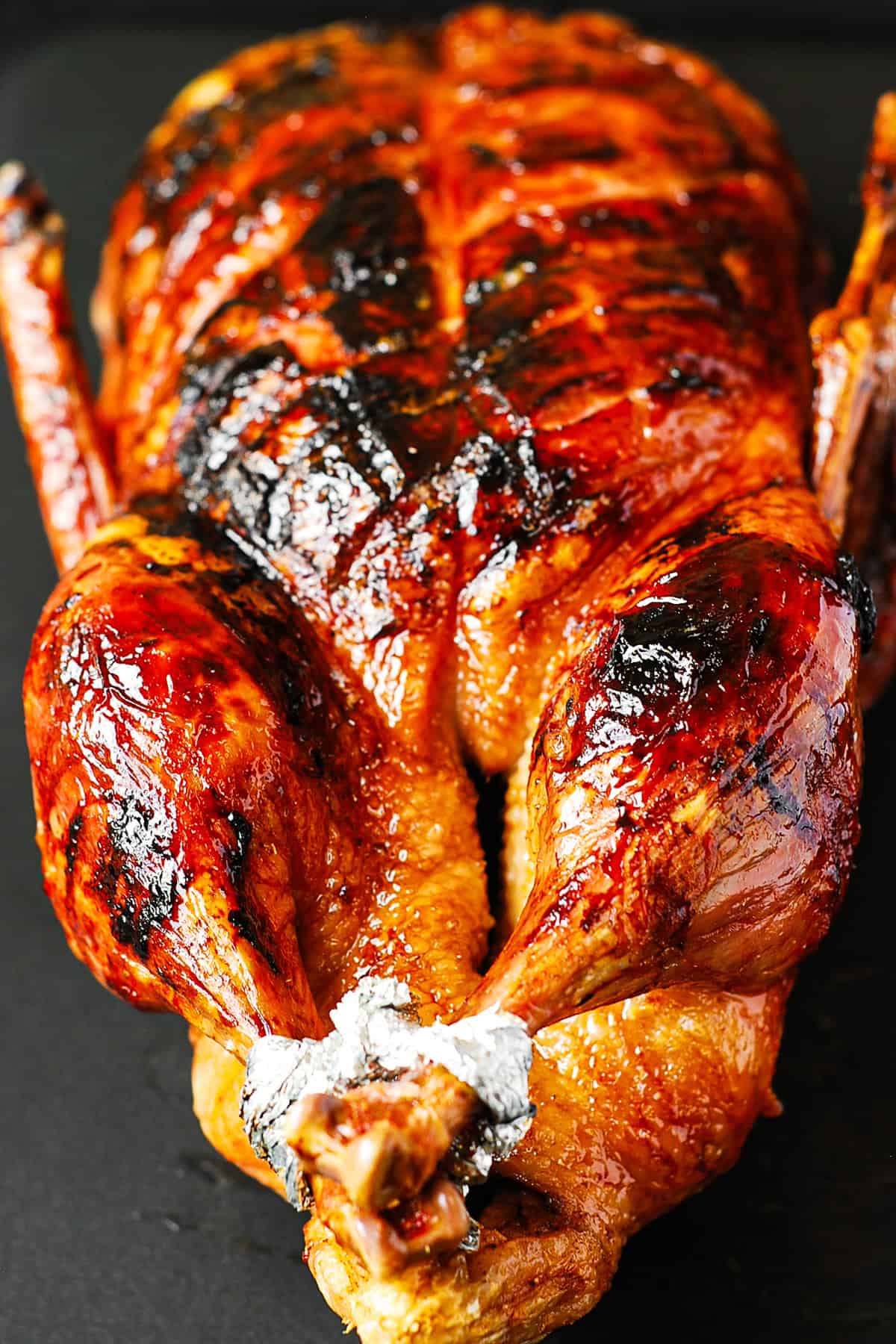
If you're hosting a big holiday dinner, duck works beautifully next to my Thanksgiving turkey with garlic herb butter, or on its own for a smaller gathering. Serve it with my signature holiday side dish, Roasted Butternut Squash and Brussels Sprouts with Pecans and Cranberries. Make my gorgeous Pecan-Cranberry Cheese Ball or holiday Cheese Log as appetizers!
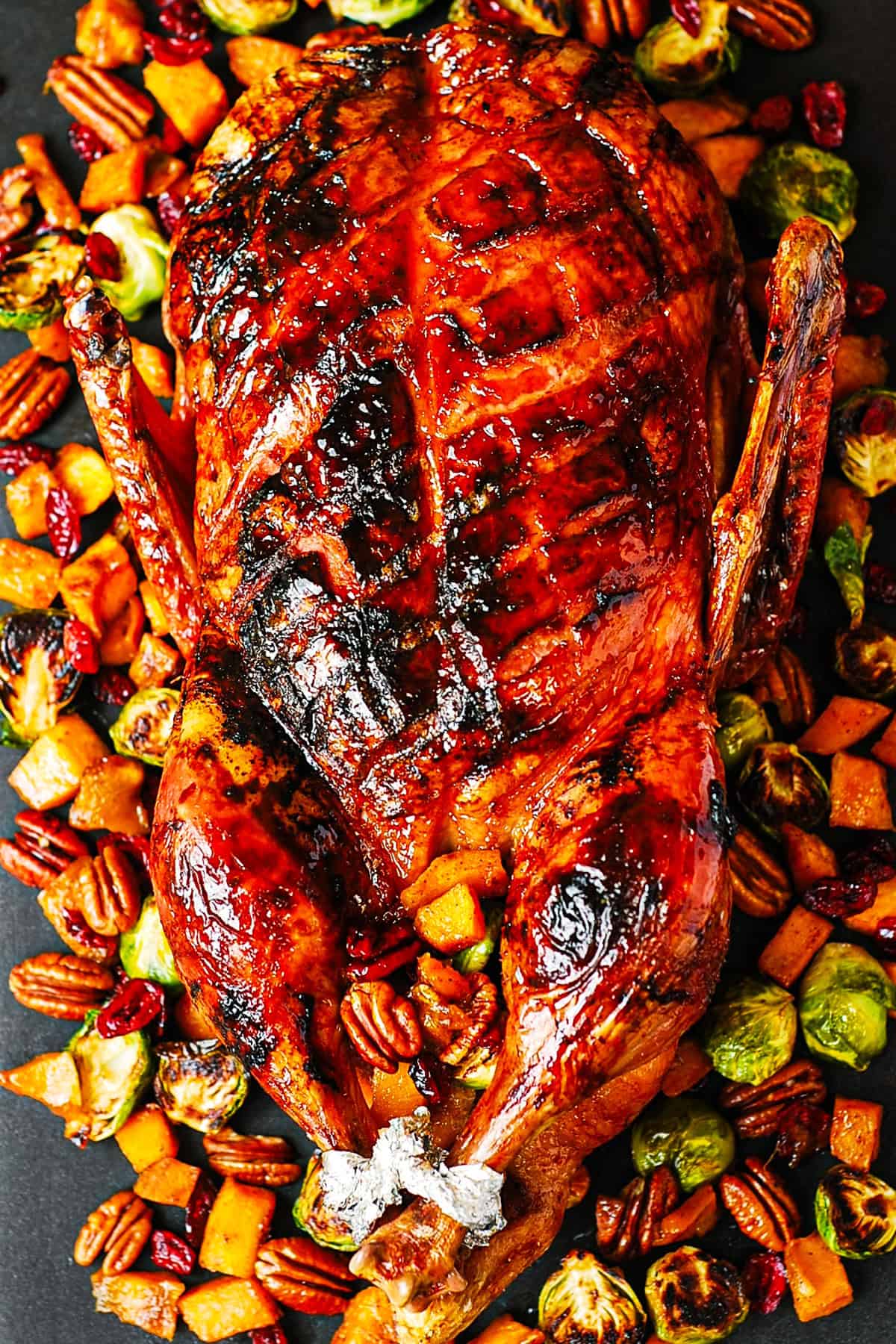
I also recommend my other festive holiday side dishes, like Sausage Stuffed Butternut Squash or Apple Stuffed Acorn Squash. For more traditional sides, try my epic Thanksgiving stuffing, the most stunning homemade cranberry sauce you'll ever make, sweet potato gratin with pecans, and sweet potato casserole with pecan topping, and you'll have a holiday table your guests will remember.
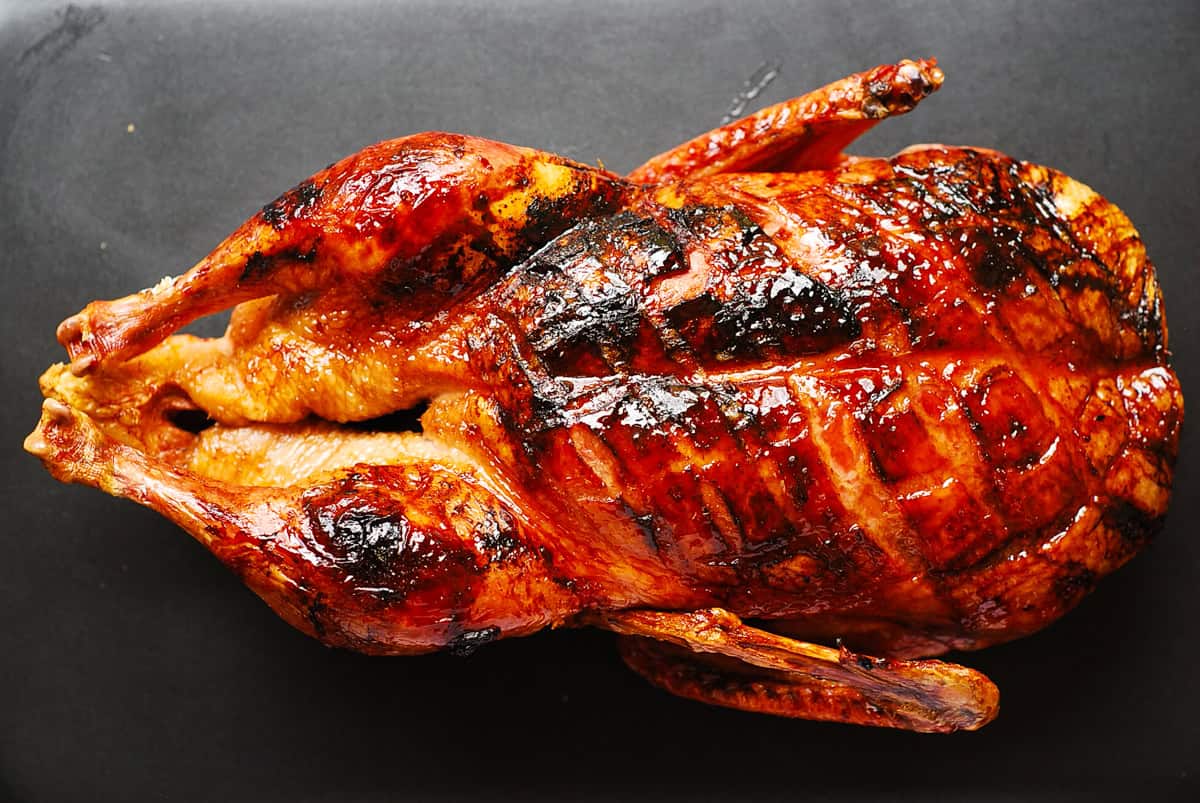
Why You'll Love This Roast Duck
- Crispy skin, every time. Scoring the skin and roasting the duck low and slow renders out the fat, so the skin turns thin and crackly instead of chewy.
- Only 7 ingredients. Duck, salt, garlic, lemon, balsamic vinegar, lemon juice, and honey. That's it.
- Mostly hands-off. The oven does the work. You flip the duck once, pour off the fat, and brush on the glaze.
- Two glazes, no burning. The balsamic-lemon glaze goes on first for color. The honey goes on last, for just 20 minutes, so it caramelizes without scorching.
- A bonus jar of duck fat. You'll pour off plenty of rendered fat. I save it to roast the crispiest potatoes you'll ever eat.
Ingredients and Substitutions
- Note: The full recipe (with exact amounts and recipe instructions) is in the recipe card below. I encourage you to read through all my helpful advice here, or skip straight to the recipe card and return later to review my recipe tips.
- Whole duck: I used a 6-pound Pekin duck (sometimes sold as Long Island duck), the most common duck in American grocery stores. If yours is frozen, thaw it in the refrigerator for 2 to 3 days. A smaller or larger duck works too. Adjust the roasting time and go by the thermometer.
- Salt: I season the duck very generously, inside the cavity and all over the skin. Salt draws moisture from the skin and helps it crisp. Kosher salt or coarse sea salt both work well.
- Garlic and lemon: I stuff chopped garlic and a chopped lemon into the cavity. They perfume the meat as it roasts and get thrown away after cooking. You can add a few sprigs of fresh thyme or rosemary if you like.
- Balsamic vinegar: I mix it with fresh lemon juice for the first glaze. It adds tang and gives the skin its rich, dark color. Use a regular supermarket balsamic here. There's no need for an expensive aged bottle.
- Honey: I stir it into the leftover balsamic mixture for the final glaze. It makes the skin glossy and lightly sweet. Maple syrup is a good substitute.
Tips for the Best Roast Duck
- Dry the skin well. Moisture is the enemy of crispy skin. Pat the duck dry with paper towels, then pat it again. If you have time, leave it uncovered in the refrigerator overnight.
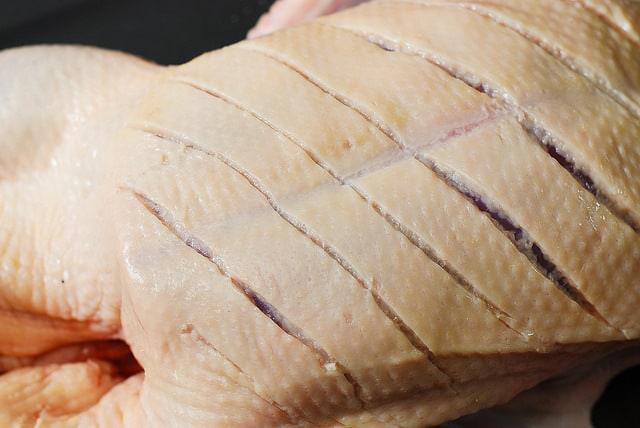
- Score the skin carefully. Cut only through the skin and fat layer. If you cut into the meat, juices will leak out and the breast can dry out.
- Use a rack. The rack lifts the duck out of the rendered fat so the bottom roasts instead of frying.
- Save the honey for the end. Honey burns quickly at oven temperatures. Brushing it on only for the last 20 minutes gives you a glossy, caramelized finish with no charred spots. If the breast darkens too fast, tent it loosely with foil.
- Trust your thermometer. Ducks vary in size and ovens vary in heat. An instant-read thermometer is the only way to know for sure when your duck is done.
What to Serve with Roast Duck
Roast duck is rich, so I like to balance it with something sweet, something tart, and something green. Here are a few of my favorite pairings:
- Stuffing and potatoes: My Thanksgiving stuffing with pecans and cranberries soaks up the pan juices beautifully. For something creamy, serve mashed potatoes with roasted garlic or my new cheesy sweet potato gratin with toasted pecans.
- Something tart: Duck and cranberries are a classic pairing. A spoonful of cranberry sauce cuts right through the richness.
- Vegetables: Brussels sprouts with balsamic glaze echo the flavors of the duck glaze. Green beans with pine nuts and roasted carrots with cranberries and pumpkin seeds add color to the plate.
- Gravy and rolls: If your crowd loves gravy, my smooth, lump-free turkey gravy works well with duck too. Add a basket of garlic butter dinner rolls on the side.
Planning a Holiday Menu?
I've been publishing holiday recipes since 2012, and I've gathered my most popular ones into four collections:

Roast Duck Recipe (Crispy Skin, Honey Balsamic Glaze)
Ingredients
Roast Duck
- 6 lb whole Pekin duck
- salt
- 5 cloves garlic chopped
- 1 medium lemon chopped
Glaze
- ½ cup balsamic vinegar
- 1 medium lemon freshly squeezed juice
- ¼ cup honey
Instructions
- If your duck is frozen, thaw it in the refrigerator for a couple of days. Take it out of the refrigerator 30 minutes before cooking.
- Preheat the oven to 350°F (175°C) and set a rack inside a large roasting pan.
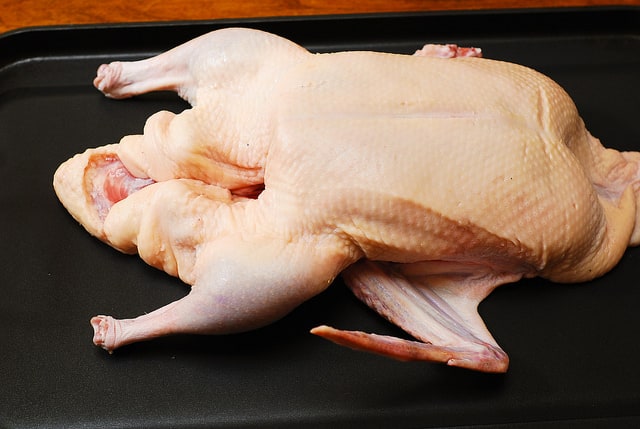
- Prepare the duck: Remove the giblets and pat the duck very dry with paper towels, inside and out. Score the breast skin in a diamond pattern, cutting only the skin and not the meat. Poke the other fatty areas all over with the tip of a knife, especially where the legs meet the body, so the fat can render. Season generously with salt inside and out.
- Stuff the garlic and lemon into the cavity (they're only there for flavor). Fold the loose skin at both ends inward to hold them in, then tie the legs with butcher's twine.
- Roast breast side up: Place the duck breast side up on the rack and roast for 1 hour.
- Roast breast side down: Flip the duck and roast for 40 minutes.
- Pour off the fat: Remove the pan from the oven and move the duck to a platter, keeping the cavity closed. Pour the rendered fat from the pan into a heat-proof container (save it for roasting potatoes).
- Balsamic-lemon glaze: Mix the balsamic vinegar and lemon juice in a small bowl. Return the duck to the rack breast side up, brush it all over, and roast for 30 minutes, brushing every 10 minutes.
- Honey glaze: Stir the honey into the leftover balsamic-lemon mixture. Brush it over the breast and roast for 20 minutes more, brushing once halfway. If the skin darkens too quickly, loosely tent the breast with foil.
- Check the temperature. An instant-read thermometer in the thickest part of the thigh should read at least 165°F (74°C). Let the duck rest for 15 minutes, then remove and discard the garlic and lemon. Carve and serve.
Notes
- Total roasting time: about 2½ hours at 350°F (175°C) for a 6 lb duck. For a smaller or larger duck, adjust the time by about 25 minutes per pound, and go by the thermometer. As a general rule, a whole duck needs about 25 or 30 minutes of roasting time per pound when cooked at 350°F (175°C). Be aware that the USDA considers the internal temperature of 165 °F (74 °C) the safe minimum for poultry.
- Don't let the glaze burn: Honey scorches fast, which is why it goes on only for the last 20 minutes. The glaze should give you plenty of color without broiling. In case it doesn't, see the next tip:
- Broil the duck (optional and if needed). Carefully broil the duck for about 5 or 10 minutes (check regularly to ensure it doesn't char too much). Broiling the duck is a great option if the skin is not crispy enough. It will speed up caramelization if your duck is already cooked to the desired internal temperature (as measured with a meat thermometer).
- Why the calories look so high: The nutrition estimate includes the rendered duck fat, which you pour off and don't eat.
- Updated Recipe: I originally published this recipe on October 24, 2015, and updated it in 2023 and 2025. In November 2026, I brought back the original method that so many of you loved, with a shorter roasting time and a later honey glaze to keep the skin from burning. Let me know in the comments how your duck turns out!
Nutrition
Nutrition Disclaimer:
The nutritional information on this website is only an estimate and is provided for convenience and as a courtesy only. The accuracy of the nutritional information for any recipe on this site is not guaranteed. It should not be used as a substitute for a professional nutritionist's advice.
How to Roast a Whole Duck
This is a helpful visual overview. For the full recipe, including all details and ingredient amounts, scroll up to the recipe card above.
- Dry and score the duck. Remove the giblets and pat the duck very dry. Score the breast skin in a diamond pattern, cutting only through the skin and fat, never into the meat. Poke the fatty areas, especially where the legs meet the body.
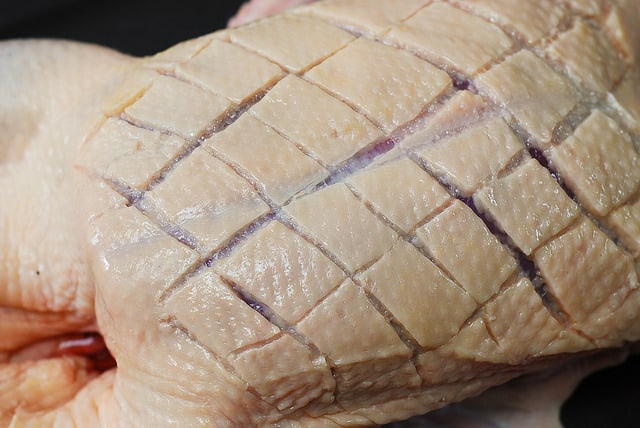
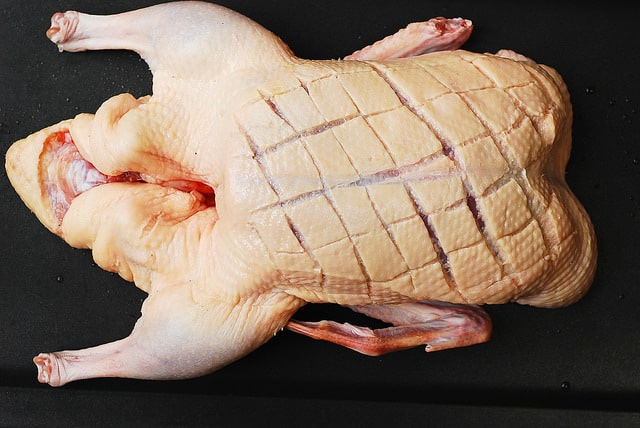
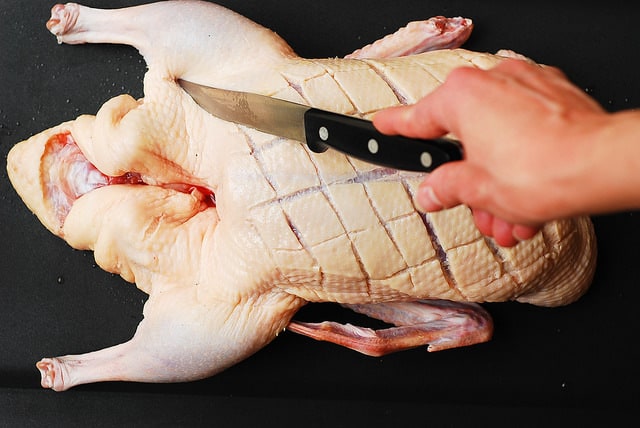
- Season and stuff. Salt the duck generously inside and out. Fill the cavity with garlic and lemon, fold the loose skin inward at both ends, and tie the legs with butcher's twine.
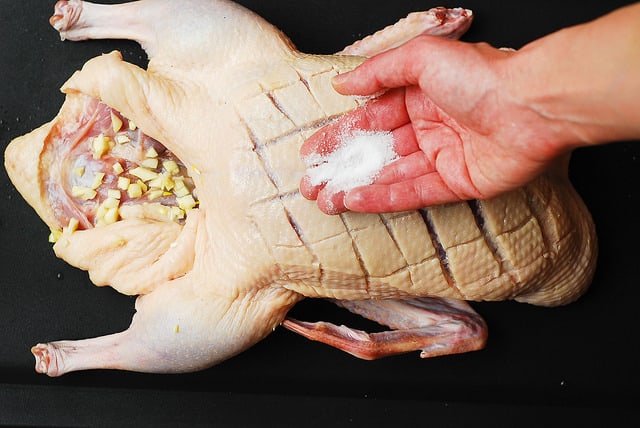
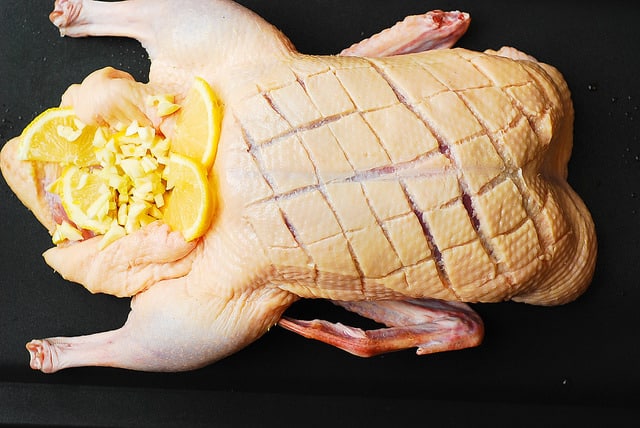
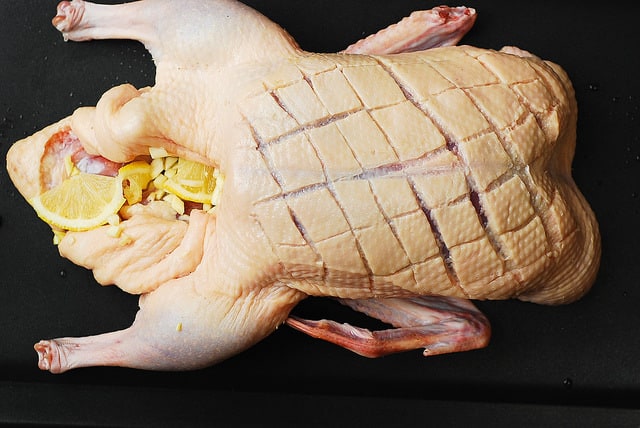
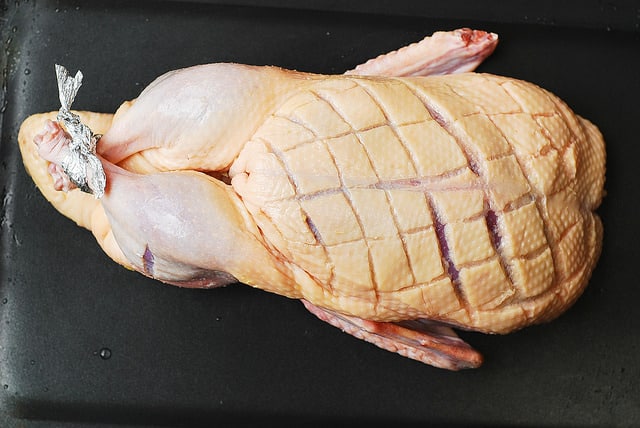
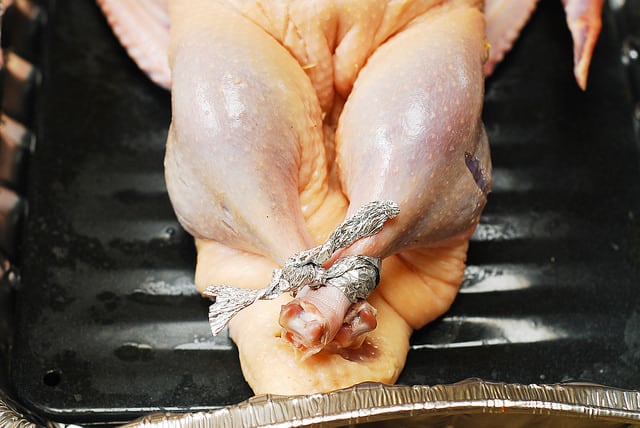
- Roast breast side up, then breast side down. Roast at 350°F (175°C) on a rack in a roasting pan for 1 hour. Flip it and roast for 40 minutes more so the back renders too.
- Pour off the fat. Move the duck to a platter and carefully pour the rendered fat into a heat-proof container.
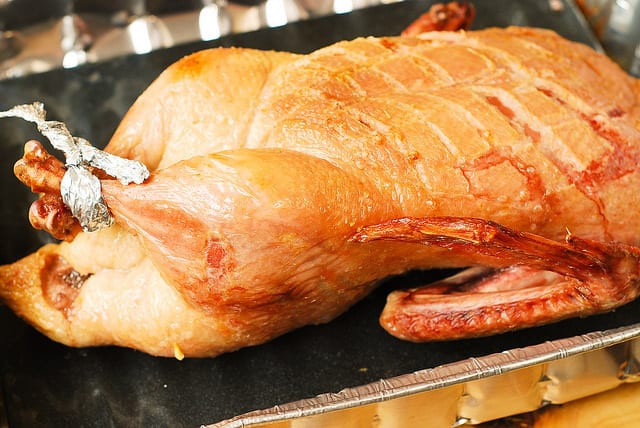
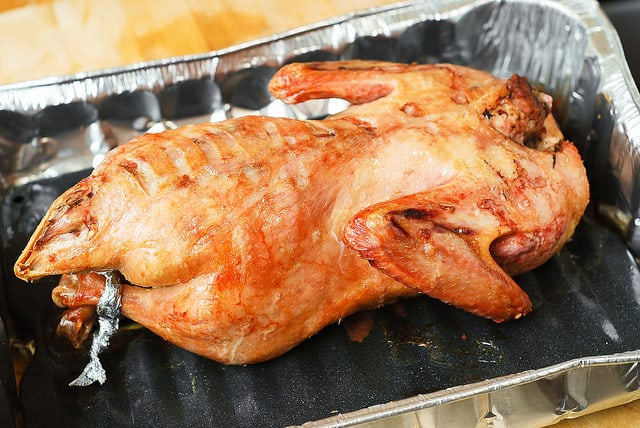
- Glaze twice. Brush the duck with the balsamic-lemon glaze and roast for 30 minutes. Then brush the breast with the honey glaze and roast for 20 minutes more.
- Check the temperature and rest. The thickest part of the thigh should read at least 165°F (74°C). Let the duck rest for 15 minutes before carving.
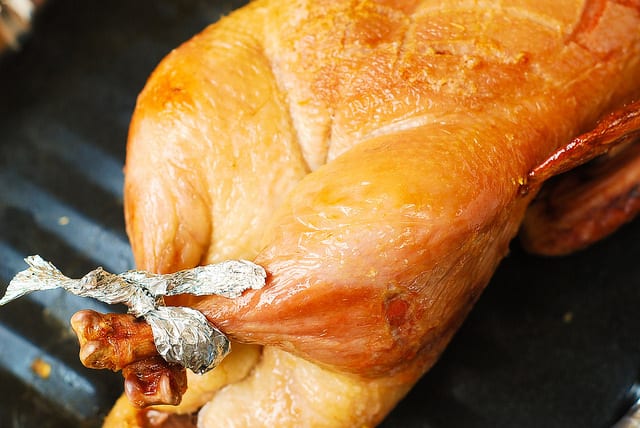
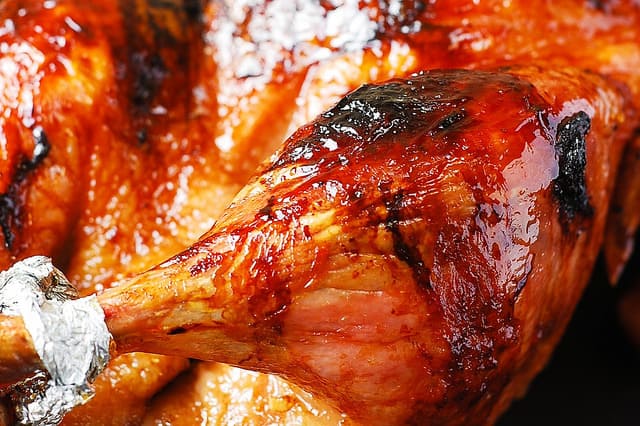
Roast Duck FAQ
- Why is the calorie count so high? The nutrition estimate includes all the fat that renders out of the duck during roasting. You pour most of that fat off and don't eat it, so the duck on your plate has far fewer calories than the label shows.
- Can I cook just duck breasts instead of a whole duck? Yes. Duck breasts cook in a skillet in under 30 minutes. Try my duck breast with cranberry sauce for a quicker holiday dinner.
- Can I make roast duck ahead of time? Roast duck is best served fresh from the oven, when the skin is at its crispiest. You can score, season, and stuff the duck a day ahead and keep it uncovered in the refrigerator. That actually helps the skin crisp even more.
- Do I have to roast the duck to 165°F (74°C)? That's the safe minimum for poultry according to the USDA. Some people prefer duck medium-rare or medium. I explain the other doneness temperatures in the recipe card notes.
- What's the best duck to buy? I recommend a Pekin duck. It's the most widely available duck in the US, it has a good balance of meat and fat, and it's ideal for roasting whole.
More Holiday Main Courses
- Thanksgiving Turkey with Garlic Herb Butter
- Ribeye Steak Dinner
- Filet Mignon with Mushroom Sauce
- Roasted Cornish Hens
- Beef Bourguignon
- Braised Short Ribs with Red Wine and Mushrooms
- Apple Cider Braised Pork Shoulder
- Stuffed Pork Tenderloin
More Thanksgiving Side Dishes
- Roasted Brussels Sprouts and Cinnamon Butternut Squash with Pecans and Cranberries
- Stuffed Butternut Squash with Spinach, Bacon, and Cheese
- Thanksgiving Stuffing
- Cranberry Sauce
- Sweet Potato Casserole with Pecan Topping
- Cheesy Sweet Potato Gratin with Toasted Pecans
- Turkey Gravy
- Sausage Stuffed Butternut Squash
- Hasselback Butternut Squash
- Apple Stuffed Acorn Squash
- Brussels Sprouts with Bacon, Pecans, and Cranberries
- Sausage Stuffed Acorn Squash
- Easy Scalloped Potatoes
More Holiday Salads
- Pomegranate Holiday Salad
- Christmas Salad
- Butternut Squash Pasta Salad with Brussels Sprouts, Pecans, and Cranberries
- Apple Spinach Salad
- Strawberry Spinach Salad
- Pear Salad with Walnuts and Honey-Mustard Dressing
Overall, this recipe is pretty good. But I found the cooking times way too long. Comparing to another book, this recipe's cooking time should be reduced to a third. It likely depends on the duck, so it would be great if there was temperature checks along the way which would really help.
Also, the ad loading means the recipe jumps around in the browser making it difficult to double-check the recipe.
Thank you so much for posting this recipe. It was my first time ever trying homemade duck and I was quite apprehensive about the whole ordeal. I really appreciated the pictures -- very illuminating! -- and detailed guidance. I also appreciated your statement that you don't like your duck sweet.
The result was very good and I will do it again. I think there may be a difference in how North American ovens hols their temperature (or not) because the bird ended up borderline dry even though I cut the last phase a bit short due to obvious charring, especially on the legs, which I covered with tin foil for that reason. And I do have (and used) a decent oven thermometer. When I first read your recipe I was incredulous about the 3 hours at this temperature but then I realized that if you take the bird out every 10 minutes then you are not really roasting at 350F as the temperature will fall greatly every time you open the oven door. So maybe my European electrical oven is faster to reach the target temperature and that led to overcooking. I probably shouldn't have used convection either. Next time I'll use a lower temperature and go by sight more. I wonder what the target temperature for the meat itself would be for the intended doneness though.
Happy New Year! Today I will attempt to make duck for my very first time. So many good compliments on your recipe. Wish me luck!
Julia,
Your duck recipe is outstanding!! I’ve made it a few months ago, it turned out perfectly!! I have one in the oven now for New Years Eve. We can’t wait to devour it !! Happy & Healthy 2021!!
Peter, I am so happy to hear that! Thank you for such an uplifting and enthusiastic comment! Happy New Year 2021 and Goodbye 2020!
Had loads of fun doing this, great recipe and seeing it turn out just like your pictures is super reassuring. Thank you and Happy New Year!
Rob, you are very welcome! Enjoy the duck! Happy New Year!
Fantastic! I made this recipe for Christmas and it was so good that I'm making it again tonight! Definitely a keeper. 🙂
This was a sublime addition to our Christmas dinner. We all loved it! The next day we took this recipe and another of sticky rice with squash...since they were our leftovers and we stuffed the mixture into mandu dumpling wrappers and cooked them up. YUM!
Instagram - Fernwehwm
Wendy, I am so glad you enjoyed this recipe! Love what you did with the leftovers the next day - those dumplings must've been delicious!
I just tried this recipe for the first time, and it was my first time cooking any duck so it was fun and challenging to cook a whole one. Following the recipe was easy and I had so much fun in the process. I might recommend as a few others said that a cook time a tad bit shorter will lend to a more medium rare meat, perhaps 2 hours and 40 minutes. The tip on watching the broiling is also a well-appreciated reminder.
Andy, I am so glad you found this recipe useful! Thank you so much for your thoughtful feedback - I really appreciate it.
We had a late Christmas dinner on Boxing Day. We followed your recipe exactly and the duck was cooked perfectly. Thank you for a great recipe! We had duck pancakes yesterday with the leftovers. Delicious! Merry Christmas!
Rachel, I am so glad you enjoyed this recipe! Love your idea of duck pancakes - that's new for me and it sounds delicious as I really like cooked duck with eggs for breakfast.
I'm 66 and never roasted a duck, though I love duck. Stumbled on this recipe and WHOA!! This is definitely a new favorite! It is fantastic!! The 6lb 10oz duck came out looking like the photos here and tasting out of this world delish!! Can't recommend this recipe highly enough!!Q
Jon, your comment made my day! 🙂 Thank you so much for stopping by and sharing such a positive and enthusiastic comment - I really appreciate it!
I've never had duck before and some of my friends and family warned me of how greasy and "strong" it would taste. We bought our duck from Aldi and served it for dinner on Christmas day. I have to say that I was SO IMPRESSED with how DELICIOUS this duck tasted! My three young boys ate every bite and we are going to have it again for New Year's Eve.
Rebecca, I am so happy you made this recipe and enjoyed it! Duck is amazing meat, and easily one of my favorites. Glad you are going to make the duck AGAIN for New Year's Eve - that's a huge compliment to me! 🙂
My girlfriend loved it! She said it tasted like it came from a fancy french restaurant. It turned out really well so thank you for the recipe!
Clark, you are very welcome! Glad you enjoyed this recipe and thank you for stopping by and sharing your feedback!
We made this on Boxing Day in England (the day after Christmas Day) and it was a great success!
Clear, simple instructing with lovely photographs made the preparation and cooking an absolute pleasure and the result was delicious.
Thank you, Julia!
Dean, your comment made my day! So glad you found this recipe along with the photos and instructions useful. Thank you so much for sharing this wonderful feedback! 🙂
Is 350 in an ordinary oven - what temp in a fan oven please?
Muriel, by a fan oven, do you mean a convection oven? If so, I do not own a convection oven, so I am not sure how that would change the temperatures. However, one of the commentators below did leave a very detailed comment about making this duck in the convection oven. I will copy and paste our exchange here:
Commentator:
“So the basics of the recipe are great. But the cooking time? Let’s talk about that. I had a 5.2 pound duck that I was roasting in a convection toaster oven. To account for the smaller duck, I reduced the first cooking time to 50 minutes. And to account for the convection oven, I reduced the temperature to 325. I actually wound up pulling out the duck after 48 minutes. And the temperature on the breast was already 141 to 159. Yikes! I went ahead and flipped the duck, setting the timer for only 25 minutes. Halfway through, I reduced the oven temperature from 325 to 310. I then checked the back and thigh temperatures. They were in the 170s to 180s. Bottom line, the recipe is excellent, but the cooking time needs serious reduction.”
My response:
“Thank you for the feedback! The convection oven does cook the duck (and the turkey for that matter) much faster than the regular oven. The convection oven is definitely a more efficient way to cook food in terms of time. So, yes, that would change the cooking times. I am curious about the fat rendering from the duck in the convection oven. Did it render a lot of fat? Did the duck’s skin get crispy in this amount of time?”
Commentator:
“I didn’t want to miss out on the glazes, so I wound up flipping the duck breast-side up, basting with the vinegar mixture, and cooking that way for 10 minutes. I then basted on the honey mixture and broiled it for 3 minutes. The breast wound up medium-well (but still tasty!). There were a couple of places where the fat was 3 to 4 millimeters, and then there was a very thin layer elsewhere. So IMHO, it rendered out pretty well, but I’m no expert. The skin was crispy where the broiler hit it well, otherwise okay but not super-crisp. I think next time I will try drying the duck in the fridge for a day and then roasting at 300 instead of 325. But I will still be using your recipe because it’s awesome! And just so you know, the duck carcass will become stock this weekend. Thank you for sharing your recipe!”
Based on the comments from the person who made the duck in the convection oven, it seems like the roasting times should be drastically reduced for each step, just to be on the safe side. And, if the duck is not cooked through at that point, just continue roasting it longer.
Also, seems it’s key to use the meat thermometer early on (after the first 1 hour and 10 minutes of roasting) to avoid overcooking the duck. The cooked duck will measure an internal temperature of 165 °F using a meat thermometer.
Overly fussy recipe involves way too much fiddling and WAY too much cooking time. Results in burned skin, meat totally dry and tasteless. Terrible. Dinner is literally ruined.
Great recipe but the cook time is way too long. 180 degrees comes up quick under these instructions.