
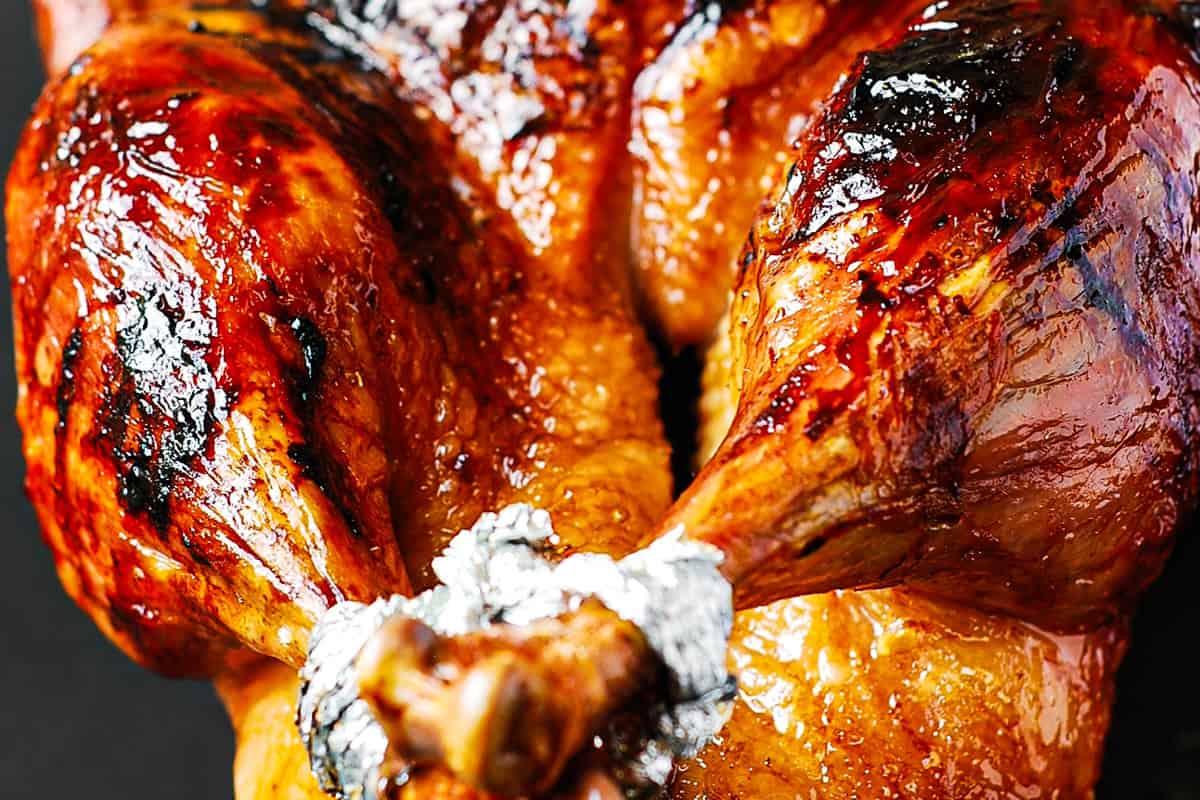
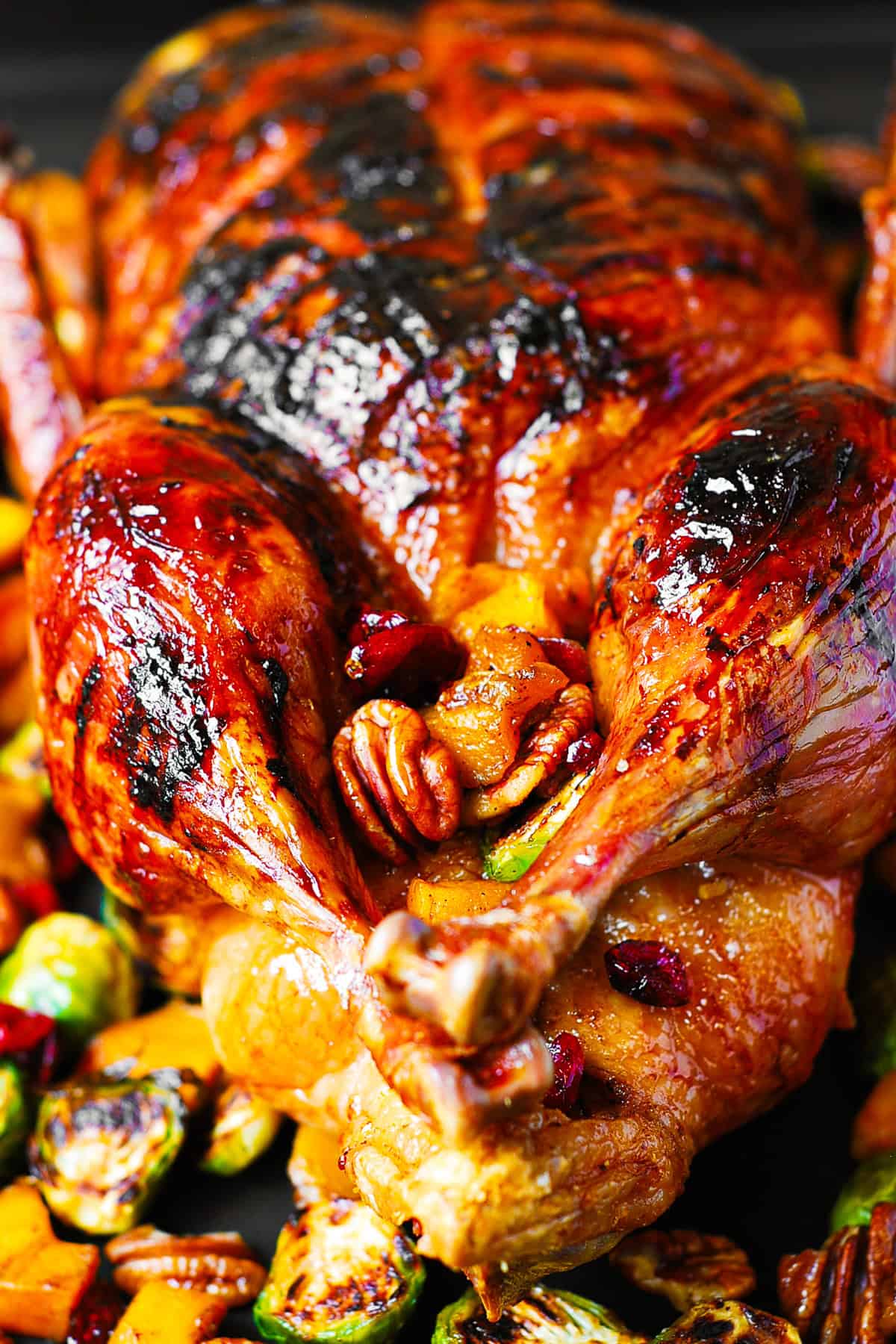
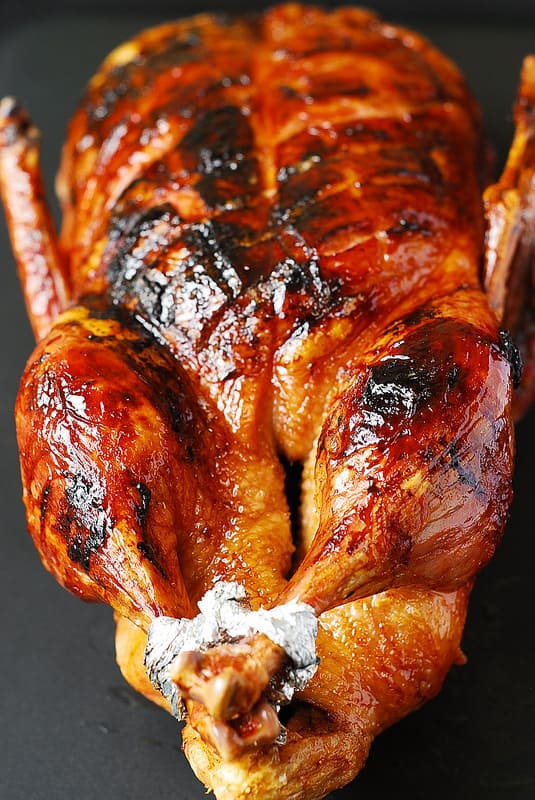
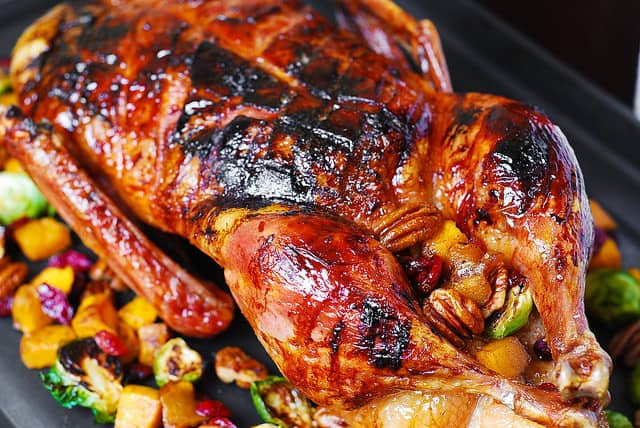
Ever wondered how to cook duck? It's much simpler than most people think. This roast duck has crispy, crackly skin, juicy meat, and a glossy honey balsamic glaze that turns the whole bird a deep mahogany color. It makes a stunning holiday main course for Thanksgiving, Christmas, New Year's Eve, Easter, or any other special occasion!
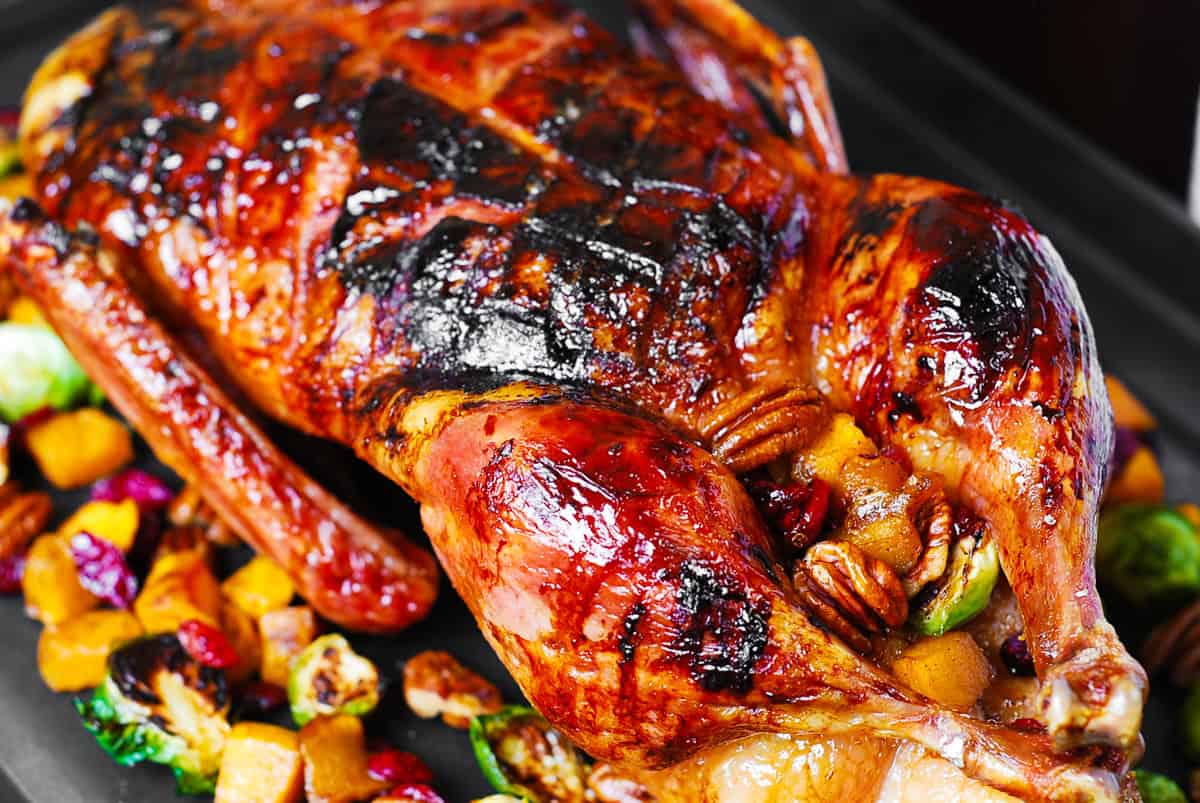
Roast Duck with Crispy Skin and Honey Balsamic Glaze
I first shared this recipe in 2015, and it has been one of the most popular recipes on my site ever since. Readers have made it for Thanksgiving, Christmas, and New Year's Eve for over a decade, and many of you have told me in the comments that it became your holiday tradition.
I've roasted more ducks than I can count while testing it. This latest version brings back the original method you loved. I shortened the roasting time and moved the honey to the very end, so the skin gets glossy and caramelized without burning. Note: The full recipe (with exact amounts and recipe instructions) is in the recipe card below.
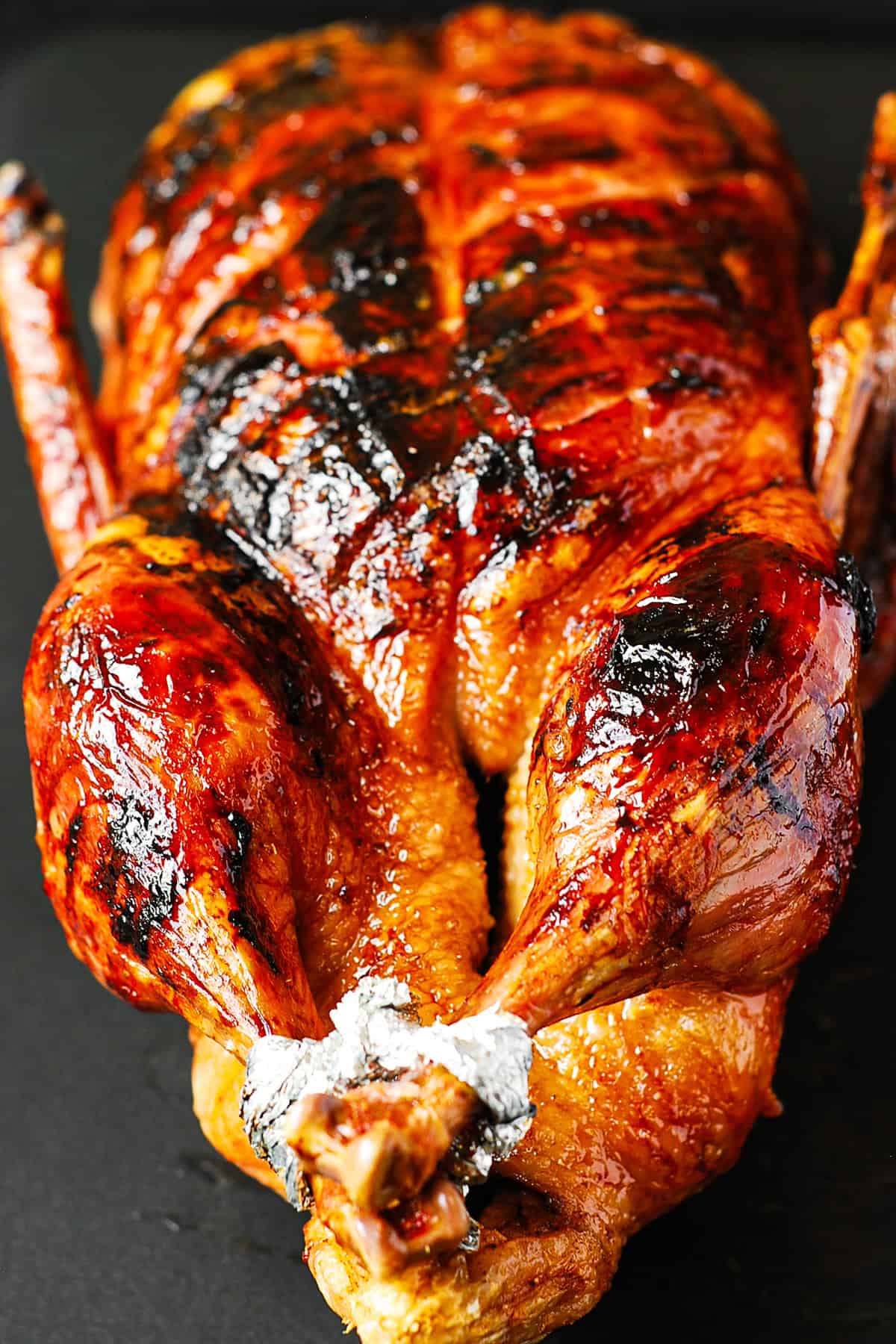
If you're hosting a big holiday dinner, duck works beautifully next to my Thanksgiving turkey with garlic herb butter, or on its own for a smaller gathering. Serve it with my signature holiday side dish, Roasted Butternut Squash and Brussels Sprouts with Pecans and Cranberries. Make my gorgeous Pecan-Cranberry Cheese Ball or holiday Cheese Log as appetizers!
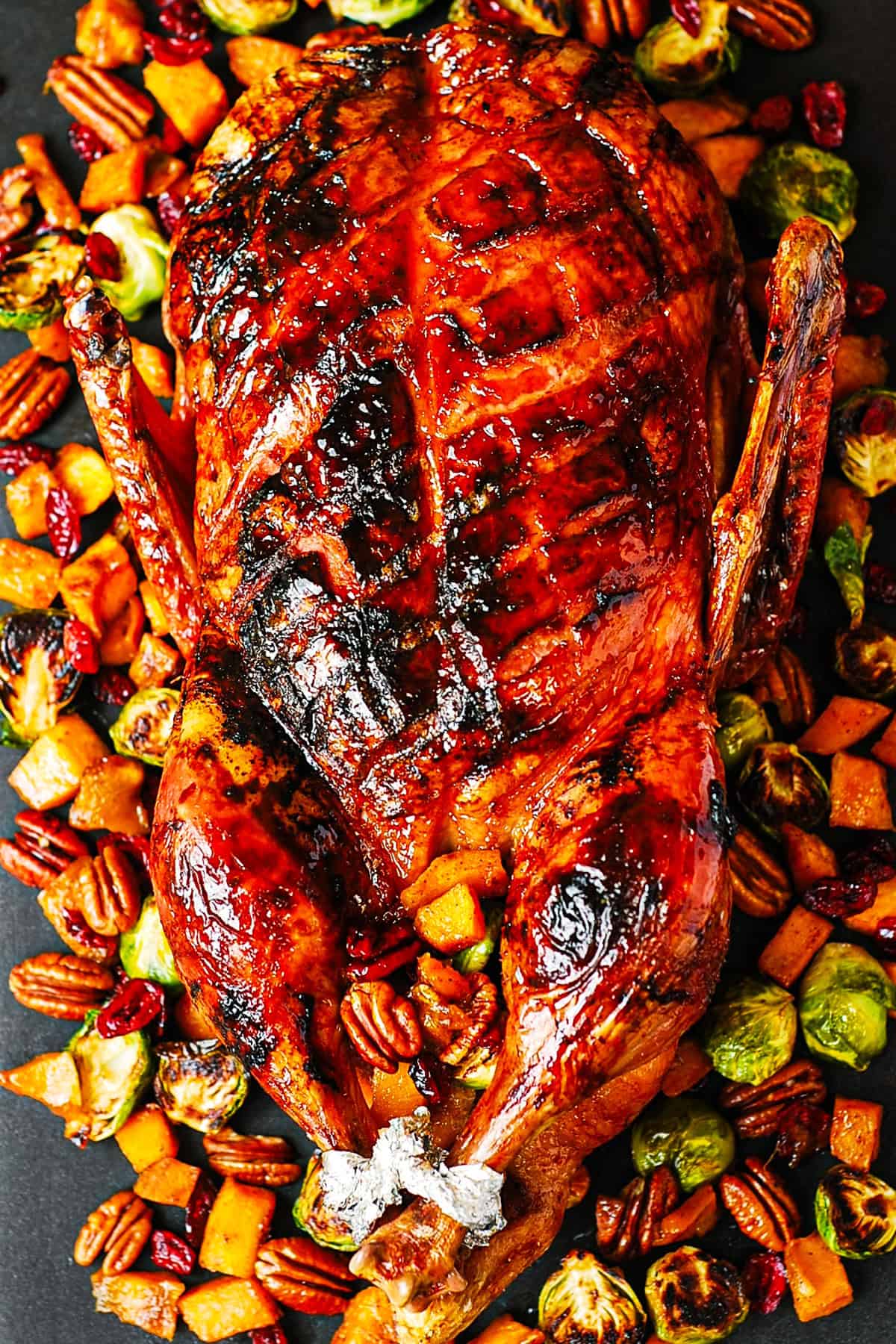
I also recommend my other festive holiday side dishes, like Sausage Stuffed Butternut Squash or Apple Stuffed Acorn Squash. For more traditional sides, try my epic Thanksgiving stuffing, the most stunning homemade cranberry sauce you'll ever make, sweet potato gratin with pecans, and sweet potato casserole with pecan topping, and you'll have a holiday table your guests will remember.
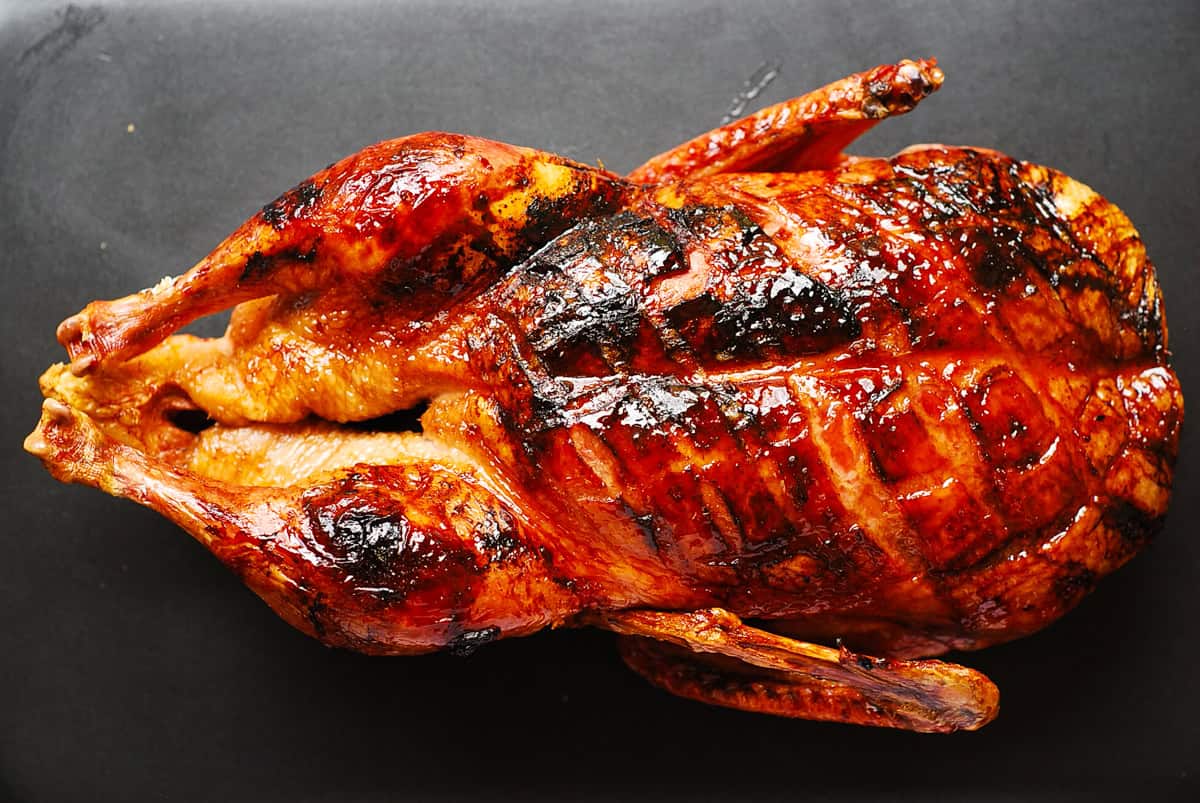
Why You'll Love This Roast Duck
- Crispy skin, every time. Scoring the skin and roasting the duck low and slow renders out the fat, so the skin turns thin and crackly instead of chewy.
- Only 7 ingredients. Duck, salt, garlic, lemon, balsamic vinegar, lemon juice, and honey. That's it.
- Mostly hands-off. The oven does the work. You flip the duck once, pour off the fat, and brush on the glaze.
- Two glazes, no burning. The balsamic-lemon glaze goes on first for color. The honey goes on last, for just 20 minutes, so it caramelizes without scorching.
- A bonus jar of duck fat. You'll pour off plenty of rendered fat. I save it to roast the crispiest potatoes you'll ever eat.
Ingredients and Substitutions
- Note: The full recipe (with exact amounts and recipe instructions) is in the recipe card below. I encourage you to read through all my helpful advice here, or skip straight to the recipe card and return later to review my recipe tips.
- Whole duck: I used a 6-pound Pekin duck (sometimes sold as Long Island duck), the most common duck in American grocery stores. If yours is frozen, thaw it in the refrigerator for 2 to 3 days. A smaller or larger duck works too. Adjust the roasting time and go by the thermometer.
- Salt: I season the duck very generously, inside the cavity and all over the skin. Salt draws moisture from the skin and helps it crisp. Kosher salt or coarse sea salt both work well.
- Garlic and lemon: I stuff chopped garlic and a chopped lemon into the cavity. They perfume the meat as it roasts and get thrown away after cooking. You can add a few sprigs of fresh thyme or rosemary if you like.
- Balsamic vinegar: I mix it with fresh lemon juice for the first glaze. It adds tang and gives the skin its rich, dark color. Use a regular supermarket balsamic here. There's no need for an expensive aged bottle.
- Honey: I stir it into the leftover balsamic mixture for the final glaze. It makes the skin glossy and lightly sweet. Maple syrup is a good substitute.
Tips for the Best Roast Duck
- Dry the skin well. Moisture is the enemy of crispy skin. Pat the duck dry with paper towels, then pat it again. If you have time, leave it uncovered in the refrigerator overnight.
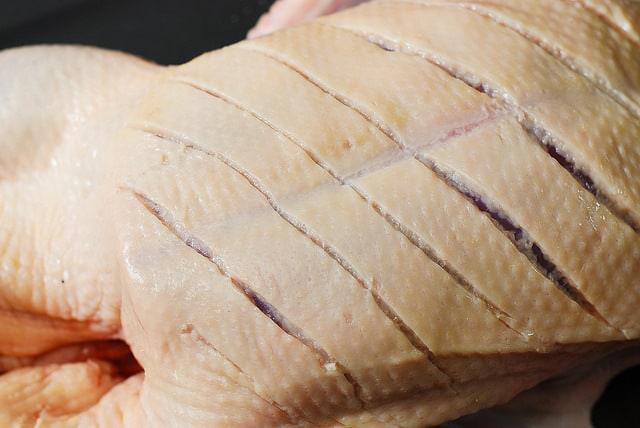
- Score the skin carefully. Cut only through the skin and fat layer. If you cut into the meat, juices will leak out and the breast can dry out.
- Use a rack. The rack lifts the duck out of the rendered fat so the bottom roasts instead of frying.
- Save the honey for the end. Honey burns quickly at oven temperatures. Brushing it on only for the last 20 minutes gives you a glossy, caramelized finish with no charred spots. If the breast darkens too fast, tent it loosely with foil.
- Trust your thermometer. Ducks vary in size and ovens vary in heat. An instant-read thermometer is the only way to know for sure when your duck is done.
What to Serve with Roast Duck
Roast duck is rich, so I like to balance it with something sweet, something tart, and something green. Here are a few of my favorite pairings:
- Stuffing and potatoes: My Thanksgiving stuffing with pecans and cranberries soaks up the pan juices beautifully. For something creamy, serve mashed potatoes with roasted garlic or my new cheesy sweet potato gratin with toasted pecans.
- Something tart: Duck and cranberries are a classic pairing. A spoonful of cranberry sauce cuts right through the richness.
- Vegetables: Brussels sprouts with balsamic glaze echo the flavors of the duck glaze. Green beans with pine nuts and roasted carrots with cranberries and pumpkin seeds add color to the plate.
- Gravy and rolls: If your crowd loves gravy, my smooth, lump-free turkey gravy works well with duck too. Add a basket of garlic butter dinner rolls on the side.
Planning a Holiday Menu?
I've been publishing holiday recipes since 2012, and I've gathered my most popular ones into four collections:

Roast Duck Recipe (Crispy Skin, Honey Balsamic Glaze)
Ingredients
Roast Duck
- 6 lb whole Pekin duck
- salt
- 5 cloves garlic chopped
- 1 medium lemon chopped
Glaze
- ½ cup balsamic vinegar
- 1 medium lemon freshly squeezed juice
- ¼ cup honey
Instructions
- If your duck is frozen, thaw it in the refrigerator for a couple of days. Take it out of the refrigerator 30 minutes before cooking.
- Preheat the oven to 350°F (175°C) and set a rack inside a large roasting pan.
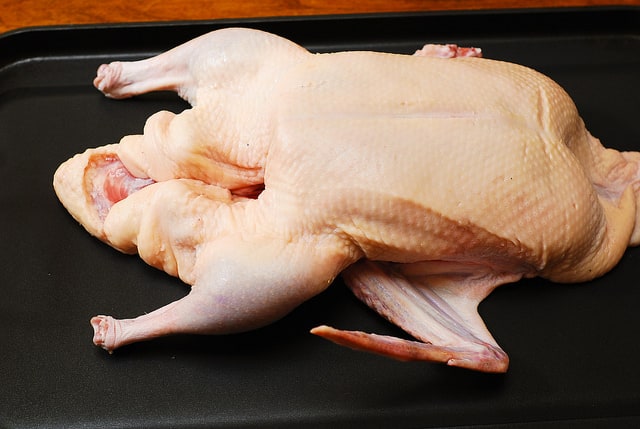
- Prepare the duck: Remove the giblets and pat the duck very dry with paper towels, inside and out. Score the breast skin in a diamond pattern, cutting only the skin and not the meat. Poke the other fatty areas all over with the tip of a knife, especially where the legs meet the body, so the fat can render. Season generously with salt inside and out.
- Stuff the garlic and lemon into the cavity (they're only there for flavor). Fold the loose skin at both ends inward to hold them in, then tie the legs with butcher's twine.
- Roast breast side up: Place the duck breast side up on the rack and roast for 1 hour.
- Roast breast side down: Flip the duck and roast for 40 minutes.
- Pour off the fat: Remove the pan from the oven and move the duck to a platter, keeping the cavity closed. Pour the rendered fat from the pan into a heat-proof container (save it for roasting potatoes).
- Balsamic-lemon glaze: Mix the balsamic vinegar and lemon juice in a small bowl. Return the duck to the rack breast side up, brush it all over, and roast for 30 minutes, brushing every 10 minutes.
- Honey glaze: Stir the honey into the leftover balsamic-lemon mixture. Brush it over the breast and roast for 20 minutes more, brushing once halfway. If the skin darkens too quickly, loosely tent the breast with foil.
- Check the temperature. An instant-read thermometer in the thickest part of the thigh should read at least 165°F (74°C). Let the duck rest for 15 minutes, then remove and discard the garlic and lemon. Carve and serve.
Notes
- Total roasting time: about 2½ hours at 350°F (175°C) for a 6 lb duck. For a smaller or larger duck, adjust the time by about 25 minutes per pound, and go by the thermometer. As a general rule, a whole duck needs about 25 or 30 minutes of roasting time per pound when cooked at 350°F (175°C). Be aware that the USDA considers the internal temperature of 165 °F (74 °C) the safe minimum for poultry.
- Don't let the glaze burn: Honey scorches fast, which is why it goes on only for the last 20 minutes. The glaze should give you plenty of color without broiling. In case it doesn't, see the next tip:
- Broil the duck (optional and if needed). Carefully broil the duck for about 5 or 10 minutes (check regularly to ensure it doesn't char too much). Broiling the duck is a great option if the skin is not crispy enough. It will speed up caramelization if your duck is already cooked to the desired internal temperature (as measured with a meat thermometer).
- Why the calories look so high: The nutrition estimate includes the rendered duck fat, which you pour off and don't eat.
- Updated Recipe: I originally published this recipe on October 24, 2015, and updated it in 2023 and 2025. In November 2026, I brought back the original method that so many of you loved, with a shorter roasting time and a later honey glaze to keep the skin from burning. Let me know in the comments how your duck turns out!
Nutrition
Nutrition Disclaimer:
The nutritional information on this website is only an estimate and is provided for convenience and as a courtesy only. The accuracy of the nutritional information for any recipe on this site is not guaranteed. It should not be used as a substitute for a professional nutritionist's advice.
How to Roast a Whole Duck
This is a helpful visual overview. For the full recipe, including all details and ingredient amounts, scroll up to the recipe card above.
- Dry and score the duck. Remove the giblets and pat the duck very dry. Score the breast skin in a diamond pattern, cutting only through the skin and fat, never into the meat. Poke the fatty areas, especially where the legs meet the body.
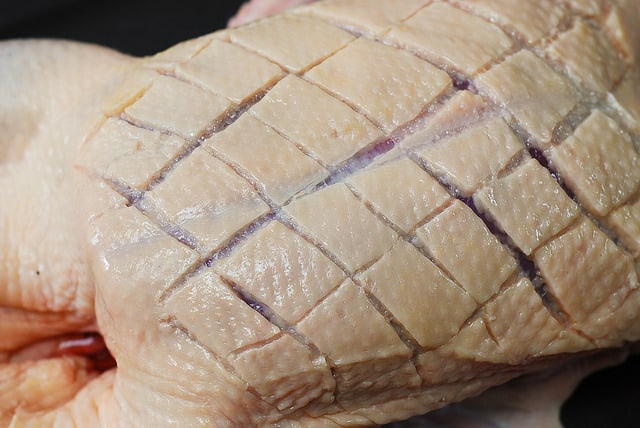
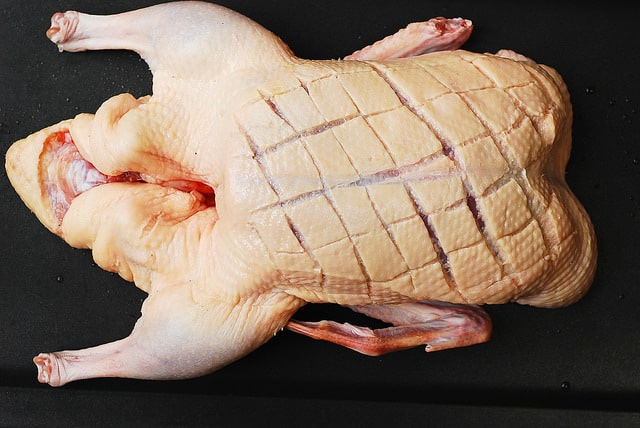
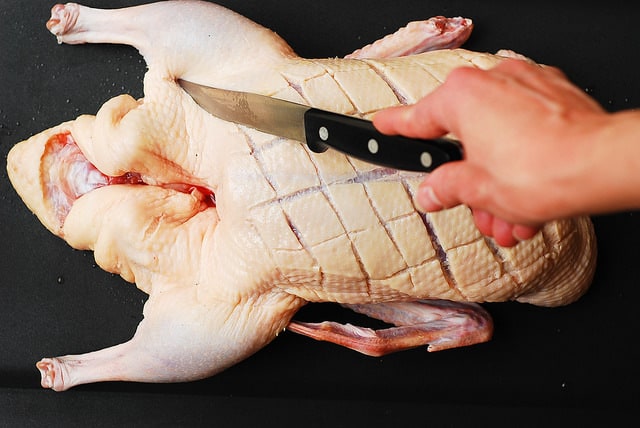
- Season and stuff. Salt the duck generously inside and out. Fill the cavity with garlic and lemon, fold the loose skin inward at both ends, and tie the legs with butcher's twine.
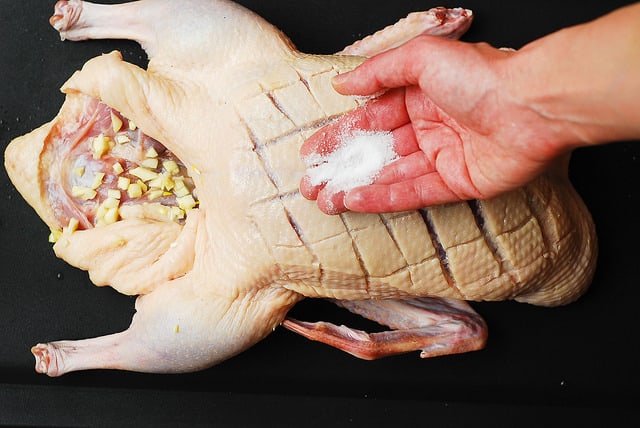
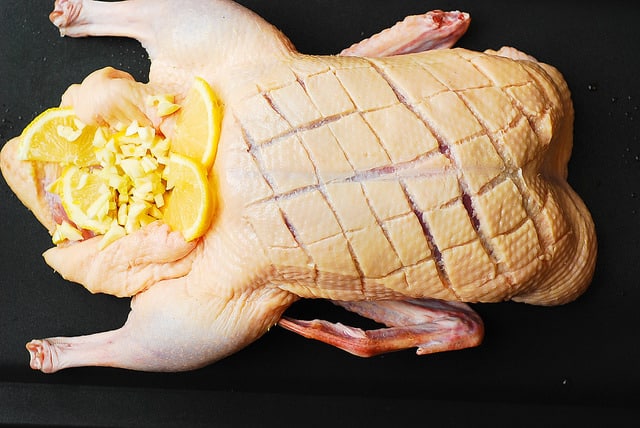
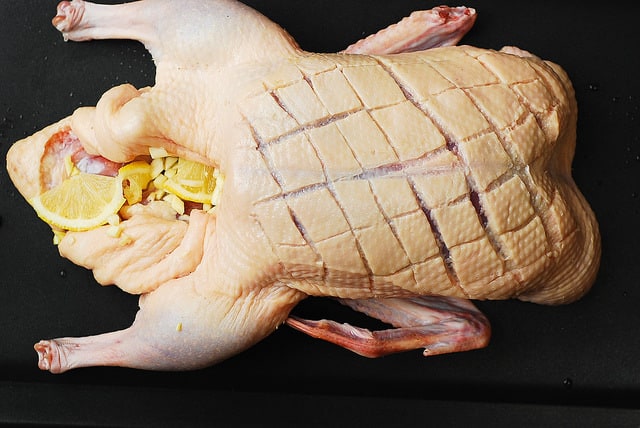
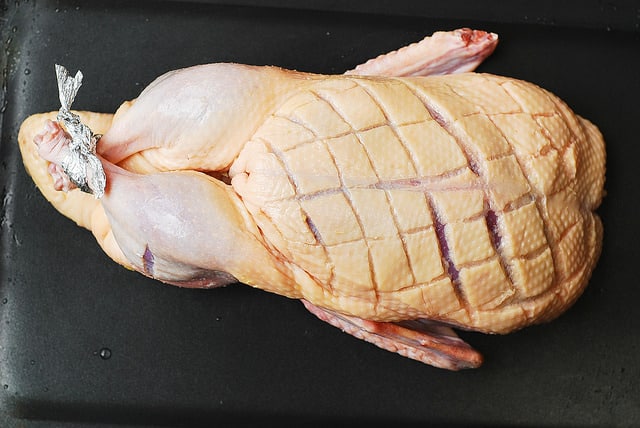
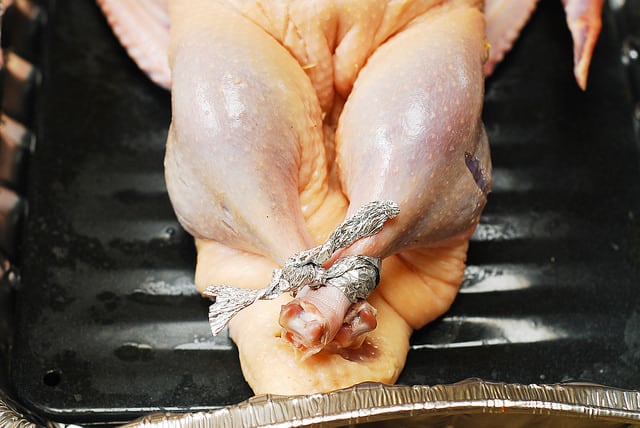
- Roast breast side up, then breast side down. Roast at 350°F (175°C) on a rack in a roasting pan for 1 hour. Flip it and roast for 40 minutes more so the back renders too.
- Pour off the fat. Move the duck to a platter and carefully pour the rendered fat into a heat-proof container.
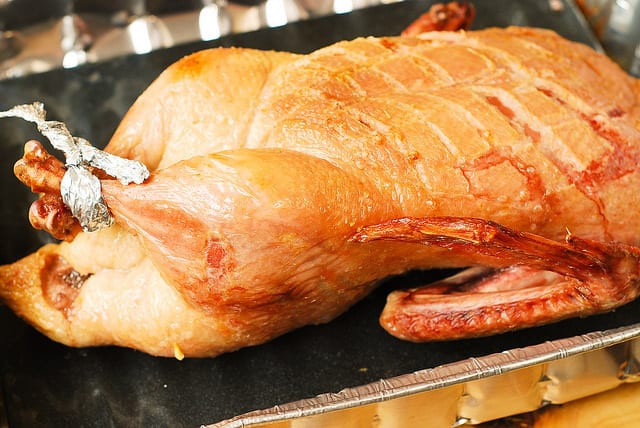
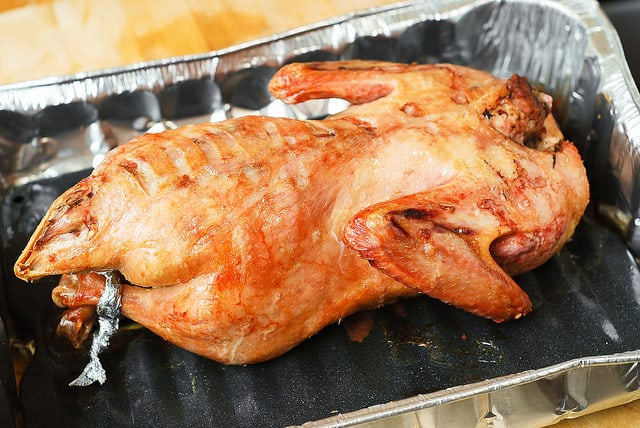
- Glaze twice. Brush the duck with the balsamic-lemon glaze and roast for 30 minutes. Then brush the breast with the honey glaze and roast for 20 minutes more.
- Check the temperature and rest. The thickest part of the thigh should read at least 165°F (74°C). Let the duck rest for 15 minutes before carving.
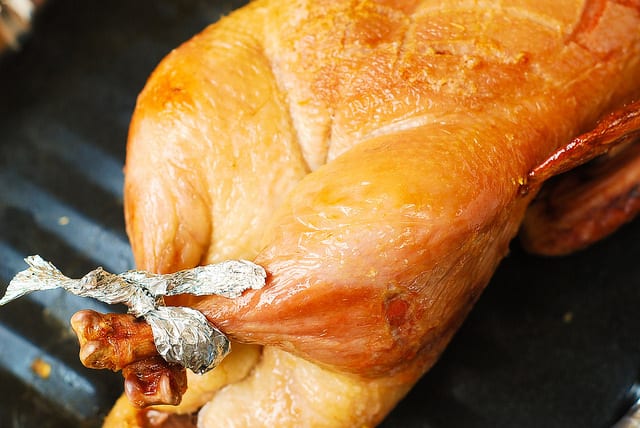
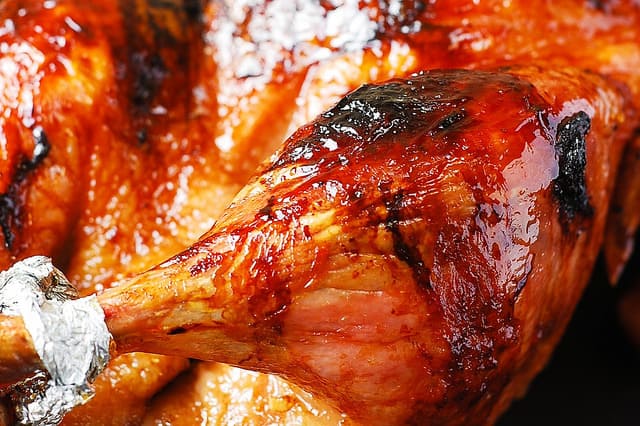
Roast Duck FAQ
- Why is the calorie count so high? The nutrition estimate includes all the fat that renders out of the duck during roasting. You pour most of that fat off and don't eat it, so the duck on your plate has far fewer calories than the label shows.
- Can I cook just duck breasts instead of a whole duck? Yes. Duck breasts cook in a skillet in under 30 minutes. Try my duck breast with cranberry sauce for a quicker holiday dinner.
- Can I make roast duck ahead of time? Roast duck is best served fresh from the oven, when the skin is at its crispiest. You can score, season, and stuff the duck a day ahead and keep it uncovered in the refrigerator. That actually helps the skin crisp even more.
- Do I have to roast the duck to 165°F (74°C)? That's the safe minimum for poultry according to the USDA. Some people prefer duck medium-rare or medium. I explain the other doneness temperatures in the recipe card notes.
- What's the best duck to buy? I recommend a Pekin duck. It's the most widely available duck in the US, it has a good balance of meat and fat, and it's ideal for roasting whole.
More Holiday Main Courses
- Thanksgiving Turkey with Garlic Herb Butter
- Ribeye Steak Dinner
- Filet Mignon with Mushroom Sauce
- Roasted Cornish Hens
- Beef Bourguignon
- Braised Short Ribs with Red Wine and Mushrooms
- Apple Cider Braised Pork Shoulder
- Stuffed Pork Tenderloin
More Thanksgiving Side Dishes
- Roasted Brussels Sprouts and Cinnamon Butternut Squash with Pecans and Cranberries
- Stuffed Butternut Squash with Spinach, Bacon, and Cheese
- Thanksgiving Stuffing
- Cranberry Sauce
- Sweet Potato Casserole with Pecan Topping
- Cheesy Sweet Potato Gratin with Toasted Pecans
- Turkey Gravy
- Sausage Stuffed Butternut Squash
- Hasselback Butternut Squash
- Apple Stuffed Acorn Squash
- Brussels Sprouts with Bacon, Pecans, and Cranberries
- Sausage Stuffed Acorn Squash
- Easy Scalloped Potatoes
More Holiday Salads
- Pomegranate Holiday Salad
- Christmas Salad
- Butternut Squash Pasta Salad with Brussels Sprouts, Pecans, and Cranberries
- Apple Spinach Salad
- Strawberry Spinach Salad
- Pear Salad with Walnuts and Honey-Mustard Dressing
If I were to stuff the duck with cubed B.Nut squash that is tossed in maple, how would that work with the time/temp of the duck and also what else would you pair with the squash? Thanks!
I think that would work great! You can also stuff the duck with apples and prunes. Stuff the duck right before placing it in the oven.
Is there any reason to unwrap the duck, season and keep it in the fridge for a day or so before roasting? This is recommended for chicken to help produce crisp skin, but I'm guessing the duck doesn't need the same treatment because of the higher fat content.
I wouldn't do any advance prep work with this duck. Just prepare everything right before you are ready to place the duck in the oven. Enjoy the recipe and Happy Thanksgiving!
Do you cover the duck for any part of the roasting? OR is it uncovered the whole time?
Hi Stephanie! The duck is roasted UNCOVERED the whole time.
If my duck is only 4 1/4 pounds, do I still cook it that long?
Hi Patricia! I would adjust the cooking times if the duck is 4 1/4 pounds. Here is what I suggest:
In the recipe card where it says: Roast the duck for 3 hours in 4 distinctive steps: I would follow step 1 through Step 3 (cooking the duck for 1 hour and 40 minutes total). Then skip step 4 and move to step 5 where you cook the duck while brushing it with the balsamic vinegar + lemon + honey mixture for 40 minutes. After that time, check your duck for doneness. If the duck is not cooked to your preference, continue cooking the duck and brushing it with the honey-balsamic mixture, checking it for doneness every 10 minutes.
How to know when the duck is done? The duck is done to medium rare if the juices are pinkish when you carefully cut the duck in the fattest part. The duck is well done when juices run yellow-ish color.
You can also use a food thermometer. The cooked duck should measure an internal temperature of 165 °F using a meat thermometer.
Can you do this recipe in a dutch oven?
I wouldn't recommend it. To roast the duck you need a large roasting pan with a rack. And, the roasting pan should have a roasting rack to lift the duck from the bottom of the pan and allow the fat to drip below the duck.
This sounds great, but I need advice for how to cook a smaller duck. Mine is only 4.5 pounds -- how do I figure out how long to cook it? Thanks.
Hi Ann! In the recipe card where it says: Roast the duck for 3 hours in 4 distinctive steps: I would follow step 1 through Step 3 (cooking the duck for 1 hour and 40 minutes total). Then skip step 4 and move to step 5 where you cook the duck while brushing it with the balsamic vinegar + lemon + honey mixture for 40 minutes. After that time, check your duck for doneness. If the duck is not cooked to your preference, continue cooking the duck and brushing it with the honey-balsamic mixture, checking it for doneness every 10 minutes.
The duck is done to medium rare if the juices are pinkish when you carefully cut the duck in the fattest part. The duck is well done when juices run yellow-ish color.
You can also use a food thermometer. The cooked duck should measure an internal temperature of 165 °F using a meat thermometer.
Any tips for cooking the duck at home and then transporting it to another household? How to reheat it?
Hi Monica. I would cook the duck at home and use the appropriate container to transport it, such as a slow cooker. The duck is small enough that it should fit in a slow cooker. Take a large roasting pan with a rack with you to the other household (roasting pan should have a roasting rack to lift the duck from the bottom of the pan and allow the fat to drip below the duck). Basically, take the same pan in which you cooked your duck (without all the fat rendered from the duck - remove that).
Then, I would move the duck from the slow cooker to the roasting pan and reheat for about 30 minutes in the oven preheated to 350 F.
We always stuff the duck with apples and prunes, do you think I can still do it or will it alter the recipe, besides the cooking time. Thank you.
Daria, that sounds amazing - stuffing the duck with apples and prunes. It will not alter the recipe. Go ahead and stuff the duck with that yummy stuff.
Hi,
This looks great! Can’t wait to try instead of turkey this thanksgiving. I actually have a 7lb duck and am wondering how I should adjust the cooking time based off the extra lb.
Thanks!
Hello Sally, just follow the recipe as is. In the end, check the duck for doneness and cook it a bit longer, checking it for doneness every 10 minutes. You just might have to roast the duck for a short bit longer, that's it.
The duck is done to medium rare if the juices are pinkish when you carefully cut the duck in the fattest part. The duck is well done when juices run yellow-ish color.
You can also use a food thermometer. The cooked duck should measure an internal temperature of 165 °F using a meat thermometer.
What about an orange sauce recipe?
Someday I hope to post the recipe for it because the orange sauce will be amazing with this duck! Just added this to my TO-DO list.
1/2 C Red Wine Vinegar and 2 oz Sugar in saucepan: boil to dissolve sugar and turns light tan. Remove from heat, add 2 C Chicken Stock (homemade is best). Simmer 45 mins (or whatever) on low. Deglaze duck roasting pan and get some brown bits (optional) and add to simmering sauce. Simmer until reduced by half (or whatever). Season with S&P. Bring back to a boil while adding 2 T Butter, zest of 2 Oranges, juice of 1/2 orange, and a splash of lemon juice. It's my MUCH easier version of Anthony Bourdain's Duck L'orange but I have made it both ways and prefer the one that is easier both for time and taste. Even if I make turkey, I still make this EVERY year. Quick tip: if you aren't making your own chicken stock, get the gelatinous liquid from the store-bought whole roasted chicken and strain that out. The thickening helps, and the dogs like the "free" roast chicken.
Thank you so much for sharing how you make the orange sauce. It sounds so good!
As a follow up to my question. The label on the duck package says to cook a duck of this size for 2 1/4 hours.
I just bought a frozen duck at grocers that weighs 6 1/4 pounds. Your recipe recommends cooking the duck for three hours but you don’t mention the weight of duck. How long should I cook my duck using your recipe?
Hi Tom, the duck I cooked in this recipe was a 6 lb duck (the weight is mentioned under the ingredients list). So it's very similar to your duck. I would say follow the recipe as is and check the duck for the desired doneness every 10 minutes in the last 30 minutes of roasting.
Hi Julia. Thank you for posting this. Im going tobtry it tonight. We just harvested a small handful of our own ducks, fornthebforst time, and I was looking for an easy yet delicious recipe. My wife isn't excited about it, haha so hopefully this will be just what she needs to change her mind.
Enjoy the recipe! Hope you like it! Depending on how big or small your ducks are, watch the cooking times carefully, especially in the end, checking for doneness every 10 minutes in the last 40 minutes of roasting.
How much fat renders out? How salty are the juices? Have you used the pan drippings for gravy or saved the fat for confit? Cheers. Looks great!
Thank you, Michael. I haven't measured the fat in cups, but it's quite a lot. Several cups. I have used the drippings for gravy. Actually, when the fat drips down it sort of separates into fat and yummy more textured and more colorful drippings - you'll see. I use the yummy textured drippings for the gravy or for smothering the leftover duck meat with it. Or even for cooking potatoes. I've saved the fat and just used it as cooking oil. They actually sell duck fat in some stores to use instead of vegetable oils or butter in cooking, frying, sauteeing, etc.
I'm going to try your recipe this year except. I will be using two wild Mallards I begged during last hunting season. I plucked the ducks. Is the recipe still the same? Thank you in advance.
Larry C. HESS
PS: the C. Stsnfs for coon ass, you can take the man out of Louisiana, but you can't take Louisiana out of the man
Hi, Larry! Just looked up Mallard ducks briefly - and those are considered wild ducks and it seems like they are much less fatty than the duck in this recipe. That will definitely call for a few adjustments not to overcook the duck.
Quick research also showed that mallard ducks burn about 12 times more energy (read: fat) in flight vs rest, so it really depends on what kind of activity your mallards were engaged in before you got them. If the mallard has just been resting for a while before you got it, it would be more fat. 🙂 If it's been flying around too much - it would be way leaner. 🙂
Also, it's recommended to brine wild duck and geese before cooking. Here is a nice article: https://www.ducks.org/hunting/waterfowl-recipes-wild-game-cooking/waterfowl-cooking-basics