
This post may contain affiliate links. Read my disclosure policy.
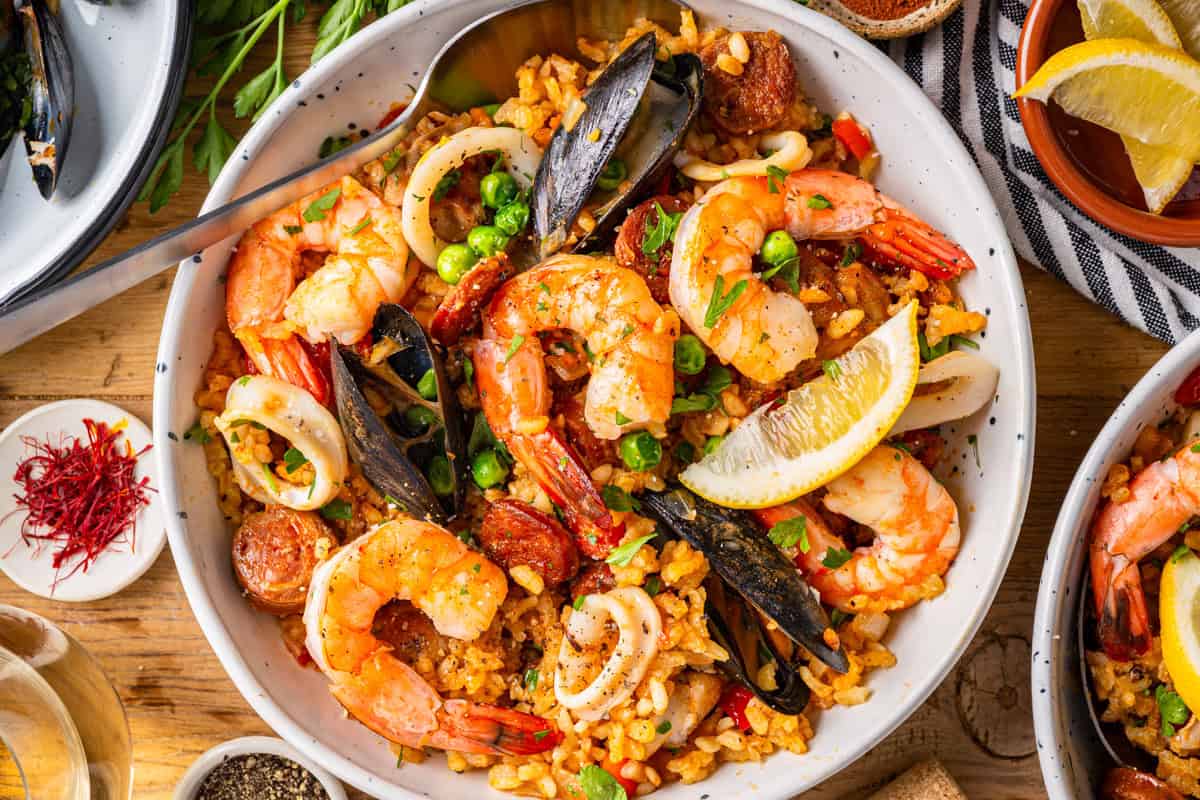
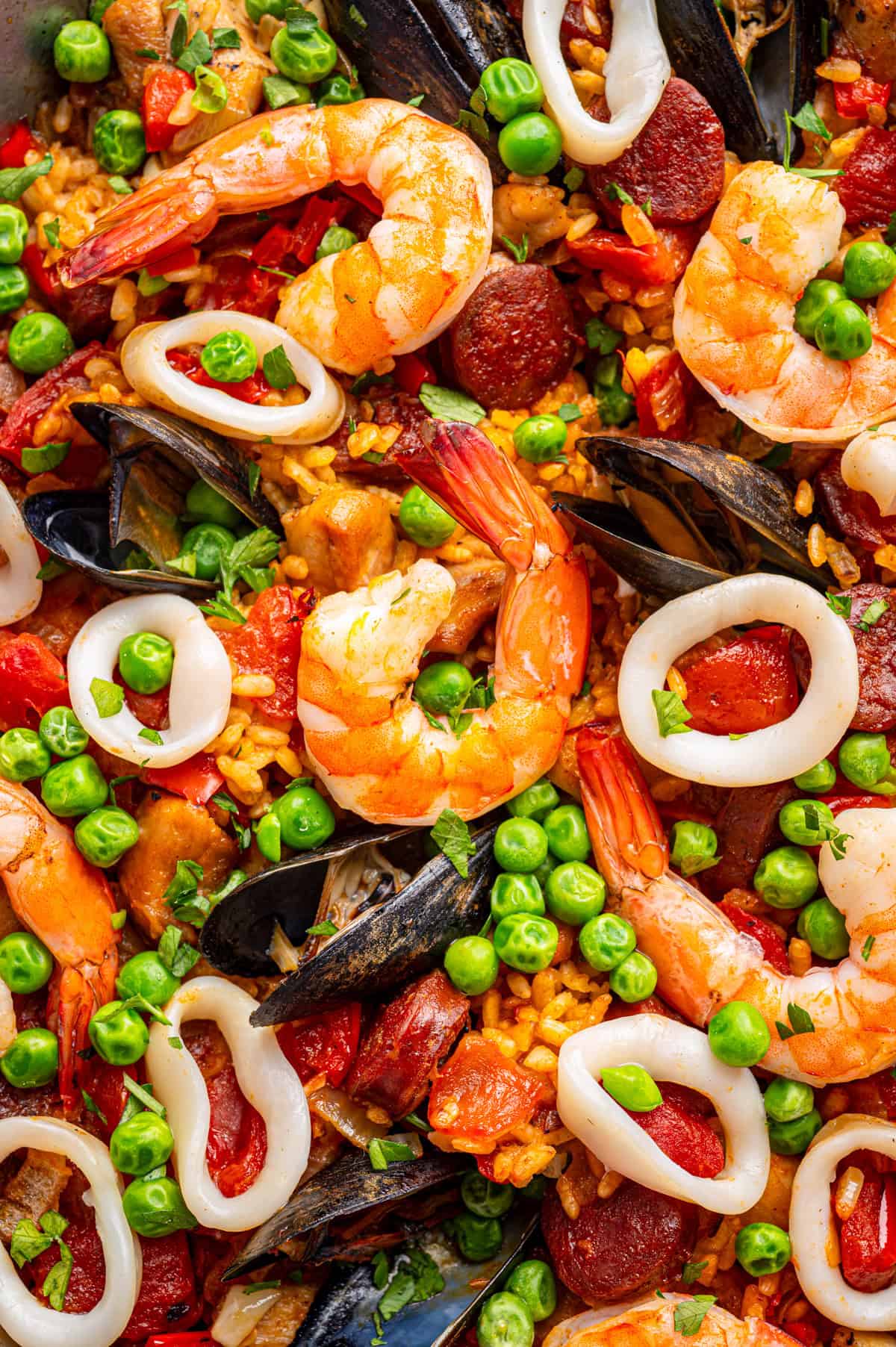
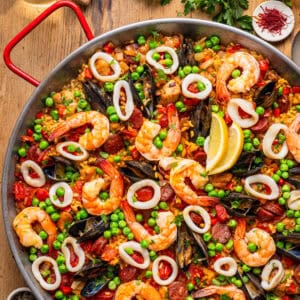
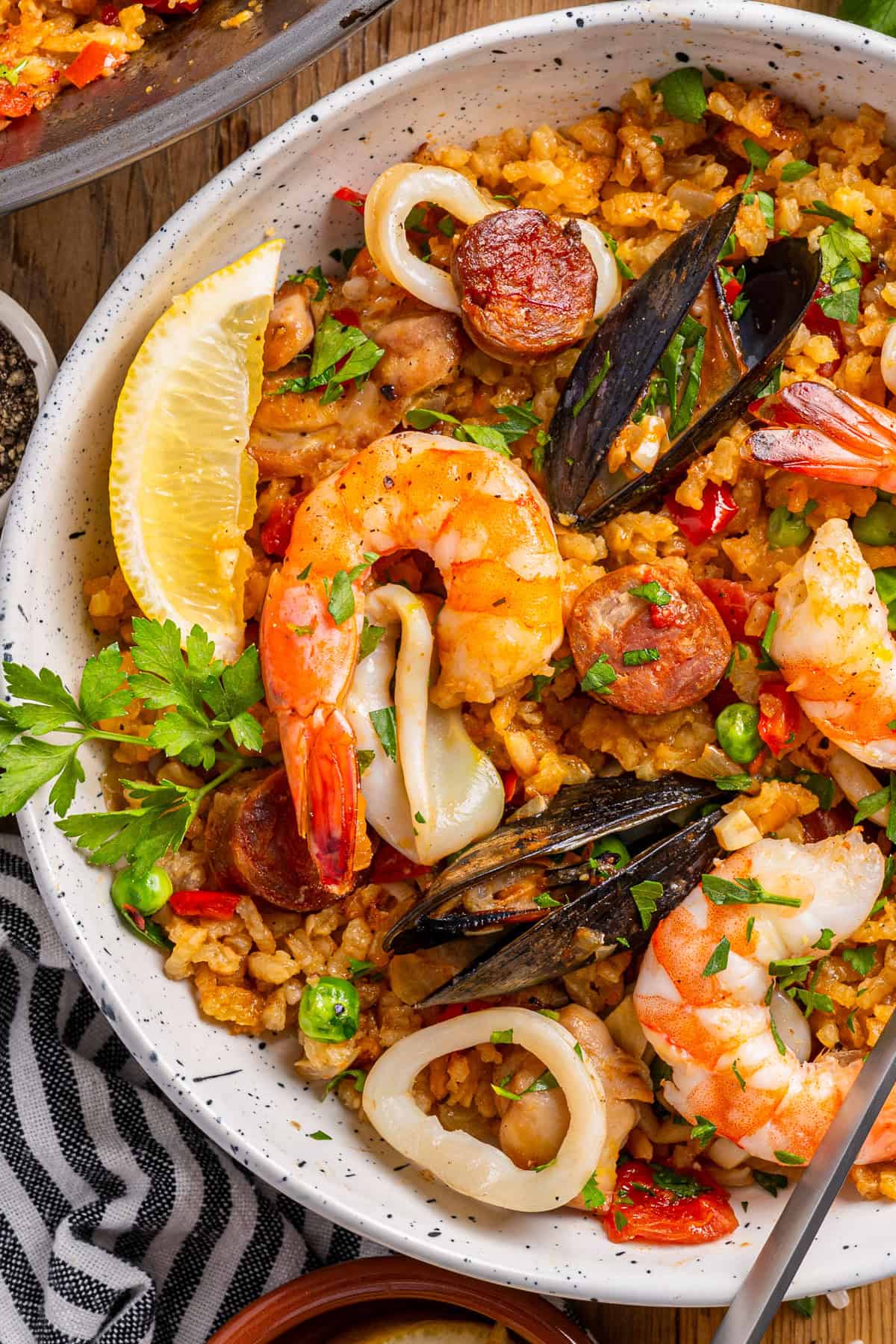
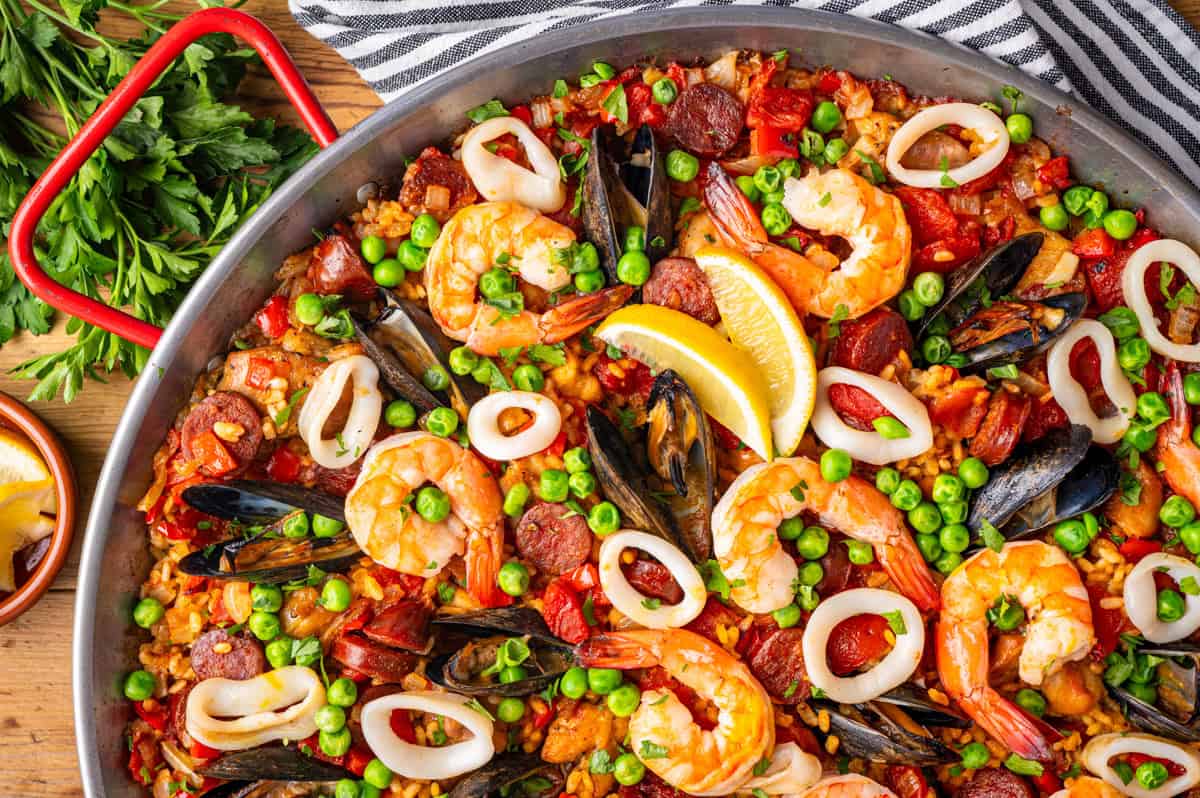
This Spanish seafood paella combines tender chicken, smoky chorizo, shrimp, mussels, calamari, and saffron rice in one impressive pan. Authentic, colorful, and packed with bold Mediterranean flavors. Perfect for dinner parties and holidays.
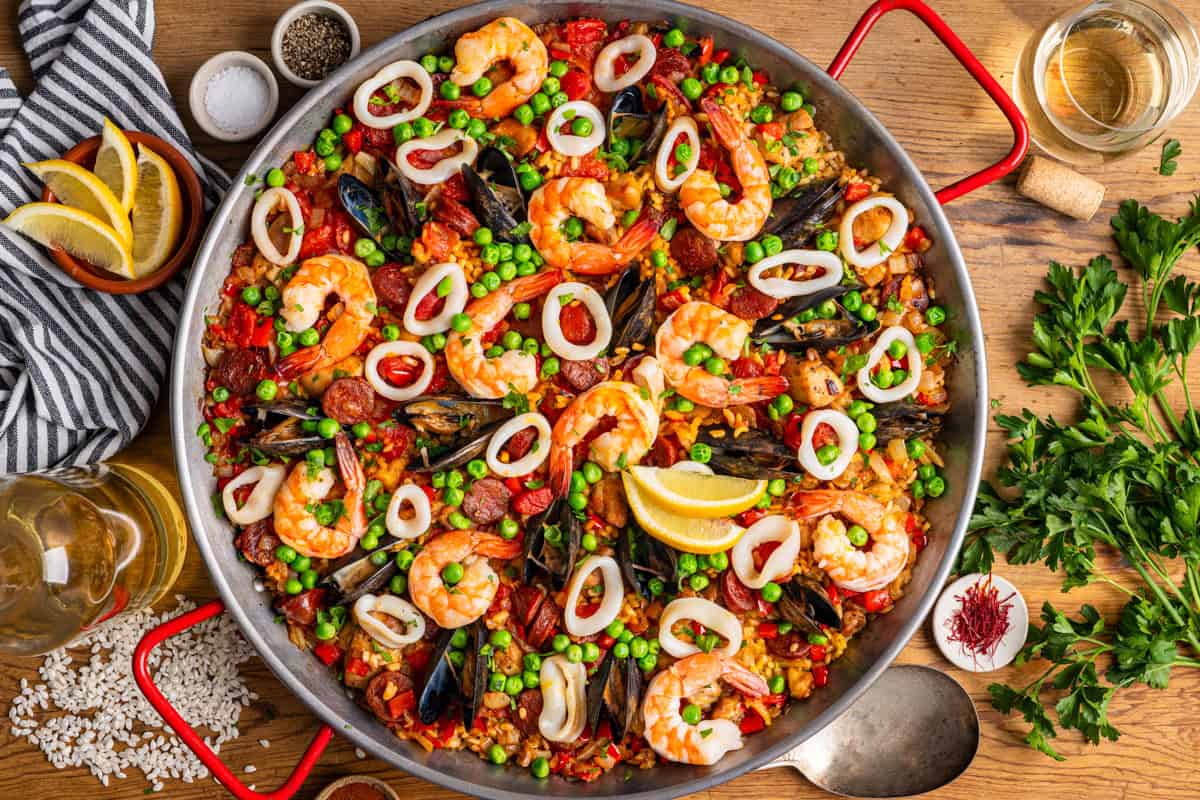
Authentic Spanish Paella at Home (No Trip to Spain Required)
If you think paella is intimidating, reserved for restaurants, or "too advanced" for a home kitchen, my recipe will change your mind. And while it takes a bit more attention than a simple weeknight dinner, I promise it's far easier than it looks. There are no advanced techniques required, just patience during the simmer.
The best part is you can make it your own: swap in clams for mussels, add scallops, or make it seafood-only by skipping the chicken and chorizo entirely. And if you love seafood as much as I do, try my popular seafood recipes such as my Mediterranean salmon with rice, reader-favorite Greek shrimp orzo, and always a hit Creamy Scallop Spaghetti with Capers.
What Is Authentic Paella?
Traditional Spanish paella varies quite a bit depending on the region. Paella Valenciana, considered the original version, is typically made with rabbit, chicken, and green beans rather than seafood. Seafood paella, or paella de marisco, developed along Spain's coast and features shrimp, mussels, and squid instead of meat. But don't worry, I'm not going to send you out to catch a rabbit for this recipe.
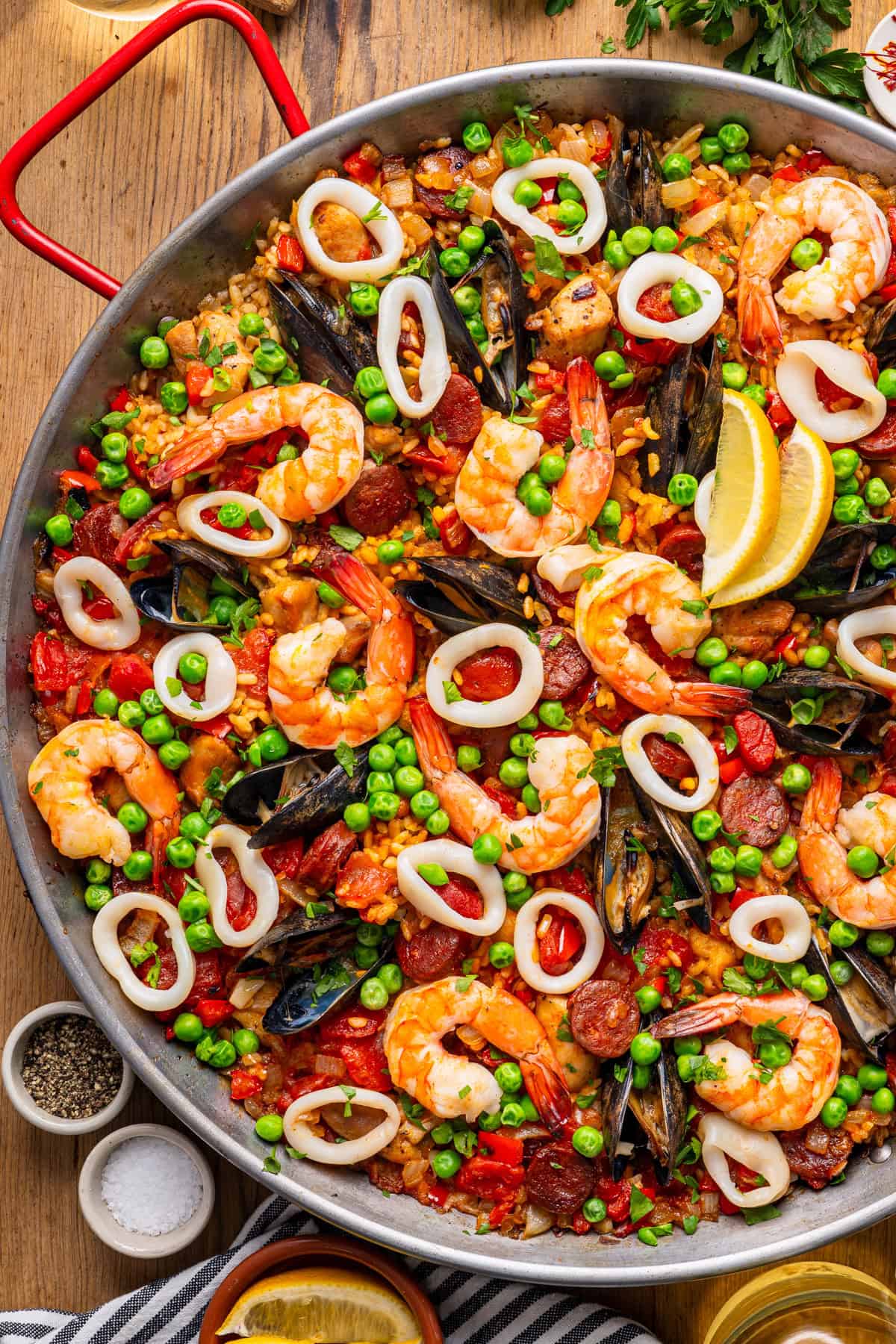
What most people picture when they think of paella today, a colorful pan loaded with chicken, chorizo, and seafood, is technically called paella mixta (mixed paella). While purists may argue that chicken, chorizo, and seafood don't belong together in the same pan, this version has become one of the most popular styles both in Spain and around the world. That's exactly what we're making today!
Why My Recipe Works
Spanish paella has a reputation for being complicated, but once you understand the process, it's surprisingly straightforward and incredibly rewarding. I make it all in one pan (a proper paella pan if you have one, but any wide, shallow skillet works).
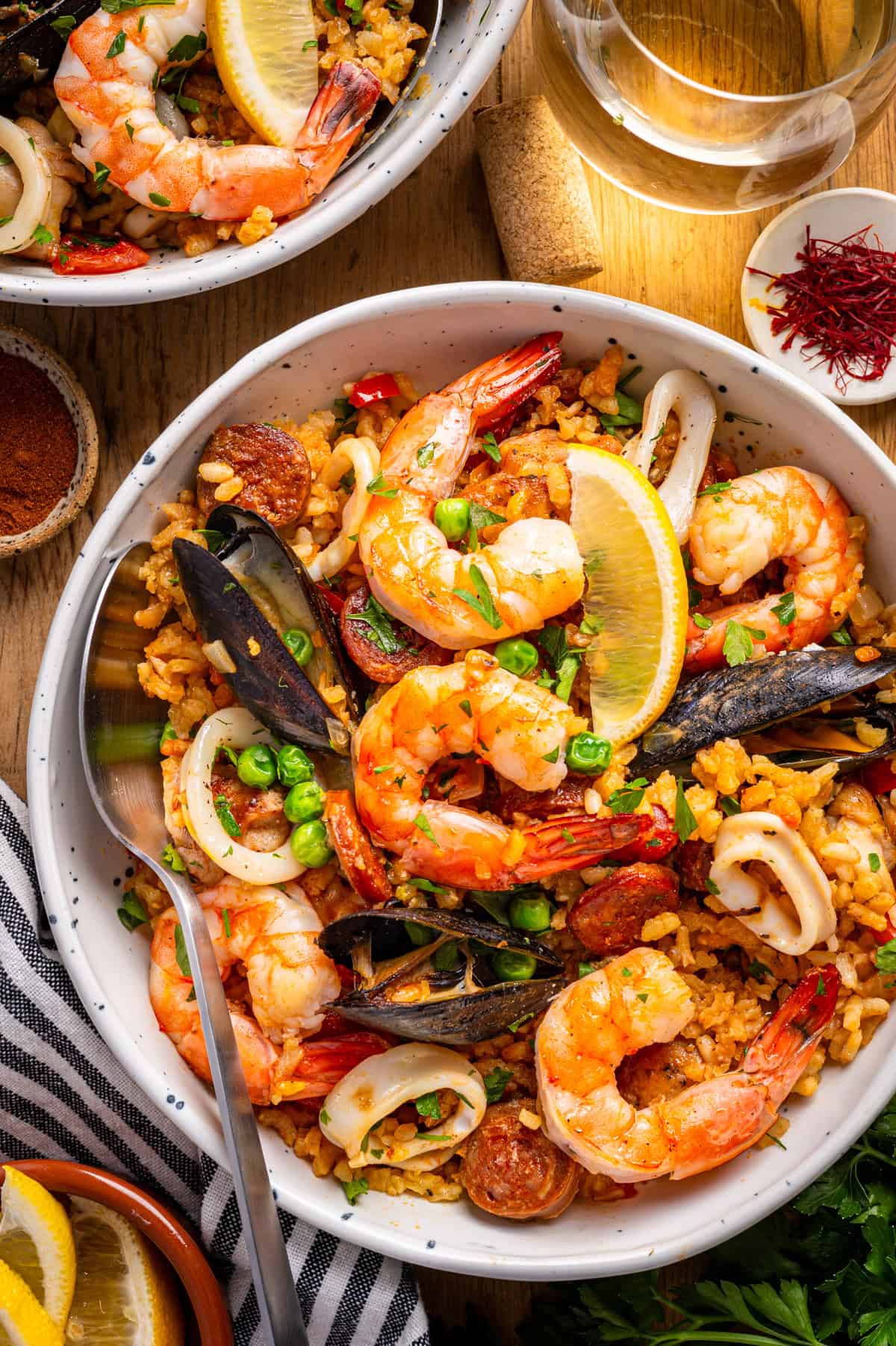
- Authentic flavors: saffron-scented rice, smoky chorizo, juicy chicken, and a trio of seafood come together in layers of flavor that taste as if they came straight from a seaside restaurant in Spain. I deliberately kept the seafood additions staggered so the mussels, shrimp, and calamari are all cooked at exactly the right moment. They are all plump, tender, never rubbery.
- Nutrition-wise, it's naturally dairy-free and gluten-free, and it's protein-packed thanks to the chicken, chorizo, and seafood working together in one pot.
- Well-balanced meal: It's a complete meal in one pan. You get protein, seafood, vegetables, and rice all cooked together, which means fewer dishes and maximum flavor.
- It's a true celebration dish: Paella is designed to be shared, and you will love serving it directly from the pan at the table. It always draws attention, impresses guests, and becomes the centerpiece (and the talk!) of the meal!
If you enjoy Mediterranean-inspired dinners, don't miss my Greek shrimp bowls, Mediterranean salmon, Greek Shrimp with Orzo and Feta, and seafood pasta recipes.
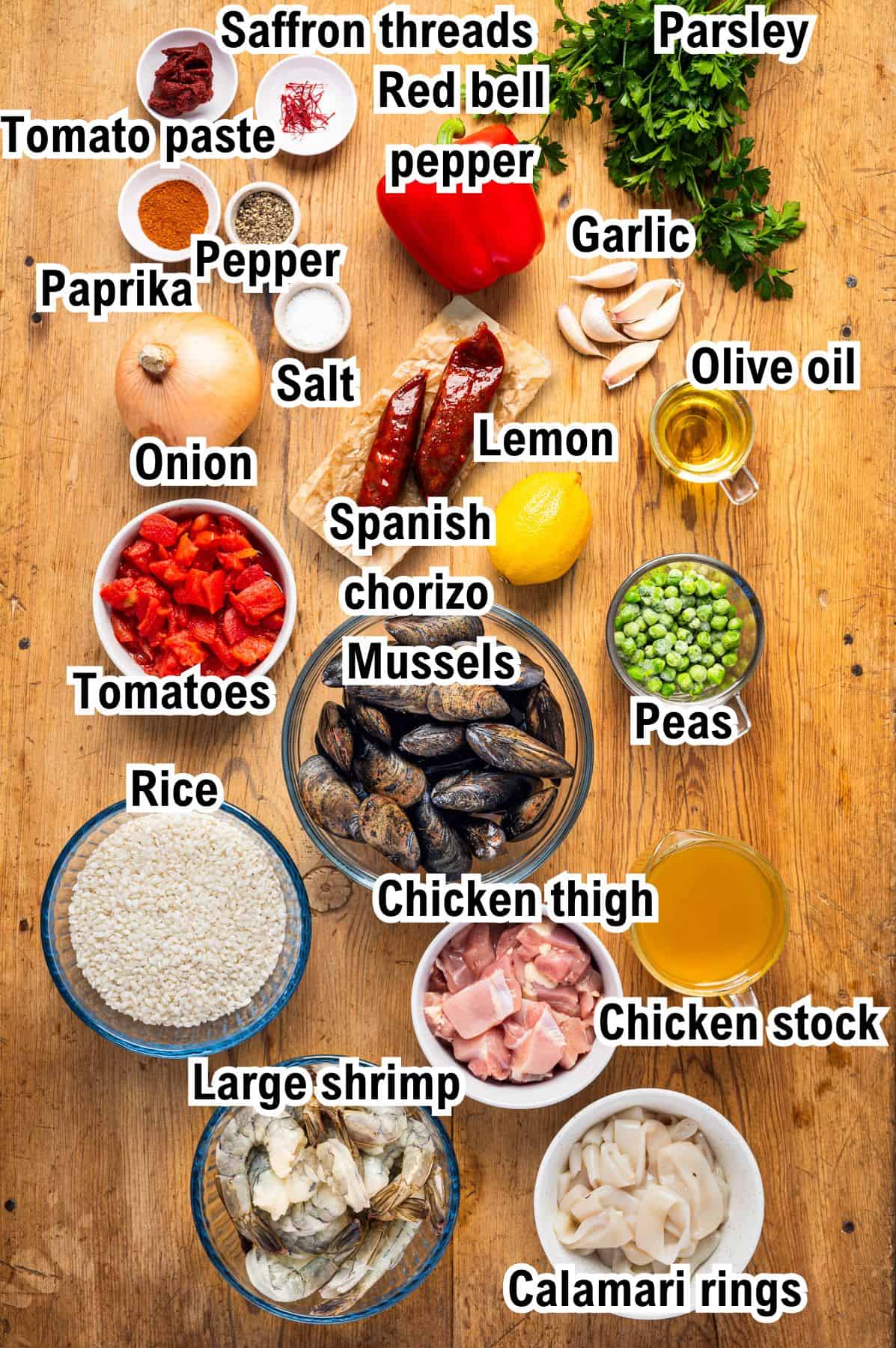
Ingredients and Substitutions
- Chicken thighs: Boneless, skinless chicken thighs stay juicier than chicken breast through the browning and simmering process. I prefer them over chicken breast because they are much more forgiving.
- Rice: Bomba and Calasparra are traditional rices used in paella. They have high quantities of amylose, which creates a unique firm, fluffy, non-sticky texture. However, these kinds of rice can be tricky to find in some parts of the United States. You can use Arborio rice in place of the Bomba or Calasparra; however, keep in mind that it will be creamier, stickier, and less authentic.
- Chorizo: Spanish chorizo is best for this dish. You can also use Andouille or merguez, or even Smoked kielbasa. Avoid using fresh Mexican chorizo if possible, as it is a bit too greasy and soft for paella. If you are only able to find large chorizo chubs, cut them into ¼-inch rounds, then either halve or quarter them.
- Chicken Stock: You can use seafood or vegetable stock if you want to replace the chicken stock. Avoid using beef stock as it is not compatible with paella. If you don't have any stock, just use water.
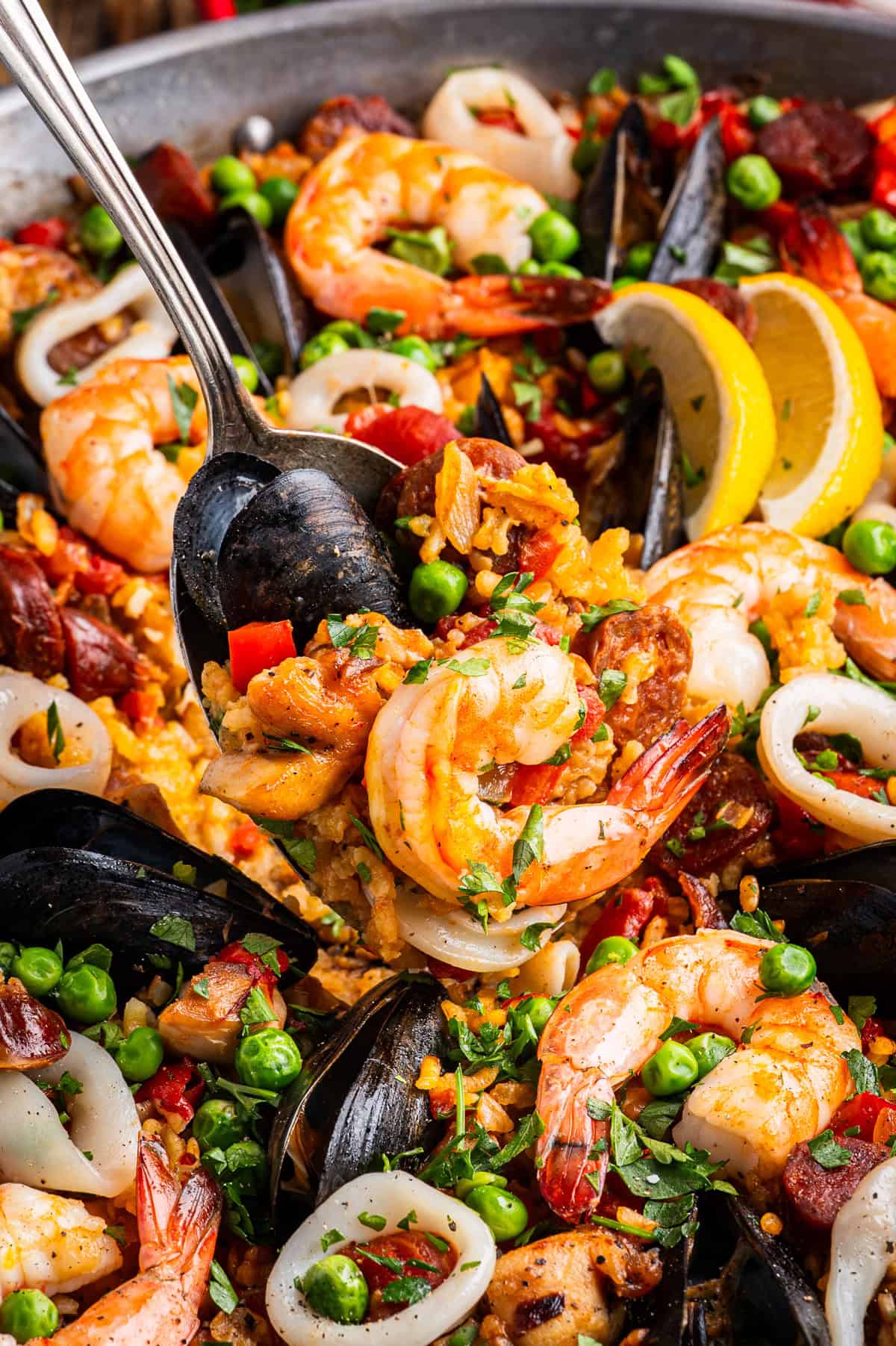
- Mussels: Fresh mussels should be tightly closed before cooking and should open on their own during cooking. Clams are a solid substitute if mussels aren't available.
- Shrimp: Large shrimp hold up well to the short cooking time near the end. I like keeping the tails on for presentation, though it's entirely optional. You can also use scallops instead of or in addition to shrimp.
- Calamari: Rings are the easiest cut to work with here and cook quickly. Cook them just until opaque, since calamari turns rubbery fast if left in too long. If you cannot find raw calamari rings, ask the seafood counter for whole squid bodies (tubes) and cut them into rings yourself.
- Diced tomatoes: These add acidity and body to the sofrito base. Fresh, grated tomato is a common substitute in traditional Spanish kitchens if you'd rather skip the canned version.
- Vegetables. You will also need onion (or shallots), garlic, red bell pepper (or any other color), and frozen peas (or fresh peas).
- Smoked paprika: You can use regular paprika, too.
- Saffron threads: Steeping saffron in warm water before adding it to the pan draws out its color and flavor more fully. There isn't a true substitute for saffron, though a pinch of turmeric can mimic the color and replicate the visual effect.
- Other ingredients: You will also need olive oil, garlic, fresh parsley, salt and pepper.
How to Make Spanish Paella (Step-by-Step)
Let me show you how it works. I promise it is not as complicated as its reputation suggests. Here is the short version (but with helpful process photos). Full amounts and more detailed instructions are in the recipe card at the bottom.
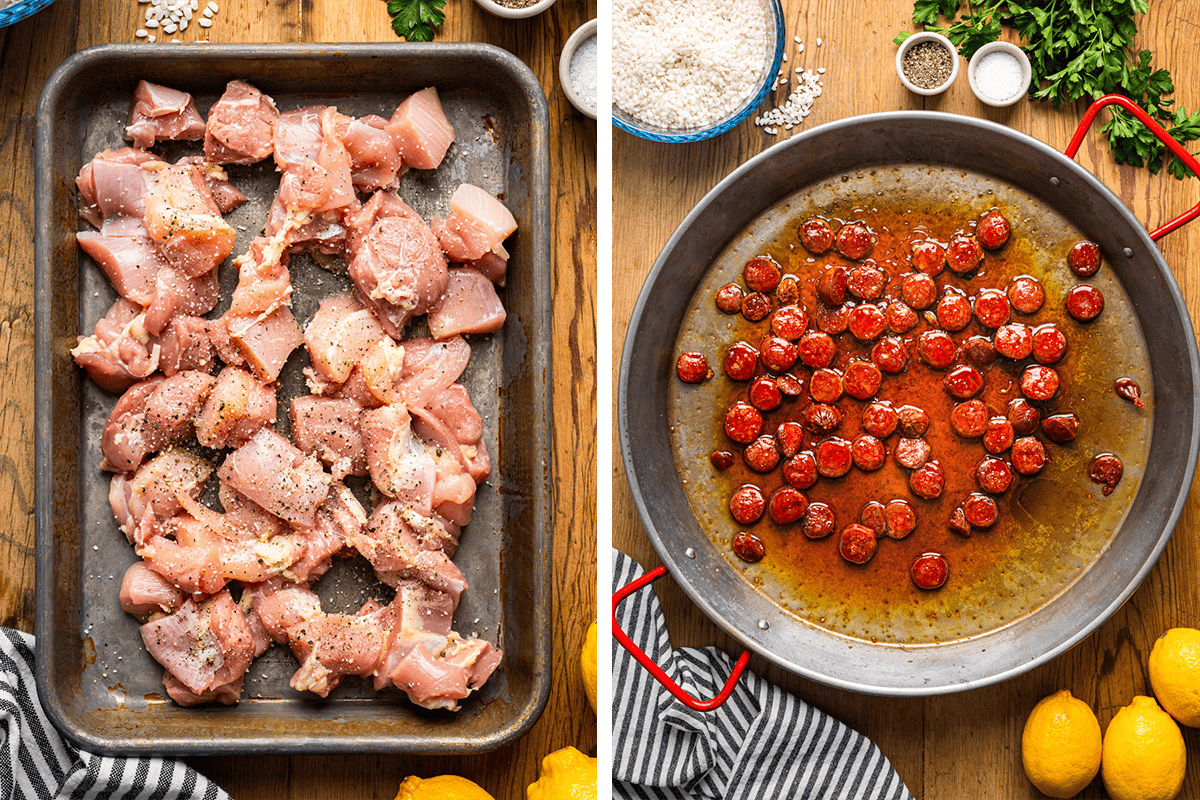
- Brown the meats. Cook the chorizo in olive oil until it releases its orange oil, then remove it. Sear the seasoned chicken cubes in that same flavored oil and set aside with the chorizo.
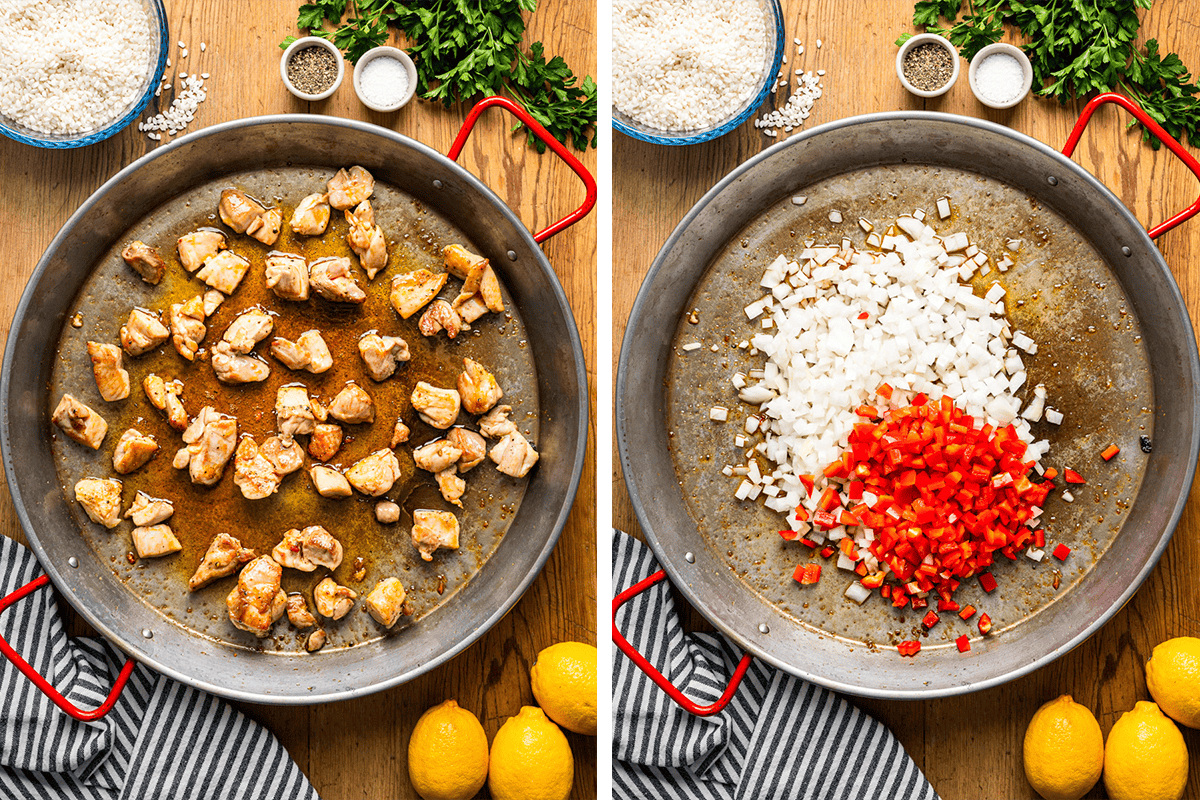
- Make the sofrito. Soften the onion and bell pepper, then add garlic and smoked paprika and cook one minute until fragrant.
- Toast the rice. Stir the rice into the sofrito and toast 2 to 3 minutes, then add tomato paste and cook one more minute until it darkens.
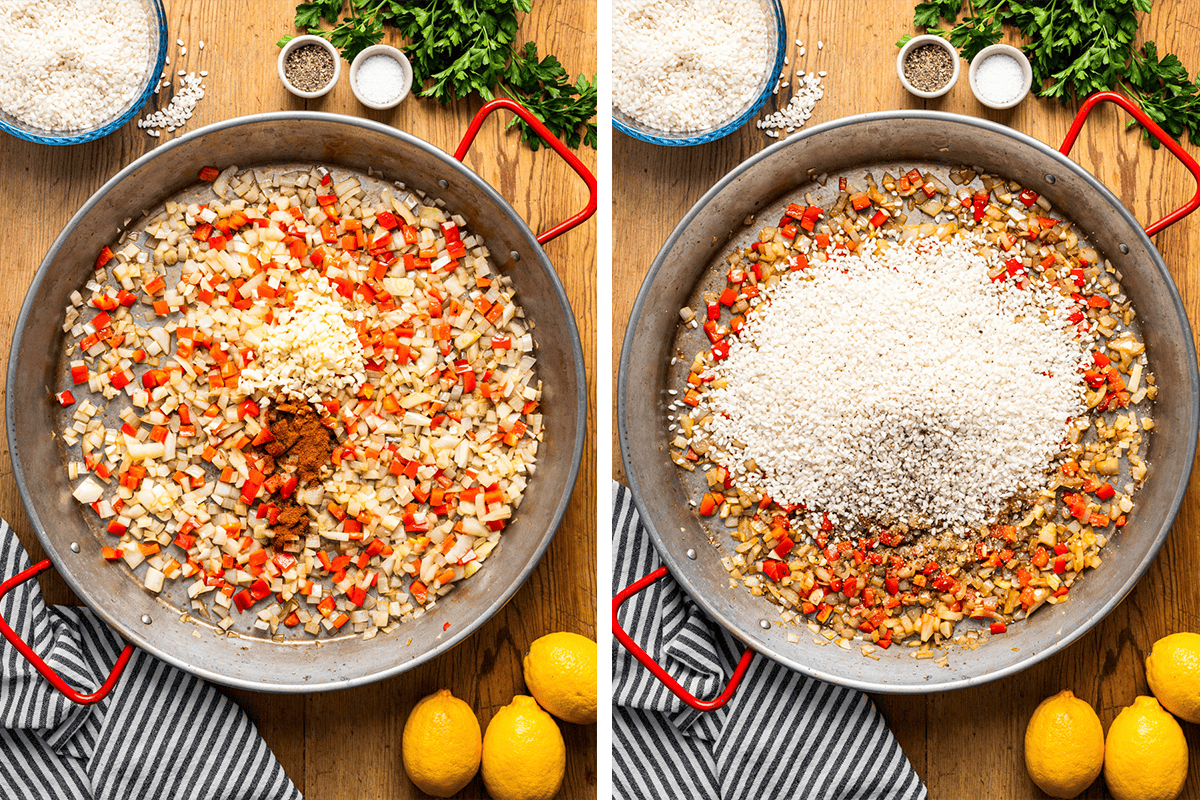
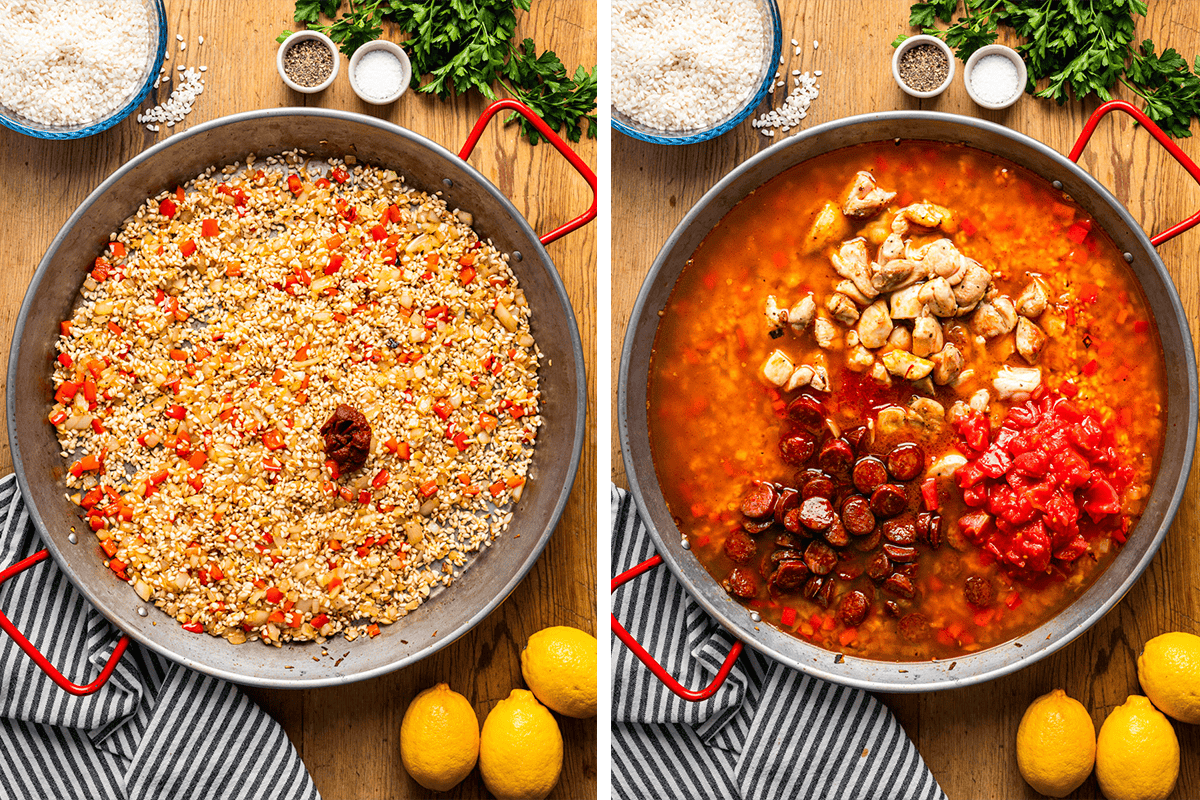
- Add the liquids and stop stirring. Pour in the bloomed saffron, diced tomatoes, and warm stock. Return the chicken and chorizo. Stir gently once to distribute, then do not touch it again.
- Simmer undisturbed. Bring to a boil across two burners, drop to low, and simmer 20 minutes, rotating the pan a quarter turn every couple of minutes so it cooks evenly.
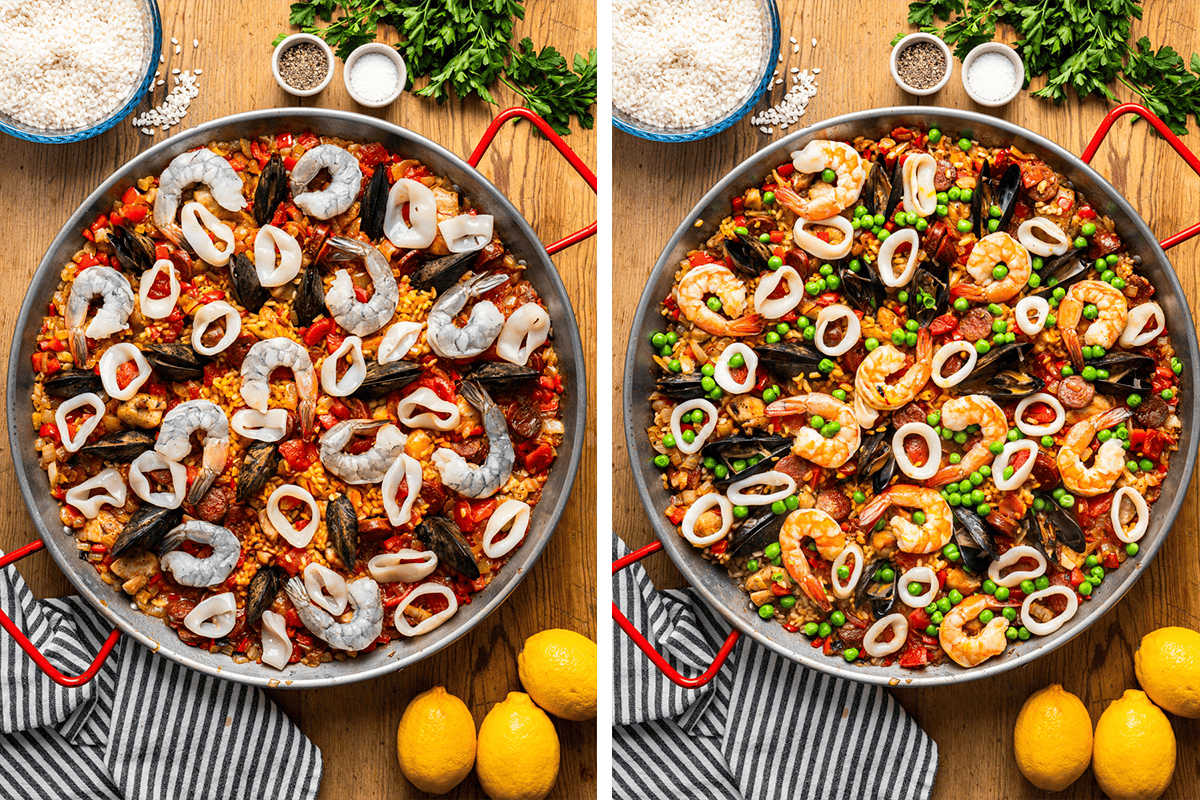
- Add the seafood and rest. Nestle in the mussels, shrimp, and calamari and cook 10 to 12 more minutes until the mussels open and the liquid is gone. Scatter the peas, turn off the heat, and let the pan rest 5 to 8 minutes before serving.
Behind the Recipe Testing
I spent hours researching traditional techniques and tested this recipe twice before landing on the final method. Some of the instructions might seem a little unusual at first, but I wrote the recipe to give the reader the best results.
My goal was to develop a method that works with equipment most people already have while staying as true as possible to the traditional stovetop technique rather than moving the pan to the oven. After all the testing, the method I found most reliable and repeatable for the average home kitchen is the one in the recipe card below, and I explain it in more detail here.
- One of the biggest challenges was the pan itself. Most recipes instruct you to use a traditional paella pan over a single stovetop burner. While that is technically the classic setup, I found that the pan never heated evenly on a standard home stove. The rice cooked too quickly in the center while the edges lagged behind, leading to inconsistent texture and doneness.
- I tested the recipe again using two burners, rotating the pan throughout cooking to distribute the heat more evenly. Even this required some attention, but it produced much more consistent results. That's why the final recipe asks you to cook over two burners and occasionally rotate the pan. It does require a little babysitting, but it gives the best balance of evenly cooked rice, proper texture, and great flavor on a typical home stovetop.
- The ideal, traditional setup for cooking paella is still a dedicated paella burner or a gas grill, both of which heat the entire bottom of the pan evenly. However, very few home cooks in the U.S. own a paella burner, and many don't have a gas grill either.
The Secret to Great Paella
- Leave the Rice Alone. Don't stir the paella like a risotto. Leave it undisturbed while cooking.
- Be flexible. Paella is a very traditional Spanish dish. However, like pizza, there can be many variations, and you should adjust the recipe to fit your needs.
- Don't Overload the Pan. If you are adding other ingredients, make sure you don't add too much or try to add it at the very end. The more things you put into your paella while it cooks, the harder it will be to cook properly.
- Add seafood toward the end to avoid overcooking.
- If it's taking a long time for the shrimp to turn pink, feel free to flip them once one side has turned pink.
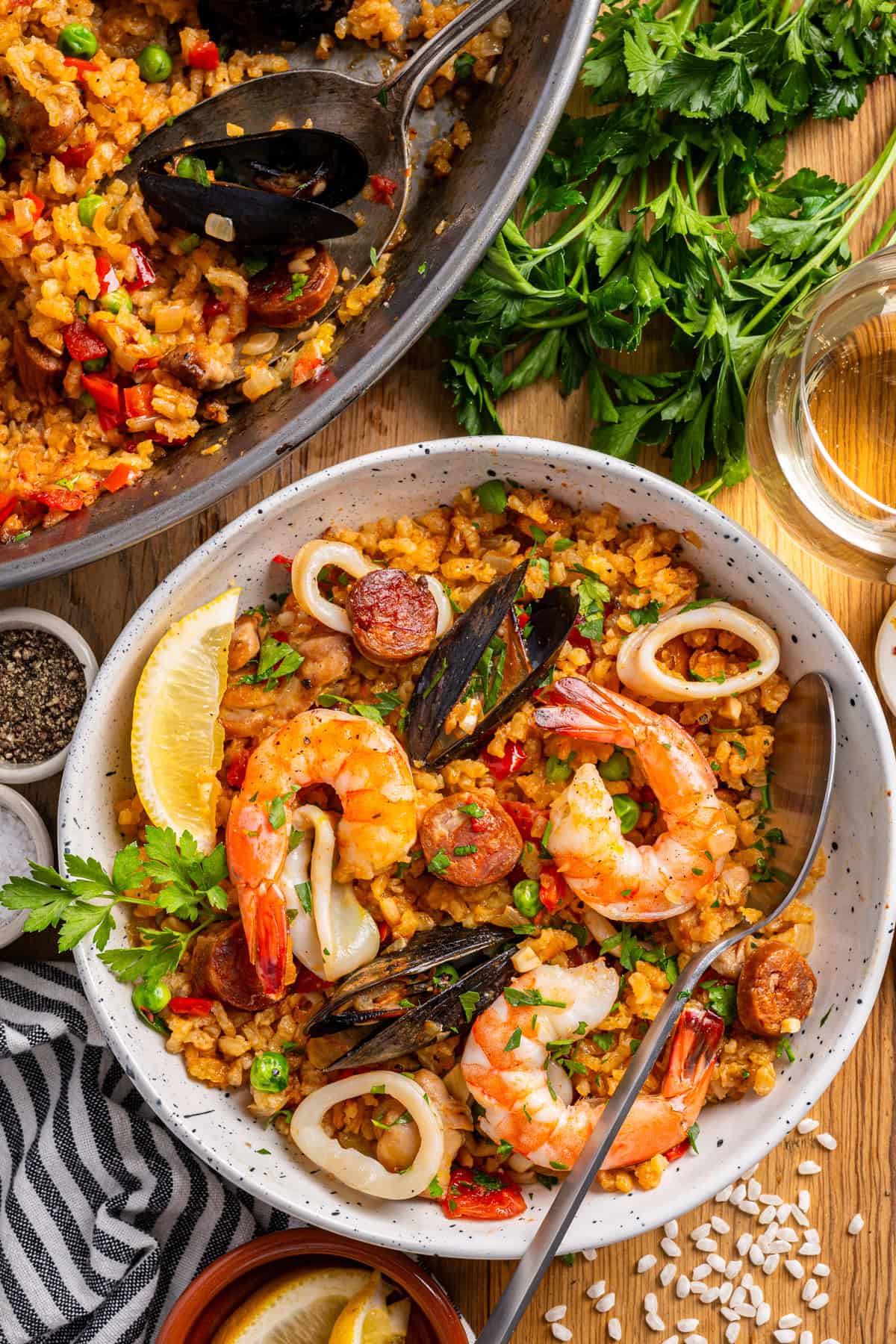
Use the Right Pan
- Traditional paellera (paella pan): a wide, shallow, two-handled carbon steel (or polished/stainless steel) pan with sloped sides. The wide surface area is the whole point: it lets the rice cook in a thin, even layer so it cooks quickly and evenly, and it's what makes the socarrat (that crispy bottom crust) possible. Paella pans come in different sizes. For this recipe, I use a 14"-16" traditional paella pan. Paella pans can be quite thin, so be mindful of your heat. If you are finding it's beginning to burn your ingredients, lower the heat.
- No paella pan? Use a wide, shallow skillet or sauté pan of a similar diameter (14"-16"), ideally one with a wide flat cooking surface rather than tall, sloped sides. A large cast iron skillet works well for heat retention!
- Avoid anything too deep or narrow, like a Dutch oven or stockpot. For paella, what matters most is a wide cooking surface, and the pan's diameter matters more than its depth. Too much depth (especially paired with a diameter too small for the amount of paella you're cooking) traps steam, which stops the rice from cooking in that thin, even layer and prevents the socarrat from forming on the bottom.
- No pan big enough for the full recipe? Split the recipe across two smaller pans (12"-13" each) rather than piling it into a deep pot. This preserves the thin-layer cooking that paella depends on.
- Oven-safe alternative: A large, shallow oven-safe skillet or roasting pan can also work if you finish the dish in the oven instead of stovetop burners. Even though you'll lose a bit of the stovetop socarrat effect and may need to broil briefly at the end to crisp the bottom.
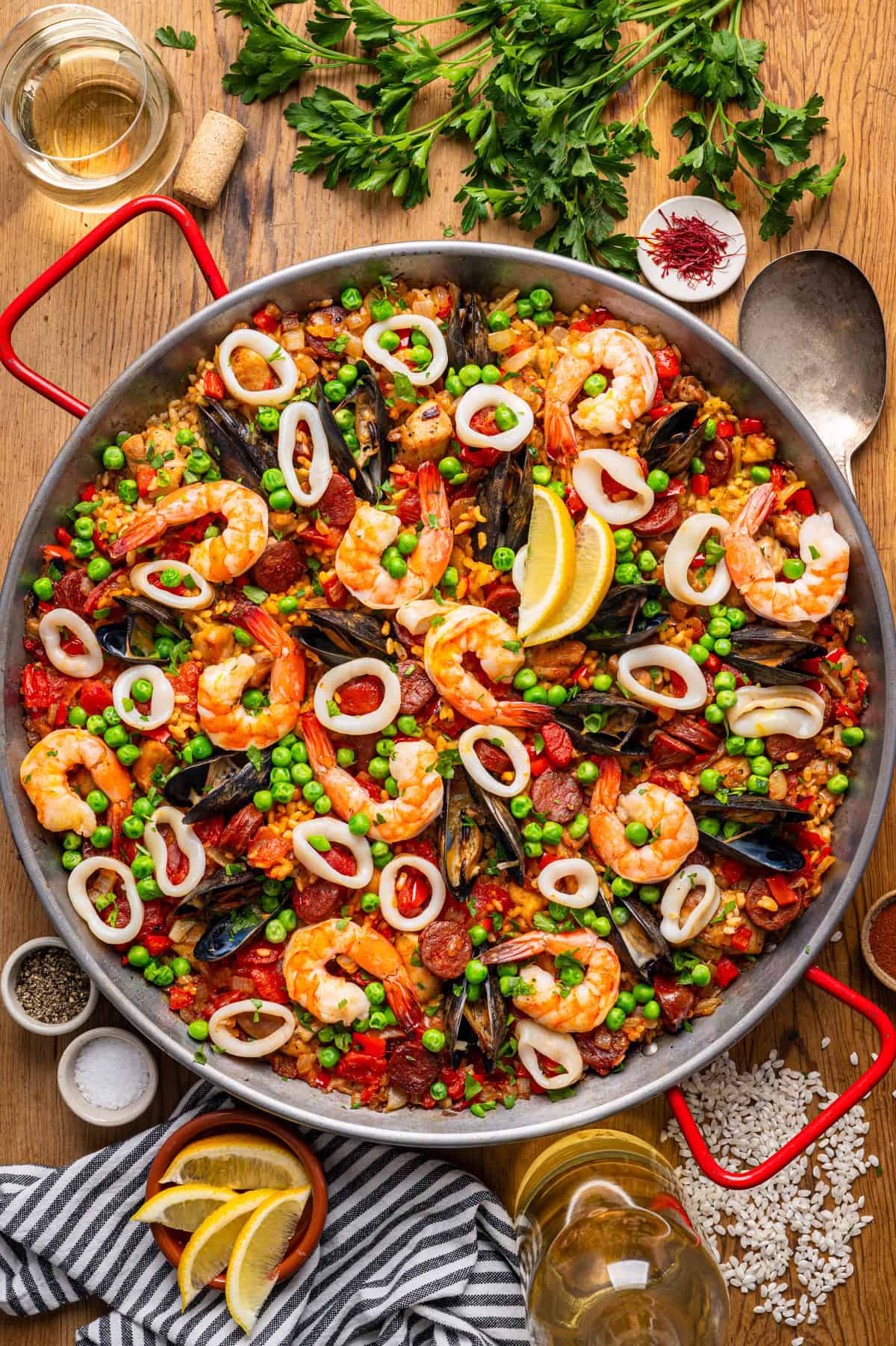
Let's Talk About Socarrat
Socarrat is the toasted layer of rice at the bottom of the pan, and it is the reason people scrape paella pans with such enthusiasm. Here is what I want you to know about getting it.
- Listen for it. In the last several minutes of cooking, you will hear a faint crackling under the pan. That sound is the socarrat forming. It is the single best cue you have.
- Do not stir. I know it goes against every instinct. Stirring releases starch and gives you a creamy rice dish instead of paella. Rotate the pan; do not stir the rice.
- Give it 30 extra seconds. If you hear crackling but want more crust, raise the heat slightly for 30 to 60 seconds at the very end. Pull it the moment you smell toast rather than smoke.
- Rest before serving. The rest at the end lets the grains firm up and makes the crust easier to lift out in sheets.
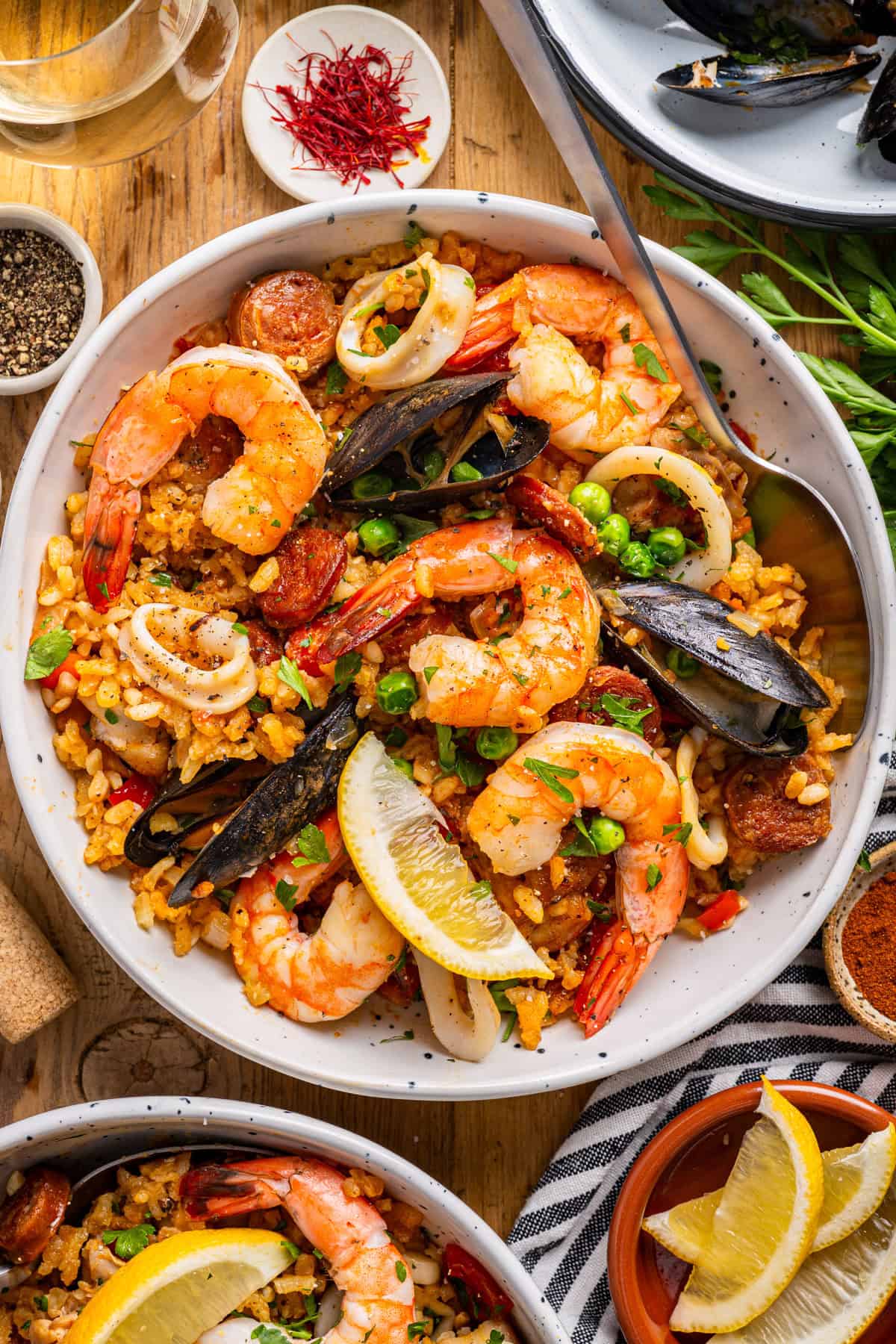
Variations
- All-Seafood (Paella de Marisco): Skip the chicken and chorizo, doubling the mussels, shrimp, and calamari. Add clams, langoustines, or lobster for a feast.
- Valencian Paella (Paella Valenciana): Classic version with chicken, rabbit, and snails, plus beans like garrofón (large white beans).
- Vegetable Paella: Seasonal vegetables (artichokes, asparagus, zucchini, mushrooms).
- Black Paella (Arroz Negro): A dramatic version made with squid ink, seafood, and garlic aioli on the side.
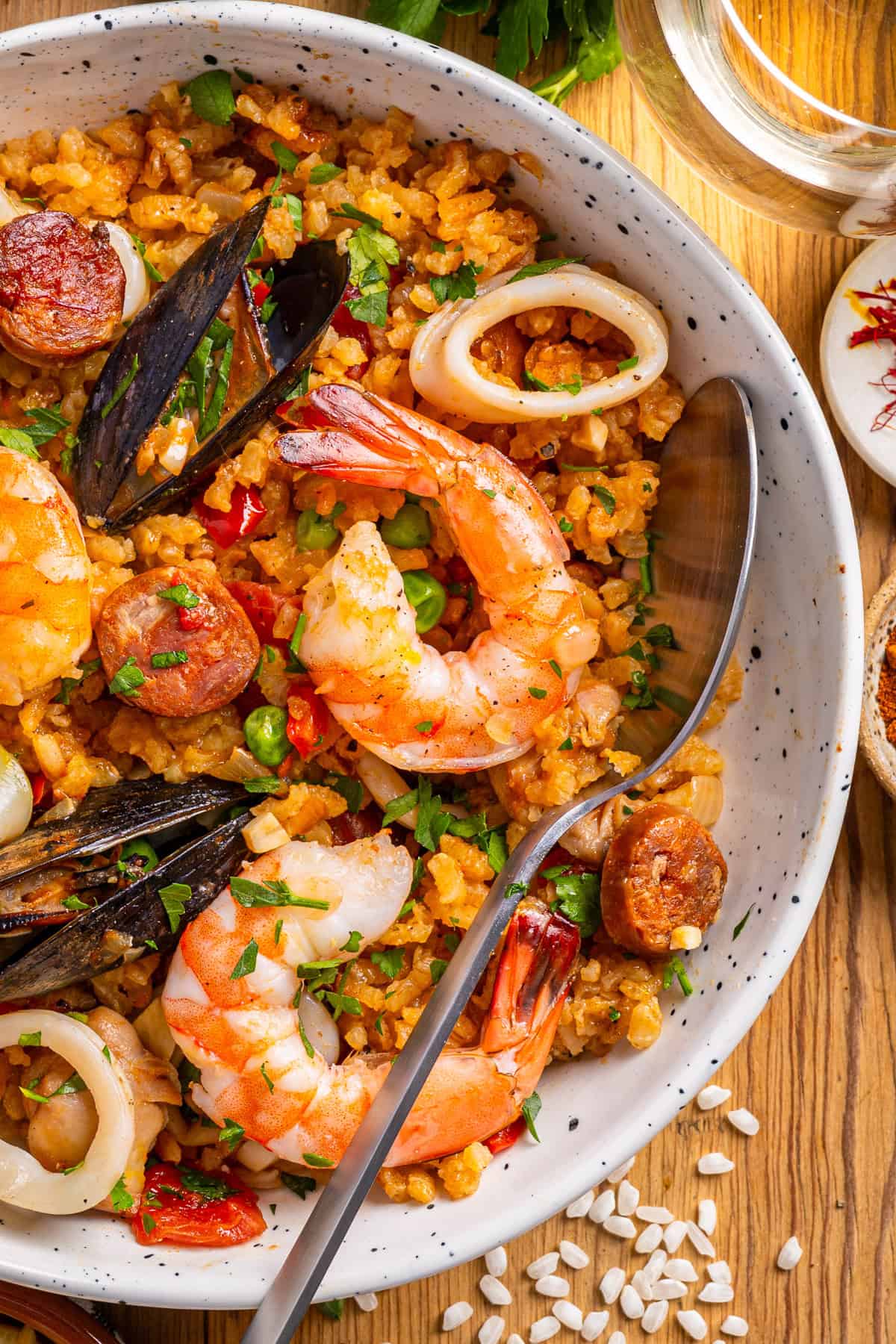
Serving Ideas
- Bread. A basket of warm bread is always welcome alongside paella. Serve my easy garlic bread, rustic seeded rye bread, or soft garlic butter dinner rolls if you're serving paella family-style for a crowd.
- Oven-Roasted Asparagus with Asiago, Bacon, and Garlic
- Green Bean Salad with Bacon, Pecans, Cranberries, and Feta - This colorful side works particularly well for holiday entertaining or special occasions.
- Tapas. You can also serve Spanish paella the traditional way, as the centerpiece surrounded by a few simple tapas. This setup feels festive and encourages everyone to gather around the table and serve themselves directly from the paella pan. My favorite options include marinated olives, my savory cheese log, roasted red peppers, Manchego cheese, garlic almonds, and sliced cured meats.
- Wine: And of course, let's not forget about a cold, dry white wine or a pitcher of sangria!
Fresh Salads To Serve with Paella
Classic Spanish Seafood Paella with Mussels, Shrimp & Calamari
Ingredients
For the Paella
- ½ pound boneless skinless chicken thigh cut into ½" cubes
- salt and pepper to taste
- 3 tablespoons olive oil plus more if needed
- 4 ounces Spanish chorizo sliced into ¼" rounds (Andouille or spicy merguez sausage also work)
- 1 large onion finely chopped
- 1 large red bell pepper diced
- 6 cloves garlic minced
- 1 teaspoon smoked paprika
- 2 cups Bomba Rice or Calasparra rice, or arborio rice
- 1 tablespoon tomato paste
- 1 pinch saffron threads about ⅛ teaspoon, bloomed in 2 tablespoons warm water
- 14.5 ounces diced tomatoes (1 can of 14.5 ounces of diced tomatoes, drained)
- 4 cups low sodium chicken stock warmed
Seafood
- ½ pound fresh mussels scrubbed and debearded
- ¼ pound calamari rings cleaned
- ½ pound large shrimp peeled and deveined, tails on optional
Garnish
- ½ cup frozen peas
- Lemon wedges for serving
- Fresh parsley chopped
Instructions
- Pat chicken cubes dry, season with salt and pepper, and set aside.
- Heat olive oil in a 14" to 16" paella pan (or skillet of the same size) over medium heat. Add the chorizo and cook until it releases its oil and lightly browns, 3-4 minutes. Remove with a slotted spoon.
- Increase heat to high and add chicken to the pan, browning on all sides. Remove from the pan and set aside with the chorizo.
- Reduce heat to medium. Add onion and bell pepper, cooking until softened, about 5 minutes.
- Stir in garlic and smoked paprika and cook for 1 minute until fragrant.
- Stir in the rice, season with salt and pepper, coating well with the sofrito mixture, and toast for 2-3 minutes.
- Add tomato paste and cook until it darkens slightly, 1 minute more.
- Pour in the saffron with its soaking liquid, the diced tomatoes, and warm stock. Return the chicken and chorizo to the pan, stirring very gently to evenly distribute all ingredients.
- Transfer the pan to sit evenly over 2 medium-sized burners with one burner at the top and the other at the bottom of your pan. Turn the heat of both burners to high until the liquid begins to boil. Do not stir or disturb the paella.
- Reduce the heat to low on both burners, and simmer for 20 minutes undisturbed, rotating the pan by a quarter turn every 2 minutes to evenly cook the paella.
- Nestle mussels, shrimp, and calamari into the rice and continue cooking while rotating the pan until the liquid is absorbed, the mussels have opened up, shrimp are pink, and calamari is opaque, about 10-12 minutes. You will begin to hear a slight crackling sound from the bottom of the pan as the crust begins to form and the liquid is being absorbed by the rice. (Discard any mussels that remain closed.)
- Scatter peas on top, turn off the heat, and let rest for 5-8 minutes.
- Garnish with parsley and serve directly from the pan with lemon wedges on the side.
Notes
- Pat everything dry first. Chicken, shrimp, and calamari all need to be dry before they hit the pan, or you'll steam them instead of browning them. This matters just as much here as it does with a good sear on beef.
- Use a wide, shallow pan. A true paella pan works best because it maximizes surface area, which means more rice touches the bottom of the pan and forms socarrat. A wide skillet is a fine substitute if you don't own one.
- Discard any mussels that don't open. A mussel that stays closed after cooking likely wasn't alive going into the pan, and it's not worth the risk of eating it.
- Let the pan rest before serving. Those 5 to 8 minutes off the heat let the rice finish absorbing any remaining liquid and firm up slightly, which makes serving much cleaner.
Manage the Heat Carefully
- Do not turn up the heat while the rice is cooking. You will simultaneously burn the bottom, and the rice will be wet and undercooked. This dish requires patience.
- If you have a very very wide burner that can reach all parts of the pan, feel free to cook the paella on it without needing to rotate.
- If you have an outdoor gas grill, this is another way to get a broader range of heat for your pan! No rotation needed!
Storage Instructions
- Fridge: Store leftovers in an airtight container for up to 2 days in the fridge. Paella doesn't last as long as some dishes because of the incorporation of seafood.
- Freezer: I don't recommend storing paella in the freezer, as it will become mushy, and the seafood texture suffers greatly.
- Reheating: Reheat gently in a skillet over medium heat with a splash of stock or water to loosen the rice. Avoid microwaving seafood-heavy portions (shrimp and calamari can turn rubbery).
You'll Need These Tools:
- Knife
- Cutting board
- Measuring spoons and cups
- 14-16" paella pan or skillet of the same size
Nutrition
Nutrition Disclaimer:
The nutritional information on this website is only an estimate and is provided for convenience and as a courtesy only. The accuracy of the nutritional information for any recipe on this site is not guaranteed. It should not be used as a substitute for a professional nutritionist's advice.
FAQ
- What is socarrat? Socarrat is the crispy, toasted layer of rice that forms on the bottom of the pan. It's one of the most prized parts of authentic paella and develops during the final minutes of cooking.
- Can I make paella without a paella pan? Yes, you can. A wide, shallow skillet that's 14 to 16 inches across works as a substitute. What matters most is surface area, since a wider pan means more rice makes contact with the bottom and forms that crisp socarrat layer. A narrow, deep pot won't give you the same result no matter how long you cook it.
- Why shouldn't I stir paella? Stirring releases starch and creates a creamy risotto-like consistency. Traditional paella rice should remain separate and fluffy.
- Why is my rice mushy instead of firm? This usually comes down to too much liquid or too much stirring. I recommend measuring your stock carefully and resisting the urge to stir once the rice starts simmering. Stirring releases starch and turns the texture creamy, which is what you want in risotto but not in paella.
- Why is my paella rice still hard? Usually the rice needs more liquid or more cooking time. I recommend keeping a little warm stock nearby. If the rice is still firm but the liquid is gone, add a small amount of stock and continue cooking gently.
- Can I use frozen seafood instead of fresh? You can, though I recommend thawing it fully and patting it dry before adding it to the pan. Frozen seafood holds extra moisture that can water down your rice if it goes in still icy or wet.
- What if my mussels don't open during cooking? Discard any mussels that remain closed after cooking. This is a sign they weren't alive when they went into the pan, and eating them isn't worth the risk.
More Mediterranean Recipes
- Mixed Paella with Chicken, Shrimp, and Sausage - my easier weeknight version, no saffron required
- Shrimp Risotto - creamy arborio rice with sun-dried tomatoes and spinach
- Greek Chicken and Lemon Rice - a 30-minute one-pot rice skillet
- Greek Shrimp with Orzo and Feta - one pan, 30 minutes, Mediterranean flavors
- Shrimp Scampi - restaurant-quality lemon garlic butter shrimp in 20 minutes
- Mediterranean Lemon Rice with Chickpeas, Spinach, Tomatoes, and Feta - a meatless rice dish that doubles as a side
- Lemon Shrimp Orzo with Asparagus - light, lemony, and fast
- The Most Amazing Greek Salad - the 15-minute salad I serve alongside almost everything
Browse all of my seafood recipes and rice recipes for more dinner ideas. If you try my version of Spanish paella or have questions, I'd love to hear what you think in the comments below. Julia.
Any way to prepare ahead or at least partially? I don’t like being in the kitchen while entertaining.
Made this though! - amazing!
Hi Sheila! Sorry for the late response — I just now saw your comment! And so glad you loved it! 🙂 For next time, you can definitely do a lot of the prep ahead: chop the vegetables, prep the seafood and chicken, and measure out the spices and other ingredients. I’d still cook the rice and assemble the paella closer to serving so the texture is at its best.
I have always wanted an accessible "Paella-ish" recipe to try, but have always been intimidated by the strictures of the purists (I am not Spanish!). Knowing firsthand your simple approach and results, I will be trying this one soon! Thank you!
Hi John! You're in good hands with this one — I developed it alongside a professional chef, because paella really is that kind of dish. So two sets of hands and two sets of eyes worked on this recipe to make sure it's properly done yet accessible to a home cook. 🙂
You can skip the intimidation about this one and just cook! 🙂 Let me know how it goes! 🙂
It's a great dish to make during the holiday season too (Christmas, New Year's Eve)!
Can you use Portuguese linguisa instead of chorizo?
Hi Wayne! Yes — linguiça is one of the better swaps you can make here. Both linguiça and Spanish chorizo are cured, smoked pork sausages that hold their shape and render flavored fat into the rice, so they behave the same way in the pan.
Portuguese chouriço is even closer to Spanish chorizo than linguiça is — if it's easier to find for you.