
This post may contain affiliate links. Read my disclosure policy.
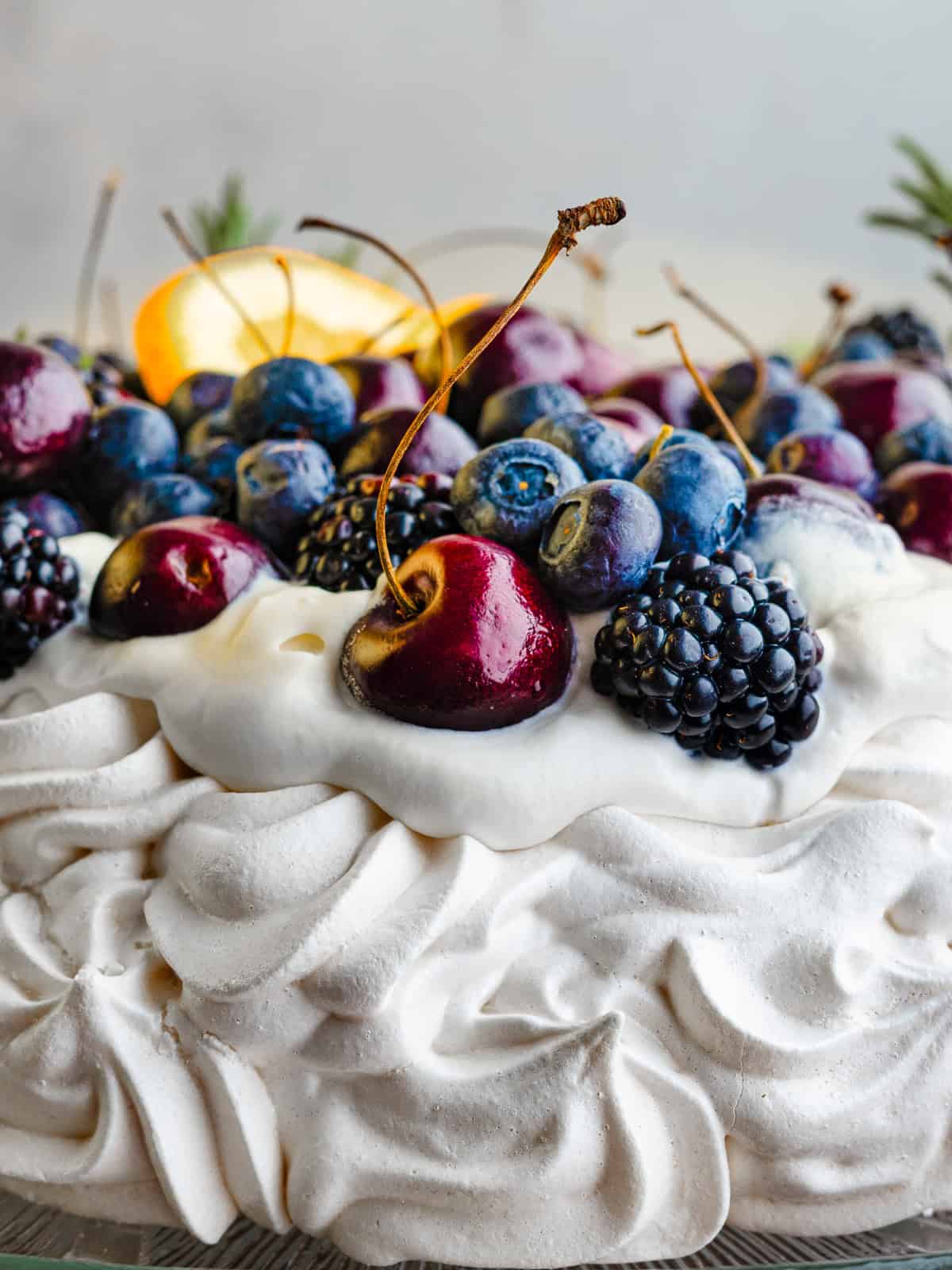
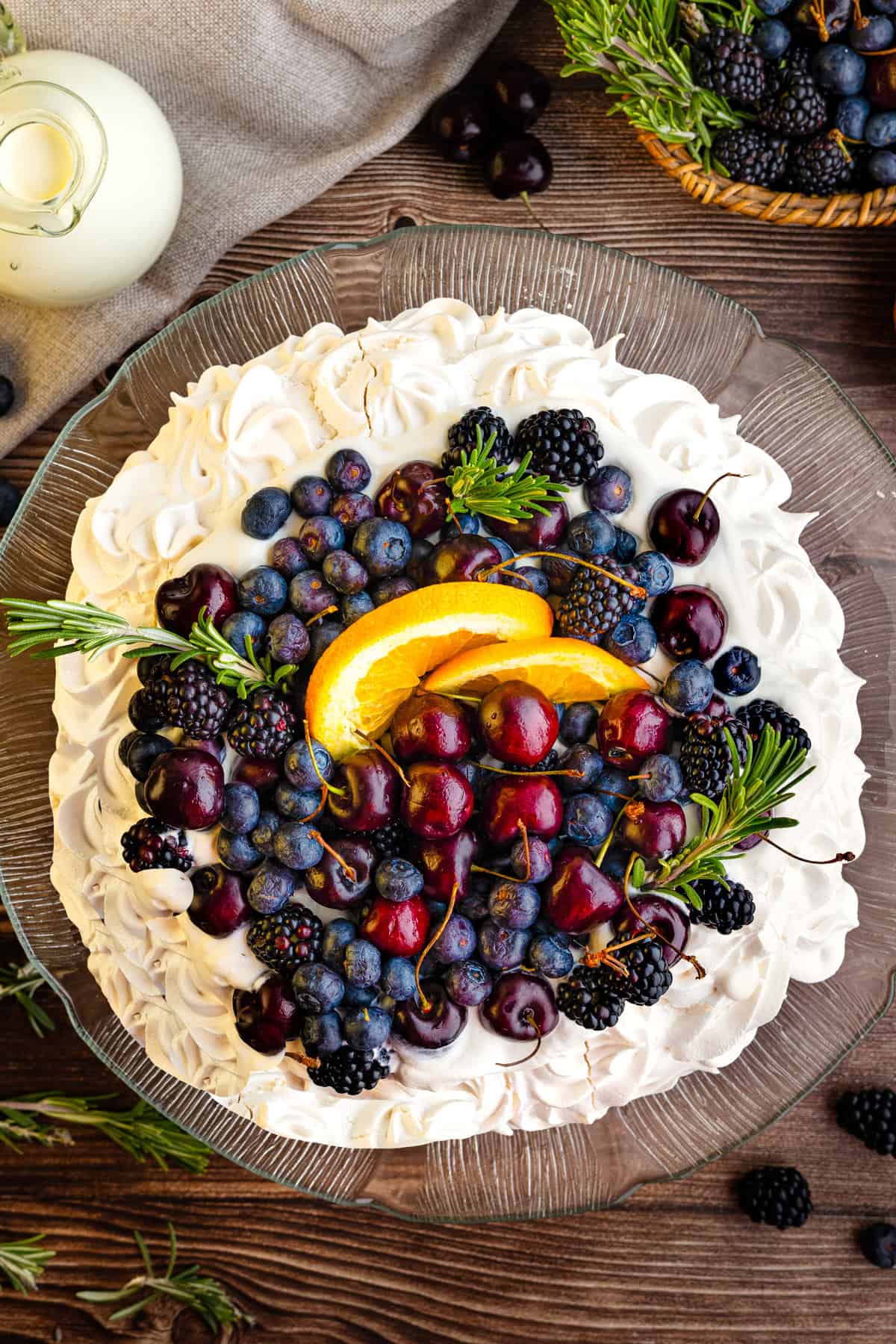
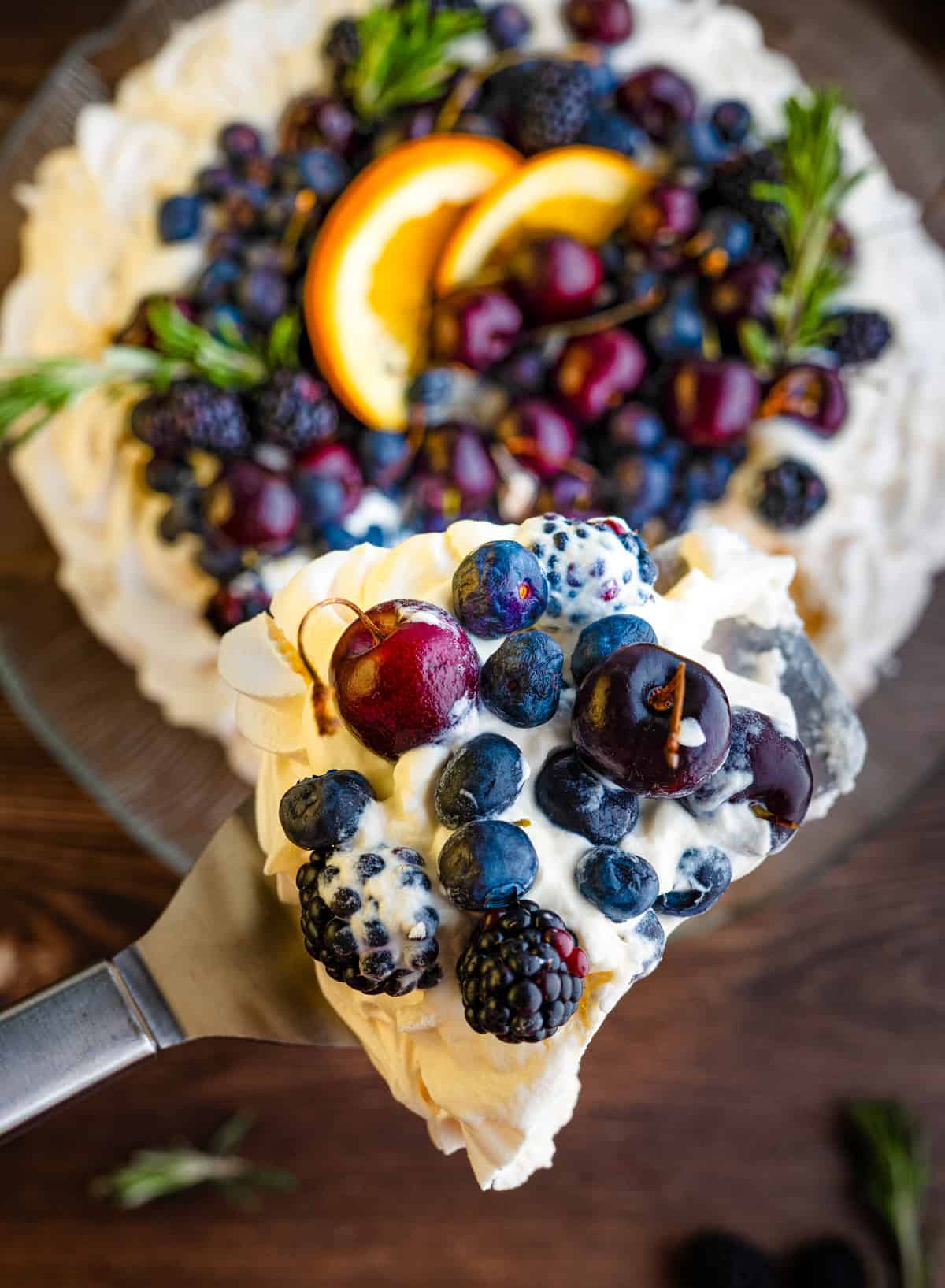
A crisp meringue nest with a soft marshmallowy center, piped with rosettes and topped with vanilla whipped cream, fresh cherries, blueberries, and blackberries. Naturally gluten-free and make-ahead friendly, this is one of my favorite summer desserts for entertaining.
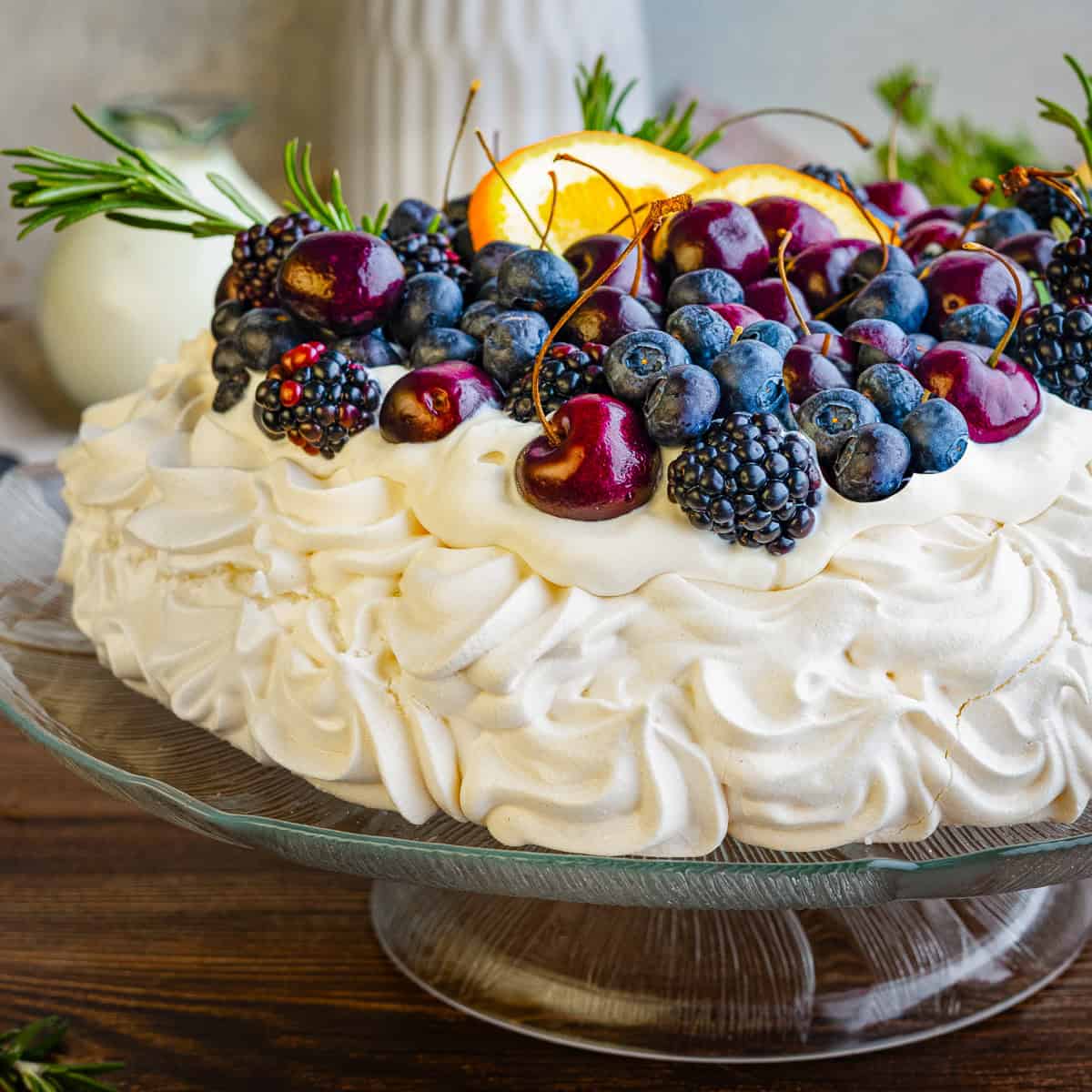
When Berry & Cherry Season Calls for Another Pavlova
I already have a classic pavlova with orange curd on the blog, and I still could not stop myself from making another one. And there is a good reason for that! Cherry season here in Colorado runs from June through August, and by the end of August my refrigerator usually looks ridiculous. Dark sweet cherries in one drawer, blackberries and blueberries stacked on top, and me trying to use it all before anything softens, or, god forbid, rots. We do not waste food in our house.
Some of that fruit becomes French cherry clafoutis, some of it goes into my single-layer cherry cake (made in a 9x3-inch springform pan), and the rest lands here, piled on top of a meringue nest. Cherry season is short, and I want to use every single week of it.
Why I Love This Version So Much!
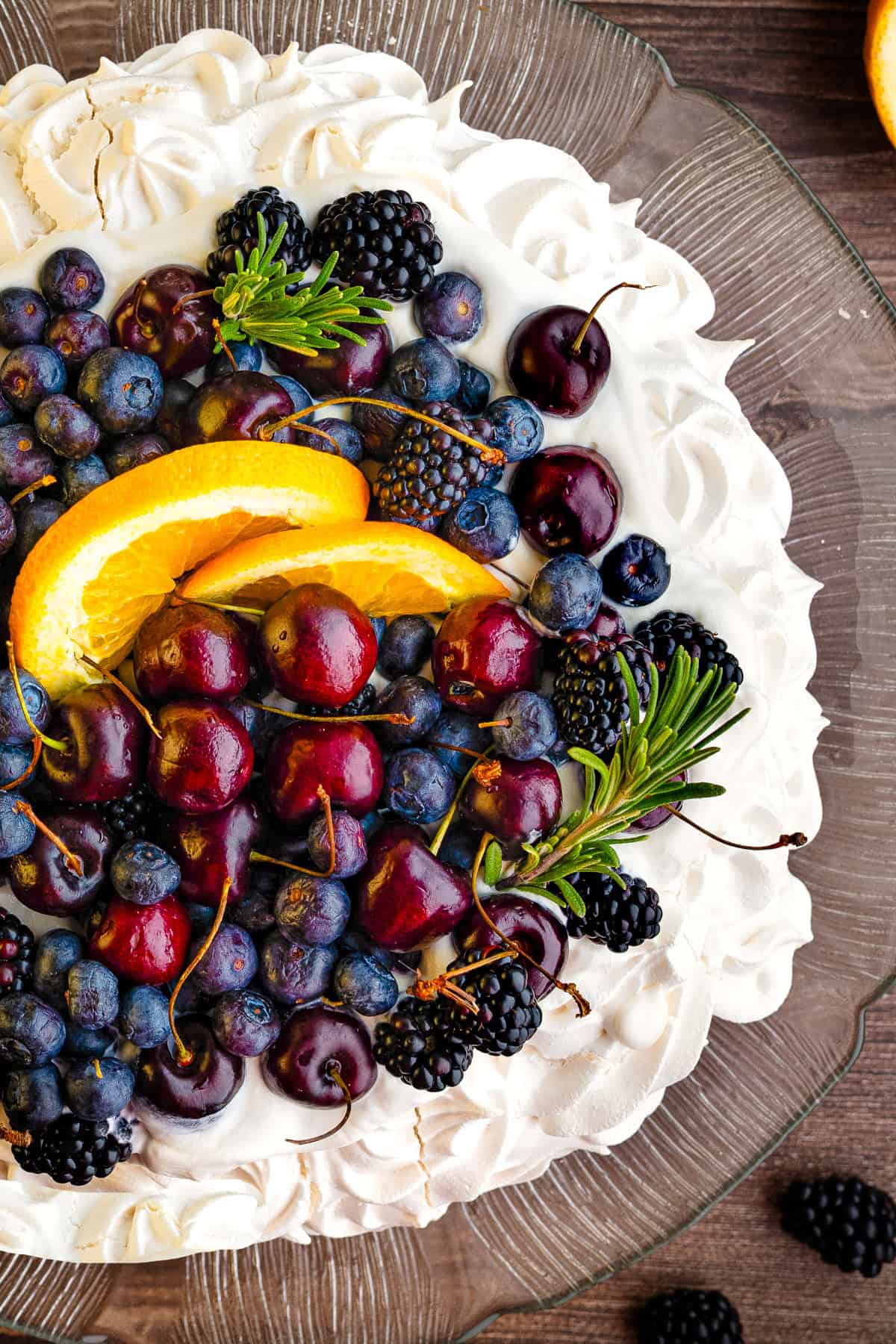
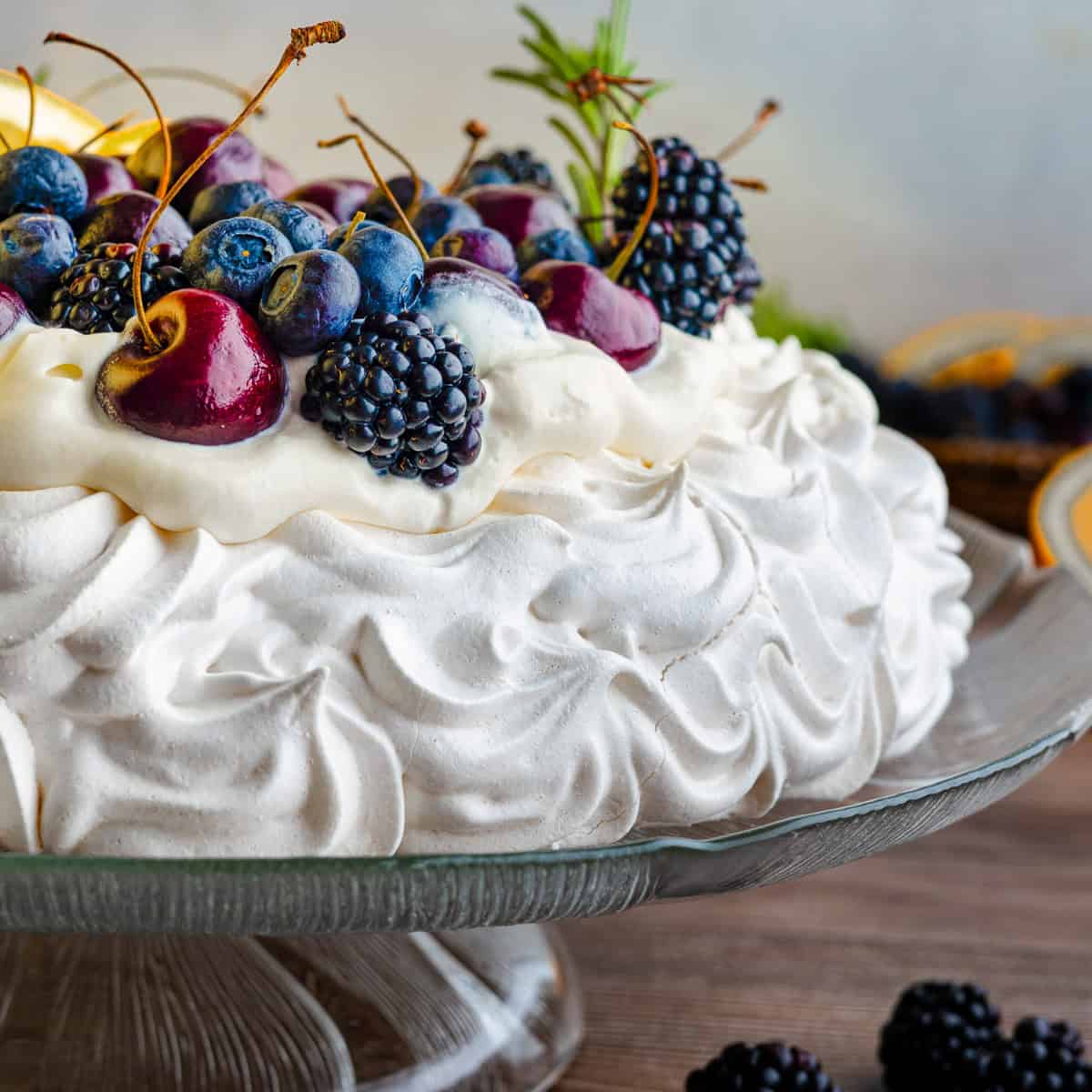
It's all about the piping! Instead of one smooth mound, you spoon a shallow nest onto the tray and then pipe rosettes all the way around the rim with a star tip. It takes maybe five extra minutes, and the difference in presentation is huge. The rosettes bake up with crisp little ridges that catch the light, and the well in the center holds a generous amount of cream and fruit without anything sliding off.
The meringue is completely make-ahead. It bakes low and slow, then cools in the turned-off oven for hours or overnight. Then, the next day, all you have to do is fill it with whipped cream, top it with fresh fruit, and impress your family and friends!
What Is Pavlova?
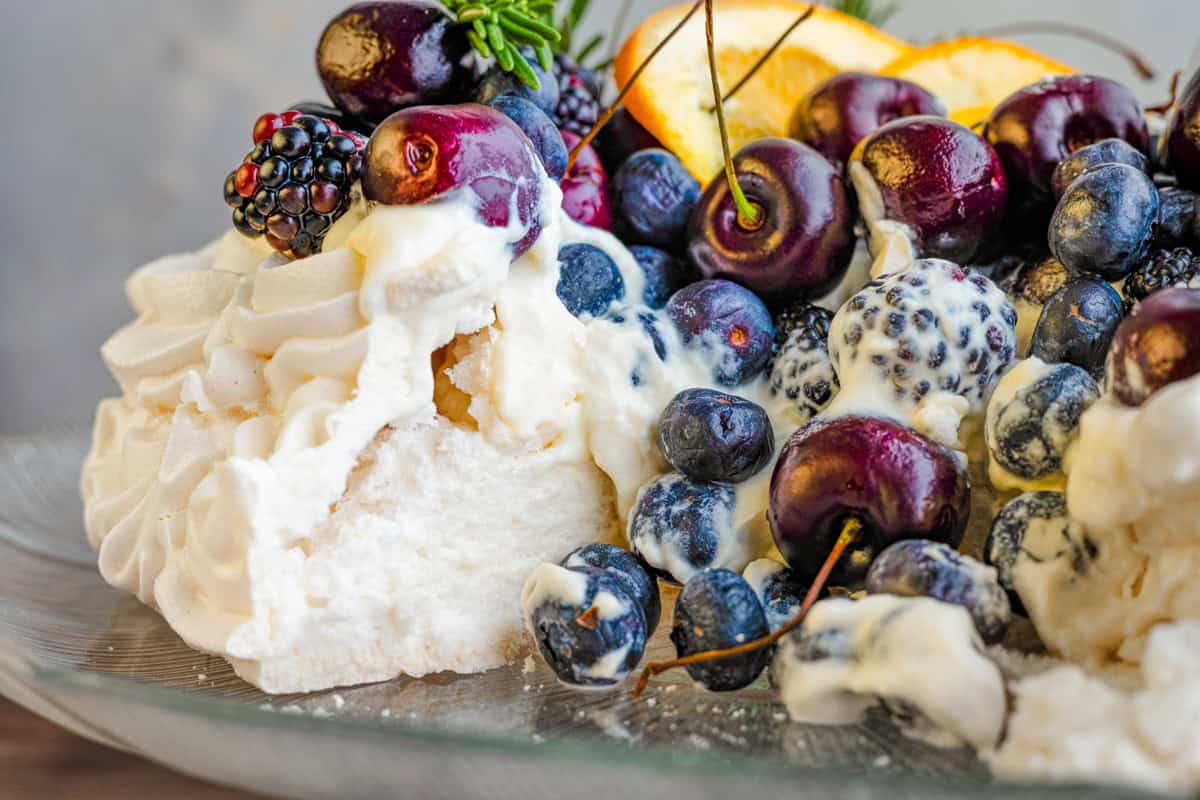
Pavlova is a meringue dessert named after Anna Pavlova, the Russian ballerina, created in her honor around the time she toured Australia and New Zealand in the 1920s. Both countries have loved it as a celebration dessert ever since, and it still turns up on holiday tables across the region every year.
What you'll need
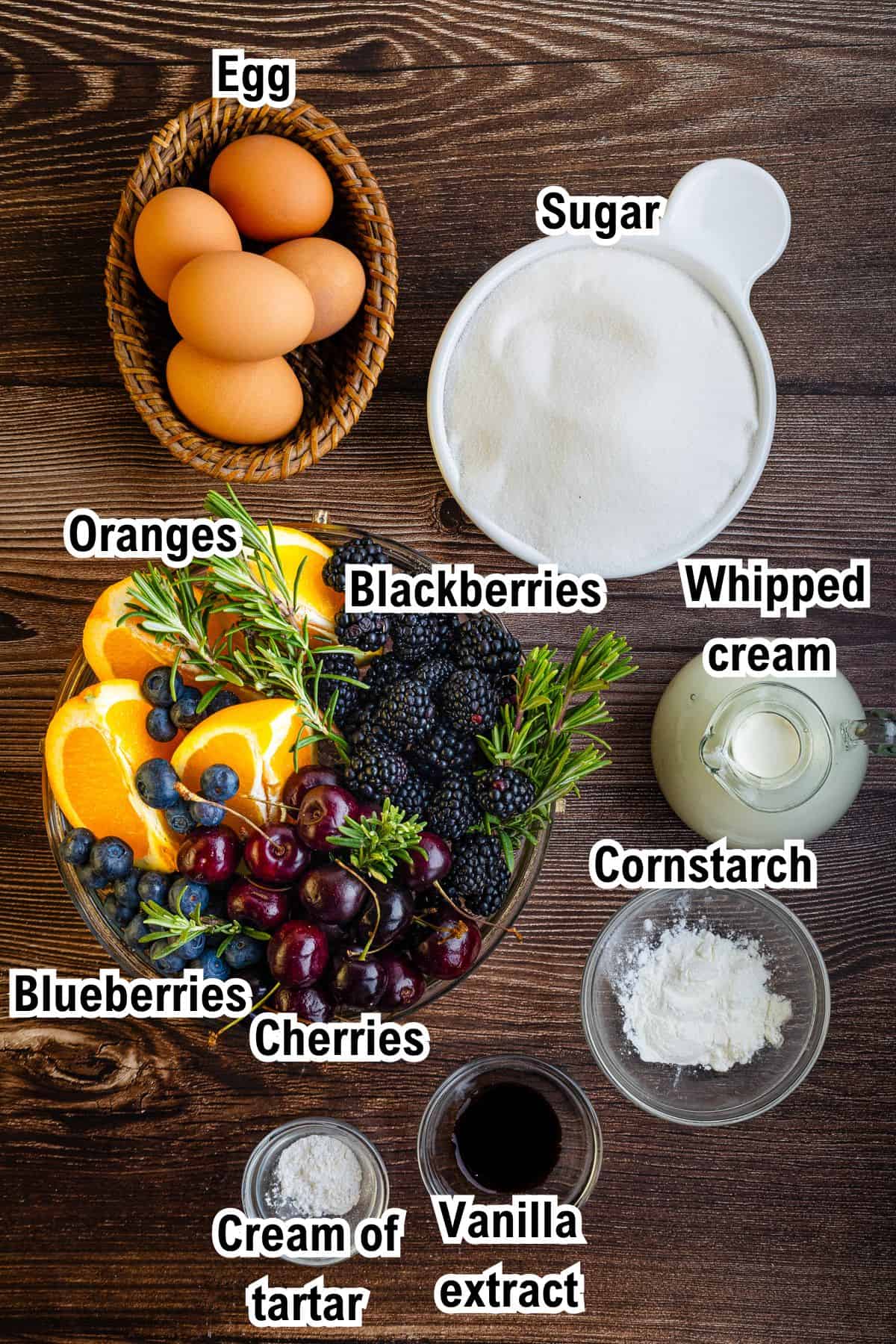
- Egg whites - 250g, which is roughly 6 to 7 large eggs. Weigh them if you can, since egg sizes vary a lot and this recipe depends on the ratio
- Granulated sugar - 500g (2¼ cups). That is exactly double the weight of the whites, and it is what gives you a sturdy, glossy meringue that will not weep
- Cream of tartar - ½ teaspoon, for stability. You can substitute ½ teaspoon white vinegar or ½ teaspoon fresh lemon juice. Add either one at the same point in the recipe when you would add the cream of tartar; you do not need to use both.
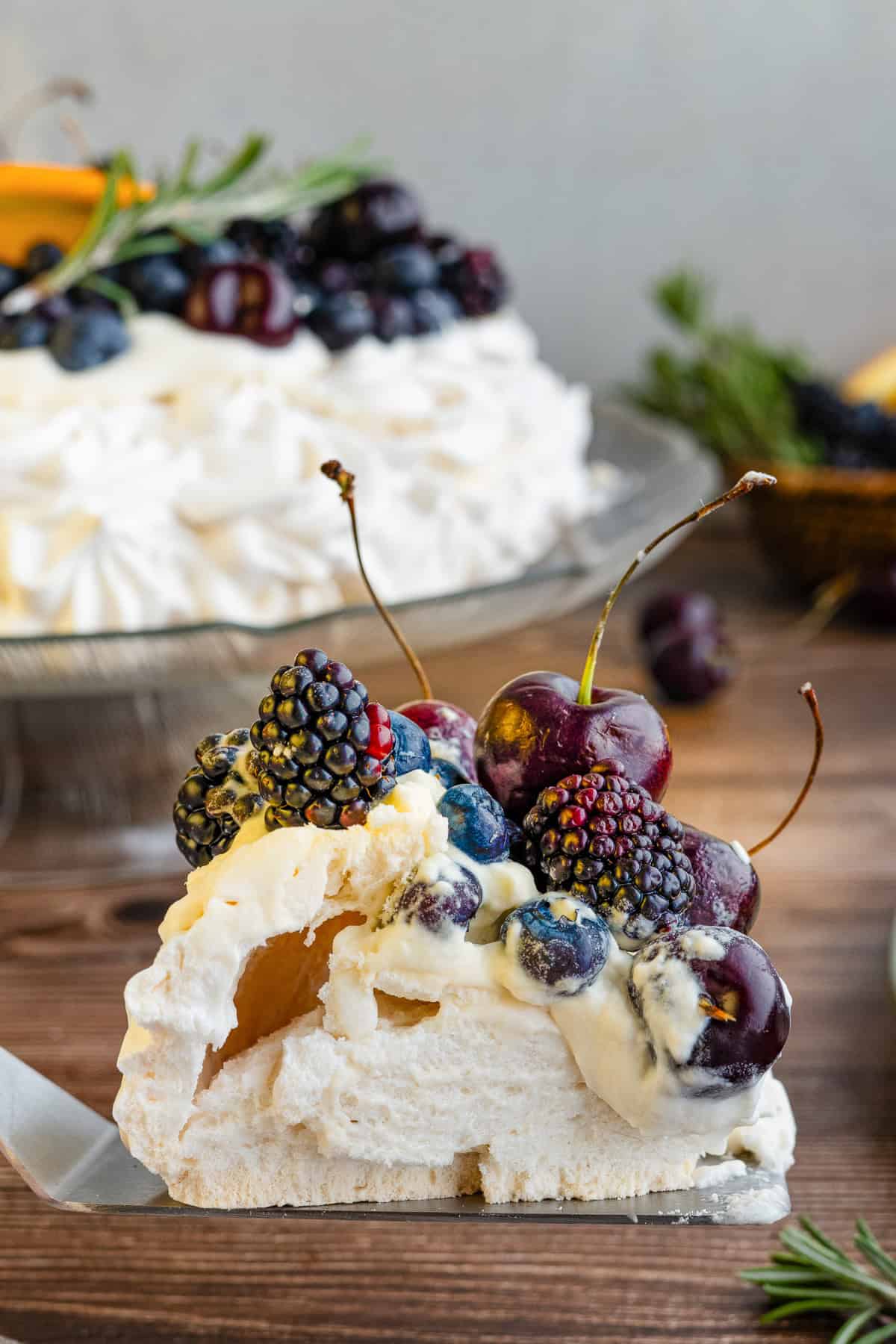
- Cornstarch - 2 teaspoons, folded in at the end. This is what creates the marshmallow-soft middle under the crisp shell
- Vanilla extract - 1 teaspoon
- Heavy whipping cream - about 2 cups, whipped to soft peaks with 3 tablespoons powdered sugar and a splash of vanilla
- Fresh fruit - about 3 cups total of blueberries, blackberries, and sweet cherries, pitted and halved.
How to Make Berry Pavlova
This is an overview. Full ingredients and instructions are in the recipe card below.
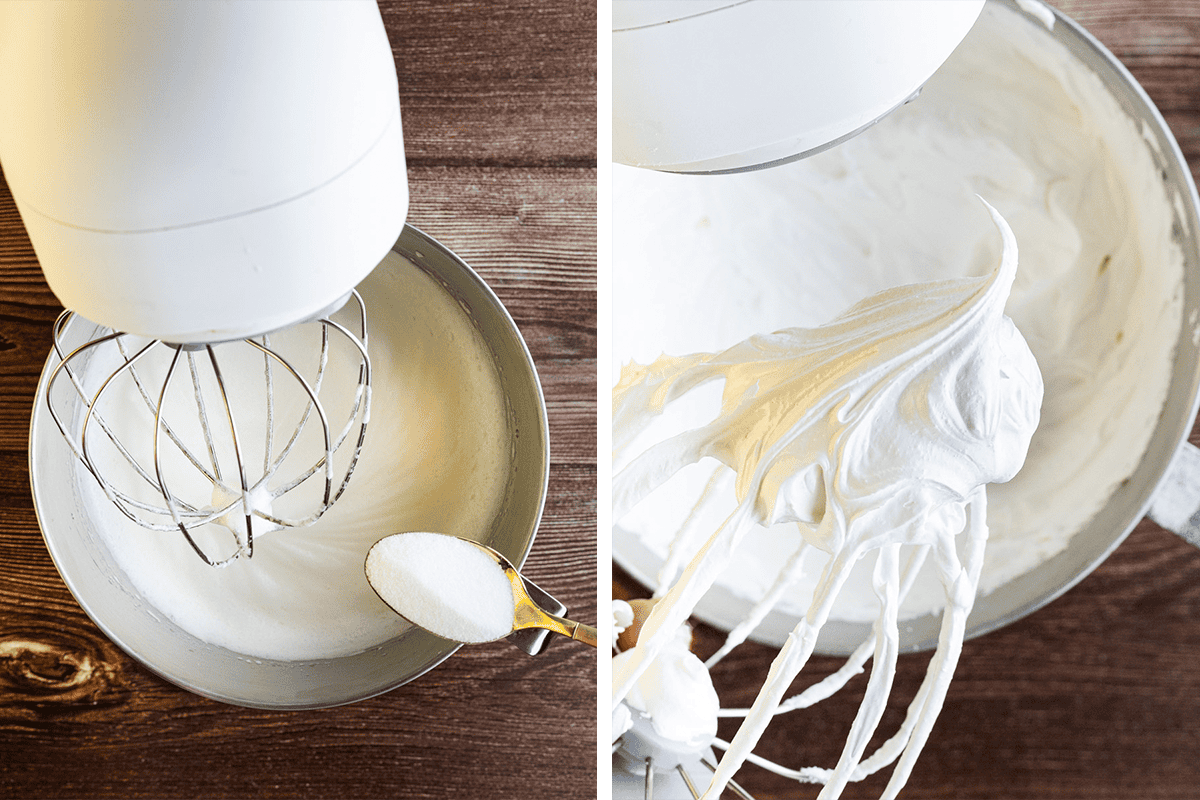
- Beat the egg whites in a stand mixer until they hold soft peaks. Add the cream of tartar and keep beating.
- Now start adding the sugar, one tablespoon at a time, giving each addition time to dissolve before the next. Beat on high until the meringue is stiff, thick, and glossy.
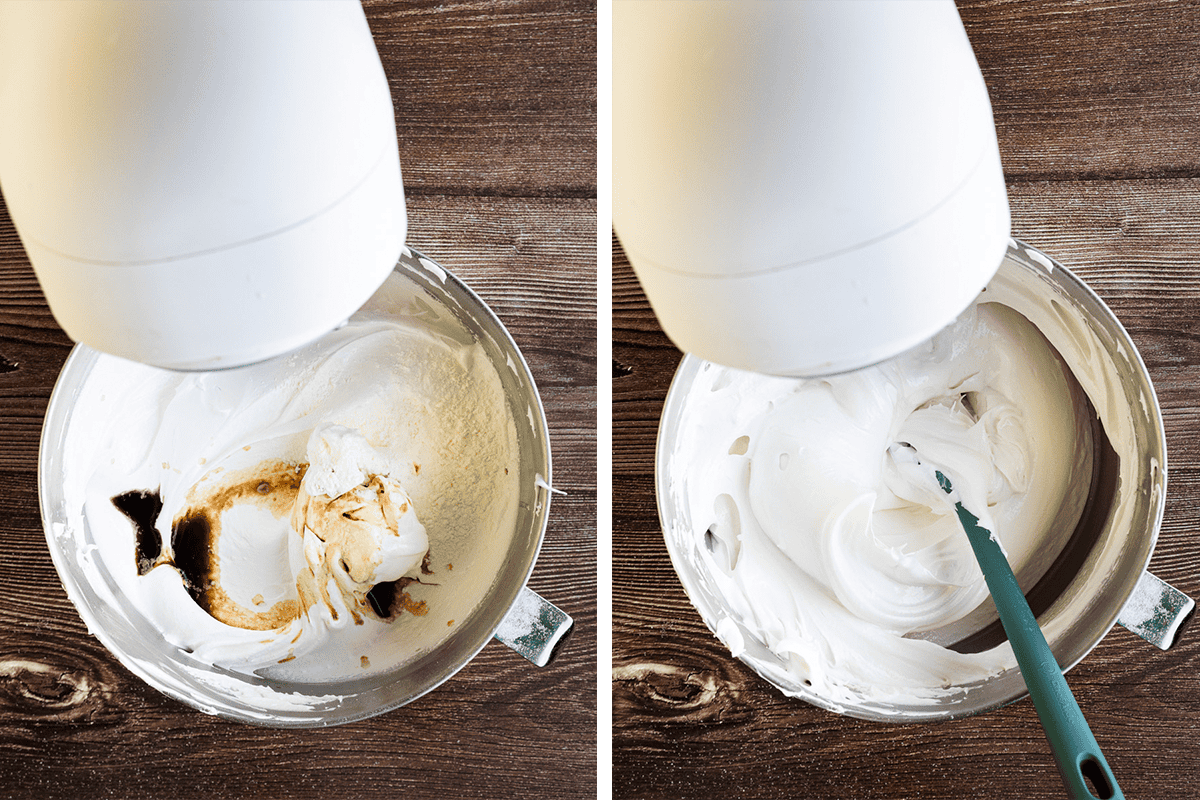
- Fold in the cornstarch and vanilla with a spatula, gently, just until they disappear.
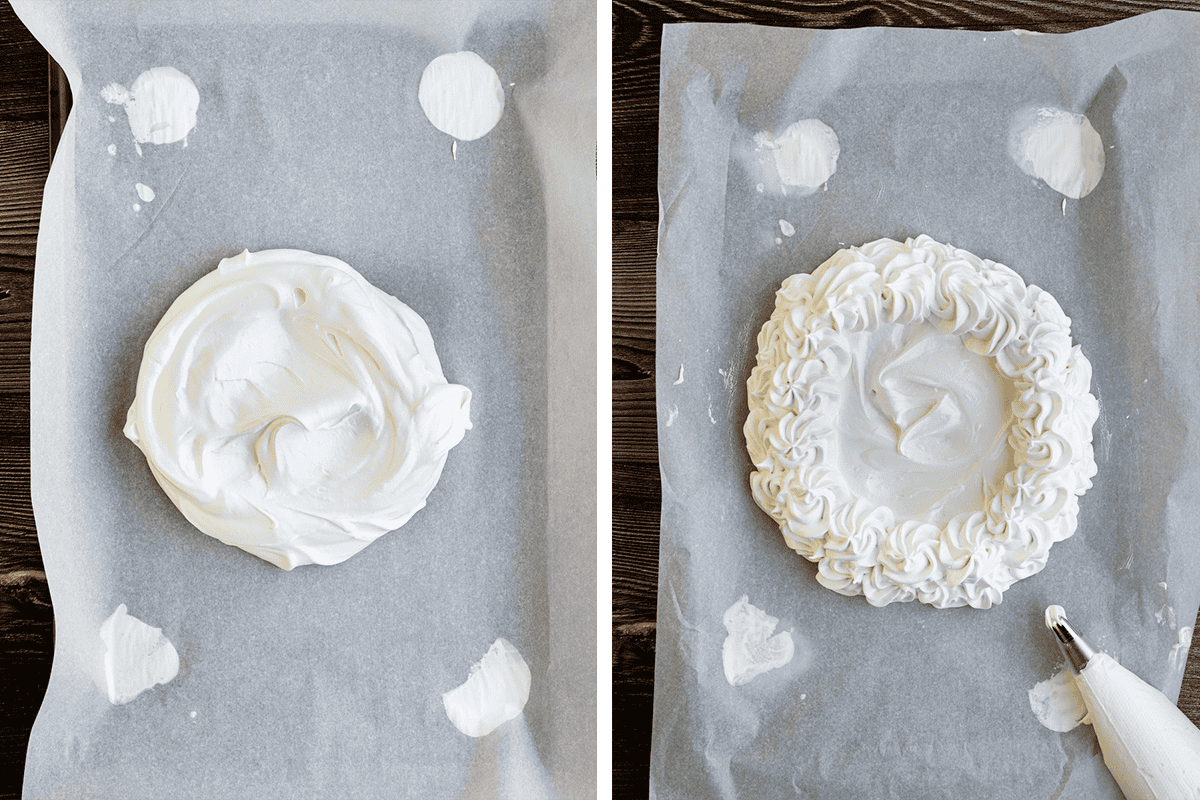
- Spoon a little over half the meringue onto a parchment-lined baking tray and shape it into a nest with a shallow well in the middle.
- Transfer the rest to a piping bag fitted with a large star tip, and pipe rosettes around the rim of the nest, keeping them even and touching. Smooth the center back down so the well stays defined.
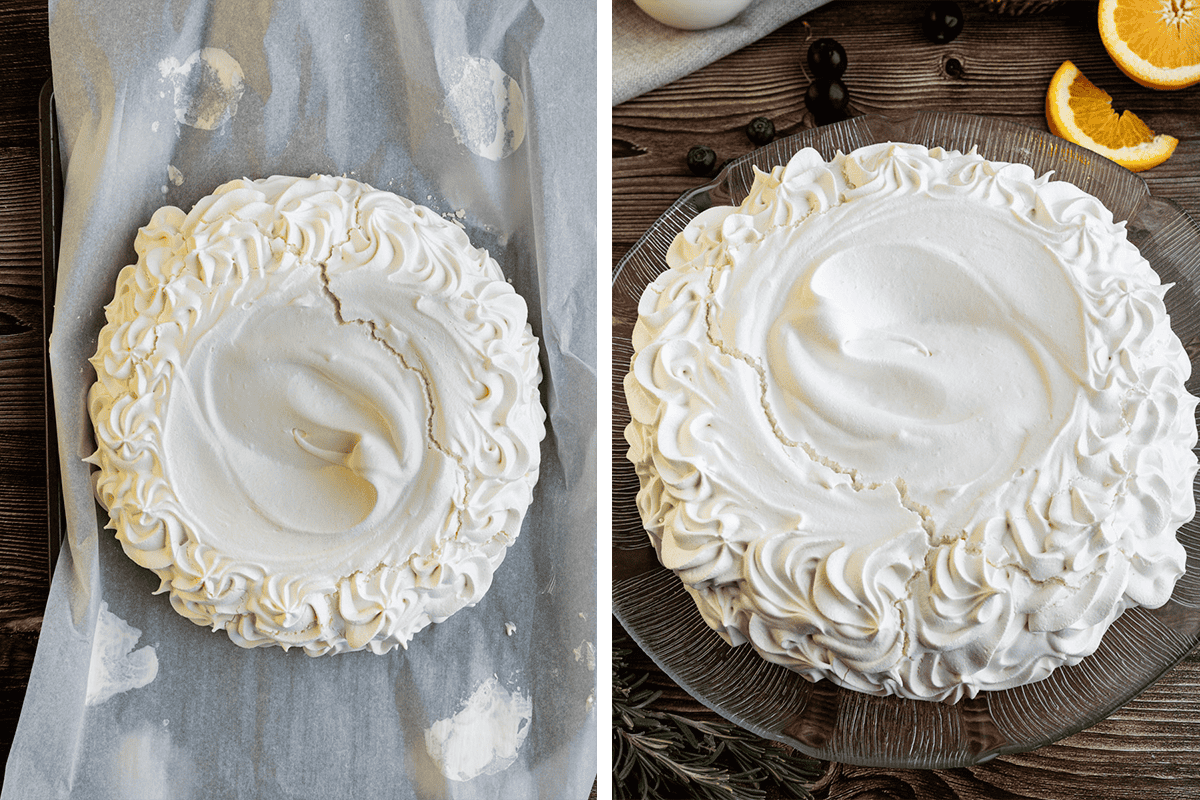
- Bake: Preheat the oven to 300F (150C), then drop it to 240F (115C) as soon as the pavlova goes in. Bake for 1½ to 2 hours. Turn off the oven, crack the door slightly, and leave it for at least 3 hours or overnight to completely cool
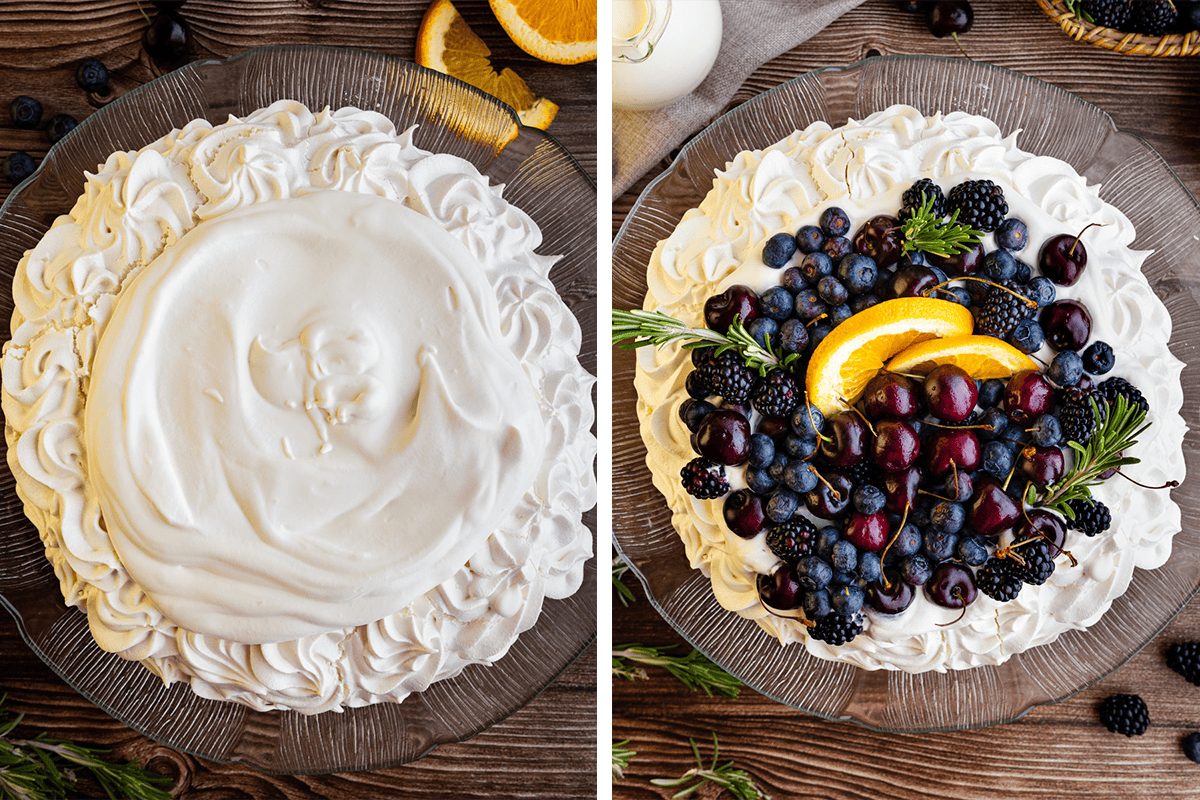
- Assembly: Top with whipped cream and fruit right before serving.
Classic Toppings for Pavlova
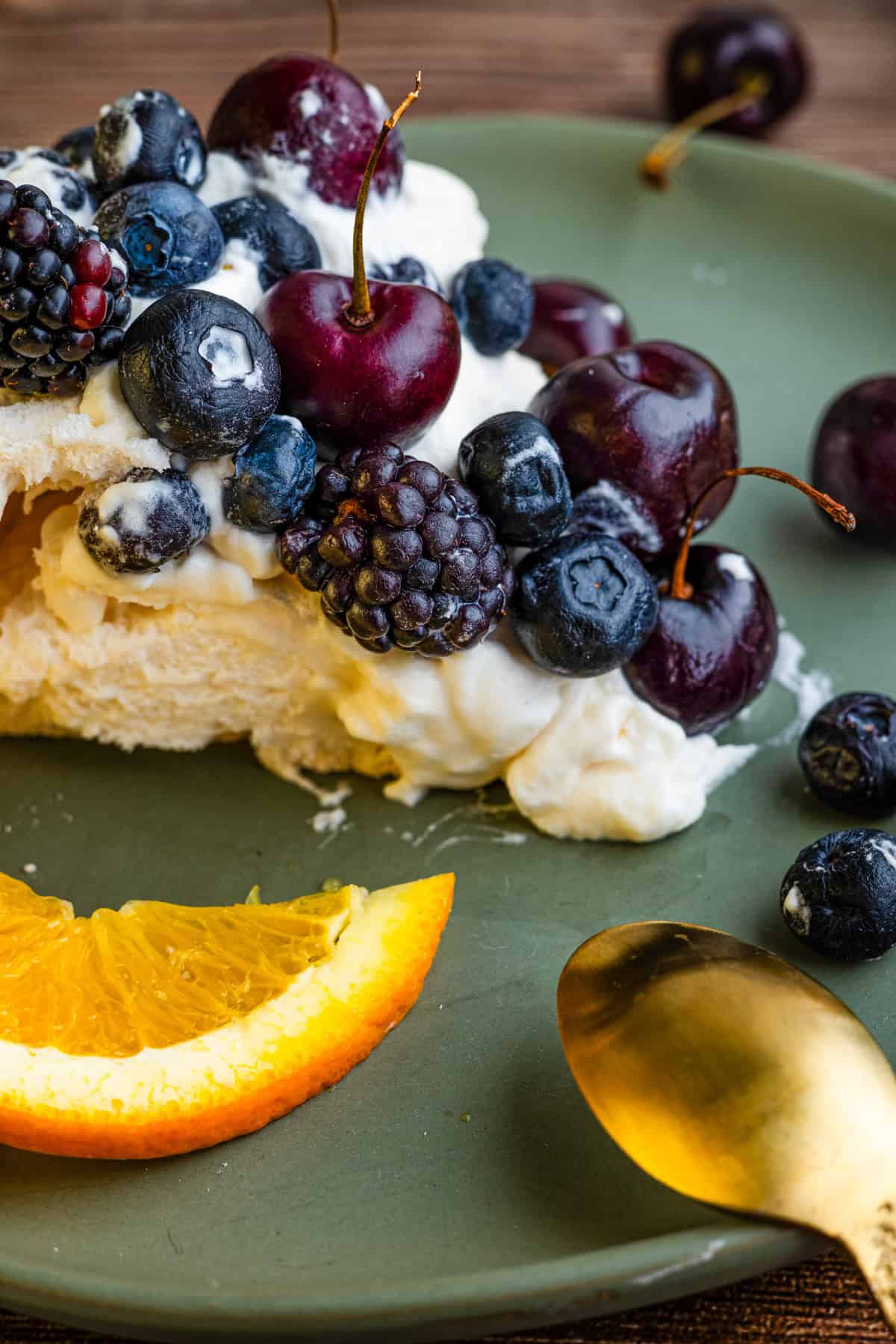
Whipped cream goes on first, spread into the well and pushed gently to the edges. Then I always add fruit. In this version, I use blueberries, blackberries, and cherries because the dark colors look striking against all that white, and the tartness cuts the sweetness of the meringue. You can use any other fruit and berries of your choice: strawberries, kiwi, passionfruit, sliced peaches, mango. Whatever is in season is what belongs on top.
Pro Tip: Top it right before serving. Cream on meringue softens the shell within an hour or two, and we do want the shell to be crispy and crackle.
Other Additions You Can Try
- Lemon curd under the cream. The tang against the sweet meringue is fantastic.
- A drizzle of passionfruit pulp over everything.
- Shaved dark chocolate or toasted sliced almonds for texture.
Summer Berry Pavlova with Cherries
Equipment
- Stand mixer with whisk attachment
- Large sheet pan
- Parchment paper
- Large piping bag with a large star tip
- Cherry pitter
Ingredients
Meringue Shell
- 8 large egg whites (250 g), about 7 to 8 large egg whites, at room temperature
- 2½ cups granulated sugar (500 g) preferably superfine
- ½ teaspoon cream of tartar or 1 teaspoon white vinegar or lemon juice, see notes
- 1 tablespoon cornstarch
- 1 teaspoon vanilla extract
Whipped Cream
- 2 cups heavy whipping cream (960 ml) cold
- 3 tablespoons powdered sugar
- 1 teaspoon vanilla extract
Fruit Topping
- 1½ cups fresh cherries pitted and halved
- 1 cup fresh blueberries
- 1 cup fresh blackberries
Instructions
- Line a large sheet pan with parchment paper. Trace a 9-inch (23 cm) circle on the parchment, then flip it pencil-side down. Wipe the mixer bowl and whisk with vinegar or lemon juice on a paper towel to remove any trace of grease.
- Add the egg whites to the bowl of a stand mixer. Beat on medium-high until foamy, then add the cream of tartar. Continue beating until you reach soft peaks.
- Add the sugar 1 tablespoon at a time, giving each addition a few seconds to dissolve. After about a third of the sugar is in, add the rest in a slow, steady stream. This should take 8 to 10 minutes total.
- Beat on high until the meringue is thick, glossy, and holds stiff peaks. Rub a little between your fingers. If it feels gritty, keep beating until smooth.
- Sift the cornstarch over the meringue, add the vanilla, and fold gently with a spatula until fully incorporated.
- Spoon a little over half the meringue onto the parchment and spread it into a nest inside your traced circle, smoothing the center so it stays low.
- Transfer the remaining meringue to a piping bag fitted with a star tip. Pipe rosettes all the way around the nest, keeping them the same size and making sure each one touches the next.
- Preheat the oven to 300°F (150°C). Place the pavlova in the oven and immediately reduce the temperature to 250°F (120°C). Bake for 1½ to 2 hours, without opening the oven door.
- The pavlova is done when the shell is dry, pale, and lifts cleanly from the parchment. Turn the oven off, prop the door open a few inches, and let it cool in the oven for at least 3 hours or overnight.
- Beat the cold heavy cream with the powdered sugar and vanilla to soft peaks.
- Pit and halve the cherries. Rinse the blueberries and blackberries and pat them completely dry.
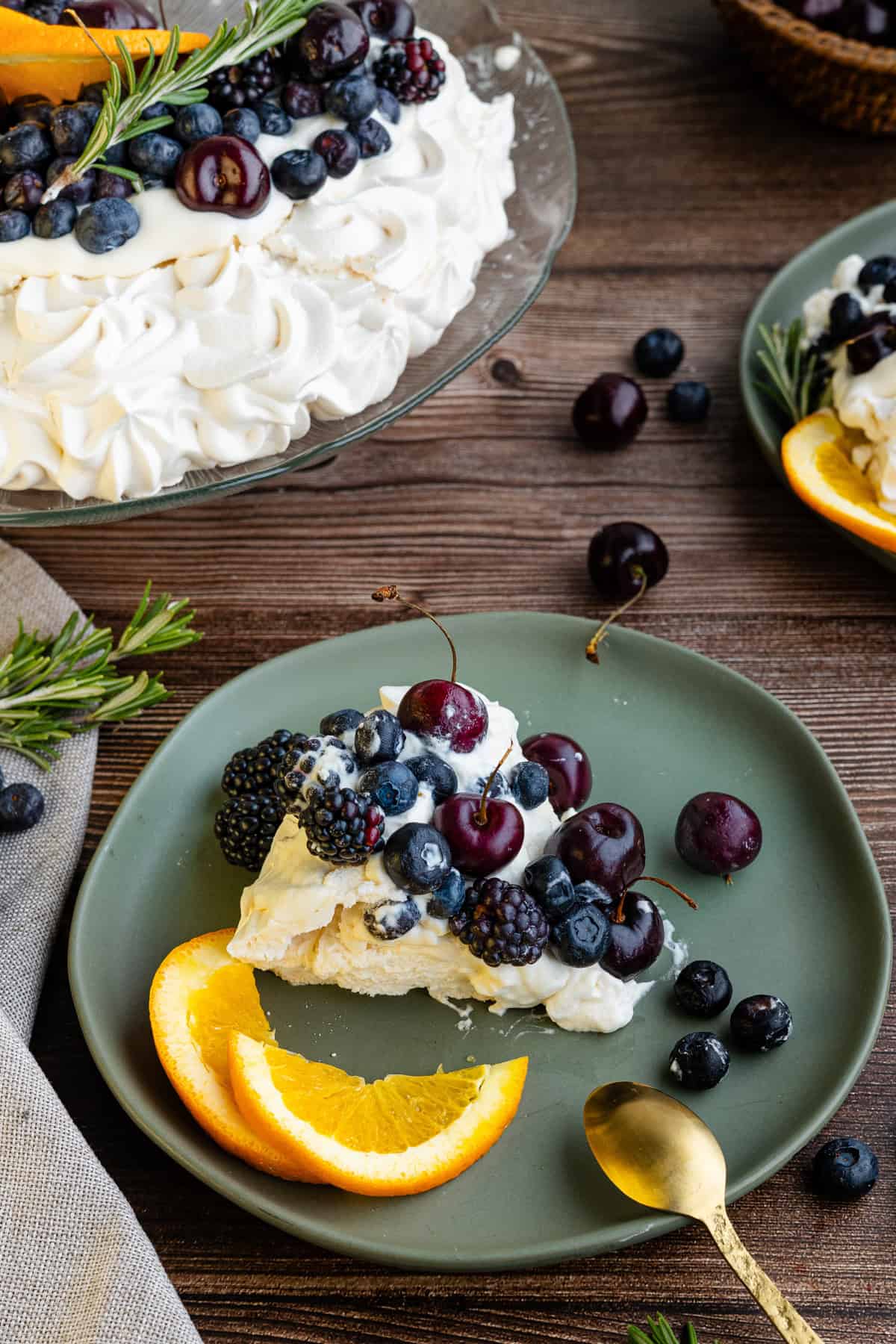
- Just before serving, spoon the whipped cream into the well of the nest and pile the fruit on top. Serve right away.
Notes
- Your bowl and whisk must be spotless and grease-free. I wipe mine with a paper towel dampened with vinegar, then dry it. Any trace of fat or yolk, and the whites will not whip properly.
- Room temperature whites whip better. Separate them cold, then let them sit out for 30 minutes.
- Not one speck of yolk. Fat kills egg whites. Separate each egg into a small bowl first, then transfer - that way one broken yolk doesn't cost you the whole batch.
- Add the sugar one tablespoon at a time. I know it feels slow. Rushing it leaves undissolved sugar, which is what causes those amber beads of syrup on a baked pavlova.
- Test it: rub a bit of meringue between your fingers. Smooth means ready. Gritty means keep mixing.
- Make the rosettes touch each other. Gaps are where cracks start.
- Don't open the oven door while it bakes, and don't pull the pavlova out to cool. A sudden temperature change is the fastest way to a collapsed shell.
- Cracks are normal. Every pavlova cracks a little, and cream and berries cover everything. Make extra cream - not for serving, for camouflage.
- Humidity is the enemy. Meringue pulls moisture from the air. On a rainy or very humid day, your pavlova may stay tacky no matter what you do. Pick a dry day if you can choose.
- Can I use liquid egg whites from a carton? I don't recommend it. Cartoned whites are pasteurized, and they often refuse to reach stiff peaks. Use whole eggs and save the yolks for lemon curd or ice cream.
- What if I don't have cream of tartar? I use ½ teaspoon of cream of tartar for stability. Substitute with ½ teaspoon white vinegar or fresh lemon juice. Add either one at the same point in the recipe when you would add the cream of tartar; you do not need to use both.
Leftovers and storage
- Unassembled meringue: keep it at room temperature in an airtight container for up to 3 days. Do not refrigerate it. The fridge is humid, and it will go soft and tacky.
- Assembled pavlova: eat it the day you top it. Once you add the cream, the shell starts softening within a few hours.
- Leftovers: cover loosely and refrigerate up to 2 days. The texture changes to something more like a soft meringue cake, which is still delicious, just different.
- Freezing: I do not recommend it.
- Cracks: If it cracks, cover it with cream and fruit and tell nobody. Every pavlova cracks a little. It is part of the charm.
Nutrition
Nutrition Disclaimer:
The nutritional information on this website is only an estimate and is provided for convenience and as a courtesy only. The accuracy of the nutritional information for any recipe on this site is not guaranteed. It should not be used as a substitute for a professional nutritionist's advice.
Substitutions and variations
- Cherry pavlova: skip the berries and use 3 cups of pitted dark sweet cherries on their own. Beautiful and very dramatic.
- Mini pavlovas: pipe 8 to 10 individual nests instead of one large one and cut the bake time to about 60 to 75 minutes. Same cooling rule applies.
- Add curd: spread a thin layer of lemon or orange curd under the whipped cream. If you want to go that route, use the orange curd from my pavlova recipe.
- Swap the acid: ½ teaspoon white vinegar or fresh lemon juice in place of cream of tartar.
- Fruit swaps: raspberries, sliced strawberries, kiwi, passion fruit pulp, or peaches all work. Use what looks good at the market.
- Mascarpone cream: fold ½ cup mascarpone into the whipped cream for a richer, slightly tangy topping that holds up longer.
More Berry and Cherry Desserts
- The Pavlova of Your Dreams with Orange Curd and Berries
- Fresh Berry Pie with a No-Bake Filling
- French Cherry Clafoutis
- Cherry Layer Cake with Cherry Buttercream
- Blackberry Cheesecake Bars
- Cherry Peach Lattice Pie
- Simple Cherry Cake
- Chocolate Cherry Cake
- Lemon Meringue Tartlets
Submit your question or provide a review of the recipe + star rating RIGHT HERE.