
This post may contain affiliate links. Read my disclosure policy.
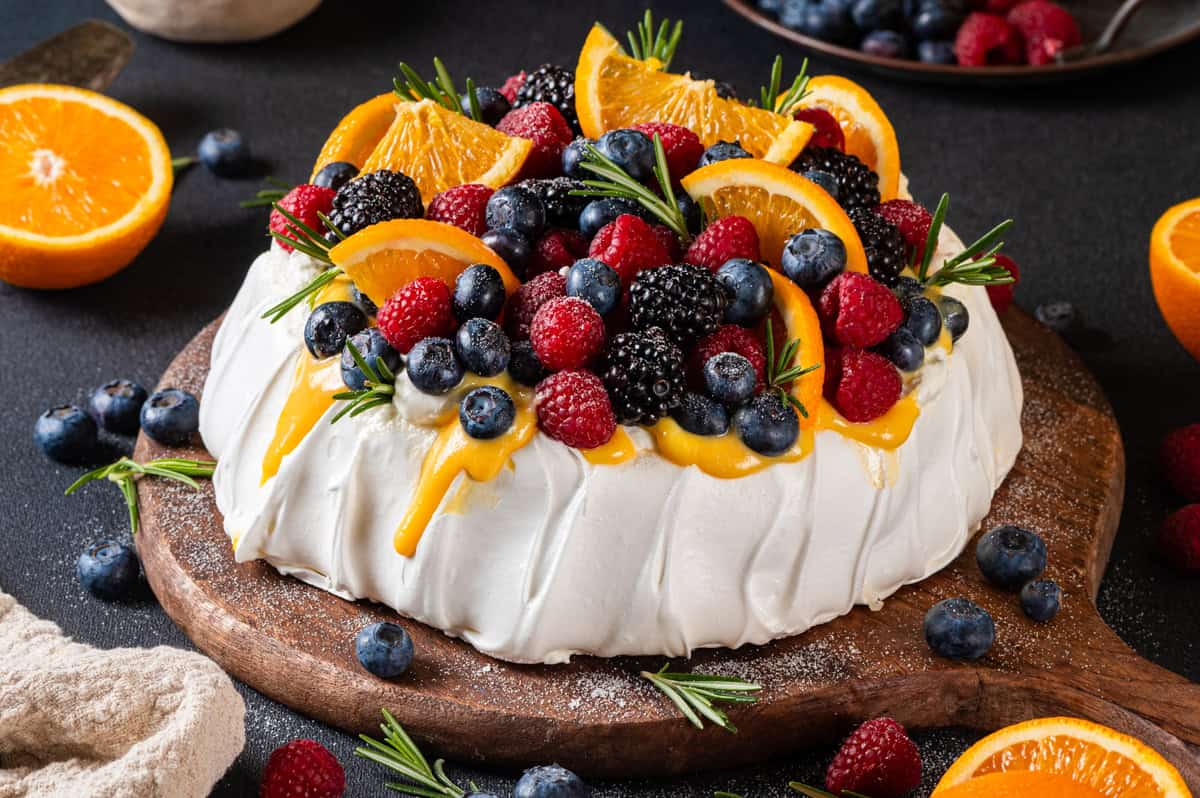
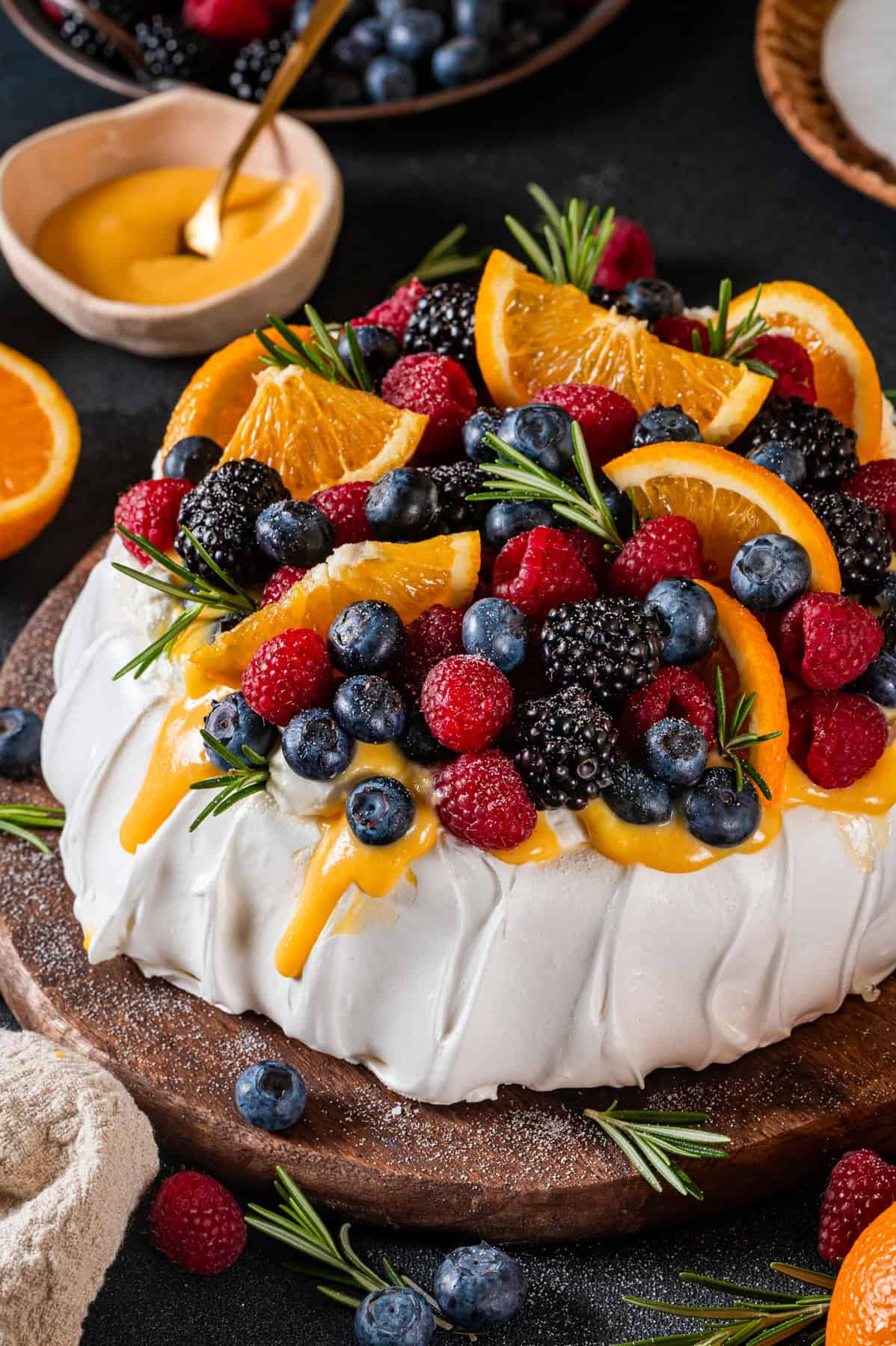
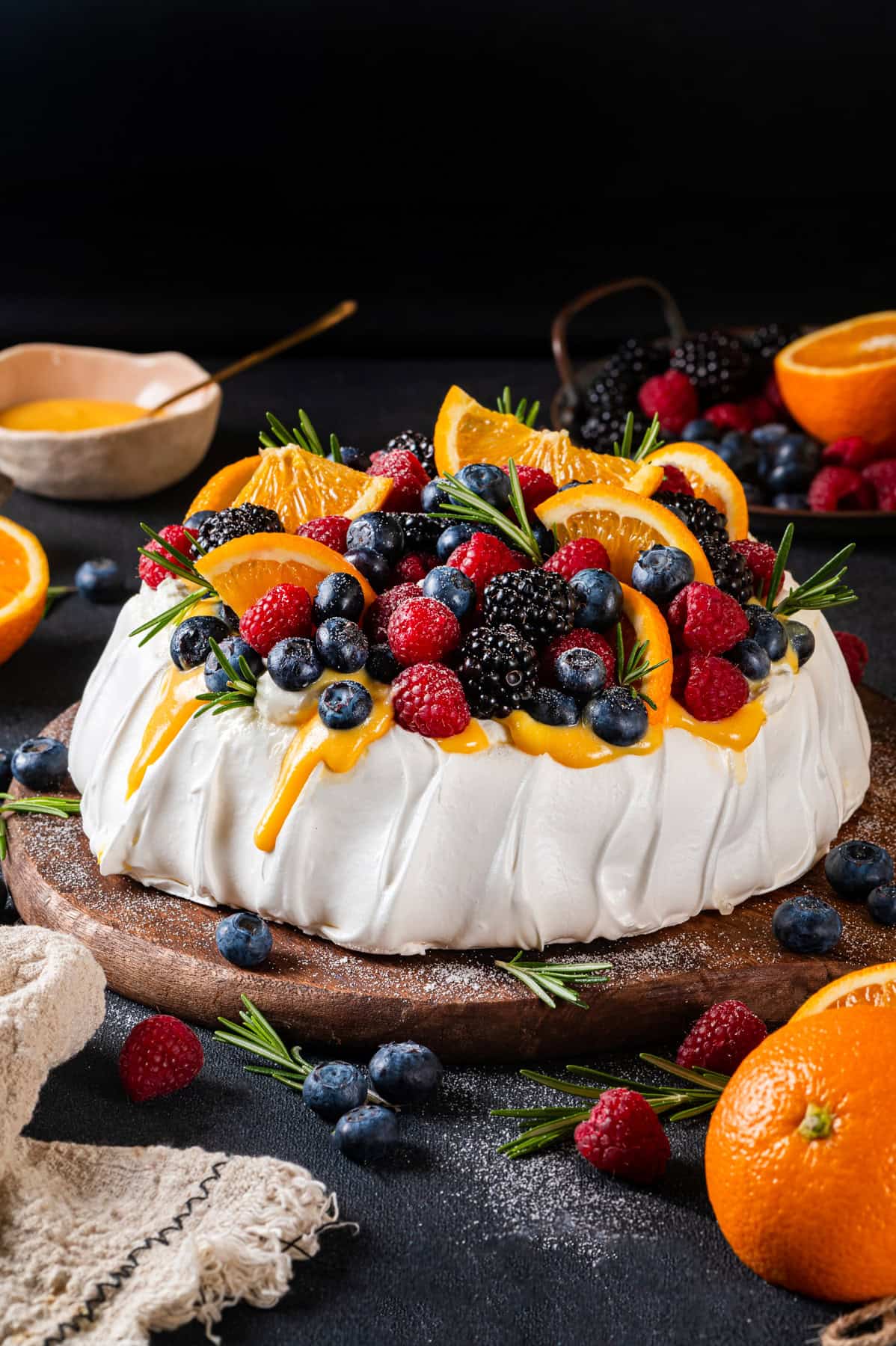
This classic Pavlova features a crisp meringue shell with a marshmallowy center, topped with softly whipped cream, bright orange curd, fresh berries, and thin orange slices. It's naturally gluten-free and a show-stopping centerpiece for entertaining and holidays.
What is Pavlova?
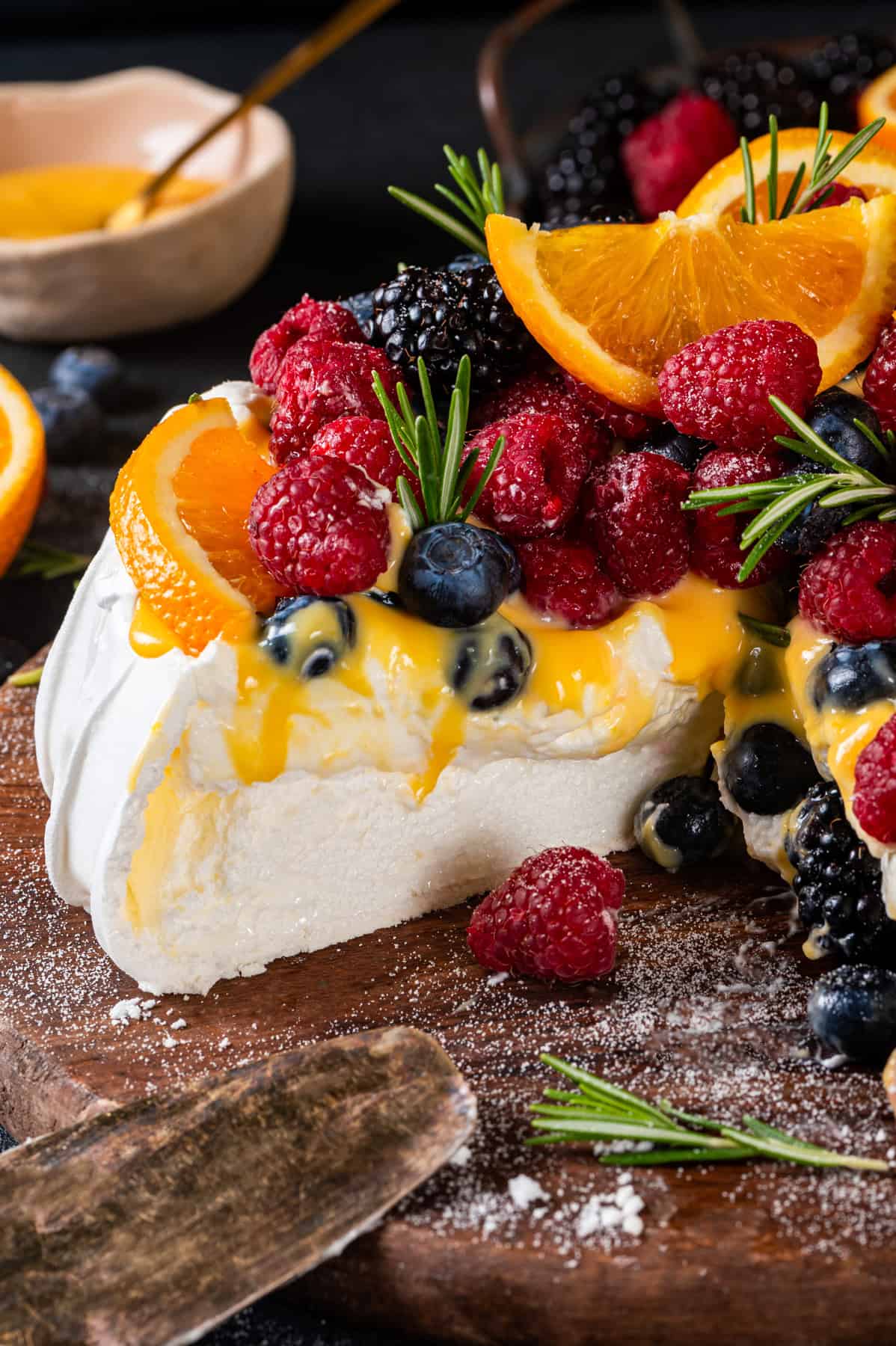
Pavlova is a meringue-based dessert with a crisp, delicate shell and a soft, marshmallowy center, traditionally topped with lightly sweetened whipped cream and fresh fruit (often kiwi, passionfruit, oranges, or berries).
It's named after the Russian ballerina Anna Pavlova and is claimed by both Australia and New Zealand, where it became popular in the 1920s-1930s after her tours there.
Today, it's a beloved centerpiece dessert for celebrations - especially Christmas and summer gatherings in the Southern Hemisphere - made from just egg whites, sugar, a little acid (cream of tartar or vinegar), and usually cornstarch for that signature pillowy interior.
Why You'll Love It
- Make-ahead friendly: I bake the shell the night before and cool it in the oven; the orange curd can be made up to 5 days ahead. All you have to do before serving is whip the cream and assemble the pavlova!
- Perfect year-round: This classic Pavlova is a perfect dessert for winter holidays, spring brunch, and summer berry season. Think Easter, Mother's Day, Christmas, New Year's, or an easy weeknight dinner dessert when you want something light. If you love my key lime pie with meringue topping, I know you'll love this recipe, too.
- Allergy-friendly: Pavlova is a naturally gluten-free dessert. You can also use dairy-free butter in the orange curd and substitute the whipped cream for coconut whipped cream for a dairy-free version.
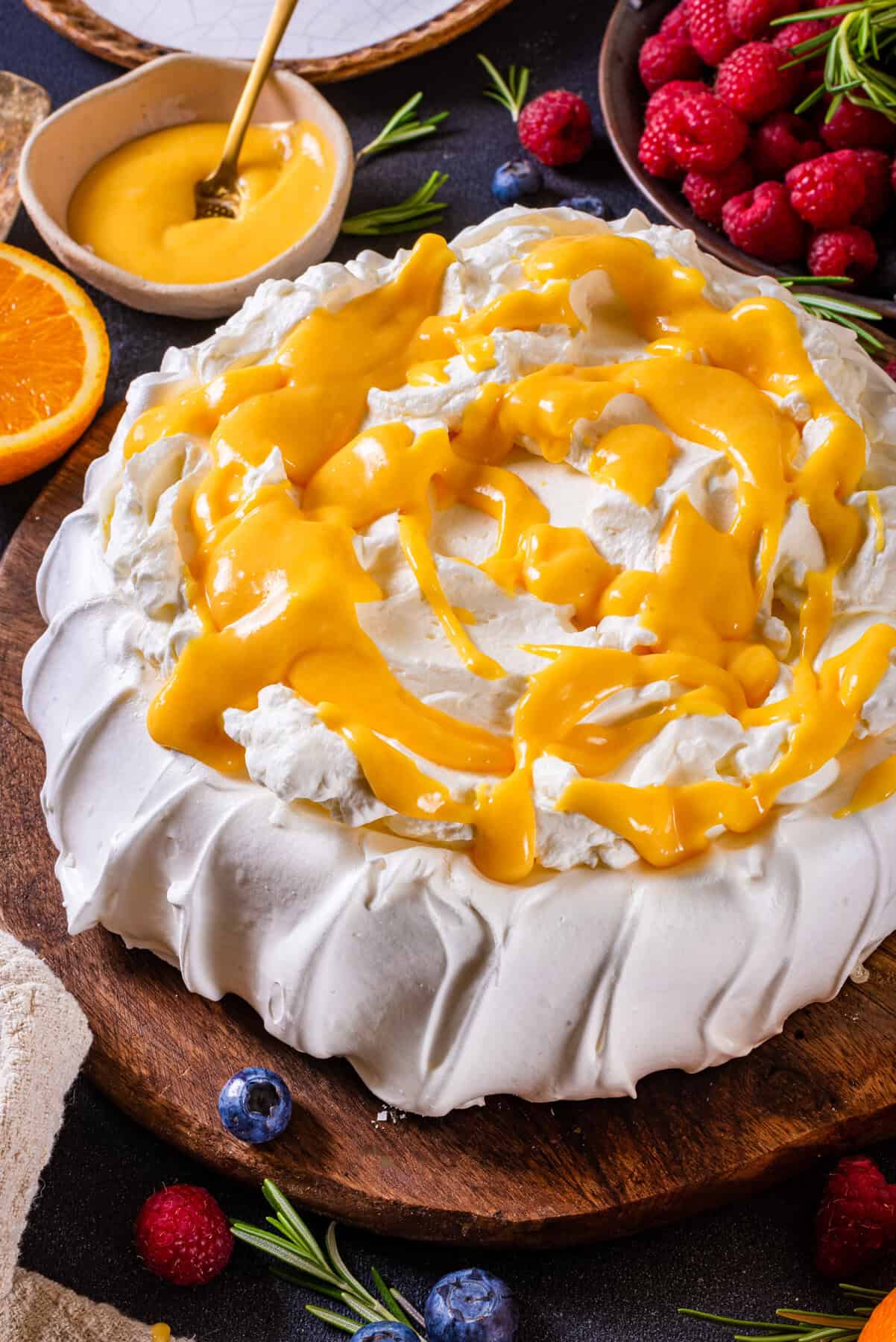

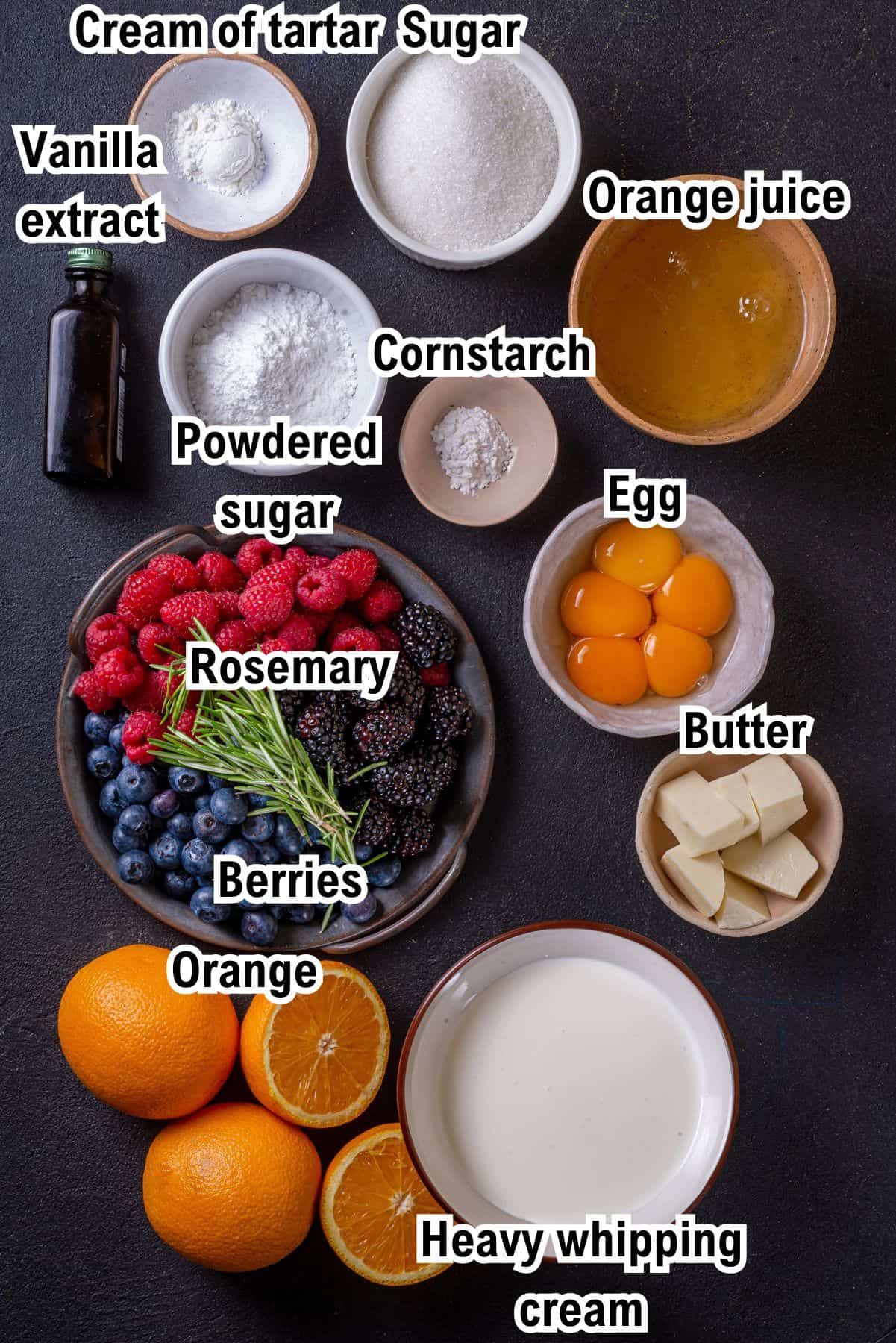
This recipe consists of 4 components: the meringue base, the whipped cream, the orange curd, and the fruit topping.
1) The Meringue Ingredients:
- Egg whites: From 5 large eggs. Do not discard the yolks; you'll need them for the orange curd.
- Granulated sugar: Don't substitute this with powdered or brown sugar.
- Cornstarch: This makes the center of the pavlova extra fluffy and marshmallow-like.
- Cream of tartar: This helps stabilize the egg whites and can be found in the baking aisle of the grocery store with the spices. If you don't have cream of tartar, you can use lemon juice or vinegar, although I prefer cream of tartar.
- Vanilla extract: You can also use vanilla bean paste.
2) Orange Curd Ingredients:
- Egg yolks: From 5 large eggs. Use the yolks you reserved from the meringue.
- Granulated sugar: I use regular sugar. Avoid coarse sugars.
- Freshly squeezed orange juice and orange zest: I find that freshly squeezed orange juice tastes best in this curd.
- Unsalted butter: Cut this into pieces.
- If you have any leftover orange curd after assembling the pavlova, you can use it in thumbprint cookies.
3) Whipped Cream Ingredients:
- Heavy whipping cream: Make sure this is very cold.
- Powdered sugar: You could also use maple syrup. Do not use granulated sugar, as that will make for a grainy whipped cream.
- Vanilla extract: Vanilla bean paste will work here, too.
4) Toppings:
- Fresh berries: I like a mixture of blueberries, raspberries, and blackberries.
- Sliced orange: I leave the rind on and slice these thinly.
- Fresh rosemary sprigs: A few sprigs of fresh rosemary make for a beautiful finishing touch against the berries and the orange curd.
- Powdered sugar: If you'd like, you can dust some more powdered sugar over the top of the pavlova after assembling it.
Why This Recipe Works
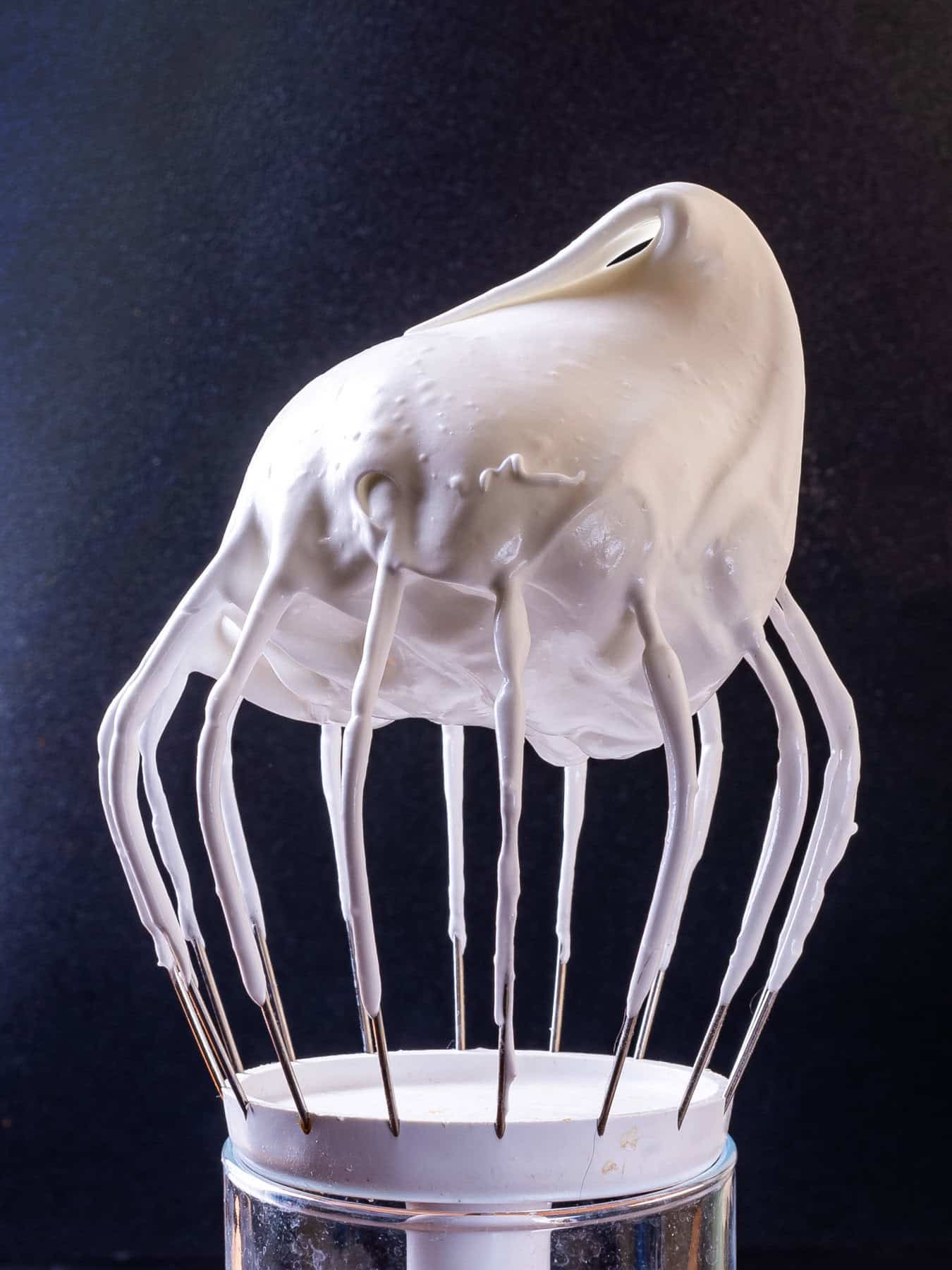
- I keep the meringue stable with cream of tartar + cornstarch, which helps prevent collapse and gives you that classic pavlova texture.
- Smooth meringue: Beating mostly on medium speed gives the sugar time to dissolve - this is the difference between smooth, glossy meringue and gritty/weeping pavlova.
- The low-and-slow bake and long oven cool dry the shell gently, keeping it crisp rather than cracking dramatically or sweating.
- The topping is balanced: rich whipped cream + tart berries + citrusy orange curd (bright and not cloying).
- It's flexible: you can swap fruit, change the curd to lemon, or make mini pavlovas with the same base method.
How to Make Pavlova (Step-by-Step Photos)
This is a recipe overview. Find the complete instructions + ingredient amounts in the recipe card below (scroll down).
1) Preheat and Prep
- Heat oven to 300°F (150°C).
- Trace a 9-inch circle on parchment paper (using a plate or cake pan), flip it so pencil marks face down, and place it on a baking sheet.
- Make everything grease-free: wipe bowl/beaters with vinegar or lemon juice, then dry.
2) Whip the Meringue
- Bring whites to room temp (20-30 minutes).
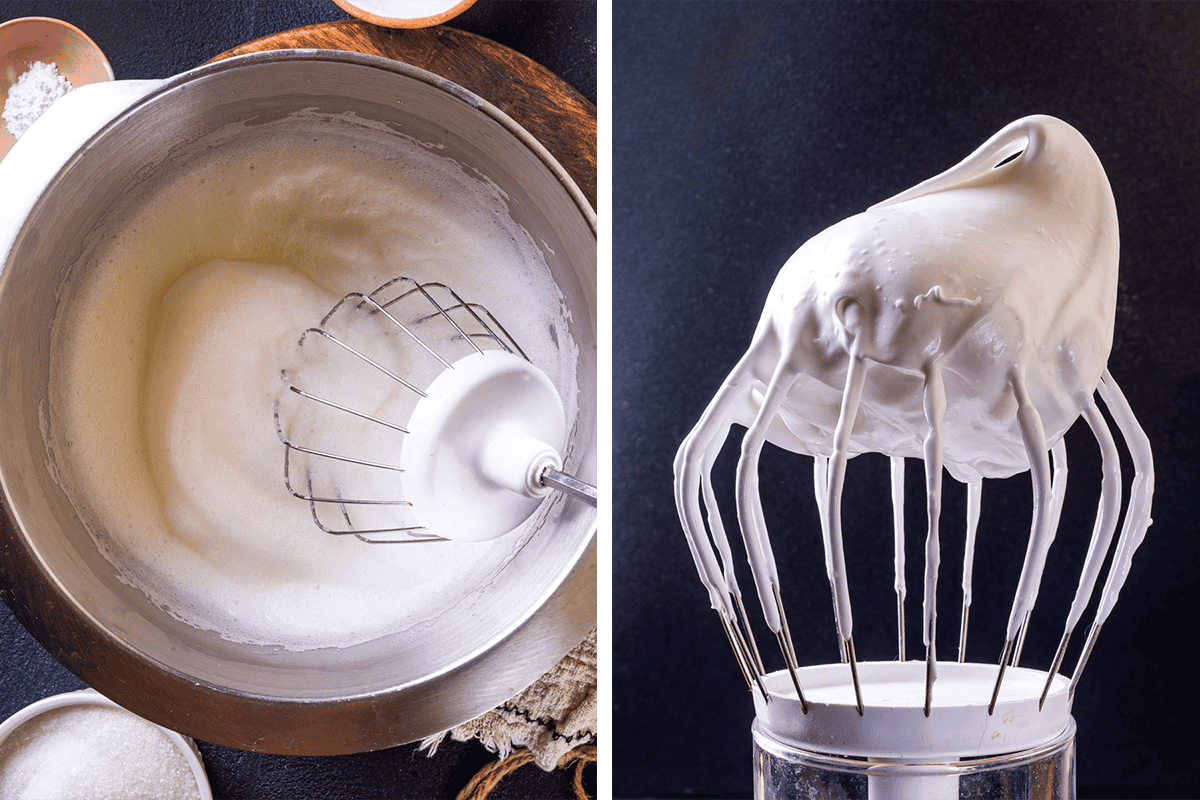
- Beat to soft peaks first, then add sugar 1 tablespoon at a time (this pacing matters).
- Keep mixing mostly at medium speed until you get stiff, glossy peaks and the mixture feels smooth (no sugar grit).
- Mix in cornstarch + cream of tartar on low just until combined.
3) Shape + Bake Low and Slow
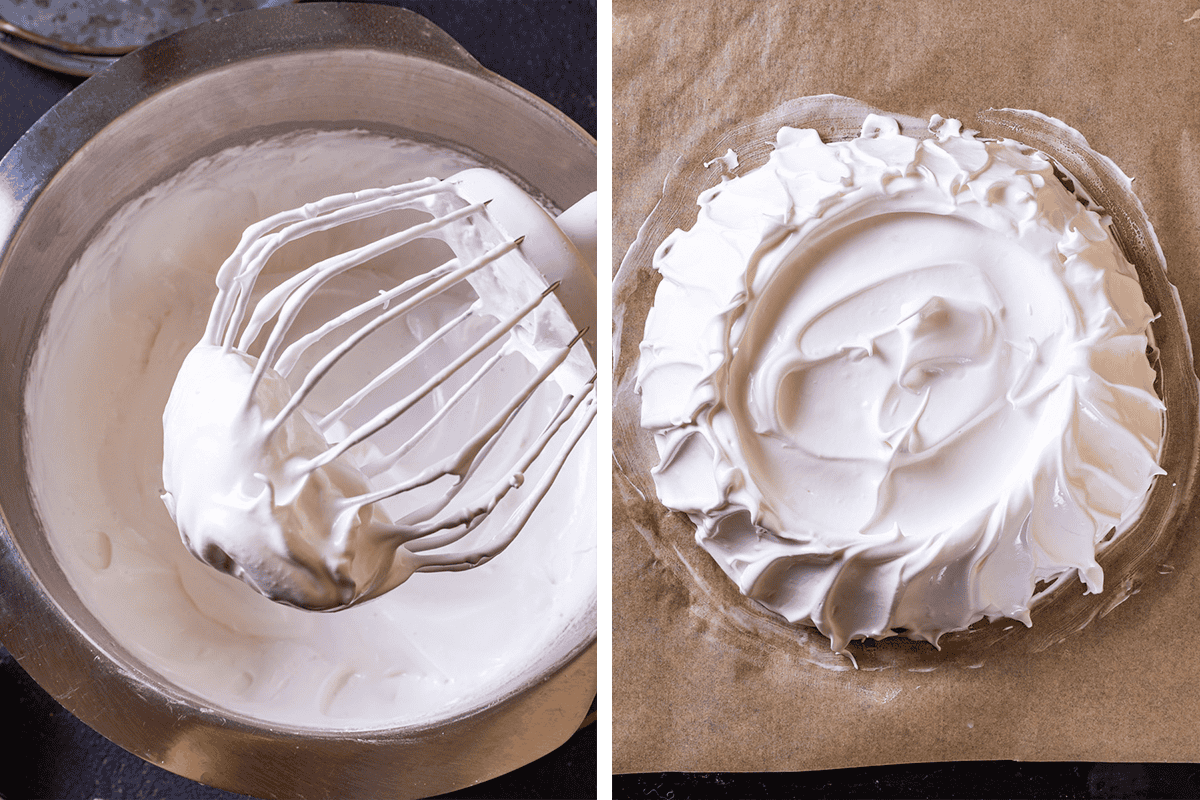
- Mound meringue inside your circle on parchment paper on a baking sheet and create a shallow well for toppings.
- Put it in the oven, then immediately reduce your preheated oven from 300°F (150°C) to 225°F (110°C). Bake for 1 hour 15 minutes (do not open the door or the meringue will crack, collapse, or develop a sticky exterior).
- Turn off the oven and cool at least 4 hours (or overnight) with the door barely cracked. Slow cooling prevents the shell from shrinking too fast (a common cause of big cracks). Cooling in the oven also continues to dry the meringue, improving crispness.
4) Make Orange Curd
- Whisk yolks, sugar, orange juice, zest in a saucepan.
- Cook low to medium-low, stirring constantly, until thickened (about 170°F / 77°C).
- Off heat: whisk in butter, then strain. Chill until cold and thick.
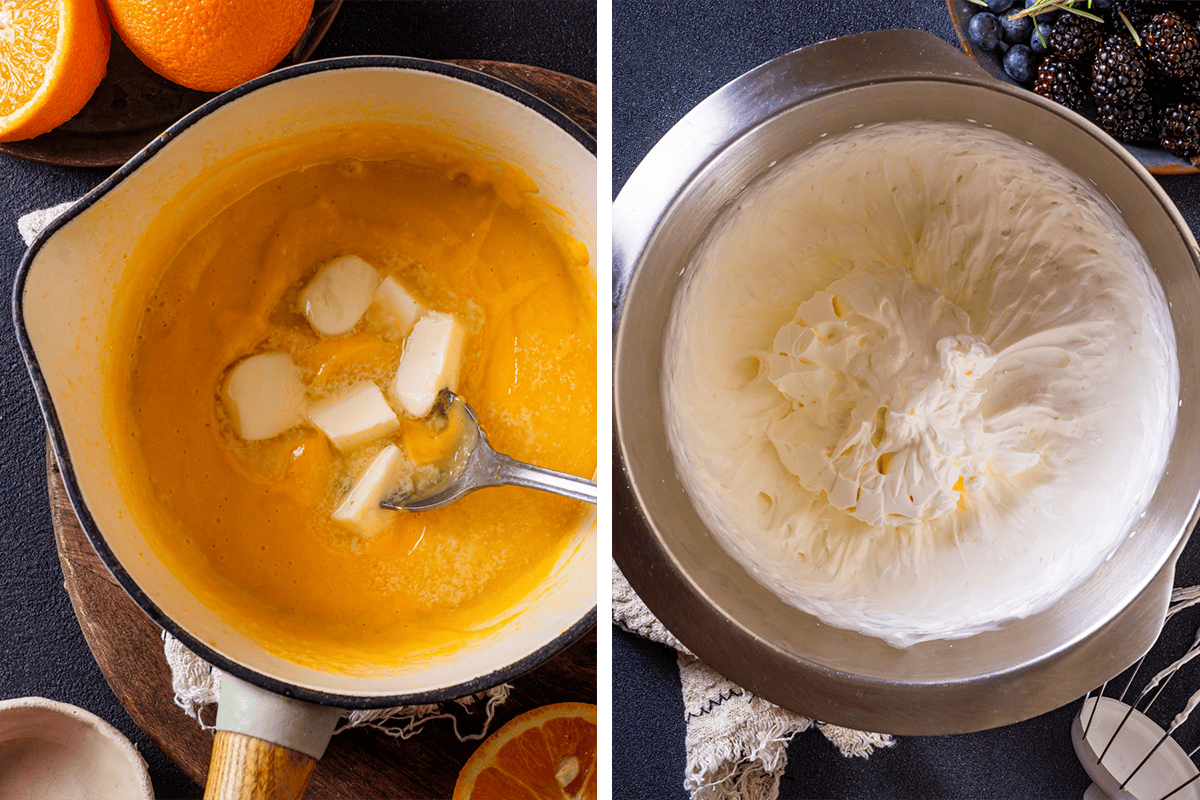
5) Whip Cream + Assemble
- Whip cream, powdered sugar, vanilla to soft peaks.
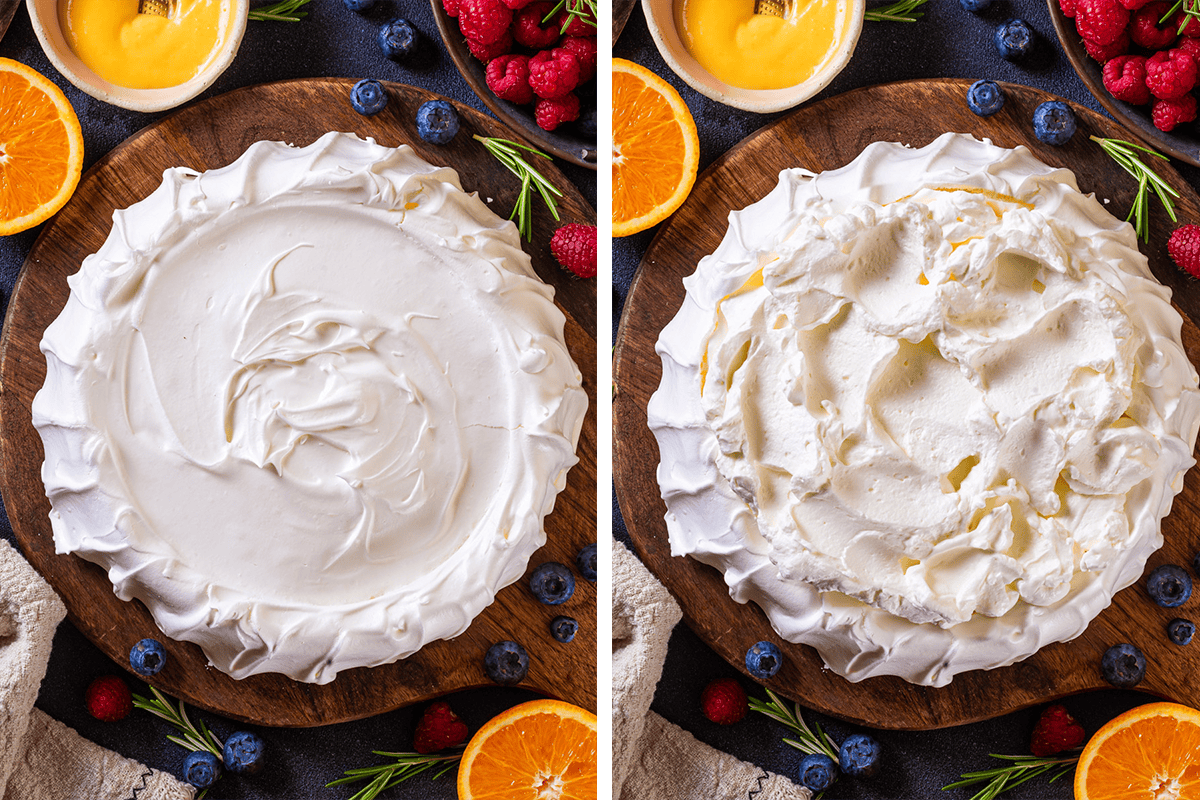
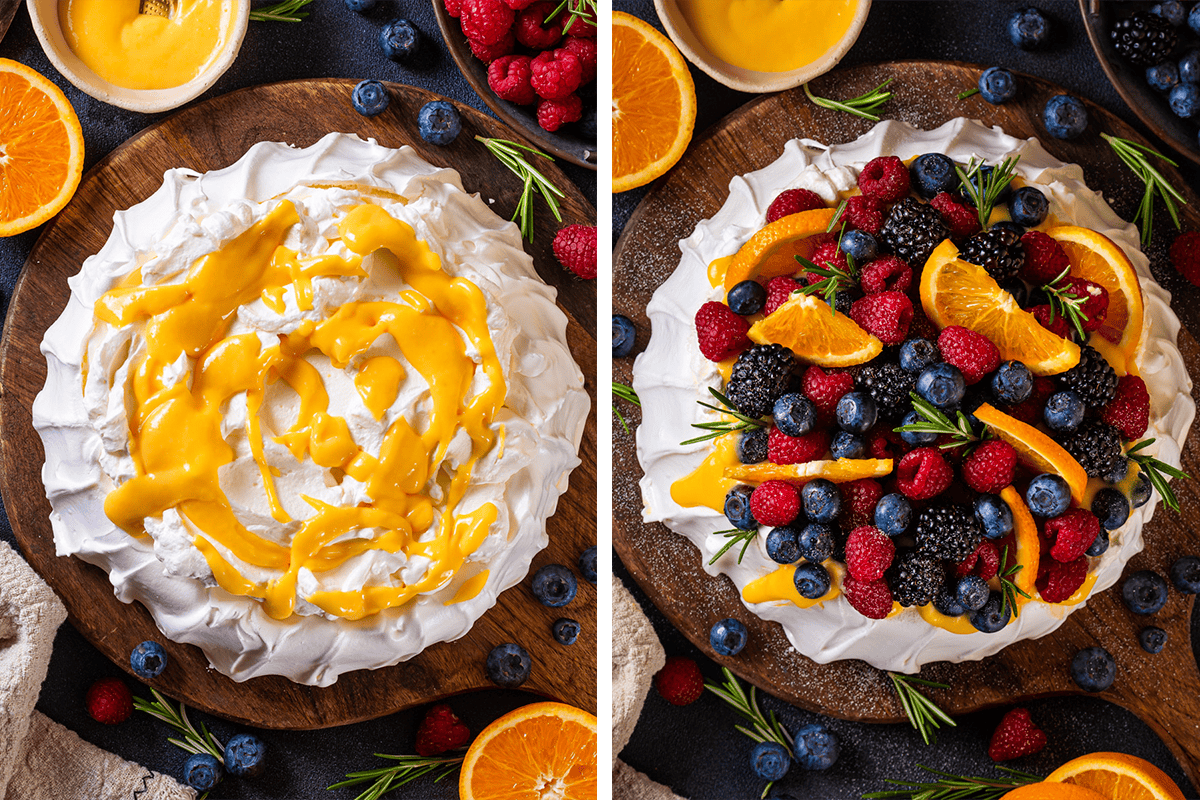
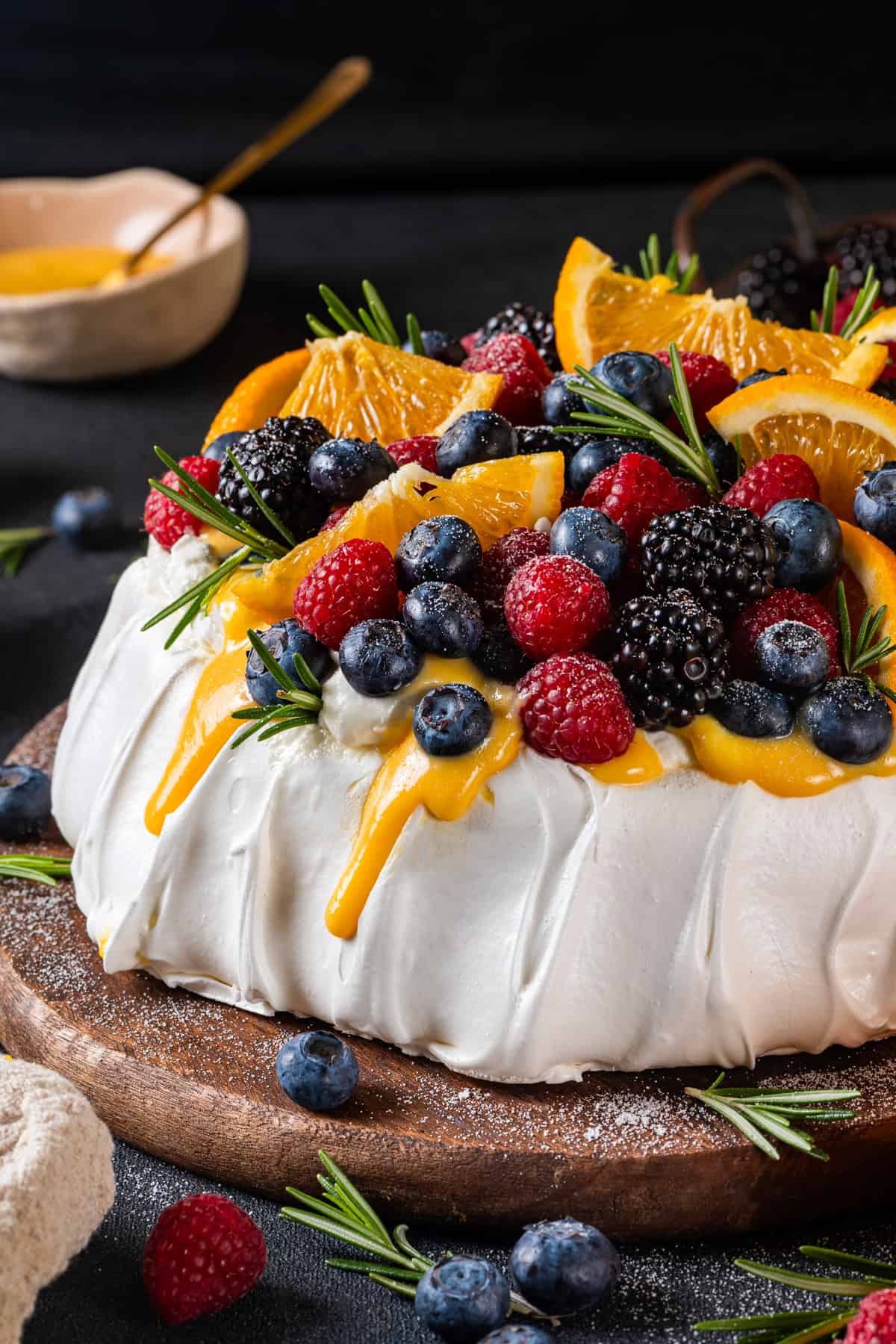
- Fill pavlova with whipped cream, dollop orange curd, pile on berries, tuck orange slices, add rosemary, and dust with powdered sugar.
Tips for Success
Even though pavlova takes some time to make, the individual steps are pretty easy. There are a few things you can do do ensure your meringue base comes out perfect every time:
- Carefully separate the eggs: When separating the egg yolks and whites, you want to make sure you don't get any yolk in the whites. I like to separate each egg over a small bowl, then check the white carefully before adding it to my mixing bowl. If there's any yolk in it, discard that one and start over with a new egg.
- Wipe down your bowl: Use a stainless-steel mixing bowl for making the meringue. Before starting, wipe the inside of the bowl and the beaters of your mixer with a small amount of white vinegar or lemon juice. This will remove any residual fat which could prevent the whites from whipping properly.
- Use room-temperature egg whites: I find that eggs are easier to separate when they are cold. After separating, let the whites come to room temperature before whipping for the airiest meringue.
- Be patient: Add the sugar to the egg whites slowly and don't try to rush whipping the meringue. Additionally, give the meringue time to cool slowly; rushing this process can cause it to collapse.
- Don't peek while the meringue is baking: Keep the oven door closed while the meringue is baking. Don't be tempted to peek in to check on it or it could collapse.
Make-Ahead Tips
The meringue and the orange curd for this pavlova recipe can be prepared ahead of time if you'd like:
- Make the meringue up to 3 days ahead. Let it cool completely, then wrap it tightly and store it at room temperature in a cool, dry place. Do not refrigerate or freeze it.
- Make the orange curd up to a week ahead of time. Store it in a glass jar in the refrigerator until you're ready to use it.
- I recommend whipping the cream no more than a couple of hours before serving.
- For the best texture, wait to assemble the pavlova until right before serving it. Assembling it ahead of time will make the meringue soggy.
Serving Ideas
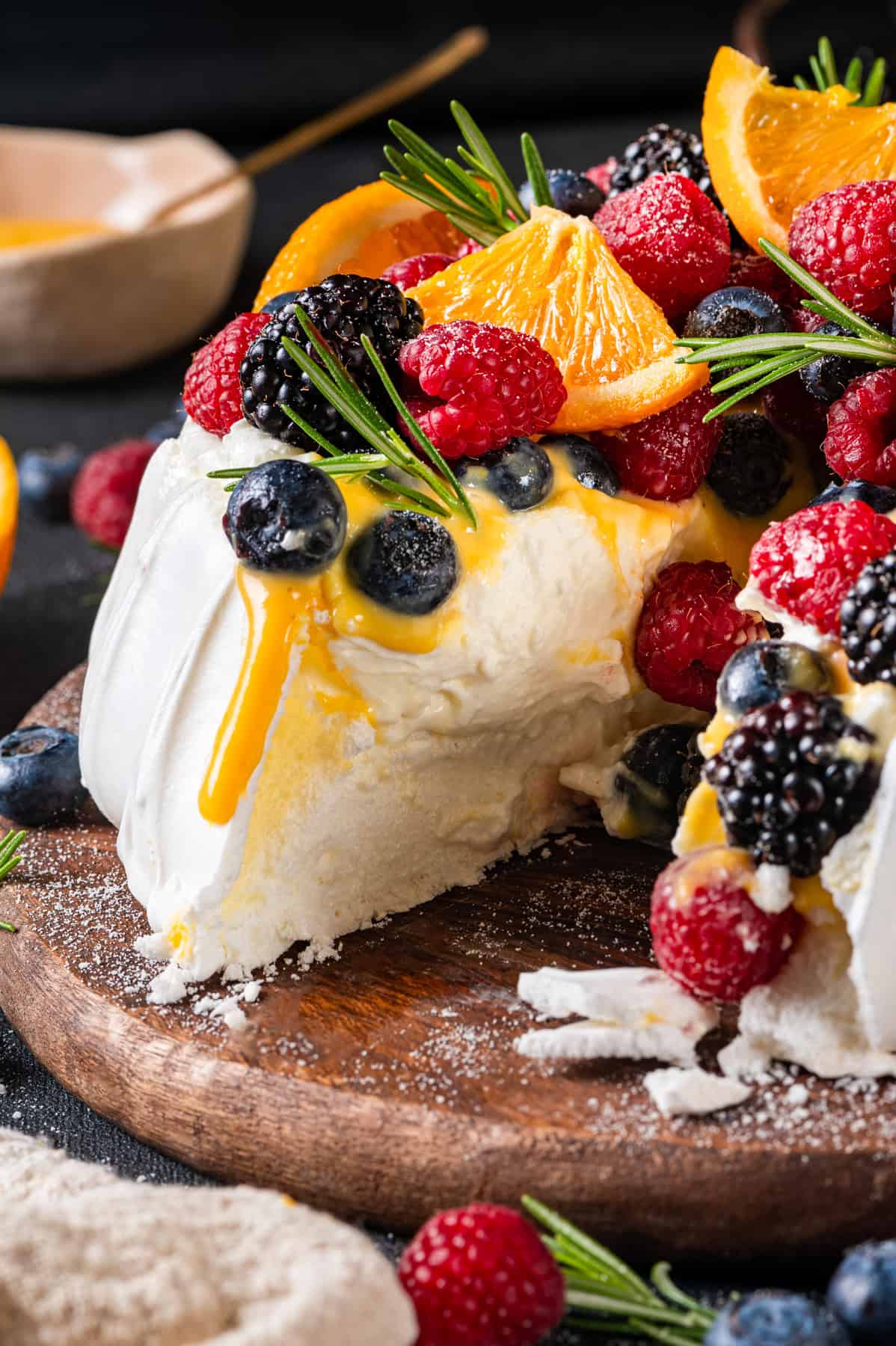
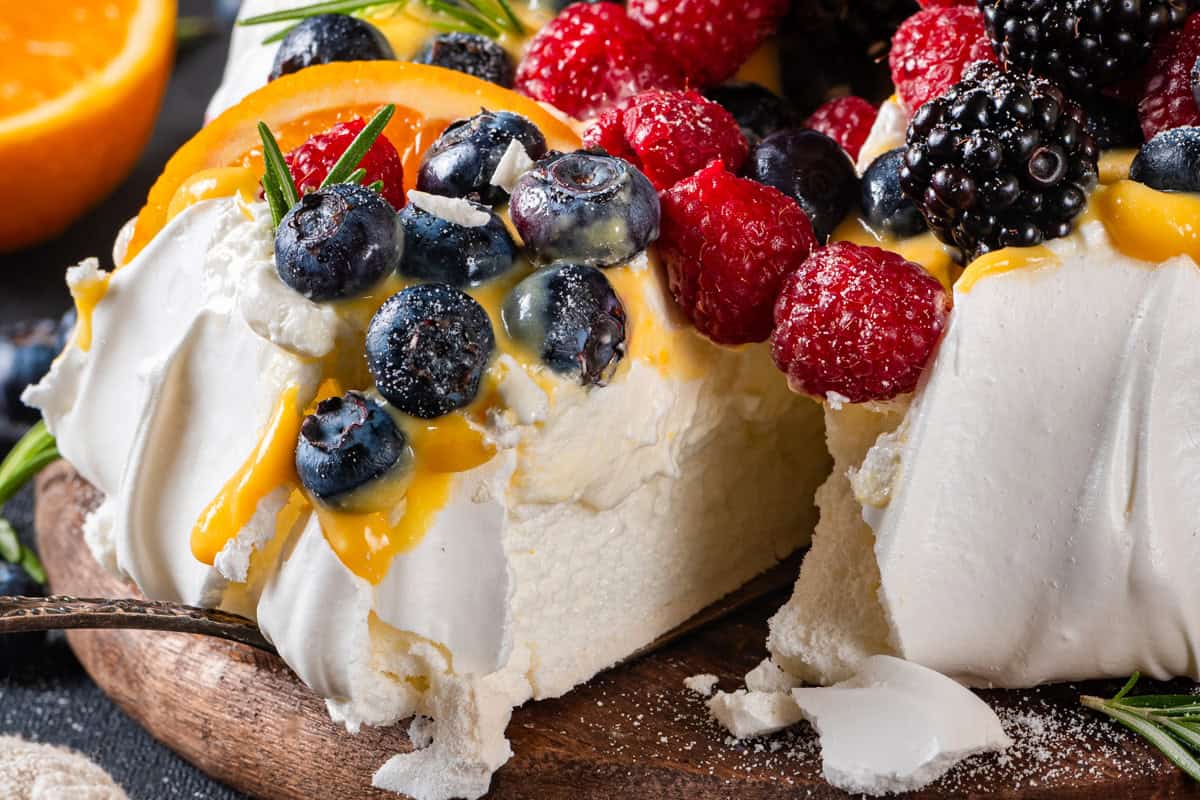
I love serving my pavlova topped with vanilla whipped cream, fresh berries, and bright homemade orange curd. The orange slices and rosemary make it feel extra special without adding extra work. Here are more serving suggestions:
- Add fresh quartered strawberries to the mixed berries.
- Use other fruit. Swap the berries and oranges for your favorite seasonal fruits. Stone fruits, such as peaches and cherries, would be delicious, while mango, passionfruit, and kiwi would give it a tropical twist.
- Use lemon curd or another fruit curd in place of the orange curd.
- Make mini pavlovas instead of 1 large pavlova. Pipe or spread the meringue into 3-inch circles instead of a 9-inch circle for individual servings.
- For a holiday vibe, I like adding extra rosemary sprigs and a heavier powdered sugar "snow."

Pavlova (Crisp, Cloud-Like, and Foolproof)
Equipment
- Stainless steel mixing bowl
- Electric hand mixer
- Fine mesh sieve
Ingredients
For the Pavlova Base:
- 5 large egg whites
- 1 ¼ cups granulated sugar
- 1 tablespoon cornstarch
- 1 teaspoon cream of tartar
- 1 teaspoon vanilla extract
For the Orange Curd:
- 5 large egg yolks
- ⅓ cup granulated sugar
- ½ cup freshly squeezed orange juice
- Zest of 1 orange
- ¼ cup unsalted butter cut into small pieces
For the Whipped Cream:
- 1 ½ cups heavy whipping cream cold
- 2 tablespoons powdered sugar
- 1 teaspoon vanilla extract
For the Topping:
- 1 cup fresh raspberries
- 1 cup fresh blueberries
- 1 cup fresh blackberries
- ½ medium orange sliced into thin rounds with peel on
- 3 fresh rosemary sprigs
- Powdered sugar for dusting
Instructions
Prepare the Pavlova Base
- Preheat your oven to 300°F (150°C). Line a baking sheet with parchment paper and draw a 9-inch (23 cm) circle on the parchment. Flip the parchment over so the pencil doesn't touch the meringue.
- Wipe down a stainless-steel mixing bowl and the beaters of an electric mixer with vinegar or lemon juice to eliminate any grease, which can prevent the egg whites from whipping properly.
- Add the egg whites to the clean bowl. When separating the whites from the yolks, be very careful not to get any yolk into the whites. Let egg whites come to room temperature (about 20-30 minutes) before whipping for maximum volume.5 large egg whites
- Beat egg whites on medium speed with an electric hand mixer until they form soft peaks-when the whisk leaves visible trails and the peaks flop over slightly.
- Increase the mixer to medium speed (5) and begin adding the sugar 1 tablespoon at a time, waiting 15-20 seconds between additions.1 ¼ cups granulated sugar
- Once all the sugar is added, continue to beat on medium speed until the meringue forms stiff, glossy peaks. This will take up to 10 minutes. Medium speed and a longer beating time is important to allow the sugar to dissolve. The meringue should feel smooth when rubbed between your fingers (no graininess of undissolved sugar). If needed, you can increase the beating speed to high when there are no sugar grains left.
- Reduce mixer to low speed and gently add cornstarch, cream of tartar, and vanilla, mixing just until combined. Don't over beat, or you risk deflating the meringue.1 tablespoon cornstarch , 1 teaspoon cream of tartar , 1 teaspoon vanilla extract
- Spoon the meringue onto the parchment-lined baking sheet into the center of the drawn circle. Smooth the edges and use the back of a spoon to create a shallow well in the center for toppings.
- Place the pan in the oven, close the door, and immediately reduce the heat to 225°F (110°C). Bake for 1 hour 15 minutes. Do not open the door during baking.
- After baking, turn off the oven and let the pavlova cool completely inside the oven with the door slightly open. You want a very small gap - just enough to allow the moisture to escape, but not enough to cause the oven to cool too quickly. I typically place the end of a kitchen towel in the door to achieve this. Let the pavlova cool like this for at least 4 hours or preferably overnight.
Make the Orange Curd
- In a small saucepan, whisk together egg yolks, sugar, orange juice, and zest until smooth.5 large egg yolks , ⅓ cup granulated sugar , ½ cup freshly squeezed orange juice , Zest of 1 orange
- Cook over low to medium-low heat, stirring constantly with a spoon, scraping the bottom and sides, until the mixture thickens and coats the back of the spoon. It should reach about 170°F (77°C).
- Remove from heat and stir in the butter pieces until melted and glossy.¼ cup unsalted butter
- Strain through a fine mesh sieve for a silky texture. Let cool completely, then refrigerate until ready to use. It will thicken further as it chills.
Whip the Cream
- Beat the cold cream, powdered sugar, and vanilla extract in a large mixing bowl with an electric hand mixer on medium-high speed until soft peaks form.1 ½ cups heavy whipping cream , 2 tablespoons powdered sugar , 1 teaspoon vanilla extract
- Keep whipped cream refrigerated until ready to assemble the pavlova.
Assemble the Pavlova
- Wait to assemble the pavlova until just before serving. When ready to assemble, carefully transfer the cooled pavlova to a serving platter.
- Spoon whipped cream into the center, leaving a small border of meringue visible.
- Dollop orange curd over the whipped cream - don't fully spread to the edges.
- Generously pile raspberries, blueberries, and blackberries on top. Tuck a few orange slices in between the berries.1 cup fresh raspberries , 1 cup fresh blueberries , 1 cup fresh blackberries , ½ medium orange
- Garnish with fresh rosemary sprigs and lightly dust with powdered sugar.3 fresh rosemary sprigs, Powdered sugar
Notes
- Chill your tools: Before whipping the cream, place the mixing bowl and mixer beaters in the freezer for 15 minutes. This will help keep the cream cold as you whip it.
- The meringue base can be made 2-3 days in advance. Once cooled, wrap tightly and cover, then store at room temperature in a cool, dry place away from humidity.
- The orange curd can be made up to 1 week in advance. Store in an airtight container in the refrigerator.
- Whip the cream close to serving: Wait to whip the cream until no more than a couple of hours before assembling and serving, if possible.
- Substitutions: Other fruits can be substituted for the berries and orange slices, and lemon curd or another fruit curd can be used in place of the orange curd.
Storage, Reheating, Freezing, Make-Ahead
- Storage (unfilled shell): Keep the baked pavlova shell at room temperature in a dry place, loosely covered in parchment inside a large container for up to 2 days. Humidity ruins the crunch, so keep the shell dry and don't refrigerate it.
- Storage (assembled): Once topped, it's best within 2-3 hours. Leftovers keep in the fridge (loosely covered) for up to 24 hours; the shell will soften, but it still tastes great.
- Reheating: Pavlova isn't reheated. If the shell picks up moisture, a brief dry-out (200°F/95°C for 10-15 minutes) before topping can revive crispness. Cool fully before assembling.
- Freezing: The shell does not freeze well (it absorbs moisture and can crack). Orange curd freezes well for up to 3 months; thaw overnight in the fridge, then whisk smooth.
- Make-ahead plan I use: Day 1: bake the shell and leave it in the cooling oven overnight. Make and chill curd. Day 2: whip cream and assemble just before serving.
Nutrition
Nutrition Disclaimer:
The nutritional information on this website is only an estimate and is provided for convenience and as a courtesy only. The accuracy of the nutritional information for any recipe on this site is not guaranteed. It should not be used as a substitute for a professional nutritionist's advice.
This turned out amazing! I made it for a small gathering, about 8 people, and there were no leftovers. Orange curd was so pretty! Now I know what to make for our Easter dessert!
Hi Holly! No leftovers is always the best sign! 🙂 I’m so glad it worked well for your gathering, and it sounds like you’ve got your Easter dessert all set! 🙂