
This post may contain affiliate links. Read my disclosure policy.
This sheet pan maple-glazed salmon is one of the best salmon recipes I make on repeat-sweet, savory, and ready in 30 minutes on a single sheet pan. The salmon is coated in a maple-soy-Dijon glaze and baked in the oven while lemon-dressed asparagus roasts right alongside it. Serve it with rice, orzo, noodles, potatoes, or any side dish you love.
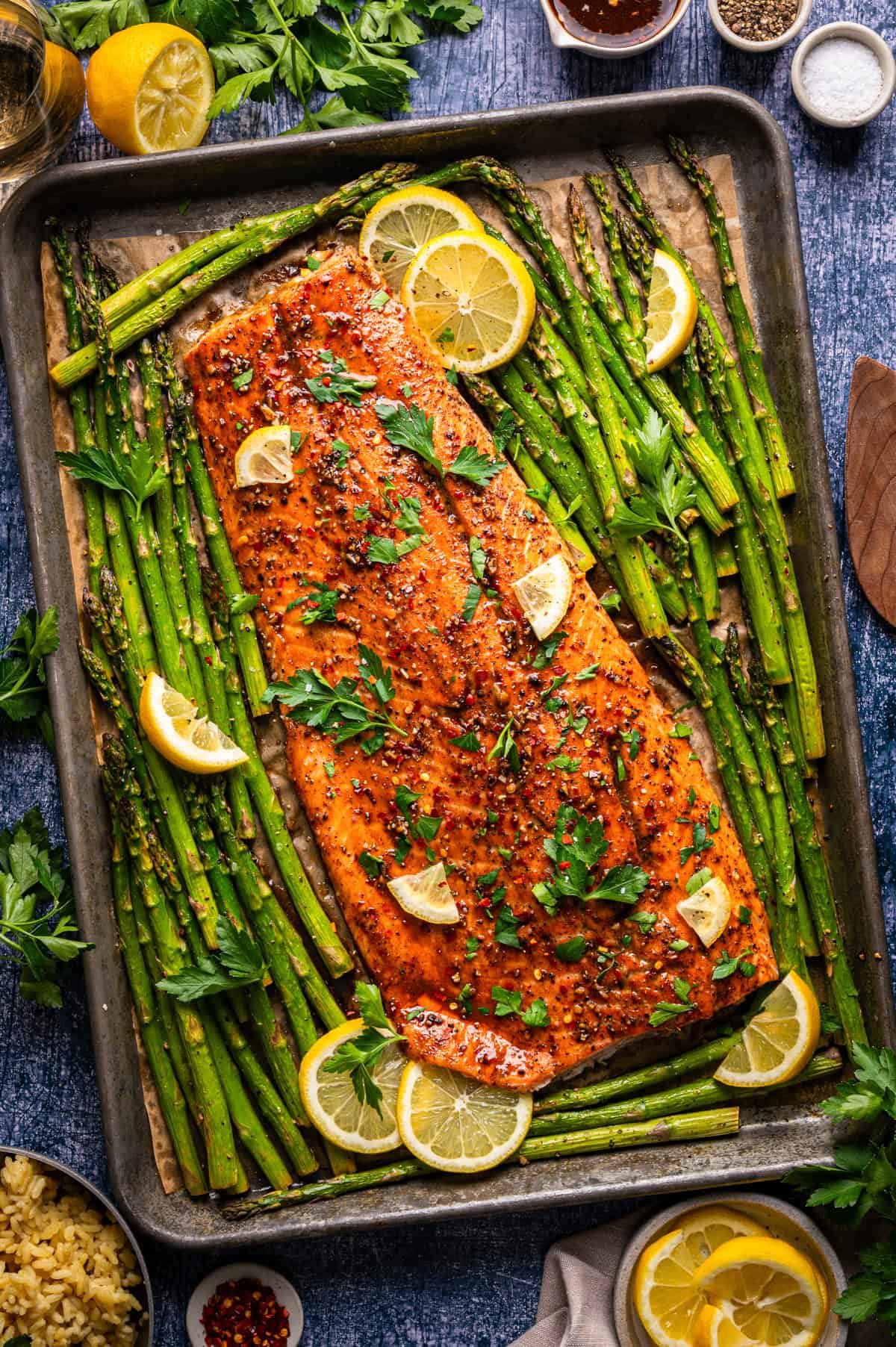
Why You'll Love It
- The glaze is incredibly versatile. It's made with just 7 ingredients, and not only does it turn this maple-glazed salmon into a restaurant-worthy meal, it also works well on other fish, chicken thighs, shrimp, and pork tenderloin.
- Smoked paprika is the secret ingredient. It adds a subtle smokiness that makes this sheet-pan baked salmon taste as if it came off a grill.
- You get a great presentation every time - pink salmon, bright green asparagus, glossy glaze - and it's ready in 30 minutes using a single sheet pan!
- This recipe works with either a large salmon slab or individual fillets. I used a skin-on salmon slab (1.5 to 2 pounds) because it holds together better, stays moister, and looks impressive on a platter - perfect for entertaining family or friends. You can also use individual skin-on fillets, which are more practical for a quick weeknight fish dinner.
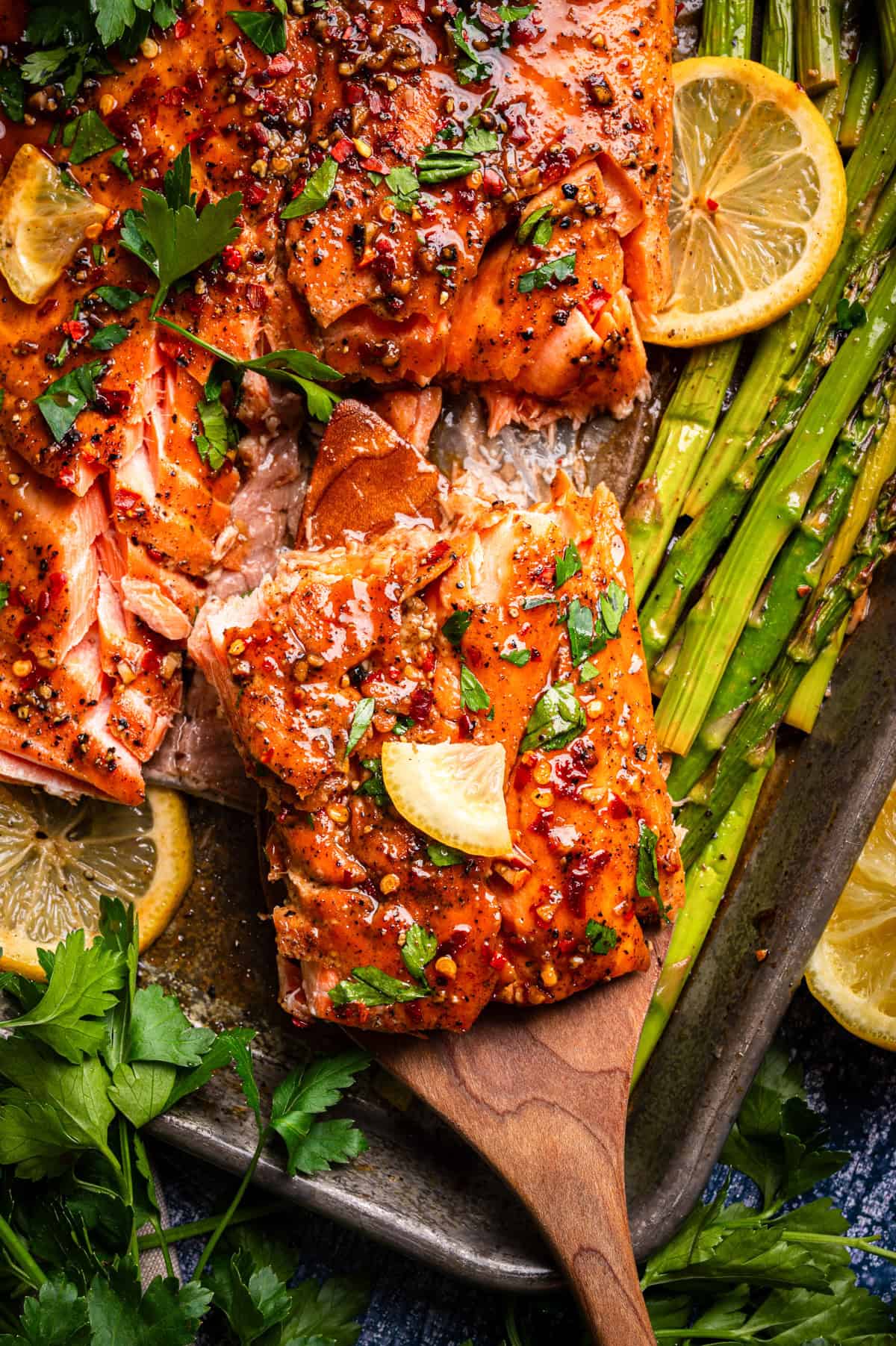
Ingredients and Substitutions
- Salmon: Use 1½-2 pounds skin-on salmon (or 4-5 fillets, about 6-8 ounces each). If using frozen, thaw completely and pat dry. Cod, halibut, or trout are also great choices! Adjust your cooking time to account for the thickness.
- Asparagus: Use medium-thick stalks or thick ones - very thin spears will overcook in the same amount of time as the salmon. Snap off the tough ends. Broccolini, green beans, or thin zucchini spears are all great alternatives to asparagus.
- Maple Syrup: Please use pure maple syrup here - not pancake syrup or maple-flavored syrup. Honey or agave can replace the maple syrup, but, of course, the flavor will be different.
- Dijon Mustard: Dijon acts as the emulsifier in this glaze - it helps bind the oil, syrup, and soy sauce together into a cohesive coating rather than a liquid that slides off. Yellow mustard, whole grain mustard, or stone-ground mustard all work just as well.
- Soy Sauce: I use low-sodium soy sauce. Regular soy sauce can make the glaze quite salty. Tamari is a great gluten-free substitute.
- Smoked Paprika: It adds a smokiness that makes the fish taste like it came off a grill.
- Red Pepper Flakes: You don't have to use them if you are adverse or allergic to them. You can also swap them out for a pinch of cayenne pepper powder or chili powder.
- Lemon: Use freshly squeezed.
- Olive Oil: Use olive oil suitable for high-heat roasting. Any neutral oil works as a substitute.
- Garlic: Use freshly minced or grated garlic. You can substitute garlic powder (use about ¼ teaspoon per clove).
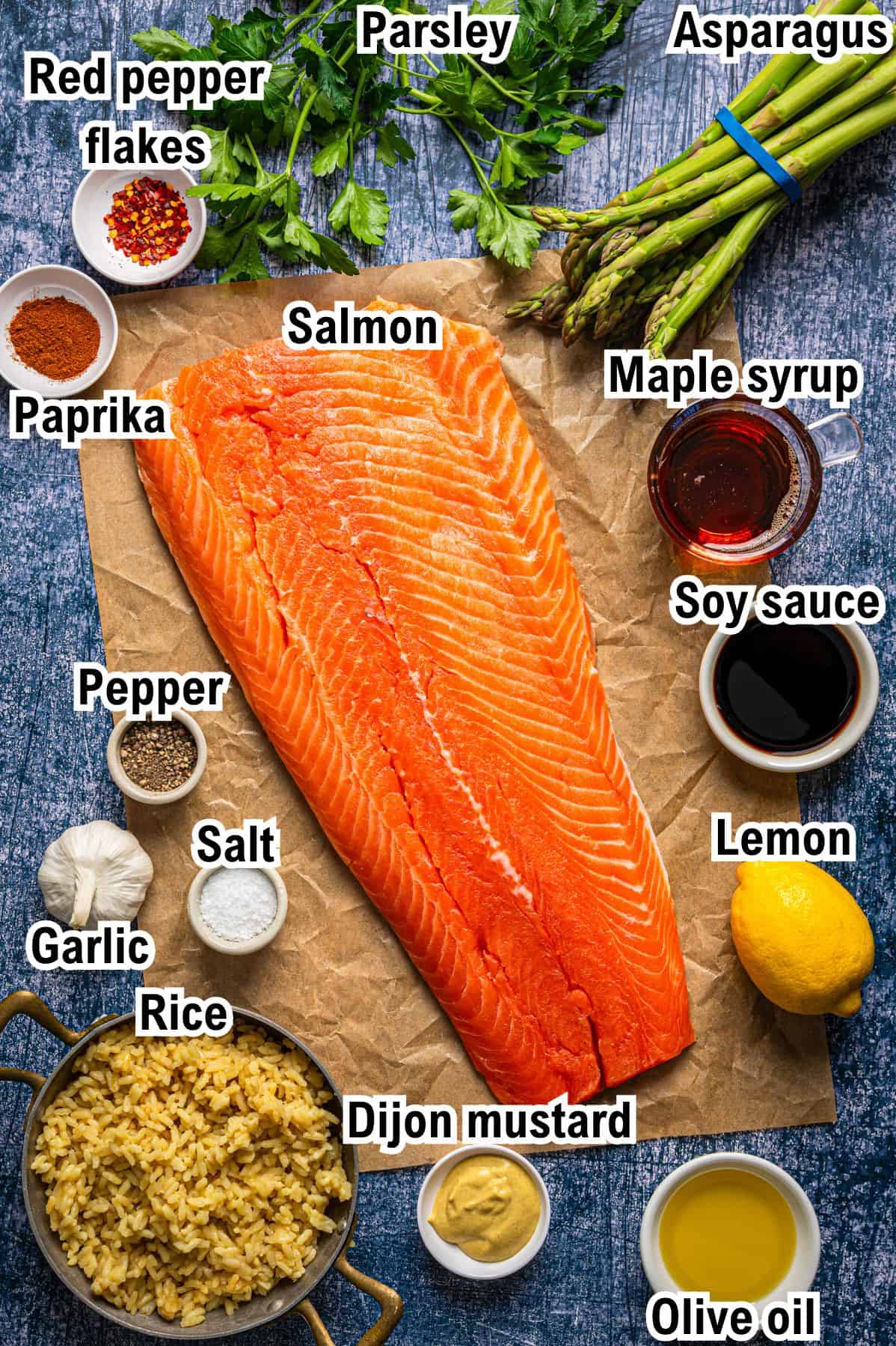
Easy Variations
- Citrus: Add orange zest and 1-2 tablespoons of orange juice to your glaze.
- Balsamic: Add in 1 tablespoon of balsamic vinegar to the glaze for a little more acidic and sweet punch.
- Asian-inspired: Finish with toasted sesame seeds and a drizzle of sesame seed oil all over the salmon and asparagus.
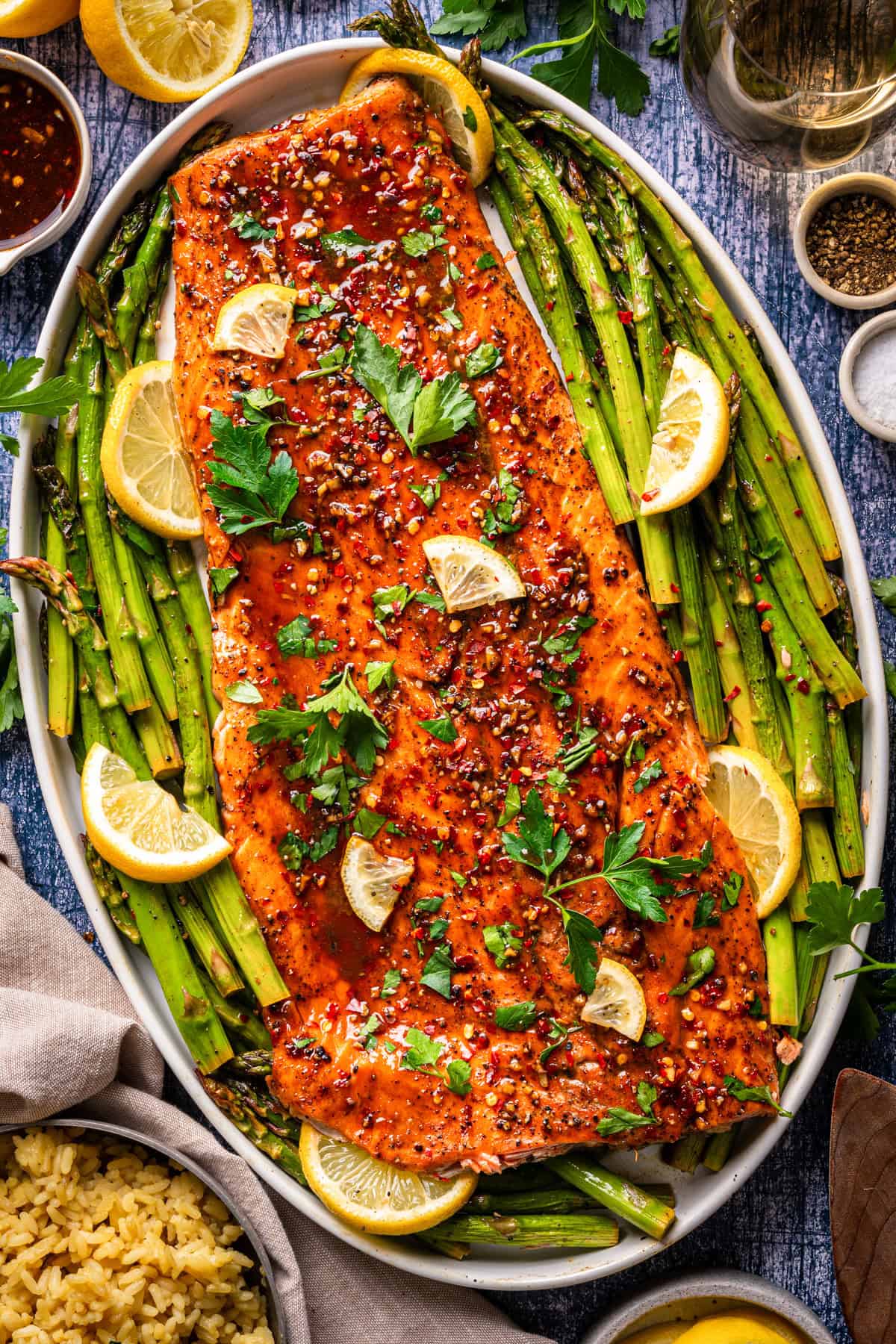
Serving Ideas
You can serve maple-glazed salmon with pretty much any side dish. Here are a few suggestions:
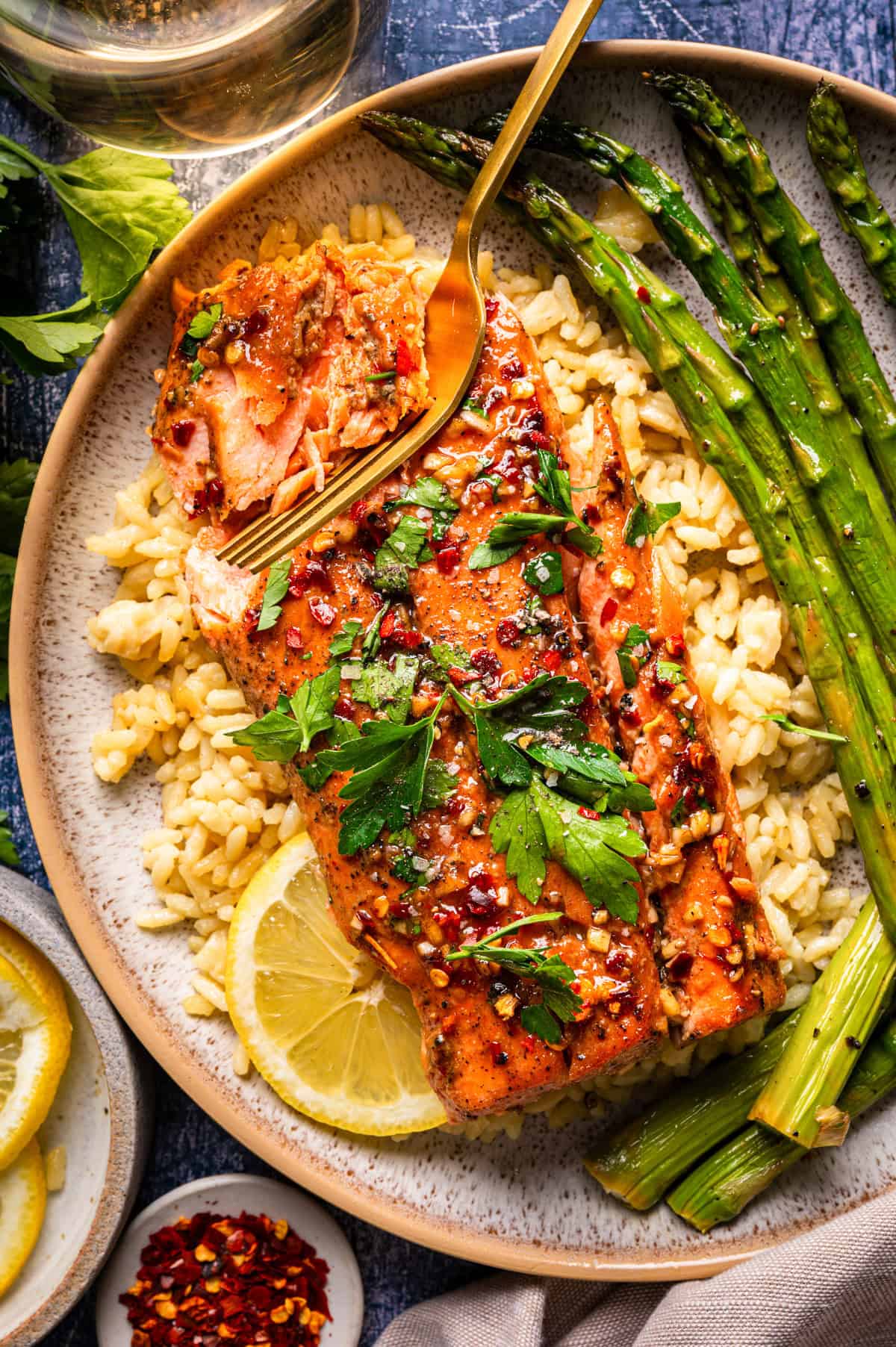
- The classic way I serve this is exactly as written: roasted salmon, asparagus, and rice with lemon on the side.
- Rice: Use jasmine rice, my cilantro-lime black bean rice, or my sun-dried tomato risotto.
- Potatoes: My roasted garlic mashed potatoes or roasted potatoes are the perfect base for soaking up the glaze. You could also serve this maple-glazed salmon, along with my other salmon recipes, with baby potatoes, crispy smashed potatoes, or even a baked potato.
- Noodles: I love serving baked salmon over noodles tossed with a little sesame oil and soy sauce, like my Thai zucchini noodles. The noodles soak up the glaze well, and make this one-pan meal slightly more substantial. You can use rice noodles, soba noodles, buttered egg noodles, or ramen noodles.
- Lighter sides: Serve this sheet pan salmon over cauliflower rice or with a salad. It also works well with arugula or a cucumber salad.
- Veggies: Serve with my lemon garlic green beans, roasted broccoli, or roasted maple butternut squash and Brussels sprouts.
- Bowls: Flake the baked salmon over rice bowls with avocado and cucumber, or tuck it into warm grain bowls with farro and feta. Quinoa bowls, brown rice bowls, or even chopped salad bowls would be great too.
Sheet Pan Maple Salmon with Roasted Asparagus
Ingredients
For the Salmon
- 2 pounds salmon slab skin-on preferred, or 4-5 (6-8 ounces each) salmon filets
- Salt and pepper to taste
- ¼ cup pure maple syrup
- 2 tablespoons soy sauce low sodium preferred
- 1 tablespoon Dijon mustard or whole grain mustard
- 2 cloves garlic finely minced or grated
- 1 teaspoon olive oil
- ½ teaspoon smoked paprika
- ¼ teaspoon red pepper flakes more or less to taste
For the Asparagus
- 2 pounds asparagus washed and trimmed
- 1 ½ tablespoon olive oil
- ½ teaspoon kosher salt
- ½ teaspoon freshly ground black pepper
- ½ medium lemon freshly squeezed juice
To Serve
- Cooked rice noodles, or your favorite starchy side
- Parsley roughly chopped
- Lemon wedges
Instructions
- Preheat the oven to 400 degrees and line a large rimmed baking sheet with parchment paper or foil. Place the slab of salmon on the baking sheet, sprinkle with salt and pepper, and set aside.
- In a small bowl, whisk together the maple syrup, soy sauce, Dijon mustard, garlic, olive oil, smoked paprika, and red pepper flakes.
- Pour half of the sauce over the salmon, brushing evenly to coat. Reserve the remaining sauce for finishing.
- In a medium bowl, toss asparagus with olive oil, salt, pepper, and lemon juice until evenly coated.
- Arrange the asparagus alongside the salmon. It's OK if there is some overlap of the asparagus.
- Bake for 13-15 minutes, until the salmon flakes easily at the thickest part, or the salmon has reached your desired temp (we recommend 130-135 degrees) and the asparagus is tender.
- Remove the sheet briefly, switch the oven to broil, and return for about 1-2 minutes to lightly char the salmon and asparagus if you wish. Watch carefully to avoid burning.
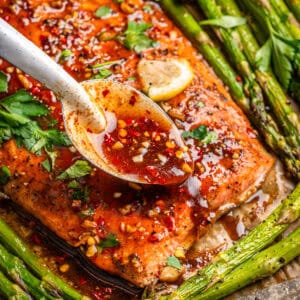
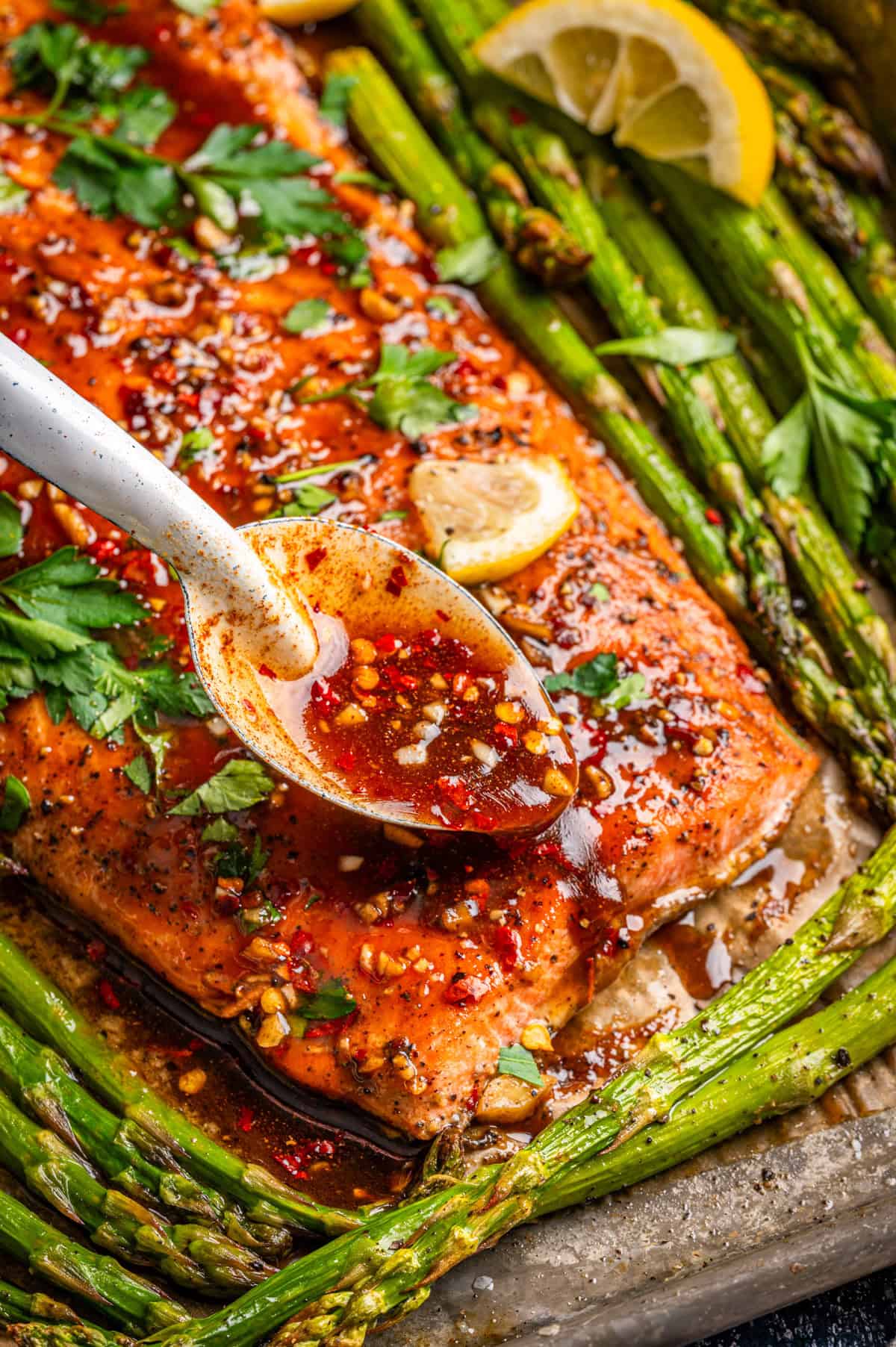
- Let rest for 2-3 minutes, then sprinkle with chopped parsley and pour remaining sauce over the entire salmon, or pour on individual portions.
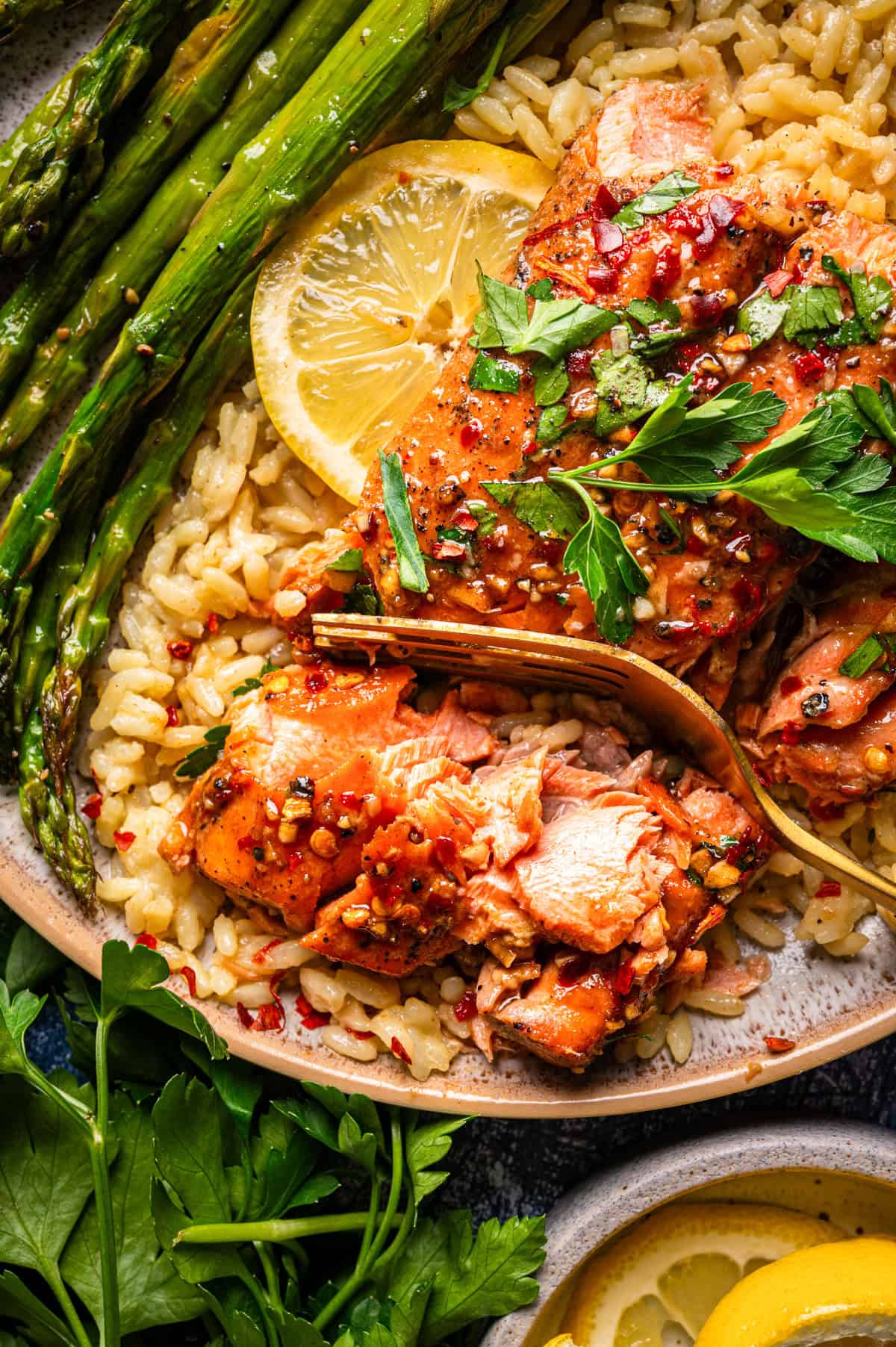
- Slice the salmon into portions and serve with the roasted asparagus and your favorite starchy side like rice, noodles, or potatoes. If desired, slice lemon wedges and squeeze some lemon juice over the finished salmon and asparagus.
- Note: I provide helpful Step-by-Step photos below this recipe card.
Notes
- Even cooking: Choose a salmon slab that has an even thickness to ensure uniform baking.
- Use a spatula to serve: Slide the spatula under the salmon skin to keep portions intact.
- Watch the oven: Salmon tends to cook quickly, so make sure to either use a thermometer probe or check the salmon around the 8-minute mark. For medium-rare, you'll want the salmon to be between 125 and 130°F (52-54°C) internal temperature. For well done, 145°F (63°C).
- Prep ahead: Feel free to make the glaze a day in advance and refrigerate it!
- Sauce: You are welcome to adjust the sauce if you like! Want it spicier? Add more red pepper flakes. Want it smokier? Add more smoked paprika. Adjust to your preference.
- The sauce is on the thinner side. So, if you prefer it a bit thicker, combine 1 tablespoon of water and 1 tablespoon of cornstarch, then mix them together in a saucepan over low heat with the remaining half of the sauce until slightly thickened.
- The nutritional information does not include sides such as rice, noodles, or mashed potatoes. It does include asparagus.
Storage Tips
- Fridge: Store the cooled salmon and asparagus in an airtight container in the fridge for up to 3 days.
- Freezer: The cooked and cooled salmon can be frozen for up to 2 months, wrapped tightly in foil, then in plastic wrap, or in a freezer-safe container or bag. I don't recommend storing the asparagus in the freezer, as it will lose texture and flavor after thawing. Thaw the salmon prior to reheating.
- Reheating: Either reheat gently in a 300°F (150°C) preheated oven for 5-10 minutes or microwave until it reaches your desired temperature.
Nutrition
Nutrition Disclaimer:
The nutritional information on this website is only an estimate and is provided for convenience and as a courtesy only. The accuracy of the nutritional information for any recipe on this site is not guaranteed. It should not be used as a substitute for a professional nutritionist's advice.
How To Make Sheet-Pan Maple-Glazed Salmon (Step-by-Step Photos)
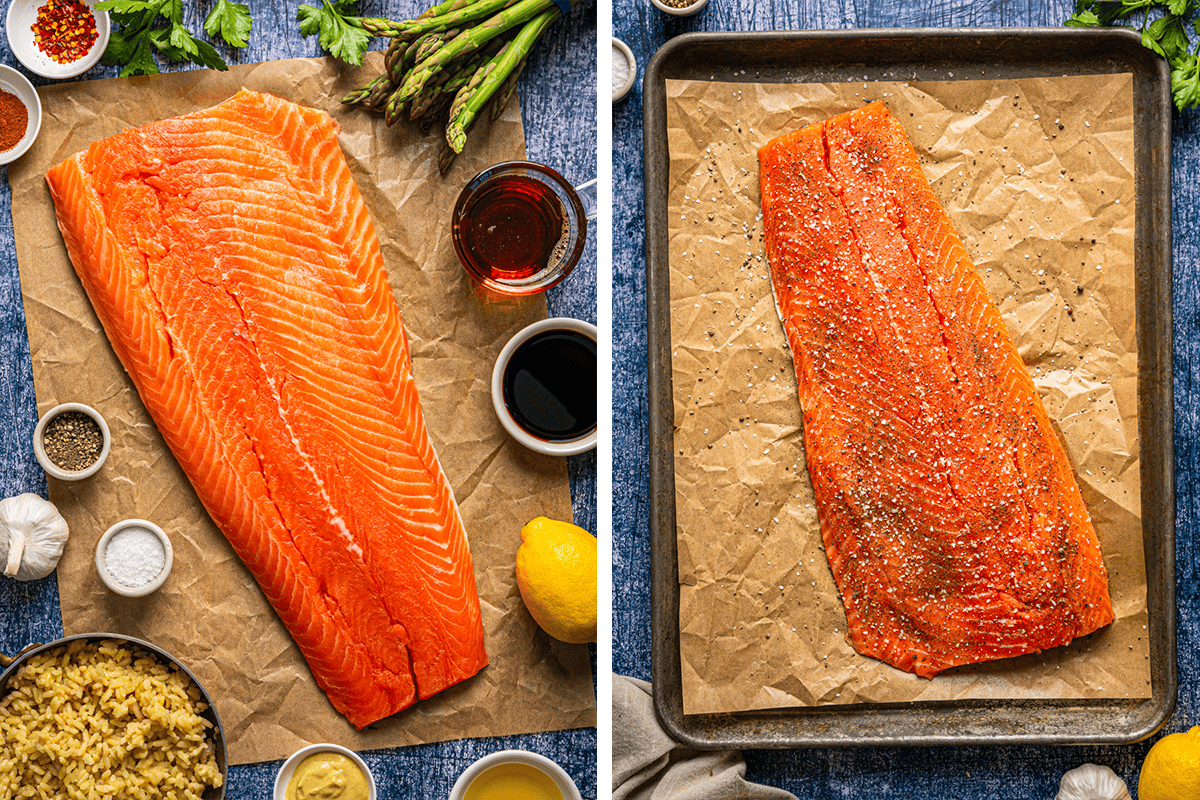
- Prepare salmon: Preheat oven to 400°F (200°C) and line a sheet pan with parchment paper. Place the slab of salmon on the baking sheet, and sprinkle it with salt and pepper.
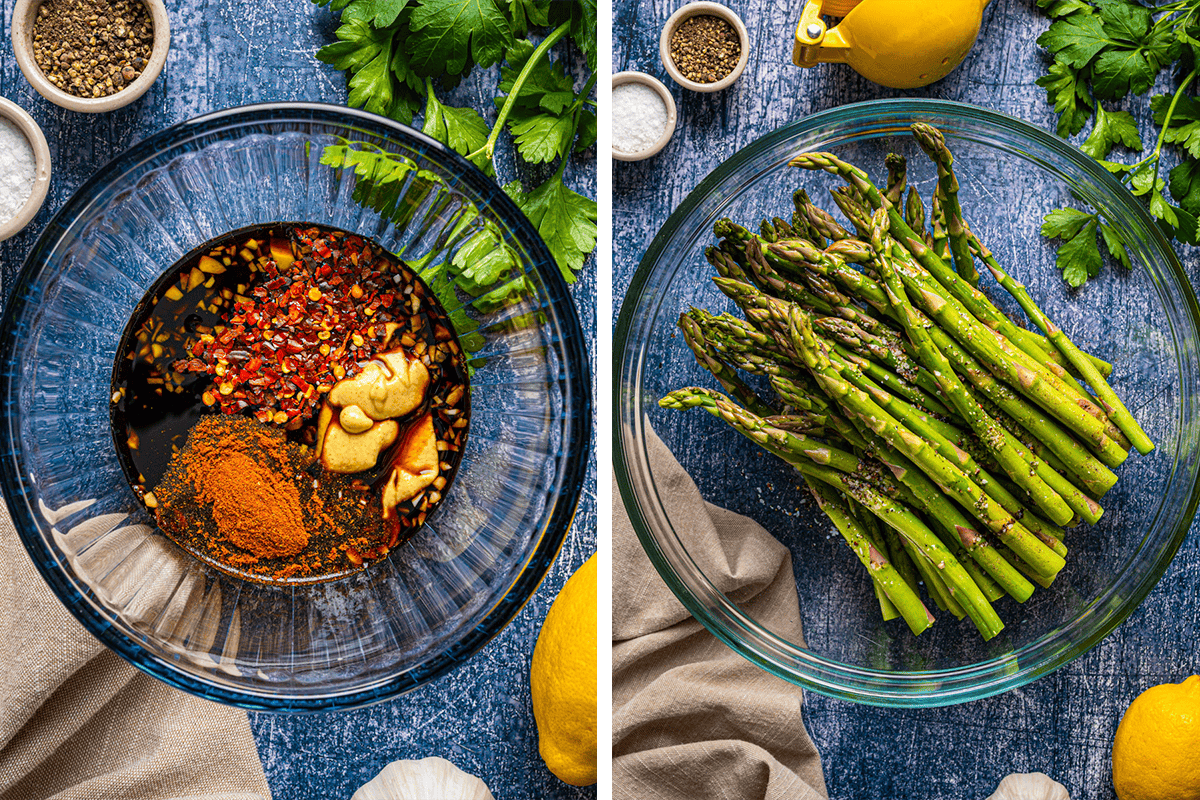
- Make maple glaze: In a small bowl, whisk together the maple syrup, soy sauce, Dijon mustard, garlic, olive oil, smoked paprika, and red pepper flakes.
- Prepare asparagus: In a medium bowl, toss asparagus with olive oil, salt, pepper, and lemon juice until evenly coated.
- Brush salmon with half the maple glaze (reserve the rest).
- Arrange asparagus around salmon on the baking sheet.
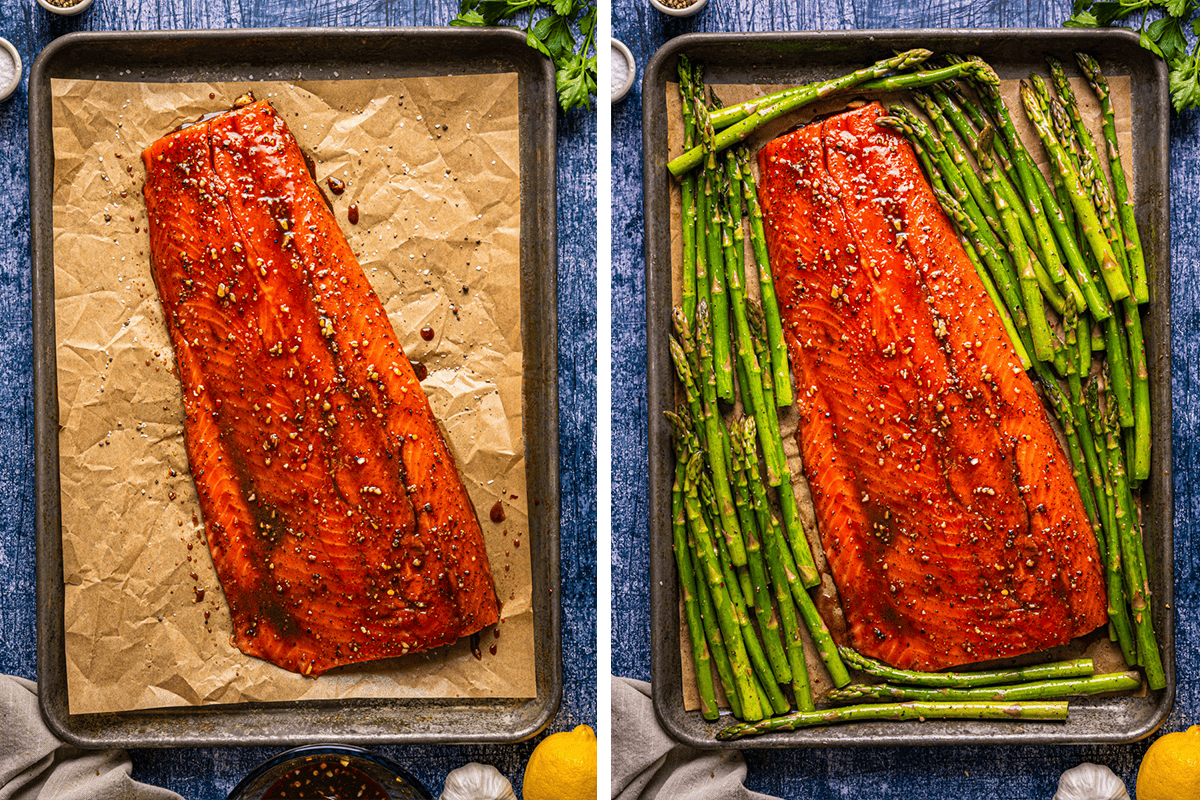
- Bake for 13-15 minutes, until the salmon is cooked. Rest briefly, top with parsley and remaining sauce, then serve with your preferred side and lemon wedges.
Submit your question or provide a review of the recipe + star rating RIGHT HERE.