
This post may contain affiliate links. Read my disclosure policy.
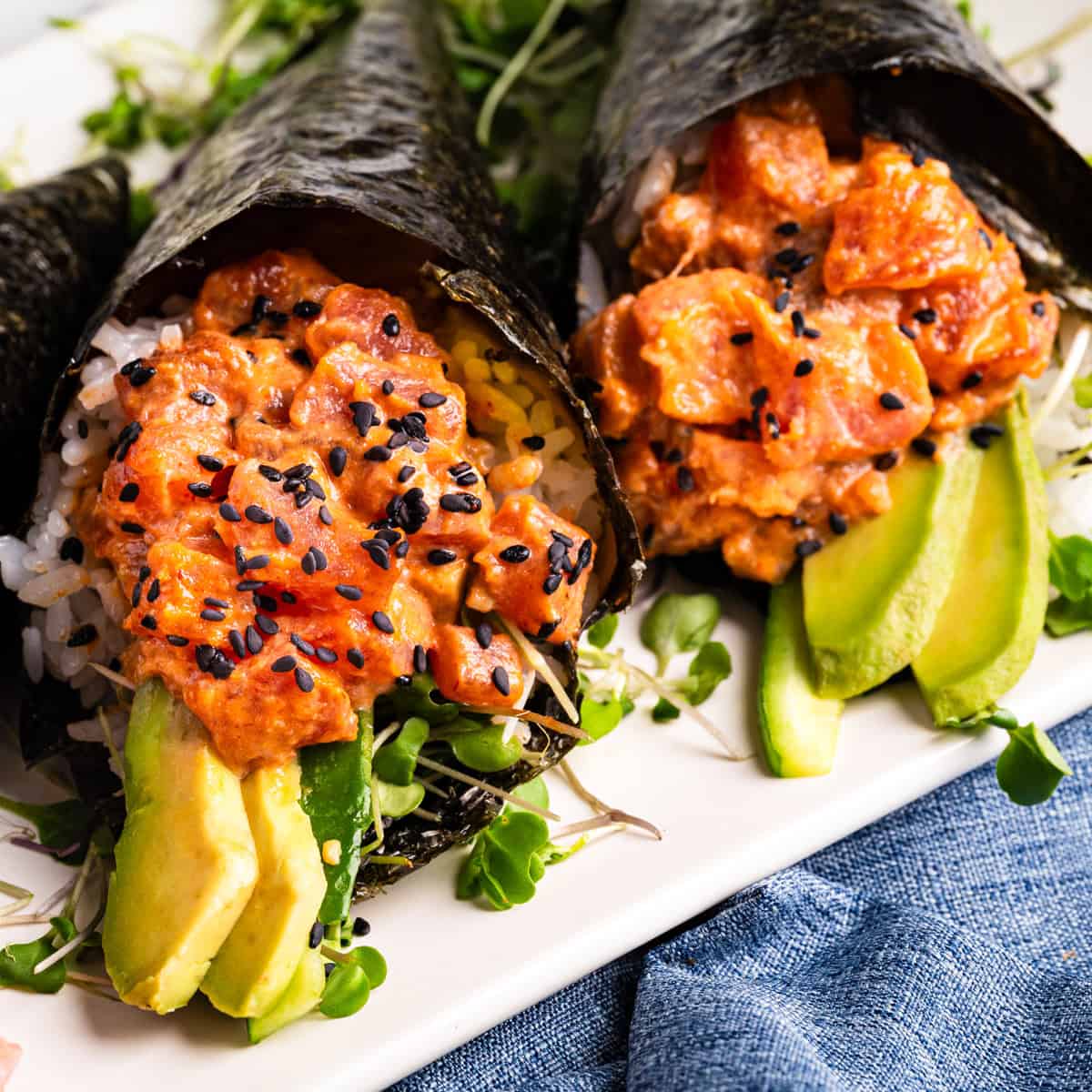
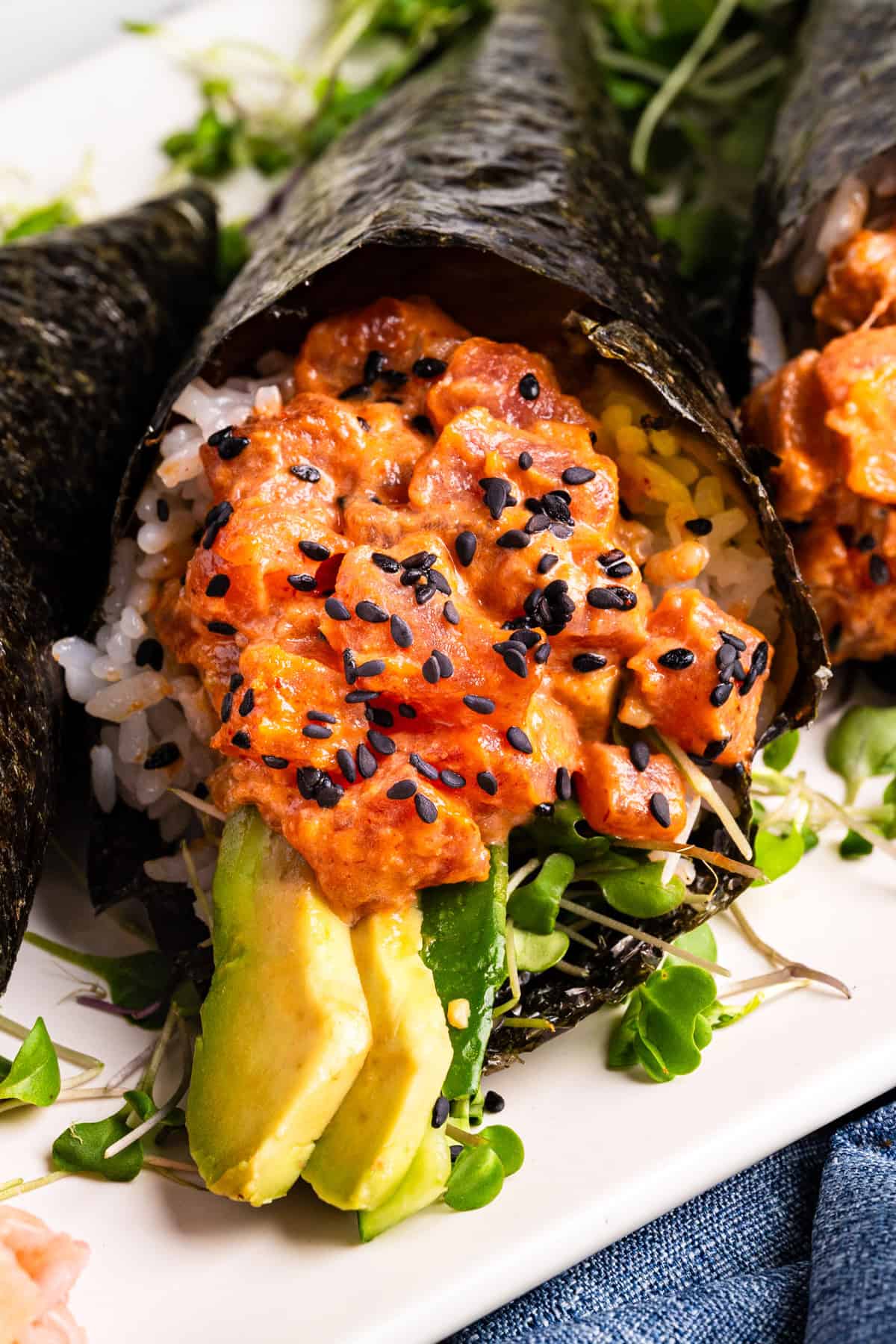
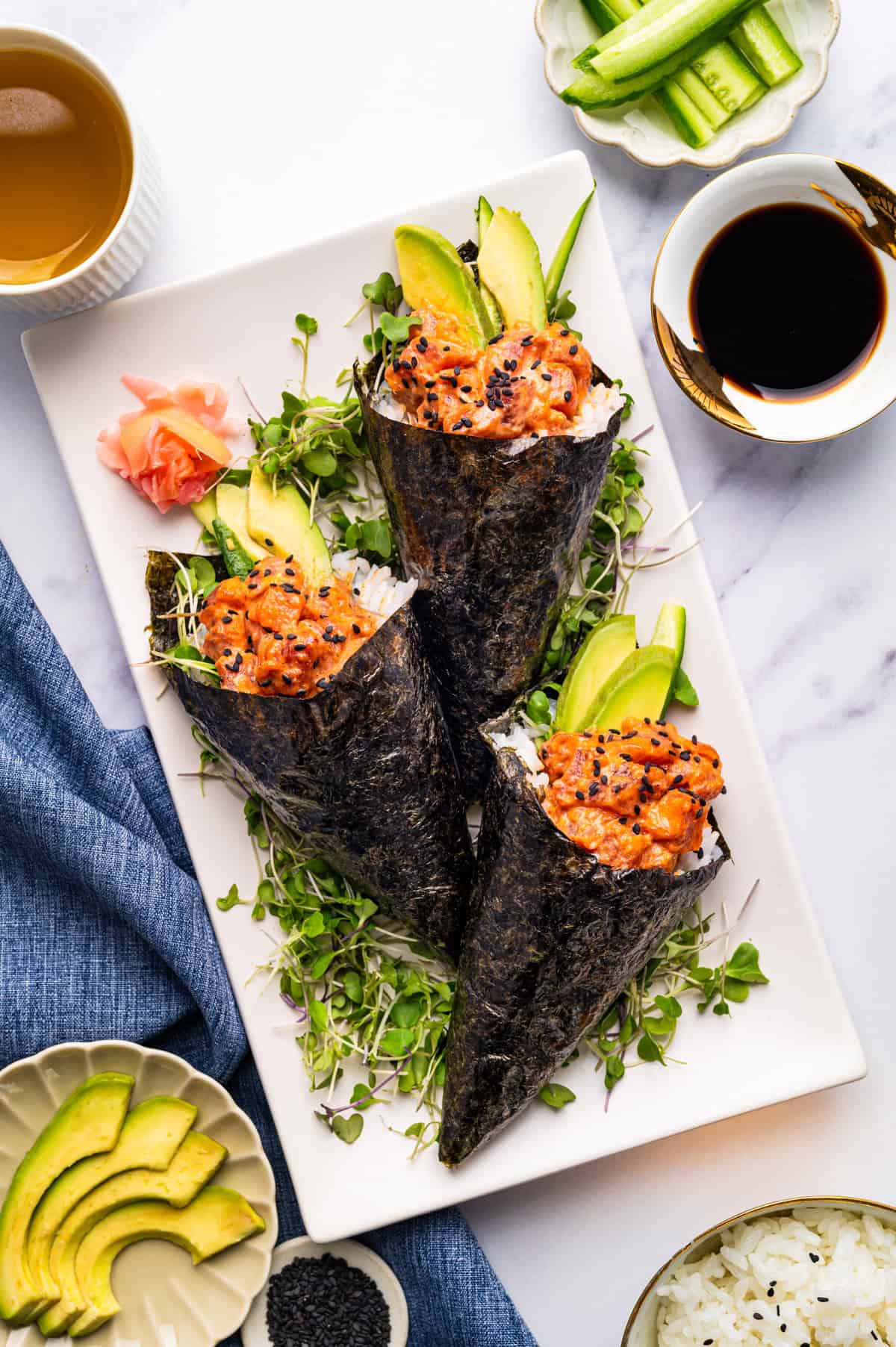
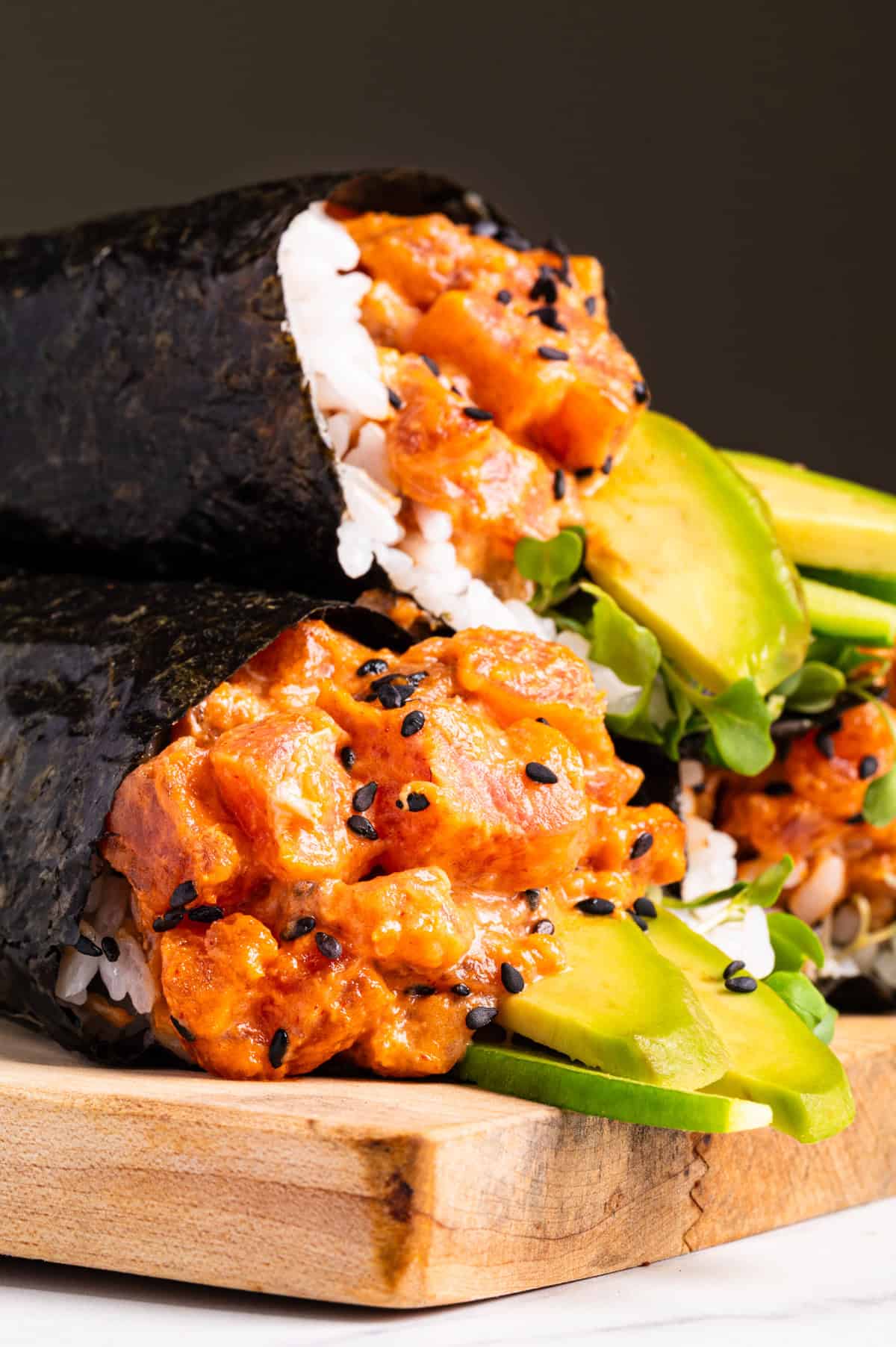
Ready in 20 minutes, these spicy tuna hand rolls are the easiest homemade sushi you can make. Crisp nori cones are filled with lightly seasoned sushi rice, creamy sriracha tuna, cool avocado, and crunchy cucumber. No sushi mat, no rolling skills, no takeout prices. Naturally gluten-free.
Easy Spicy Tuna Hand Rolls (Temaki Sushi in 20 Minutes)
Living on top of a mountain in landlocked Colorado means I am about as far from an ocean as a person can get, which is why I love the simplicity of these hand rolls. Sushi rolls take practice, a bamboo mat, and a patience I don't always have.
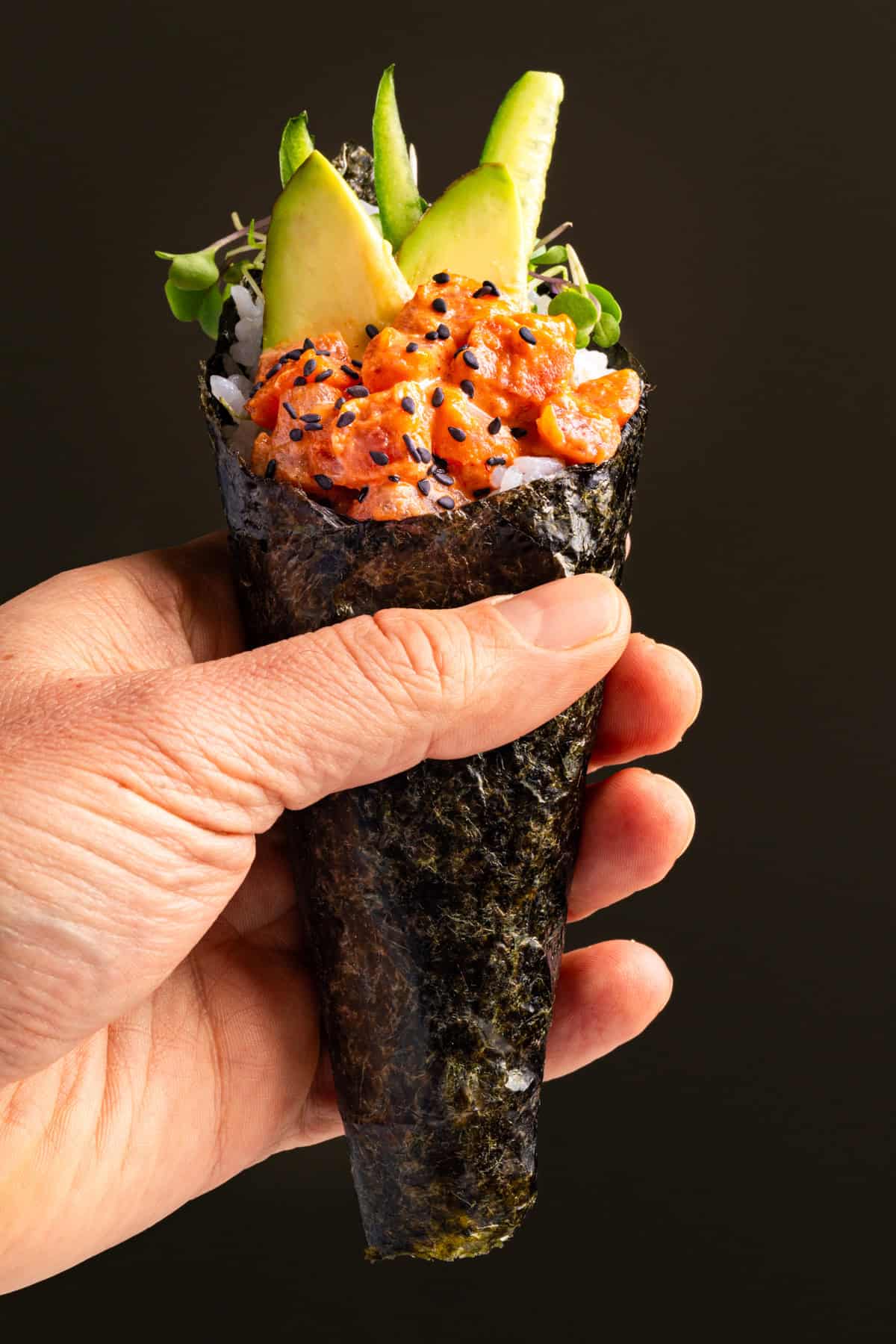
These spicy tuna hand rolls are the easiest sushi you can make. They come together in 20 minutes, with none of the mess or technique regular sushi requires. You hold a half sheet of nori (dried edible seaweed) in your palm, press on a little rice, tuck in the filling, and twist it into a cone. That is the recipe!
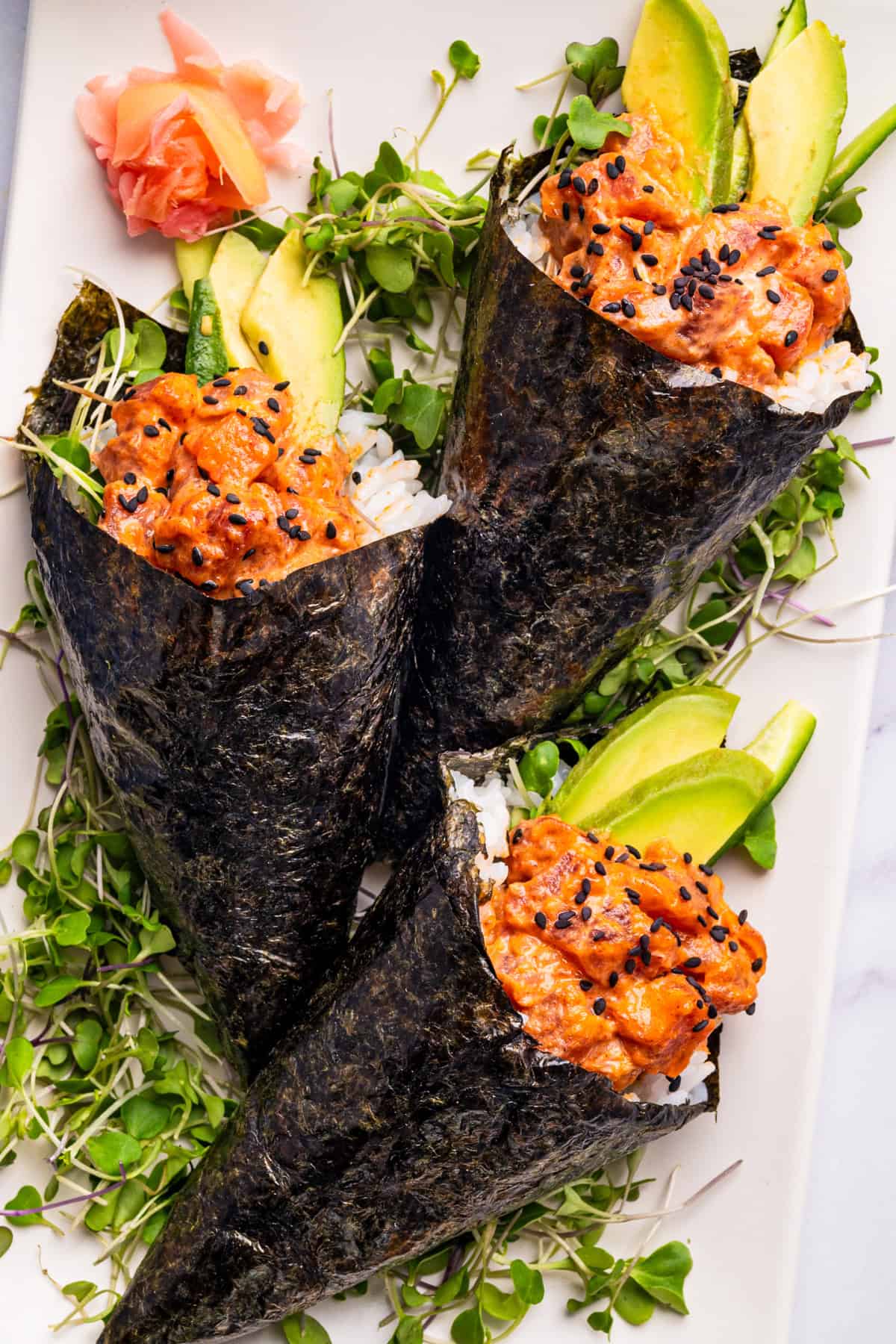
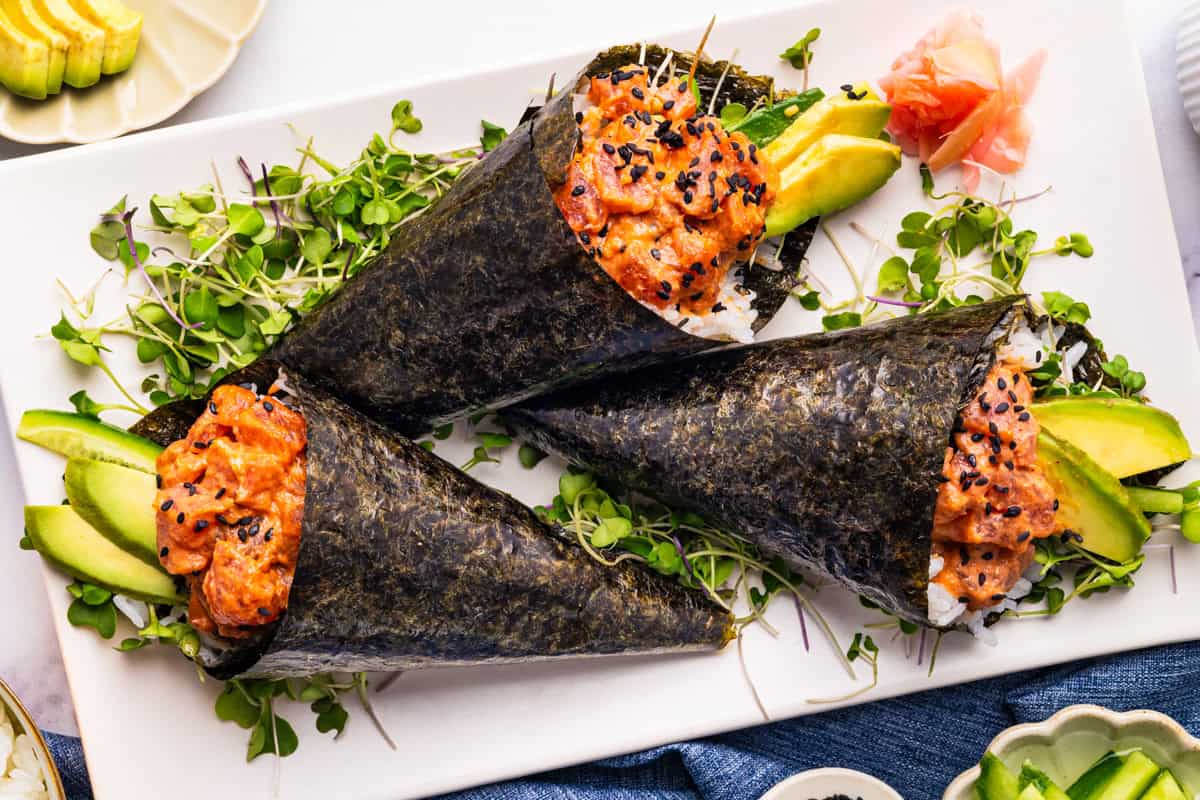
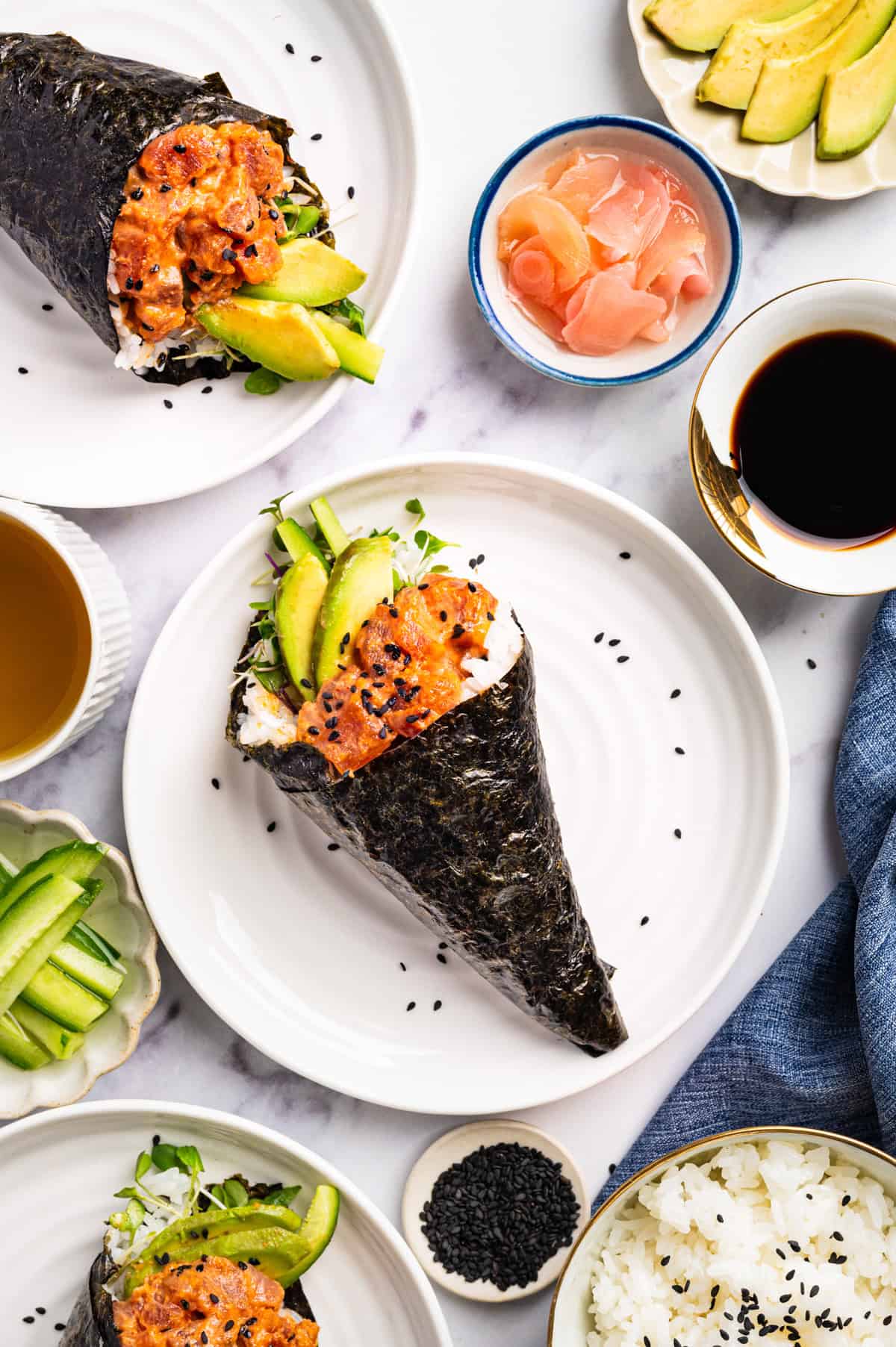
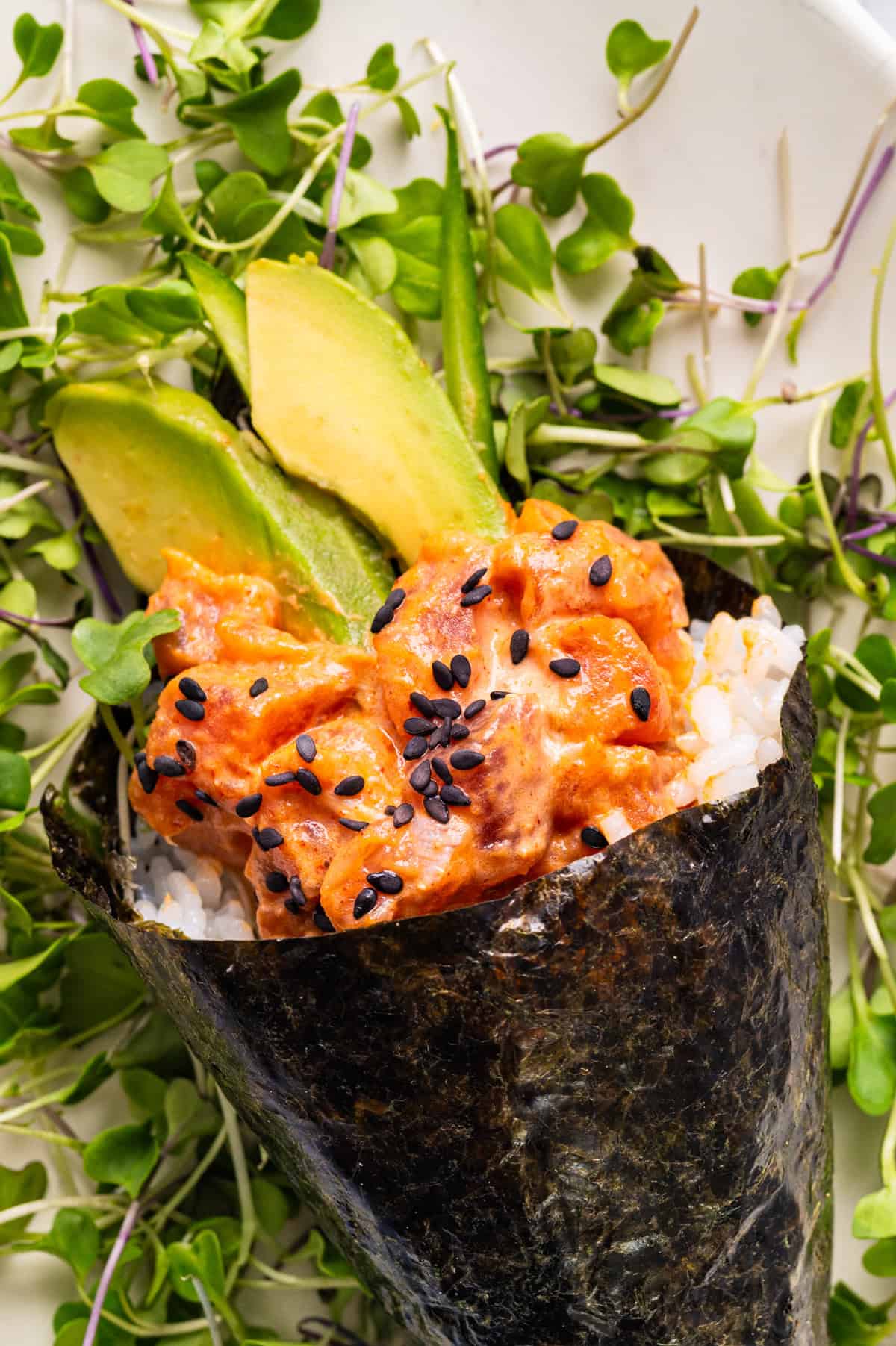
Temaki (手巻き) means "hand roll," and that is exactly what this is: a half sheet of nori (海苔) rolled into a cone around seasoned sushi rice (shari, 酢飯) and a filling. Mine is a spicy tuna mix of sushi-grade tuna, Japanese mayo, chili sauce, soy sauce, and a few drops of sesame oil, topped with cucumber, avocado, and a little wasabi, with pink pickled ginger (gari, ガリ) on the side.
Ingredients and Substitutions
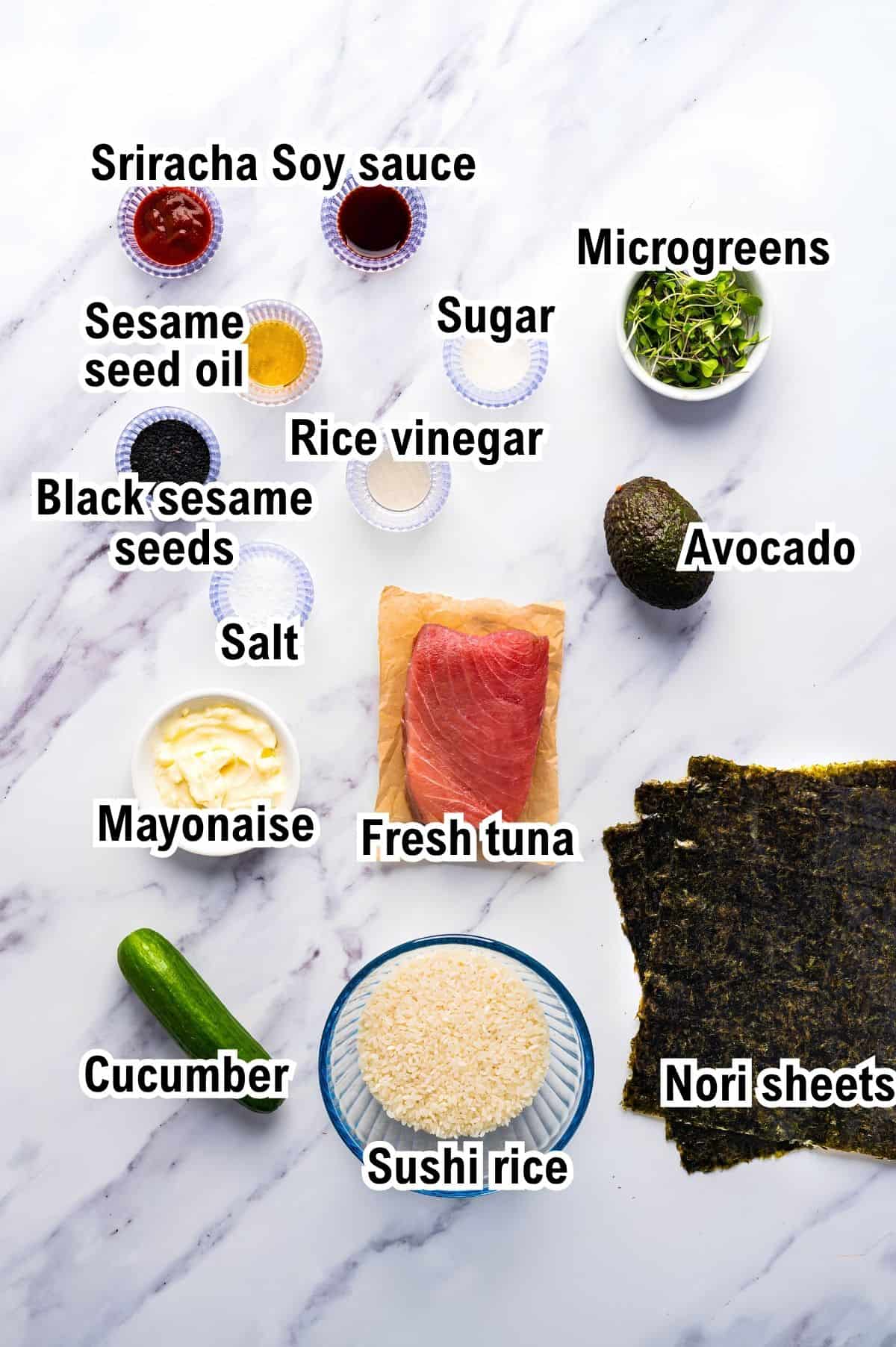
This recipe has 4 components: seasoned sushi rice, spicy tuna, fillings, and garnishes. I encourage you to read my ingredient notes below, but you can also skip straight to the recipe card for the amounts and directions.
1) Sushi Rice Ingredients
- Sushi rice: Short- or medium-grain rice works, and both cook up sticky enough to hold together in your hand. Long grain rice will not work here.
- Rice vinegar, sugar, and salt. This trio is what turns plain rice into sushi rice. You are not looking for heavily seasoned rice here. I recommend regular granulated sugar, but brown sugar will work, too.
2) Spicy Tuna Ingredients
- Sushi-grade tuna: Ask for it by name at a good fish counter or a Japanese or Asian market. Yellowfin (ahi) and bigeye are both excellent. Fresh or previously frozen are both fine, and previously frozen is often the safer choice. Keep it cold in the fridge, at or below 40°F (4°C), right up until you cut it. You can also use sushi-grade salmon instead. Cooked shrimp or imitation crab are also excellent if raw fish isn't your thing.
- Japanese mayonnaise: Kewpie is richer and slightly tangier than American mayo because it's made with egg yolks and rice vinegar. Regular mayo works fine if that's what you have.
- Sriracha or chili sauce. Start with what the recipe calls for, then adjust. Sambal oelek and gochujang both work if you want a different kind of heat.
- Soy sauce: Use tamari, coconut aminos, or a certified gluten-free soy sauce to keep the whole recipe gluten-free. Japanese soy sauce is lighter and slightly sweeter than Chinese soy sauce.
- Toasted sesame oil: A little goes a long way.
- Nori sheets (dried edible seaweed). Buy the ones sold for sushi and keep them sealed until the moment you assemble. Nori pulls moisture out of the air fast, and soggy nori is the one thing that will ruin an otherwise perfect spicy tuna hand roll.
3) Fillings
- Cucumber: Persian or English cucumber, cut into matchsticks for crunch. If cucumbers aren't your vibe, feel free to substitute or even add other crunchy veggies such as carrots, raw zucchini, or daikon!
- Avocado: Sliced thin so it drapes rather than clumps.
- Microgreens: Peppery and pretty. Shiso leaves, thinly sliced scallions, or sprouts all work.
- Black sesame seeds: Toasted, for a little nuttiness and contrast against the pink tuna.
4) Optional Garnishes
- Wasabi: Serve on the side so everyone controls their own heat.
- Pink pickled ginger (gari): Meant to be eaten between rolls to reset your palate, not piled inside them.
How to Choose Tuna for Hand Rolls
- Ask for sushi-grade or sashimi-grade tuna. "Sushi grade" isn't a regulated term in the U.S., so ask your fishmonger directly if the tuna is intended to be eaten raw. If the answer isn't a confident yes, choose something else.
- Choose ahi tuna. Yellowfin and bigeye, both commonly sold as ahi, are classic choices for tuna hand rolls. Bluefin is excellent but expensive; albacore works too, though it's softer and paler.
- Check for freshness. Look for deep, even color and a clean, oceanic smell, never a strong fishy odor. Buy the tuna the day you plan to serve it and keep it refrigerated until slicing.
- Food safety: Eating raw fish always carries some risk. Buy from a trusted source, tell them you'll be serving it raw, keep it cold, and use it the same day. Pregnant women, young children, older adults, and people with weakened immune systems should avoid raw fish. For full guidance, see the FDA's Selecting and Serving Fresh and Frozen Seafood Safely and FoodSafety.gov's page on fish and shellfish.
How to Make Spicy Tuna Hand Rolls (Step-by-Step Photos)
Note: This is an overview with the key details. The full recipe with exact amounts is at the bottom of this post.
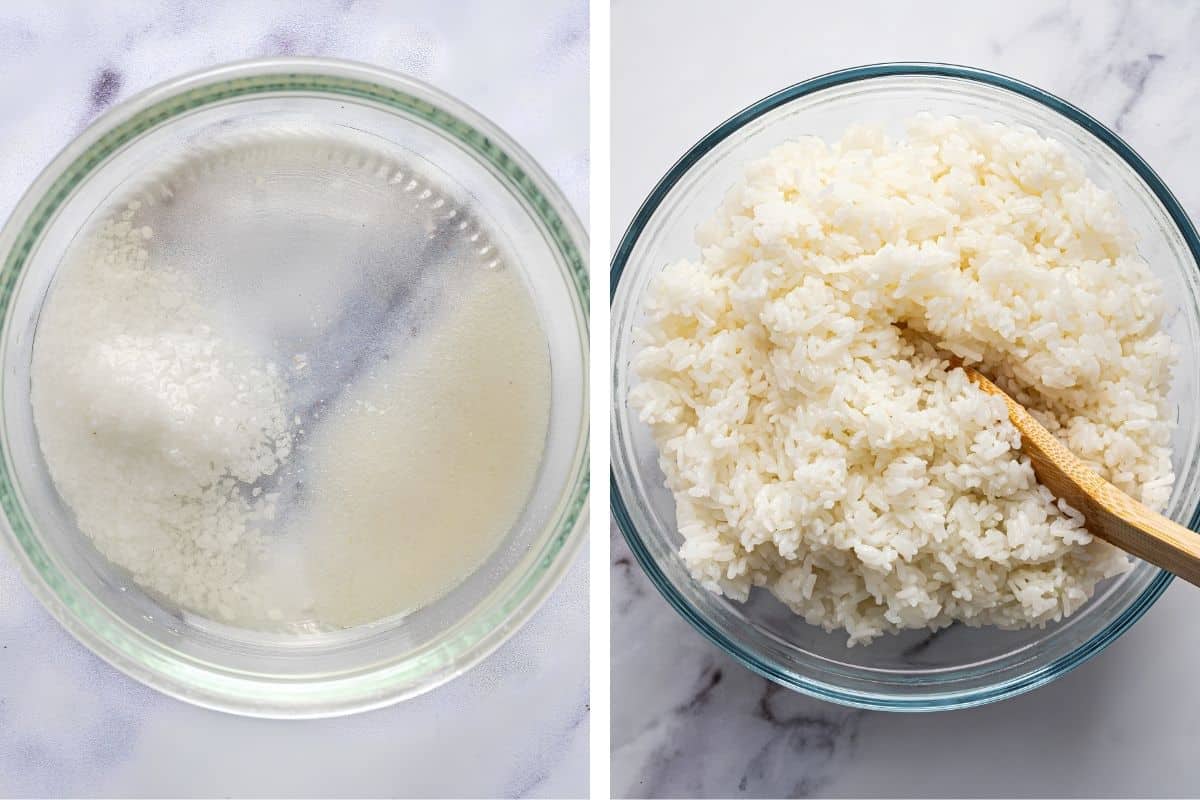
- Season the rice: Stir the rice vinegar, sugar, and salt together until dissolved. Cook the rice, then pour the vinegar mixture over it while it's hot and cut it in with a spatula rather than stirring. Cool to about body temperature, 98°F (37°C).
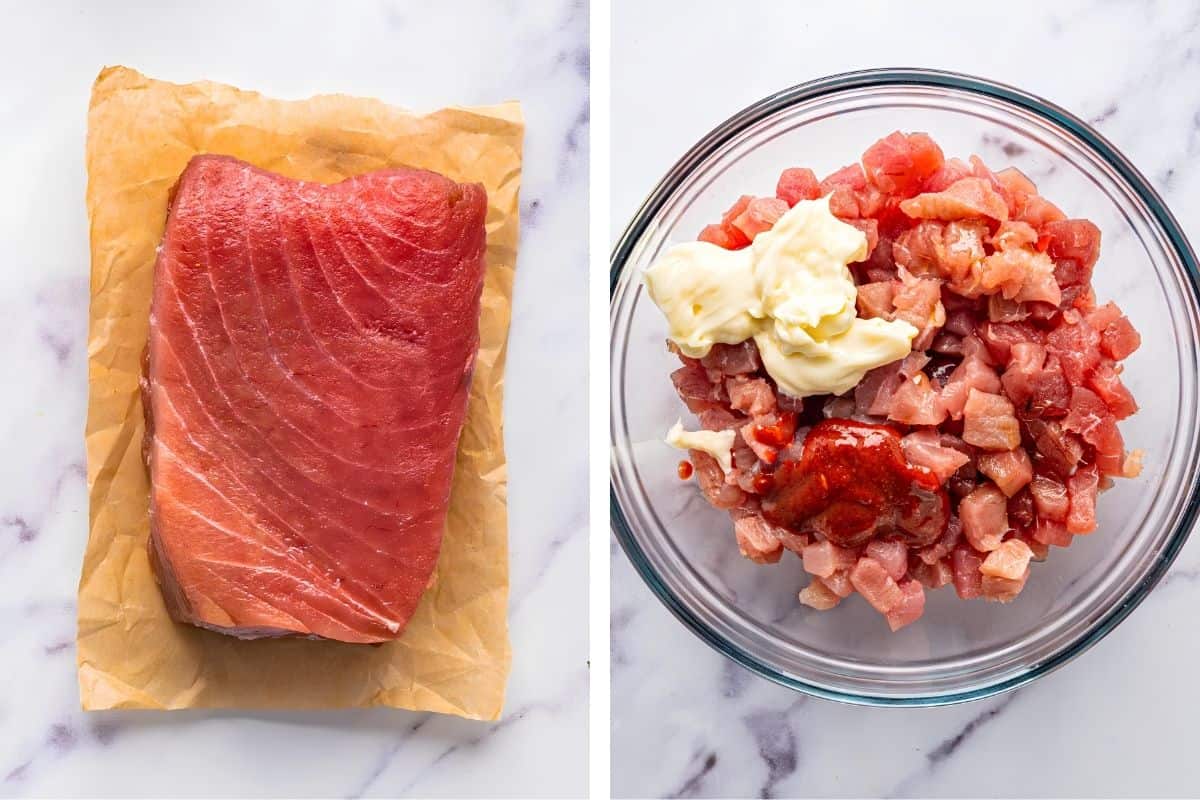
- Make the spicy tuna: Cut the tuna into small cubes and mix with mayonnaise, chili sauce, soy sauce, and sesame oil. Taste and adjust.
- Prep your fillings: Cut the cucumber into matchsticks and slice the avocado thin. Cut each nori sheet in half.
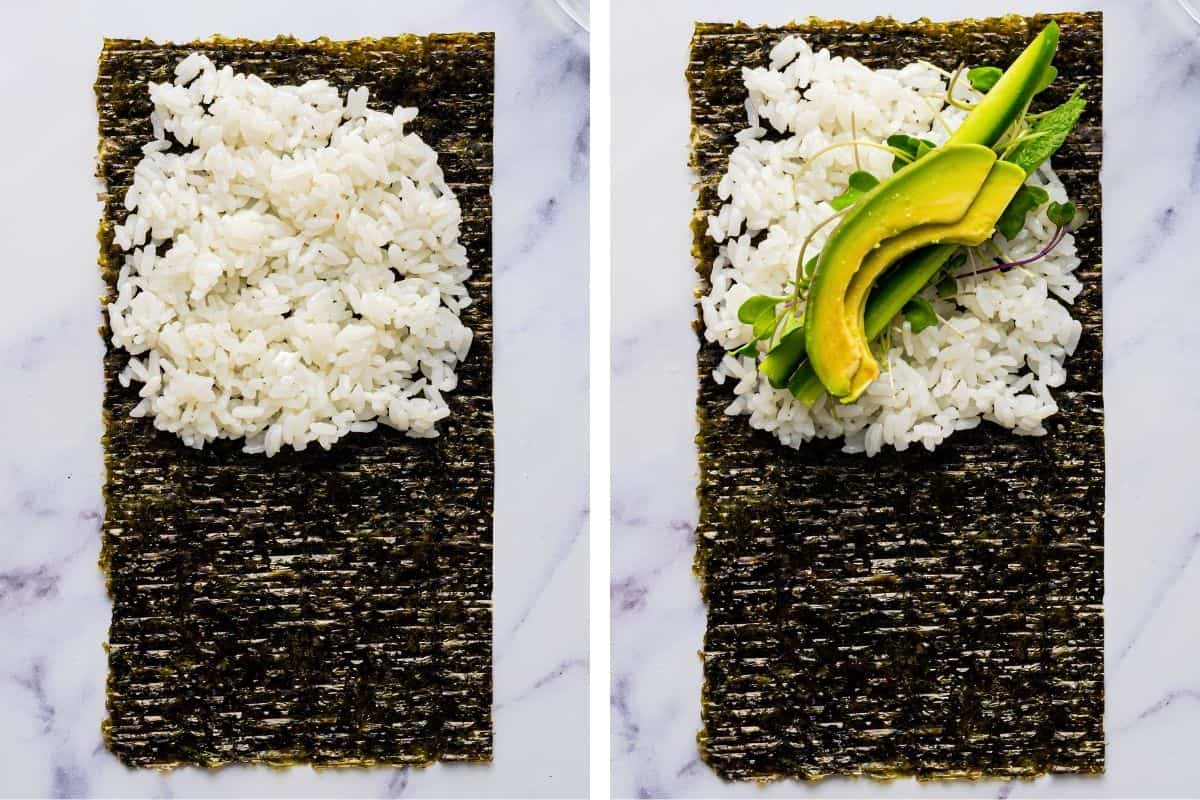
- Press the rice: Wet your hands, then press a handful of rice onto the left half of the nori (edible dried seaweed), leaving the right corner bare.
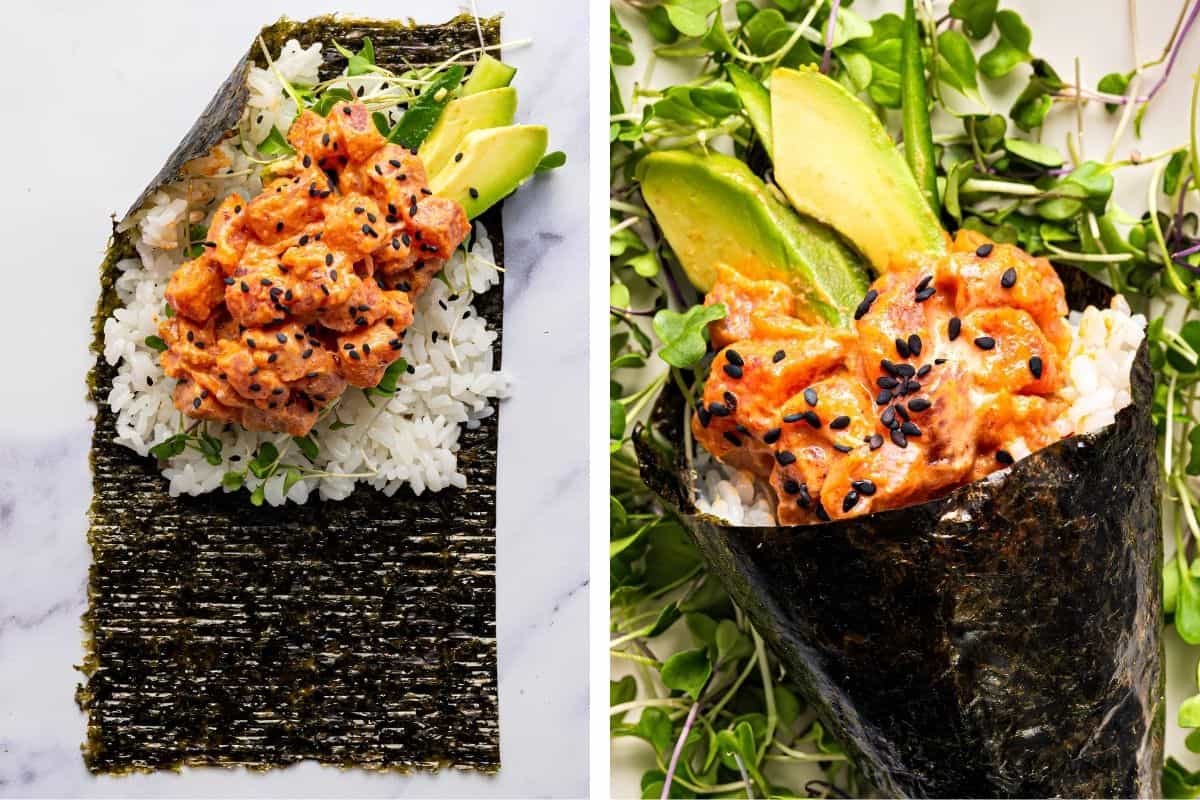
- Fill at an angle: Lay the cucumber and avocado diagonally across the rice, then spoon the tuna on top.
- Roll into a cone: Fold the bottom left corner up and over the filling, then roll into a cone. Dab a few grains of rice or a little water on the edge to seal.
- Serve right away: Hand rolls are best within a minute or two of rolling, while the nori is still crisp.
Key Preparation Tips
- Cut the tuna with a sharp knife, and cut it small. Tiny cubes, roughly ¼ inch, so the mix is creamy rather than chunky. A dull knife tears the fish and turns it mushy.
- Keep the tuna cold. Store it in the coldest part of your fridge, below 40°F (4°C), and mix it right before you roll.
- Season the rice while it's hot. Hot rice absorbs the vinegar mixture. Cold rice just gets wet. Pour the seasoning over and cut it in with a spatula using a slicing motion instead of stirring, which keeps the grains intact.
- Serve the rice warm, not hot. Aim for around body temperature: 98°F (37°C). Hot rice steams the nori limp and slightly cooks the fish.
- Wet your hands, but only lightly. A quick dip in water keeps the rice from sticking to your fingers. Too much water and the nori will tear.
- Roll and eat immediately. Tuna hand rolls have a shelf life of about five minutes before the nori softens.
Variations
- Spicy salmon hand rolls: Swap in sushi-grade salmon. Everything else stays the same.
- Cooked options: Chopped cooked shrimp, imitation crab, or flaked cooked salmon all work with the same spicy mayo mixture. Great for anyone at the table who doesn't eat raw fish.
- Vegetarian: Skip the tuna and fill the cones with avocado, cucumber, firm tofu, and a drizzle of the spicy mayo. Roasted sweet potato also works well here.
- Sushi bowl instead: Short on time or nori? Spoon the rice into bowls, top with the spicy tuna and fillings, and eat it as a deconstructed bowl, the same way I serve my pan-seared salmon and rice with cilantro-lime crema.
- Not spicy: Omit the sriracha altogether if you can't handle spice. Feel free to add in a sauce you prefer instead.
What Is the Difference Between a Hand Roll (Temaki) and a Sushi Roll (Maki)?
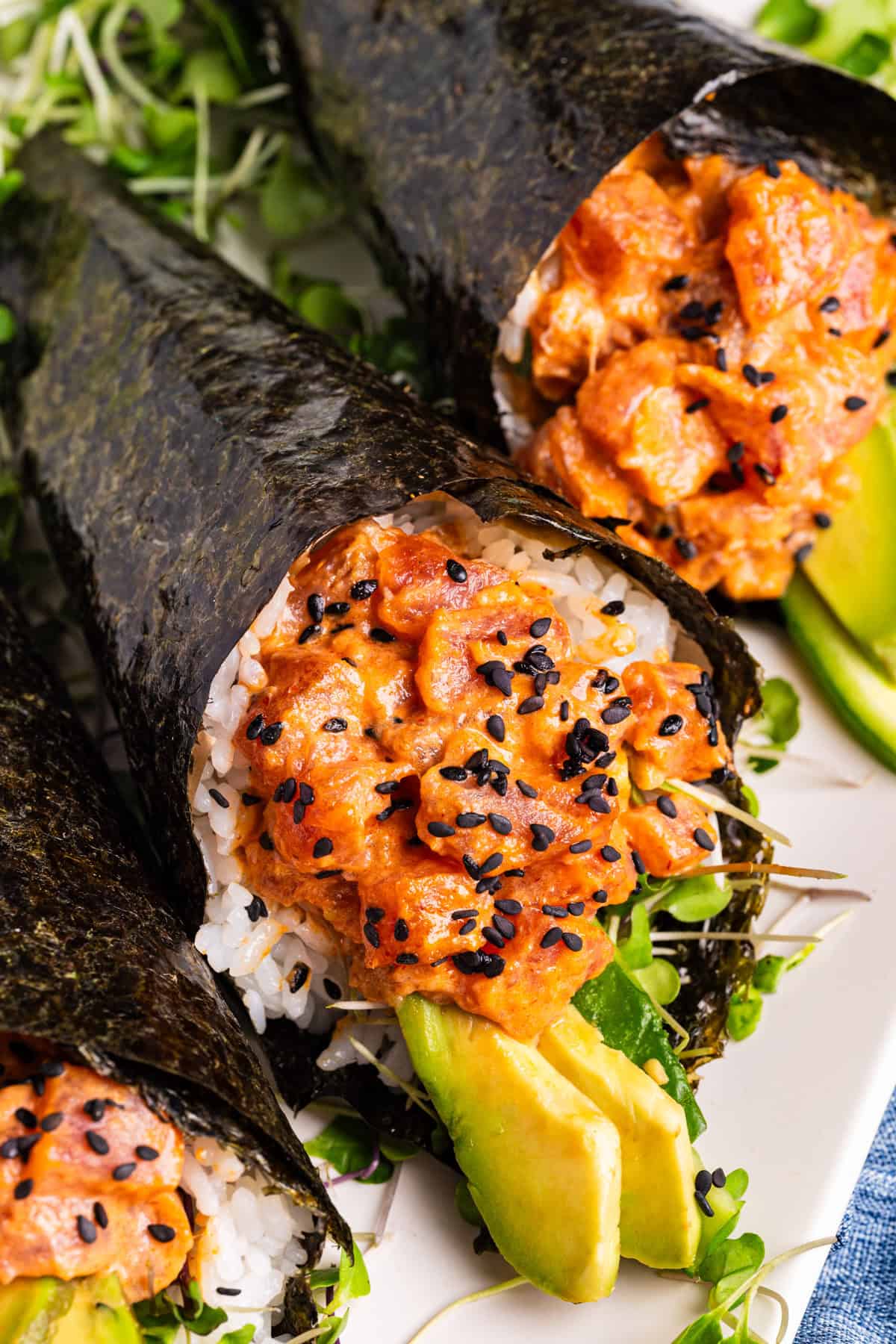
- A hand roll (temaki) is a cone-shaped sheet of nori (dried edible seaweed) filled with sushi rice, fish, and other fillings, then shaped by hand. It's eaten with your hands immediately after assembling, while the nori is still crisp. Hand rolls are generally easier to make because they don't require a bamboo mat or precise slicing.
- A maki roll is the type of sushi roll most commonly referred to simply as "sushi" in the U.S. The rice and fillings are rolled tightly with nori (dried edible seaweed), usually using a bamboo mat, then sliced into 6 or 8 bite-size pieces. Maki requires a little more technique but holds its shape better, making it easier to serve on a platter or pack for takeout.
YOUR FEEDBACK: If you have any questions or feedback about this recipe, I'm always looking forward to hearing from you in my comment section below. Julia.

Spicy Tuna Hand Rolls (Temaki Sushi in 20 Minutes)
Equipment
- Rice cooker or medium saucepan with a lid
- Wooden spoon or rice paddle
- Sharp knife
- Small bowl
Ingredients
For the Rice
- 1 ½ tablespoons rice vinegar
- 1 teaspoon sugar
- 1 teaspoon salt
- 1 ½ cups sushi rice (uncooked) Short- or medium grain rice works as well
For the Tuna
- ½ pound sushi-grade fresh tuna
- 2 tablespoons mayonnaise Japanese mayo preferred
- 1 ½ tablespoons chili sauce like Sriracha
- 1 teaspoon soy sauce use tamari for gluten free
- ½ teaspoon sesame oil toasted
- 3 sheets nori (edible dried seaweed) cut in half
- water to coat your hands
Optional Fillings
- cucumber sliced into matchsticks
- avocado sliced thin
- microgreens
- black sesame seeds
Optional Garnishes
- wasabi
- pink pickled ginger
Instructions
Season the rice
- Combine the rice vinegar, sugar, and salt in a small bowl until the sugar and salt have dissolved. Set aside.
- Cook your rice according to the instructions on the package. Once done but still hot, transfer to a large bowl and "cut in" the vinegar mixture, pouring it over the rice while using a wooden spoon or spatula to slice through the rice rather than stirring it. Adjust to taste with more vinegar, salt, or sugar while the rice is still hot. It shouldn't be heavily seasoned, just enough to taste the vinegar, salt, and sugar. Set aside to cool to about body temperature, 98°F (37°C), while you prepare the tuna.
Make the spicy tuna
- Cut the tuna into tiny cubes or pieces and place in a medium bowl. Mix in the mayonnaise, chili sauce, soy sauce, and sesame oil. Adjust to taste: more chili sauce if you like it spicier, more soy if you want it savory, more sesame oil for richness.
Assemble
- Place a half sheet of nori on a flat surface, shiny side down. Wet your hands with water and grab a handful of rice, pressing it flat onto the left half of the nori sheet and leaving the right corner empty.
- If using, lay your fillings diagonally across the rice, then spoon some of the tuna on top.
- Fold the bottom left corner of the nori up and over the filling, then roll the nori into a cone. Use a few grains of rice or a little water along the edge to seal it together.
- Serve immediately, while the nori is still crisp. Enjoy!
Notes
- Ask for sushi-grade or sashimi-grade tuna. Neither term is regulated, so what you're really doing is asking your fishmonger one question: is this tuna meant to be eaten raw? Buy tuna from a source you trust and confirm it's intended to be eaten raw. Use it the same day when possible.
- Buy your fish the same day. Ask your fishmonger directly whether the tuna is safe to eat raw. Previously frozen sushi-grade tuna is a great option and often the safer one. Keep it refrigerated at or below 32 to 38°F (0 to 3°C), until the moment you use it.
- A note on food safety: Raw fish always carries some risk of foodborne illness. Buy from a source you trust, tell them you're serving it raw, keep it cold, and use it the same day. Pregnant women, young children, older adults, and anyone with a weakened immune system should skip raw fish. For more, see the FDA's Selecting and Serving Fresh and Frozen Seafood Safely and FoodSafety.gov on fish and shellfish.
- No tuna? Sushi-grade salmon, hamachi, or scallops all work in place of tuna.
- Cut the rice, don't stir it: Slicing through hot rice with the edge of a spatula keeps the grains intact. Stirring turns sushi rice into paste.
- Don't chill the seasoned rice: Room temperature rice stays soft and pliable. Refrigerated rice turns hard and won't press well.
- Keep a water bowl handy: Wet your palms before every roll so the rice releases cleanly from your hands. Using water on your hands before picking up the rice helps it not stick.
- If you're having trouble getting a nice cone shape, just roll the tuna into a cylinder. It will taste just as good!
- Roll to order: Nori (dried edible seaweed) softens within minutes of touching rice, so assemble one roll at a time and eat as you go.
- Make it gluten-free: Substitute tamari or coconut aminos for the soy sauce and use a chili sauce labeled gluten-free.
- Rice yield: 1 ½ cups of uncooked sushi rice makes more than enough for 6 hand rolls. I like the extra because it means a second round for anyone still hungry, and leftover seasoned rice makes a great base for a rice bowl the next day. To make just enough for 6 rolls, use ⅔ cup uncooked rice and cut the vinegar mixture in half.
- Storage: Hand rolls do not store, so roll only what you plan to eat. The spicy tuna mix keeps refrigerated for up to 24 hours in an airtight container, and seasoned rice keeps at room temperature for a few hours or refrigerated for 2 days (let it come back to room temperature before using, since cold rice turns hard).
Make-Ahead and Storage Tips
Hand rolls are assembled to order, but you can prep almost everything ahead of time. If you are packing this to eat later, make sure all your ingredients are separated, and the nori sheets are kept away from moisture. Assemble them right before eating to keep the nori paper crispy.- Sushi rice: Season it up to 4 hours ahead and keep it at room temperature, covered with a damp towel. Refrigerating sushi rice turns it hard and dry.
- Spicy tuna: Mix it up to 4 hours ahead, cover, and keep refrigerated. Raw fish is best the day you buy it.
- Nori: Keep sheets sealed in the package with the desiccant until the moment you roll. Once nori absorbs humidity, it goes chewy.
- Leftovers: Don't store assembled hand rolls. If you have extra tuna and rice, turn them into a rice bowl the next day.
Supplies
- various mixing bowls
- wooden spoon or spatula
- cutting board
- knife
- measuring cups and spoons
Nutrition
Nutrition Disclaimer:
The nutritional information on this website is only an estimate and is provided for convenience and as a courtesy only. The accuracy of the nutritional information for any recipe on this site is not guaranteed. It should not be used as a substitute for a professional nutritionist's advice.
More Asian-Inspired Recipes You'll Love
- Japchae (Korean Noodles) - chewy sweet potato noodles with marinated beef and vegetables
- Beef Bulgogi (Korean BBQ Beef) - thin-sliced ribeye in a sweet and savory marinade
- Korean BBQ Chicken - gochujang-marinated chicken thighs, grilled or baked
- Gochujang Salmon - spicy Korean glazed salmon in 30 minutes
- Homemade Pad Thai with Chicken and Shrimp - protein-packed rice noodles with a balanced tamarind sauce
- Thai Chicken Curry - creamy one-pan red curry with sweet potato and green beans
- Thai Beef Salad (Yum Nua) - seared steak with herbs and a bright lime dressing
- Thai Shrimp Soup - coconut broth, tender shrimp, and rice noodles
- Mongolian Beef - crispy flank steak in a glossy stir-fry sauce
Submit your question or provide a review of the recipe + star rating RIGHT HERE.