
This post may contain affiliate links. Read my disclosure policy.
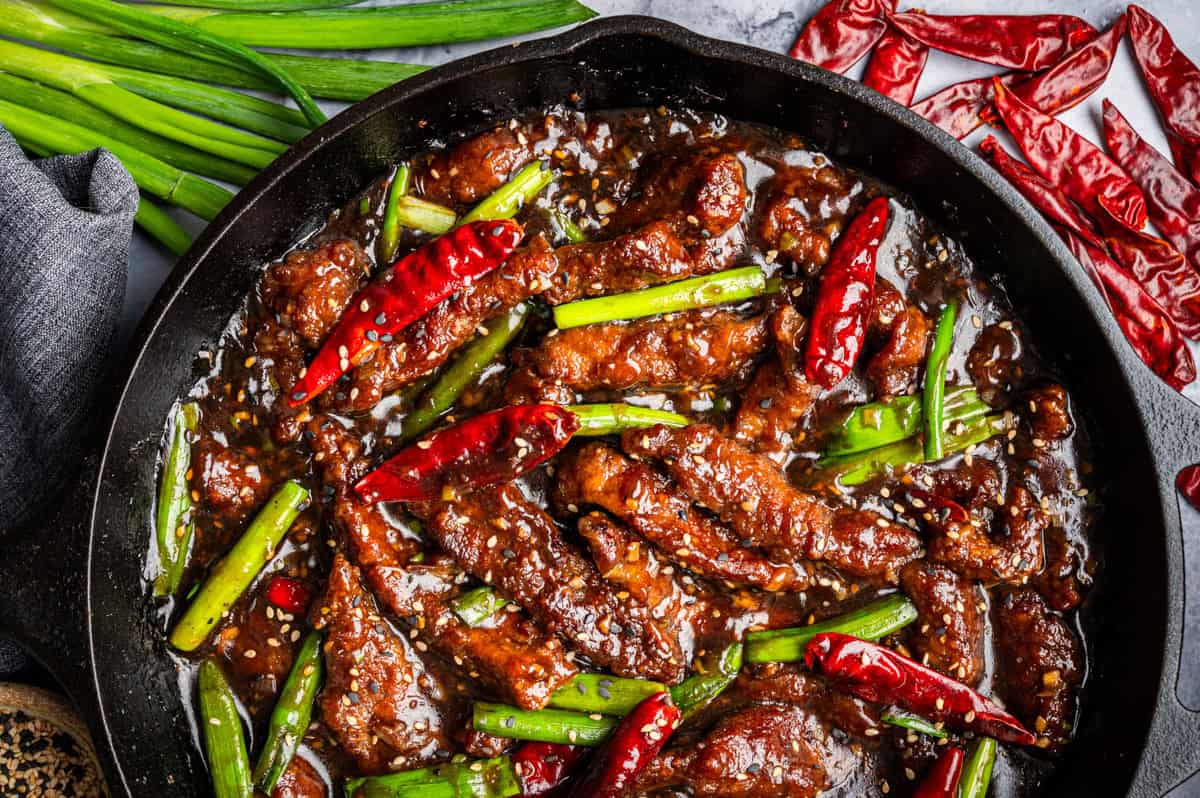
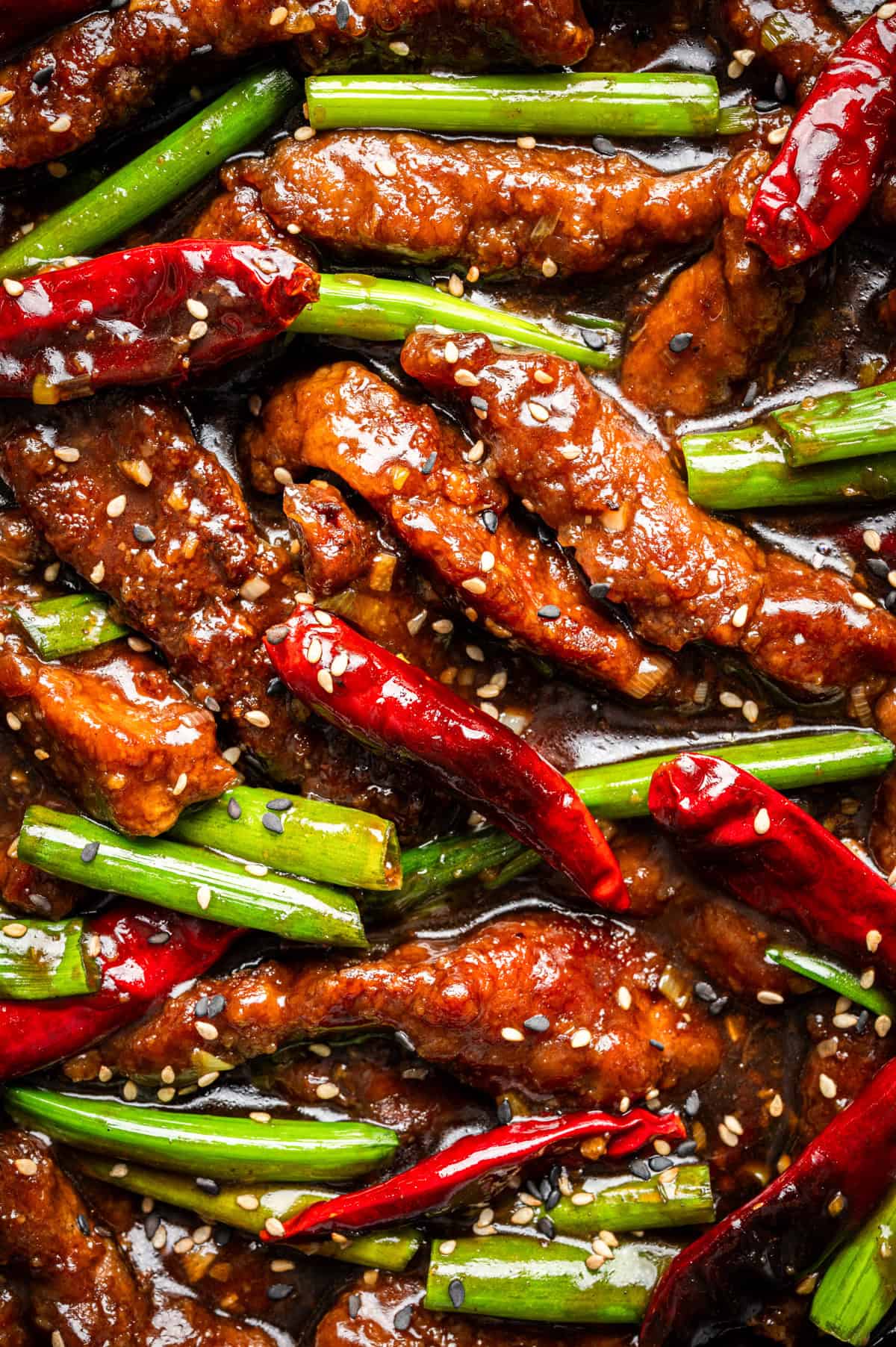
This easy homemade Mongolian beef is crispy, saucy, and better than takeout. Tender flank steak, glossy brown sauce, and ready in under an hour. My beef stir-fry recipe beats PF Chang's version every time!
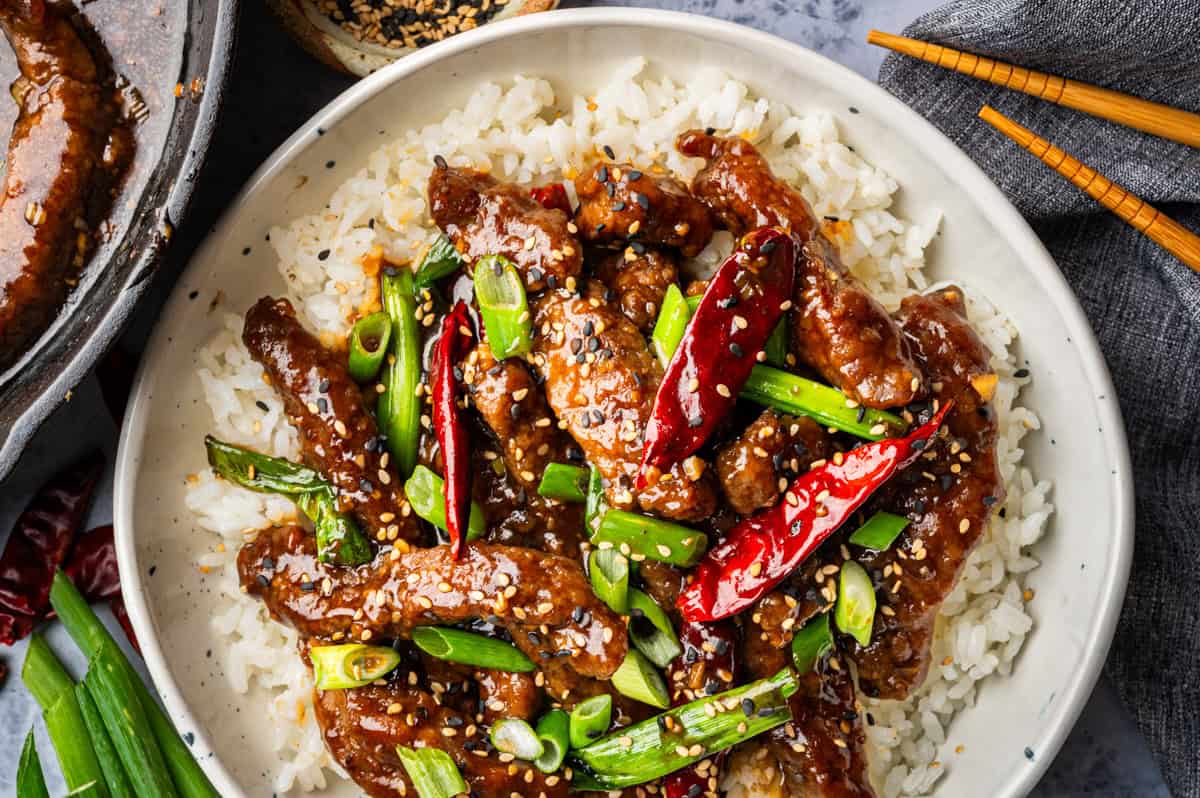
What is Mongolian Beef?
Despite the name, Mongolian beef is actually a Chinese-American restaurant dish rather than a traditional Mongolian recipe. It became popular in North American Chinese restaurants such as PF Chang's because of its savory-sweet sauce, tender beef, and quick wok cooking style.
My version is so much better than takeout while staying true to those restaurant flavors by using classic ingredients like soy sauce, ginger, garlic, scallions, Shaoxing wine, and dried chiles. The biggest difference is that I focus on developing deeper flavor and better texture at home by properly marinating and crisping the beef, rather than relying on excess sugar or heavy sauce.
This is a great weeknight dinner because the actual cook time is fast. Once the prep is done, everything comes together in about 15 minutes. It's also surprisingly easy, just like my other Asian-inspired main dishes such as Asian salmon and noodles, reader-favorite Asian beef with mushrooms and snow peas, and Asian chicken rice soup.
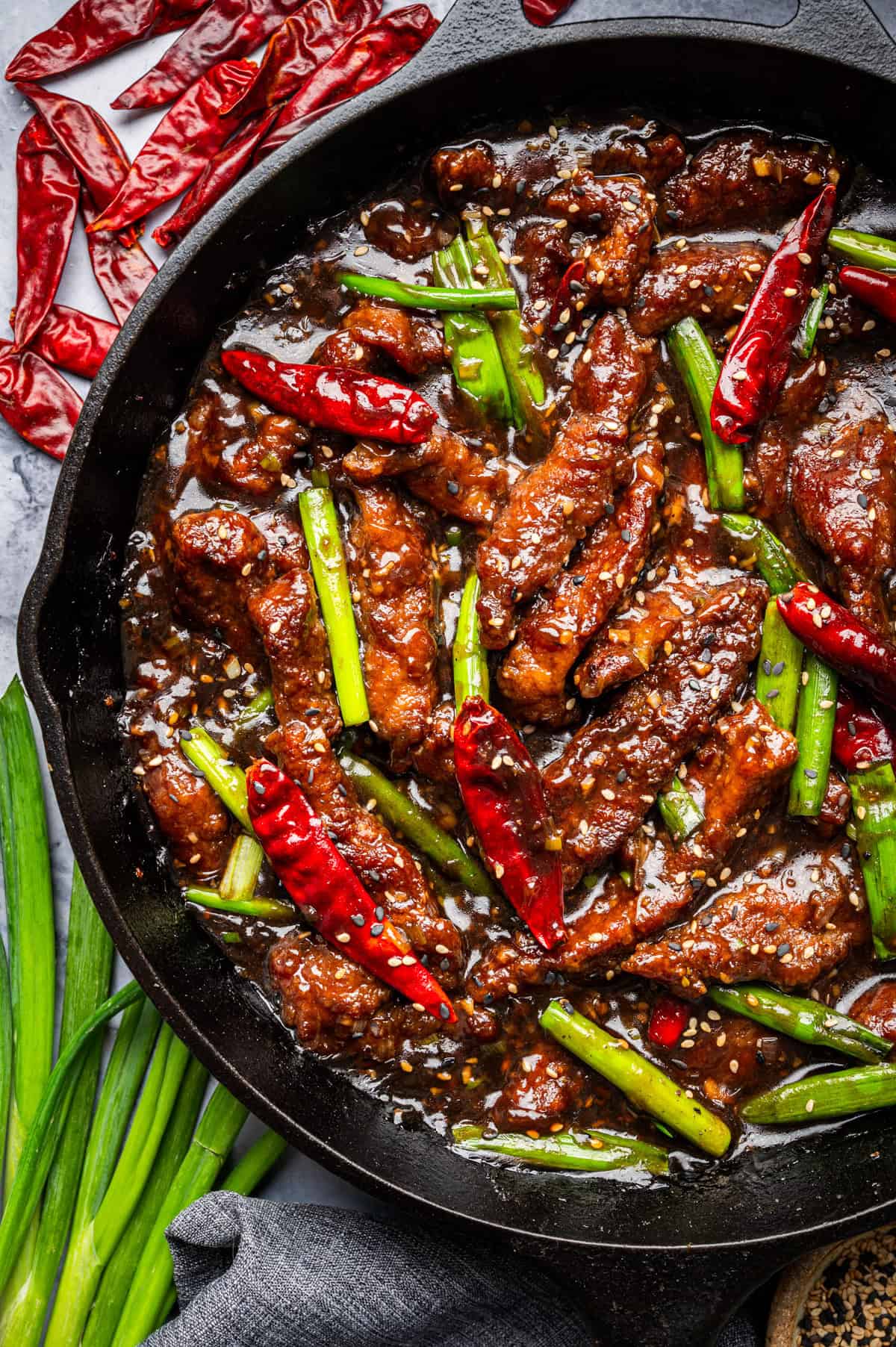
Why This Recipe Works
- I make everything in one pan or wok, so cleanup is minimal.
- Ready in under an hour, easy enough for weeknights, good enough for dinner guests.
- Baking soda in the marinade tenderizes the flank steak fast, no overnight marinating needed.
- I dredge the beef in cornstarch before frying, which creates crispy edges that stay coated in the glossy Mongolian sauce rather than turning soggy.
- I use pantry staples to make a sauce that tastes like it came straight from your favorite Chinese restaurant.
- Shaoxing wine adds authentic Chinese stir-fry flavor you cannot get from substitutes alone. Dry sherry will be your best substitute here!
- Flexible recipe. Swap in bok choy, snap peas, or broccoli instead of scallions (green onions). Pile it over noodles instead of rice. Or, serve Mongolian beef in lettuce wraps or over cauliflower "rice" for a healthier option!
- It's also dairy-free, gluten-free, and high in protein. Use gluten-free soy sauce.
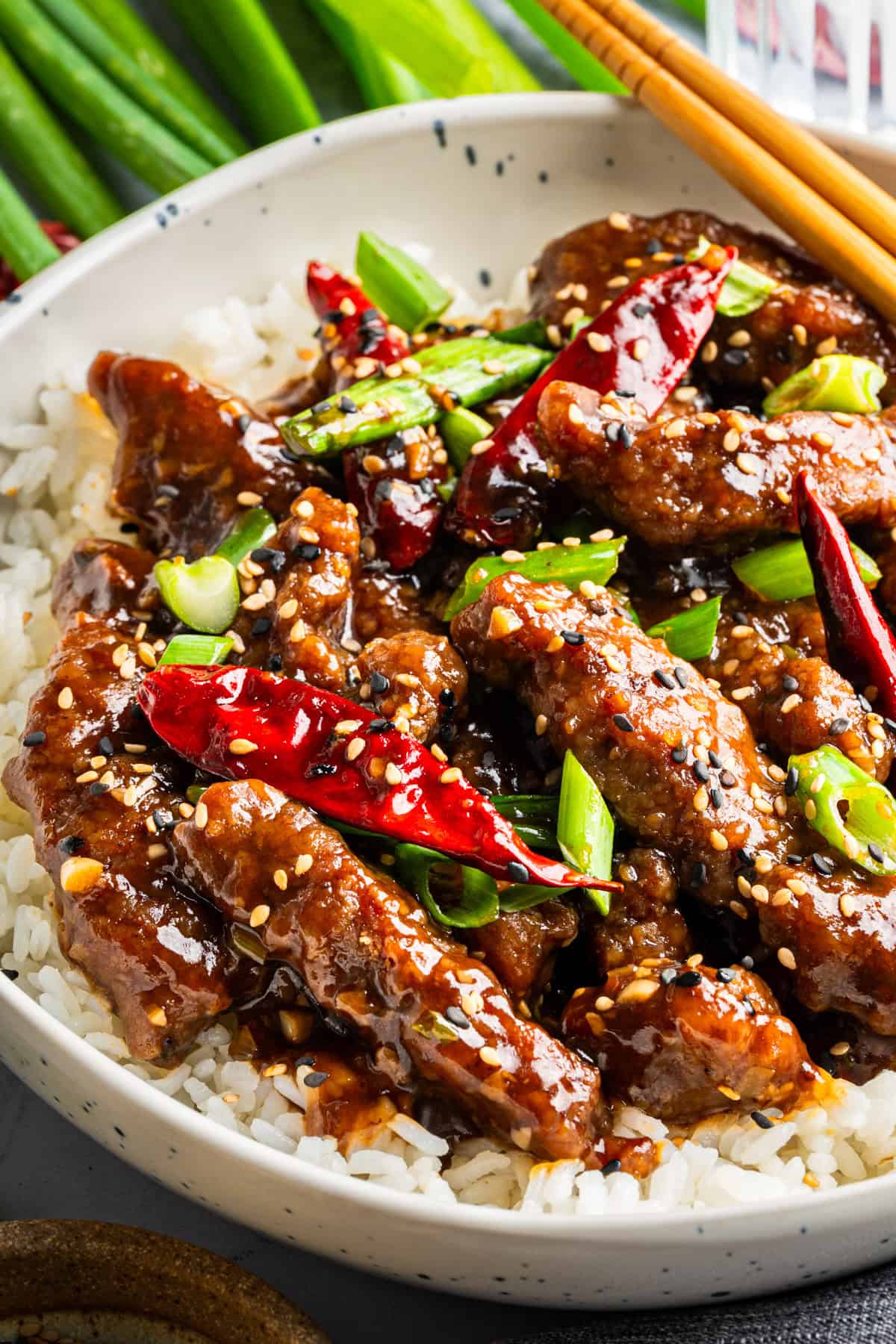
What Makes My Recipe Stand Out
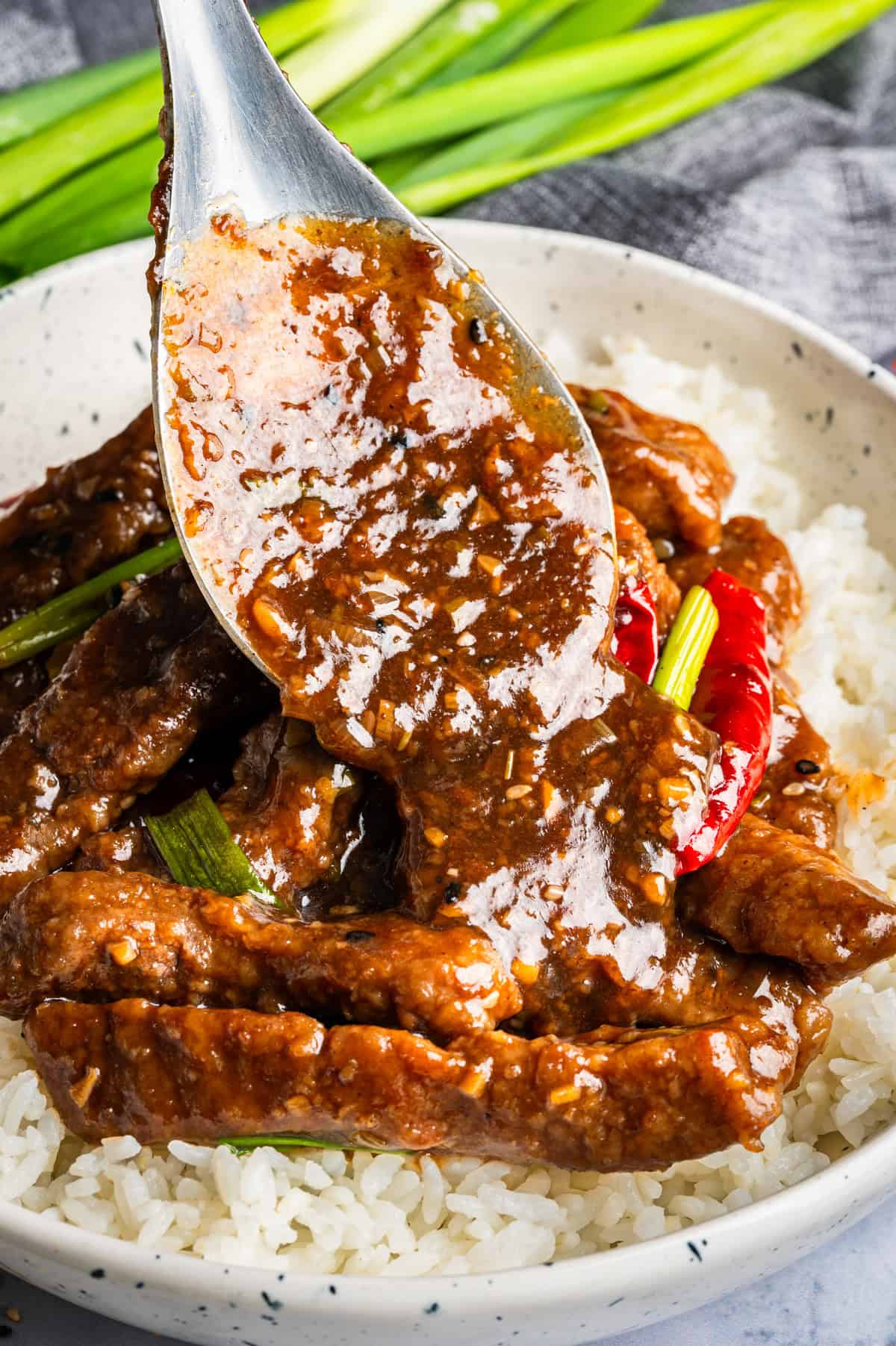
A lot of Mongolian beef recipes online go heavy on brown sugar and end up tasting like candy. In fact, PF Chang's version of Mongolian beef is too sugary for me and definitely too sweet for my carnivore, savory-food-loving husband. To balance that out, I use beef stock as the base of the beef stir-fry sauce, which gives it a rich, savory backbone before the brown sugar rounds everything out. The result is glossy and bold without being cloying.
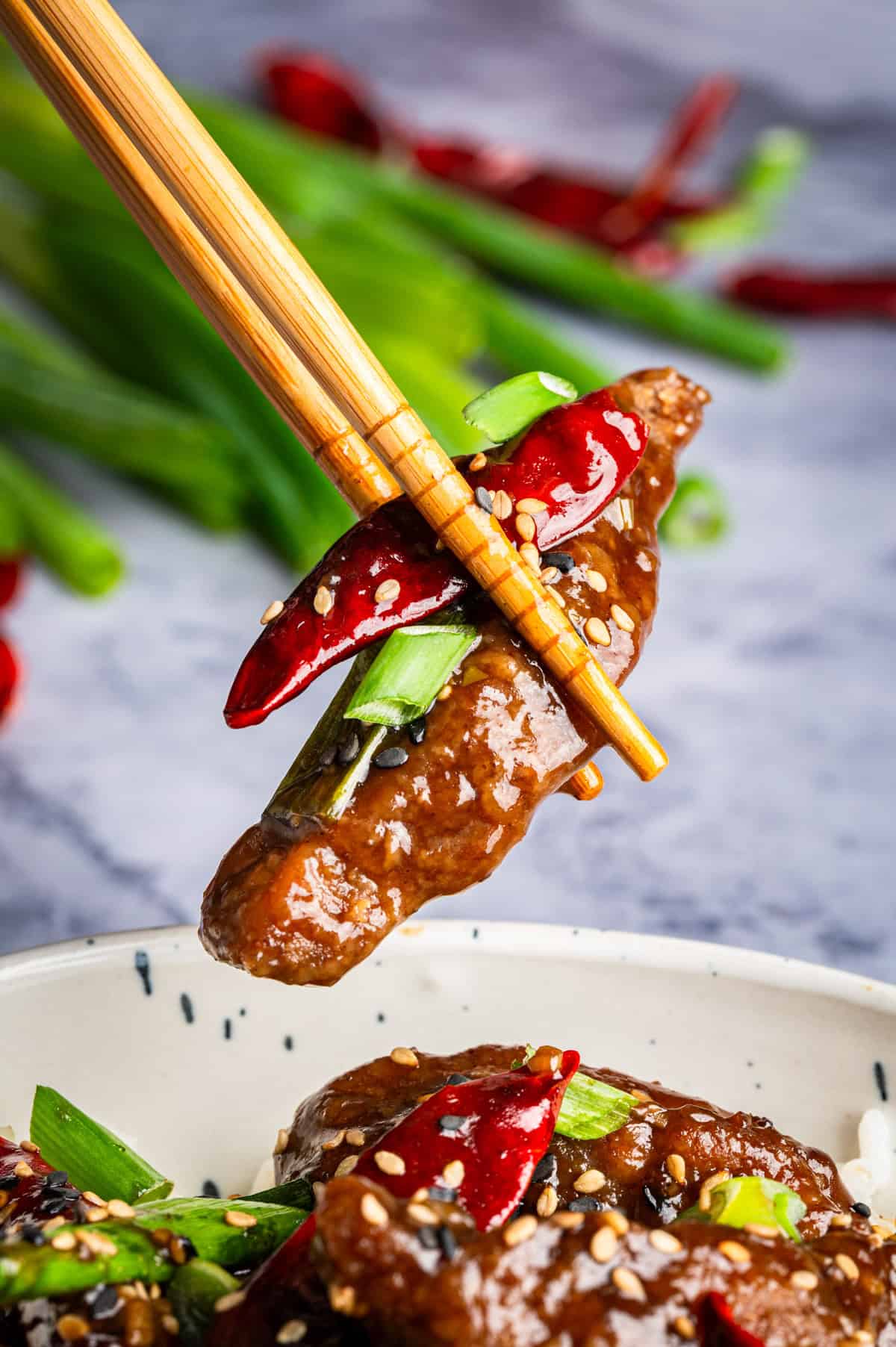
Ingredients & Substitutions
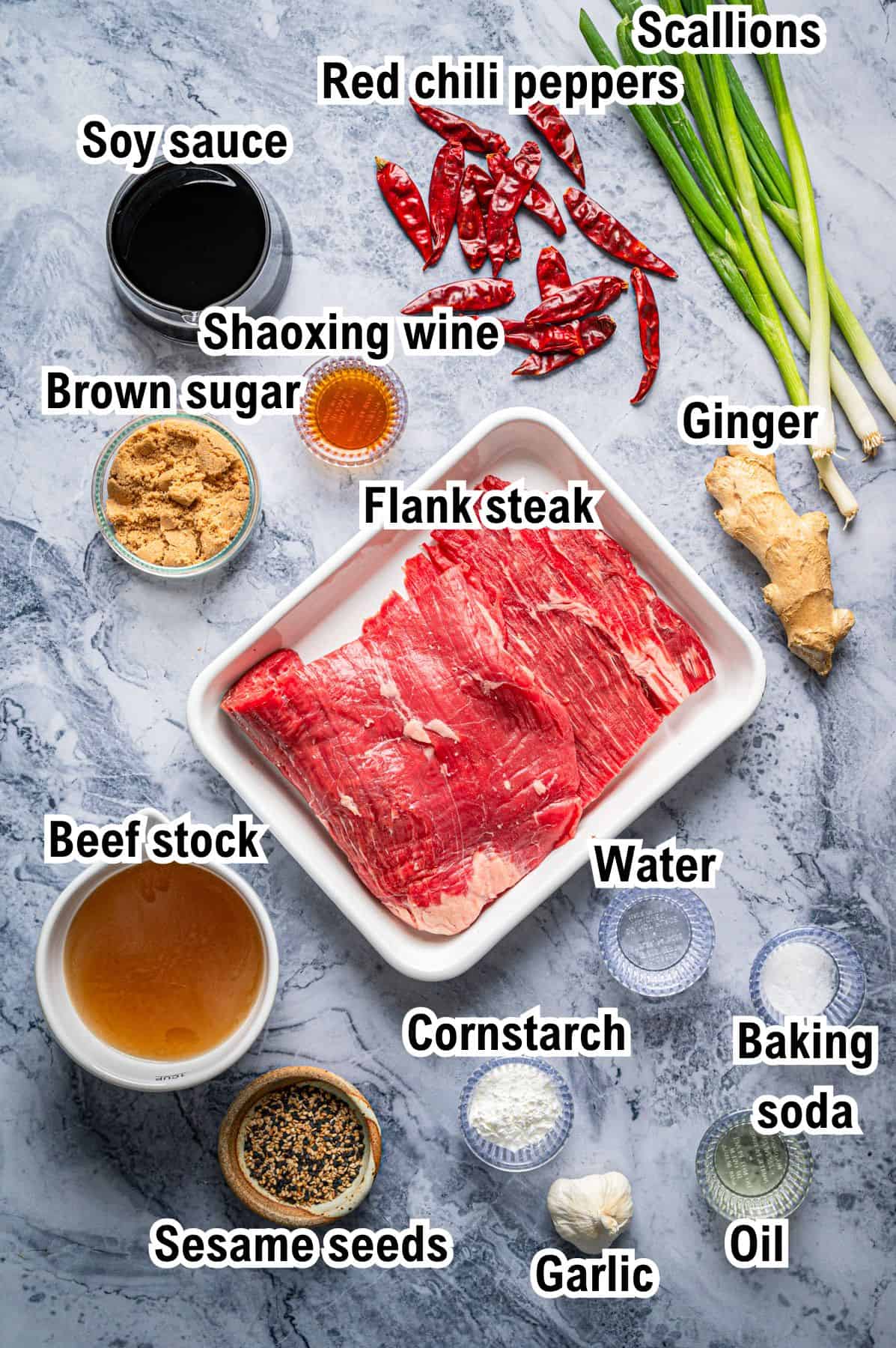
- Flank Steak. It cooks quickly and absorbs marinades well. Sirloin, skirt steak, or flat iron work just as well.
- Soy Sauce. Use gluten-free soy sauce or tamari to make it gluten-free. You can also use coconut aminos.
- Shaoxing Wine. This is a delicious Chinese cooking wine that can't be replicated any other way, but sherry or sake can be used instead if necessary. You can also use mirin or even a splash of rice vinegar with a tiny pinch of sugar.
- Cornstarch. Cornstarch serves two purposes here: it tenderizes and creates the crispy coating.
- Baking Soda. I use it for a classic Chinese restaurant technique called velveting. It tenderizes tougher cuts quickly.
- Beef Stock. You can also use chicken stock or even water instead.
- Brown Sugar. You can use dark brown sugar, which gives slightly deeper molasses notes to the beef stir-fry sauce.
- Ginger and Garlic. I don't recommend powdered versions because fresh is best here.
- Dried Red Chiles: Whole dried árbol chiles or Chinese dried chiles make great substitutes here.
- Scallions. I like using both the white and green parts for layered flavor.
- Neutral Cooking Oil. Use avocado, canola, or peanut oil. You can also use a light olive oil labeled for high-heat cooking or frying.
Variations
- MORE sauce: Add in an additional ½ cup of broth and 1 tablespoon of cornstarch mixed into the broth prior to cooking.
- Spicy: Feel free to break all of the dried chiles for this recipe to give it a nice heat bomb! You can even crush them up as well.
- Ultra crispy beef: Need more crunch? Double fry the beef!
- Veggie-balanced: Throw in some julienned carrots, bell peppers, snow peas, or sliced onion for a more balanced veggie-to-protein ratio. Cook these right after you've sweated the aromatics and chiles.
What Is Shaoxing Wine?
Shaoxing wine is a Chinese rice wine made from fermented glutinous rice. It has a slightly amber color and a nutty, mildly sweet flavor that is completely different from sake or white wine. In Chinese cooking, it is used in marinades and stir fries the same way you would use wine in Western cooking, to add complexity and help tenderize proteins.
Dry sherry is the most common substitute, but if you cook a lot of Asian food, Shaoxing wine is worth keeping in your pantry. It is inexpensive, available at most Asian grocery stores, and a small bottle lasts a long time.
What to Serve With Mongolian Beef
- Classic pairings are steamed jasmine rice, brown rice, fried rice, or lo mein noodles.
- Vegetables I recommend using include bok choy, green beans, broccoli, snap peas, snow peas, and Asian cucumber salad.
- Low-carb sides: Serve it in lettuce wraps or over cauliflower "rice"
- Add it to rice bowls with kimchi, cucumber, and a fried egg.
- Serve it family-style alongside dumplings and spring rolls for takeout-at-home night.
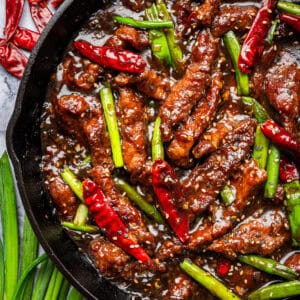
Mongolian Beef
Ingredients
For the Steak
- 1 pound flank steak sliced against the grain into ¼ inch pieces
- 1 tablespoon soy sauce low sodium or regular
- 1 tablespoon Shaoxing wine or dry sherry wine
- 1 tablespoon cornstarch
- 1 tablespoon water
- 1 tablespoon neutral oil like light olive oil, avocado, or canola oil
- ¼ teaspoon baking soda
For the Sauce
- 1 ½ cups beef stock or chicken stock or water
- ½ cup low sodium soy sauce
- ¼ cup brown sugar light or dark
- 3 tablespoons cornstarch
For the Stir Fry
- ⅓ cup cornstarch
- ⅓ cup neutral oil plus more in needed
- 2 teaspoons ginger minced
- 4 cloves garlic minced
- 4 large scallions white parts minced and green parts cut into 1 ½"- 2" long pieces, divided
- 10 whole dried red chili peppers optional but highly recommended
For Serving
- Toasted black and white sesame seeds
- Scallions sliced
- Cooked white rice
Instructions
Marinate the steak
- In a medium bowl, combine the steak, soy sauce, Shaoxing wine (or dry sherry), cornstarch, water, oil, and baking soda. Mix until evenly coated.
- Marinate at room temperature for 30 minutes and up to 1 hour.
Make Sauce
- In a separate bowl, whisk together the beef stock, soy sauce, brown sugar, and cornstarch until smooth. Leave the whisk in the bowl-you'll need to re-whisk just before adding, as the cornstarch will settle.
Assemble the Stir Fry
- Place the ⅓ cup cornstarch in a shallow bowl or pan and dredge the marinated steak in the cornstarch, shaking off any excess.
- Heat a large skillet or wok over medium-high heat and add the neutral oil.
- Once hot, arrange the beef in a single layer and cook undisturbed for about 2-3 minutes until very brown (not burnt!) and crispy. Flip and cook for another 2-3 minutes. Work in batches if necessary. Transfer beef to a plate and set aside.
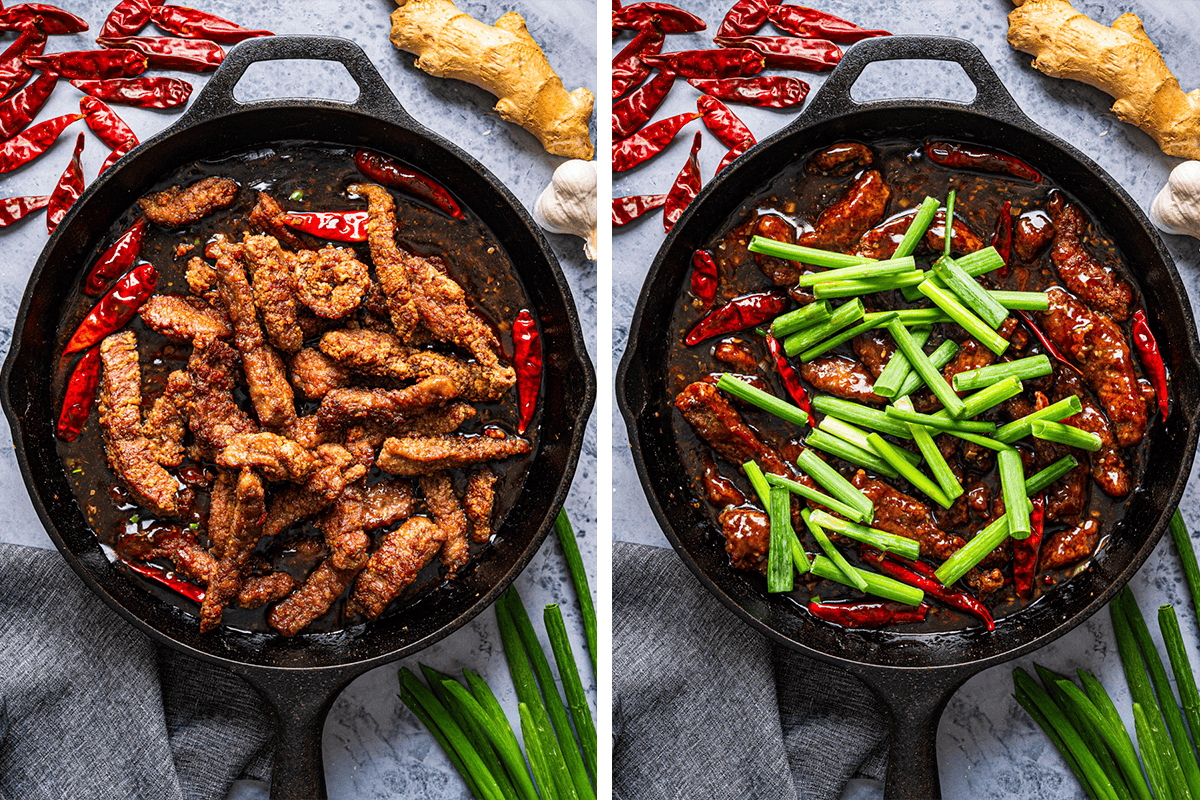
- Ensure there is at least a thin layer of oil remaining in the pan, adding more if needed. In the hot oil, add the ginger, garlic, white parts of the scallions, and whole dried chili peppers (we recommend breaking 1-2 open). Stir constantly and sauté until fragrant, making sure to release the oils in the chiles and slightly caramelize the aromatics, 1-2 minutes.
- Re-whisk the sauce to incorporate the cornstarch once more, then pour it into the skillet. Simmer, stirring frequently, until the sauce becomes dark, thickens, and becomes glossy, about 2-3 minutes.
- Return the beef and any accumulated juices to the pan and toss to coat thoroughly. Add the green scallion pieces and toss once more to combine.
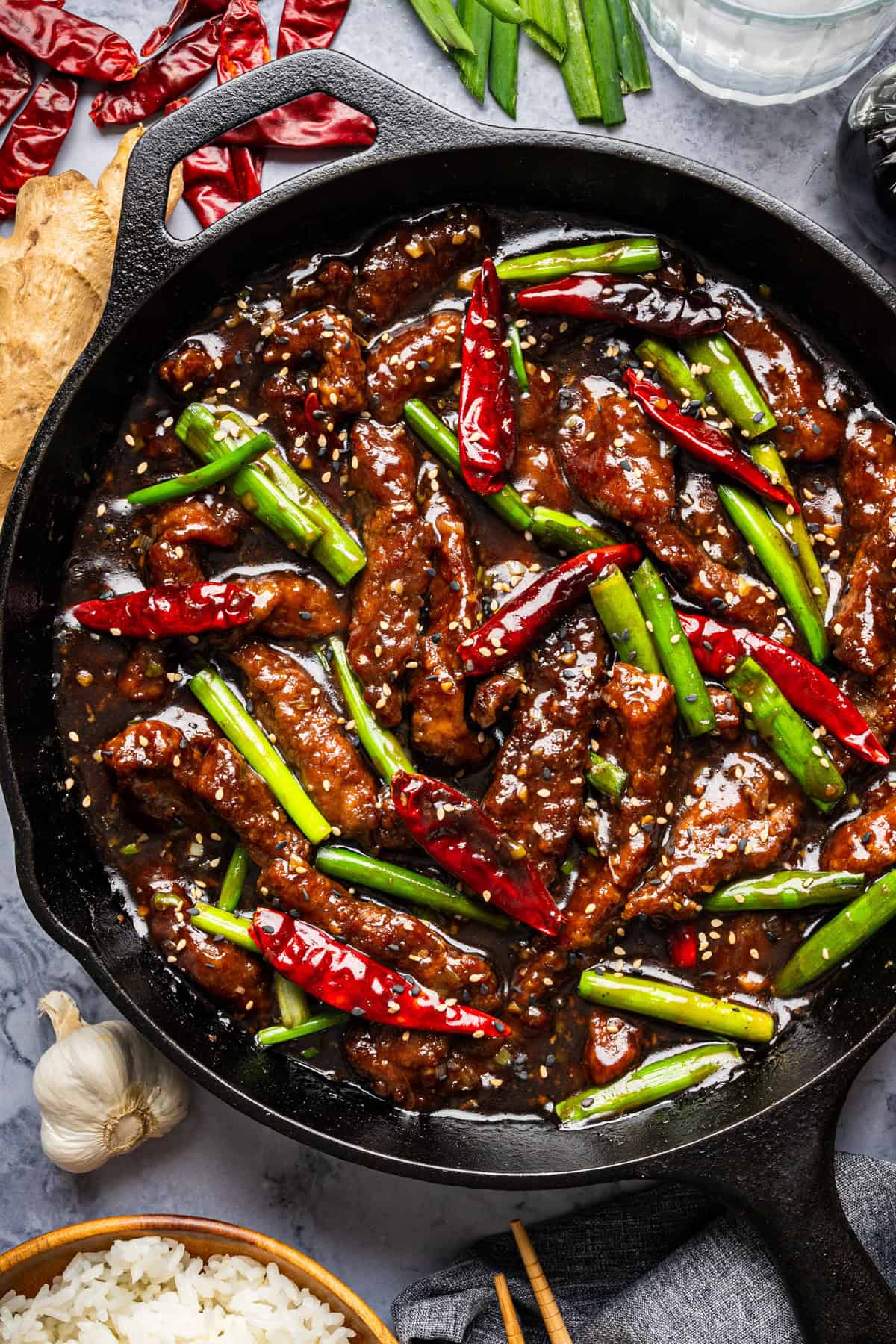
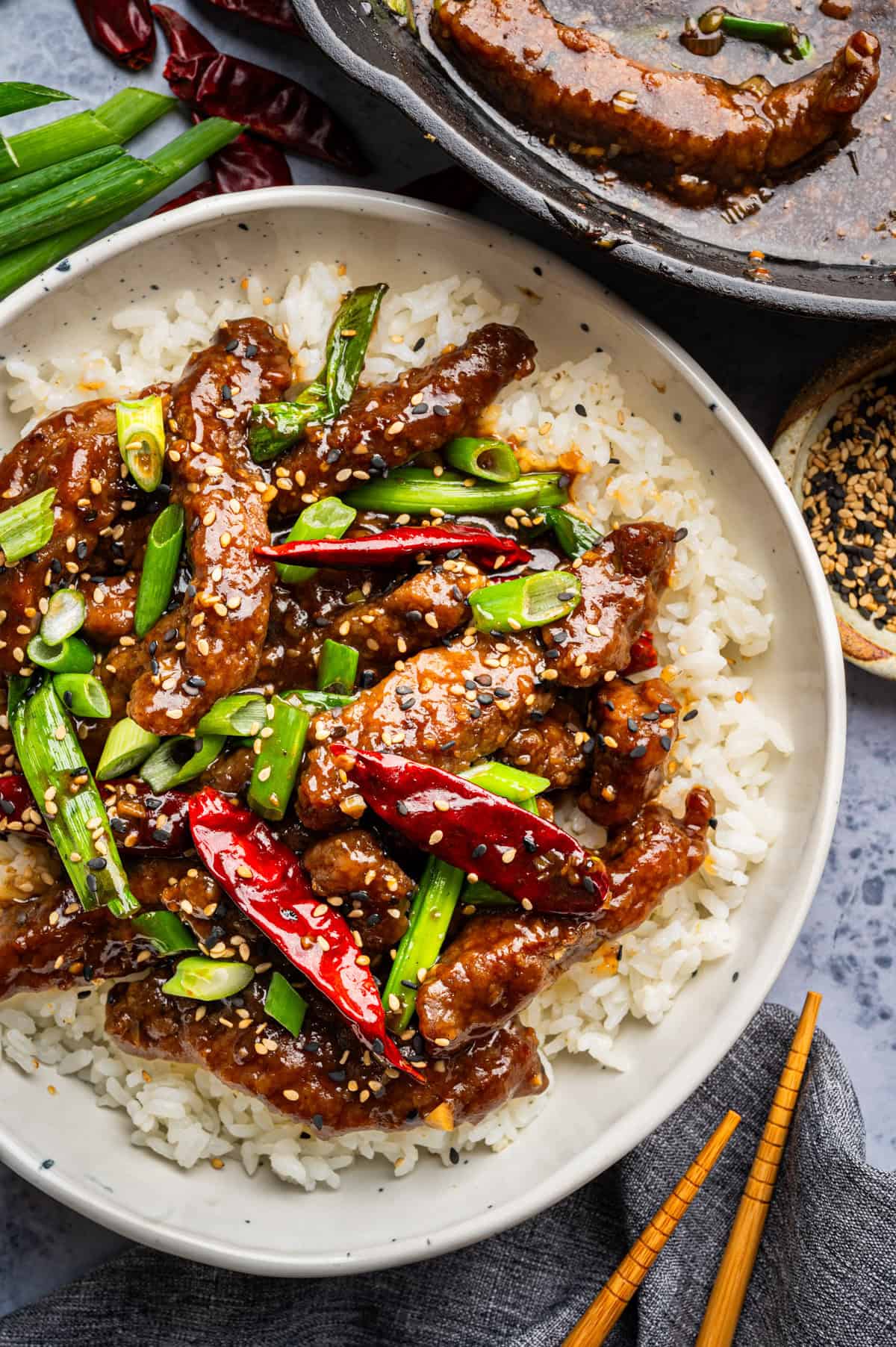
- Serve immediately over bowls of hot white rice. Garnish with toasted sesame seeds and additional scallions. Enjoy!
Notes
- Slice against the grain: If the grain runs one way, slice the other way. This maximizes the texture of your beef!
- Baking soda? Yes! Baking soda! This method is called velveting. It is a wonderful, quick way to tenderize proteins. Don't worry! You won't be able to taste it in the final dish. Trust the process!
- Re-whisking the sauce: Cornstarch will settle to the bottom of your sauce prior to cooking, so make sure to give it a little stir. Otherwise, if the cornstarch is not whisked once more and incorporated, it will stick to the bottom of your bowl, and your sauce will not become thick and glossy.
- Work in batches: If there isn't enough room in your pan to space out the beef in a single layer without crowding, just work in batches!
- The sauce can thicken quickly, so be ready for the next steps in the recipe!
- Need more sweetness? Use ½ cup of brown sugar instead of ¼ cup.
- The nutrition info DOES NOT include the calories for sides like rice.
- I provide helpful STEP-BY-STEP PHOTOS below this recipe card (scroll down).
Storage Tips
- Fridge: Cooled leftovers can be stored in an airtight container for up to 4 days in the refrigerator.
- Freezer: Once cooled, you can store the cooked Mongolian beef in an airtight container in the freezer for up to 2 months. Thaw overnight prior to reheating.
- Reheat: Reheat gently in a skillet over medium-low heat with a splash of water or stock to loosen the sauce. In microwaving, reheat in short intervals, stirring between each, until warmed through. Add a tablespoon of water if needed.
Equipment/Supplies You'll Need
- Knife
- Cutting board
- Measuring spoons
- Measuring cups
- Heavy bottomed skillet or wok
- Mixing bowls
- Whisk
- Tongs
Nutrition
Nutrition Disclaimer:
The nutritional information on this website is only an estimate and is provided for convenience and as a courtesy only. The accuracy of the nutritional information for any recipe on this site is not guaranteed. It should not be used as a substitute for a professional nutritionist's advice.
How to Make Mongolian Beef (Step-by-Step Photos)
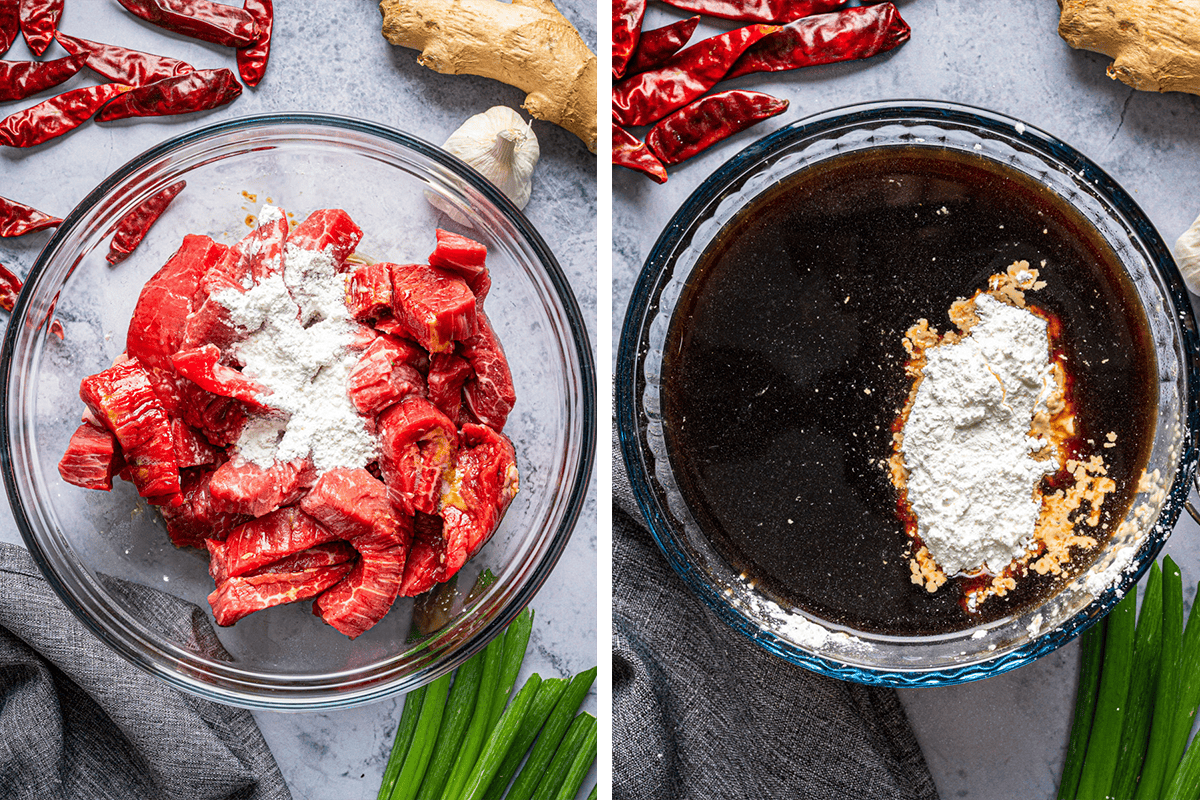
- MARINATE: Combine the steak, soy sauce, Shaoxing wine, cornstarch, water, oil, and baking soda in a bowl. Marinate for 30 minutes.
- MAKE STIR-FRY SAUCE: Whisk together the beef stock, soy sauce, brown sugar, and cornstarch in a separate bowl until smooth. Set aside.
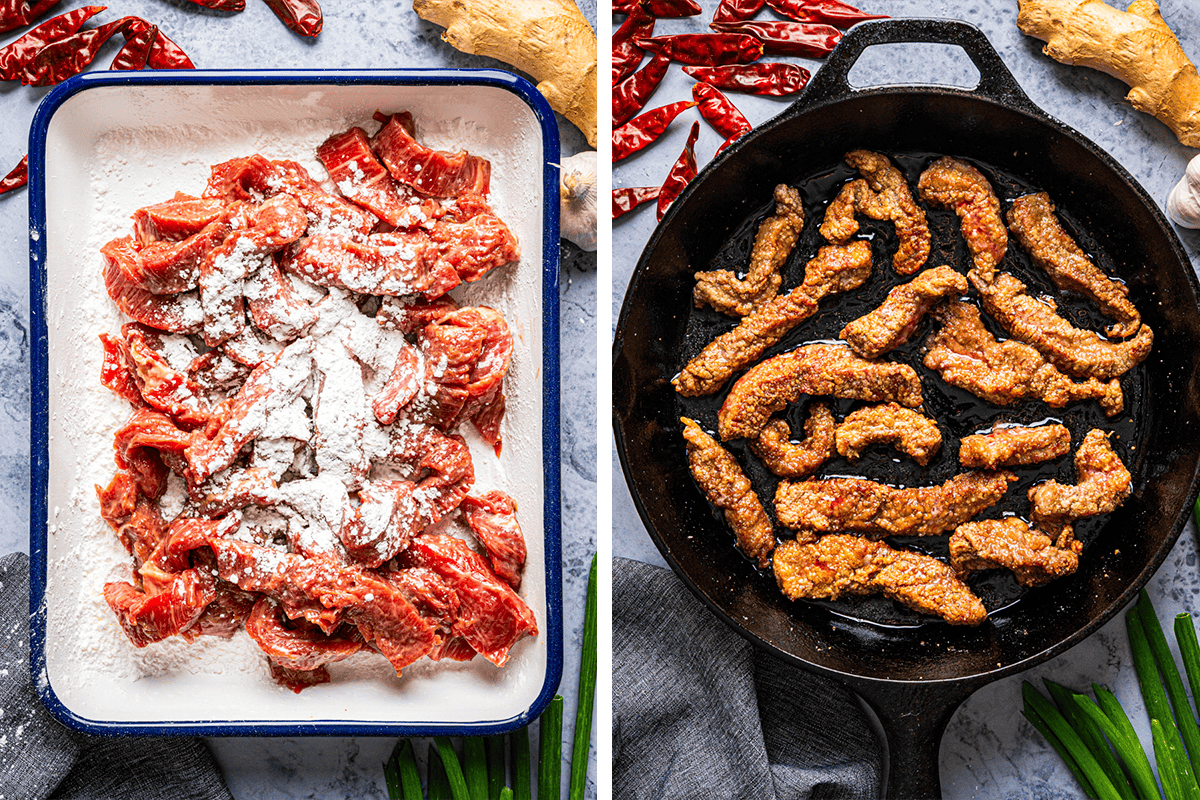
- SEAR THE STEAK: Dredge the steak in cornstarch, shaking off the excess. Cook the beef in hot oil until browned and crispy on both sides. Transfer to a plate.
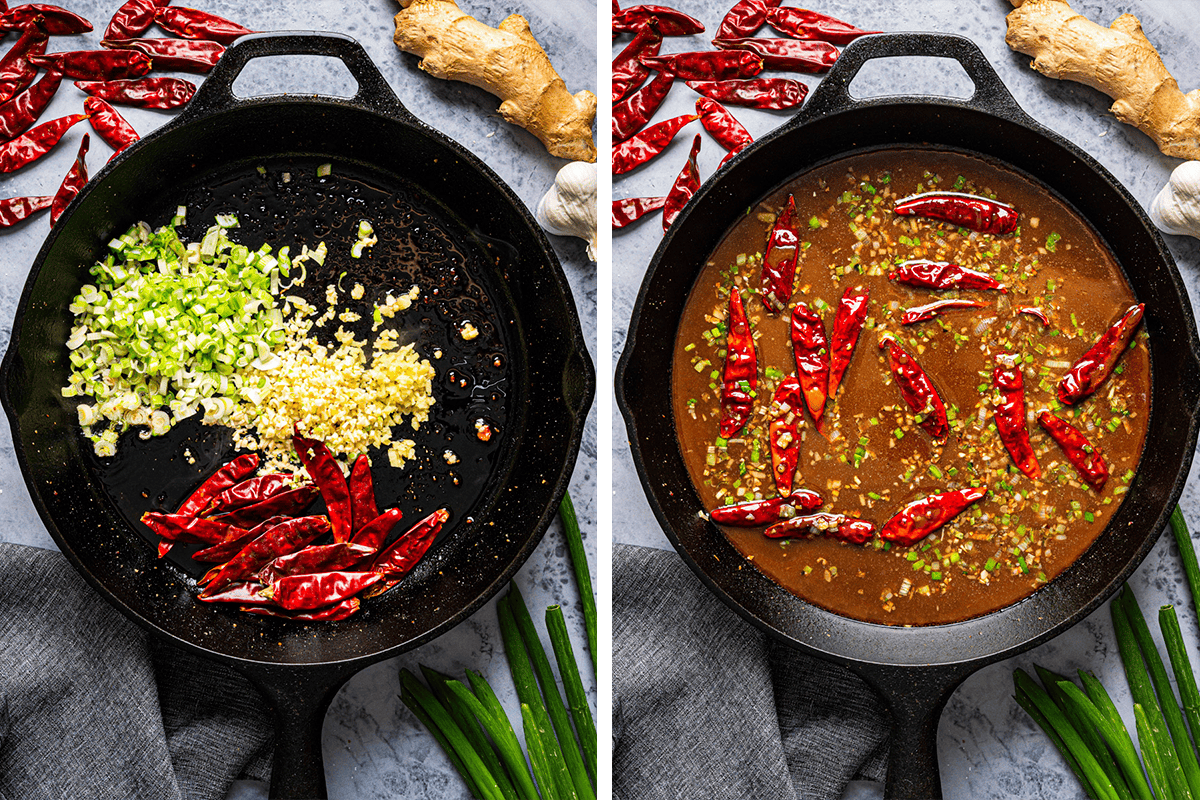
- SAUTÉ VEGGIES: Add the ginger, garlic, white scallion pieces, and dried chiles to the hot skillet. Cook until fragrant, about 1-2 minutes.
- SIMMER: Whisk the stir-fry sauce again, pour it into the skillet with sautéed veggies, and simmer until thickened and glossy.
- ADD BEEF: Return the beef to the skillet and toss to coat. Add the green scallions.
- SERVE: Serve over rice with sesame seeds and extra scallions.
Is there a non-alcohol substitute?
Hi Judith! You can use Shaoxing Wine (Chinese cooking wine), sherry, or sake - but all those are alcohol. For non-alcohol version, use rice vinegar with a tiny pinch of sugar.
Delicious! As I am cooking for one, I made half the recipe. Looking forward to having the other half tomorrow with more veggies. Note to self: do not eat the dried chilies! A glass of milk rescued me from choking on a dried chili.
Oh no! Note to ALL readers: the dried chilies are not a snack! 🙂 So glad milk saved the day, and so happy you're enjoying the recipe! 🙂
5-Stars! WE loved it!
Thank you, Oliver!
I used sirloin instead of flank steak and added asparagus. Love that I didn't have to marinate anything in advance as I like to make the meal the same day. So this recipe style really appealed to me. Nice trick with the baking soda - I didn't know that!
I am so glad this recipe was a success for you, Kelly! Thank you for taking the time to share your feedback and the 5-star review! ❤️❤️
Would you use light or dark soy sauce?
Hi Sandra! I used regular low-sodium soy sauce (light/all-purpose soy sauce) for this recipe. Some Mongolian beef recipes add a small amount of dark soy sauce, usually about a teaspoon, to the regular light soy sauce to give the sauce a darker color like in a restaurant.
I prefer using mostly light soy sauce (regular one) because dark soy sauce can be too thick and overpowering on its own (without mixing it with light (regular) one), but adding a small splash to the stir-fry sauce works great if you want that darker restaurant-style color.
Hi Julia,
I just bought all the ingredients for the Mongolian Beef recipe. My question is... can I marinate the meat the day before, or it can only be marinated same day per instructions?
Thank you so much for your time, and effort to prepare and share all your recipes
Hi Jules! I wouldn’t recommend marinating the beef overnight in this particular recipe because of the baking soda. Baking soda tenderizes the meat quickly, but if it sits too long, the texture can become too soft and almost mushy. For flank steak, about 30 minutes to 1 hour is the sweet spot! 🙂 Let me know if you try it! 🙂