
This post may contain affiliate links. Read my disclosure policy.
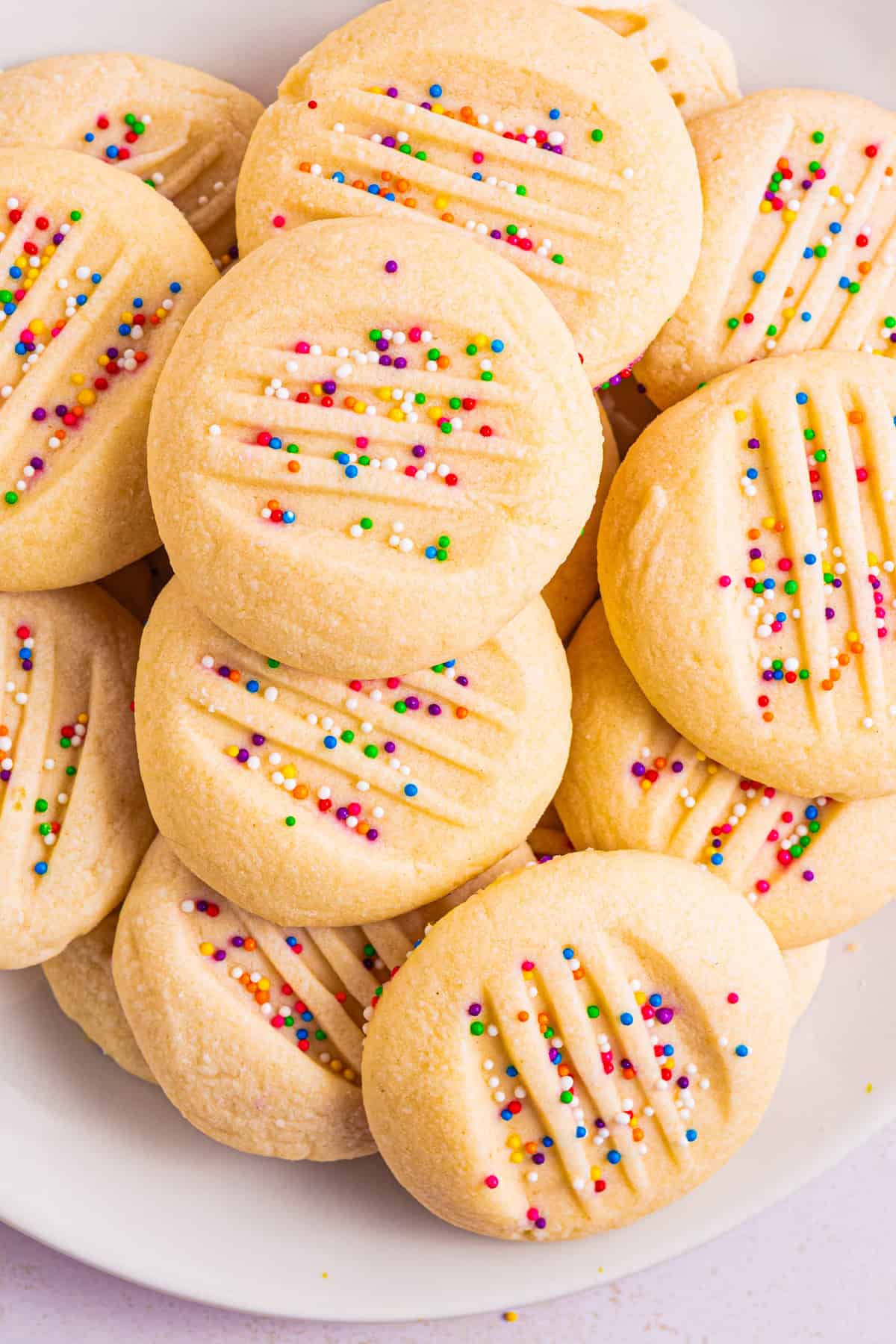
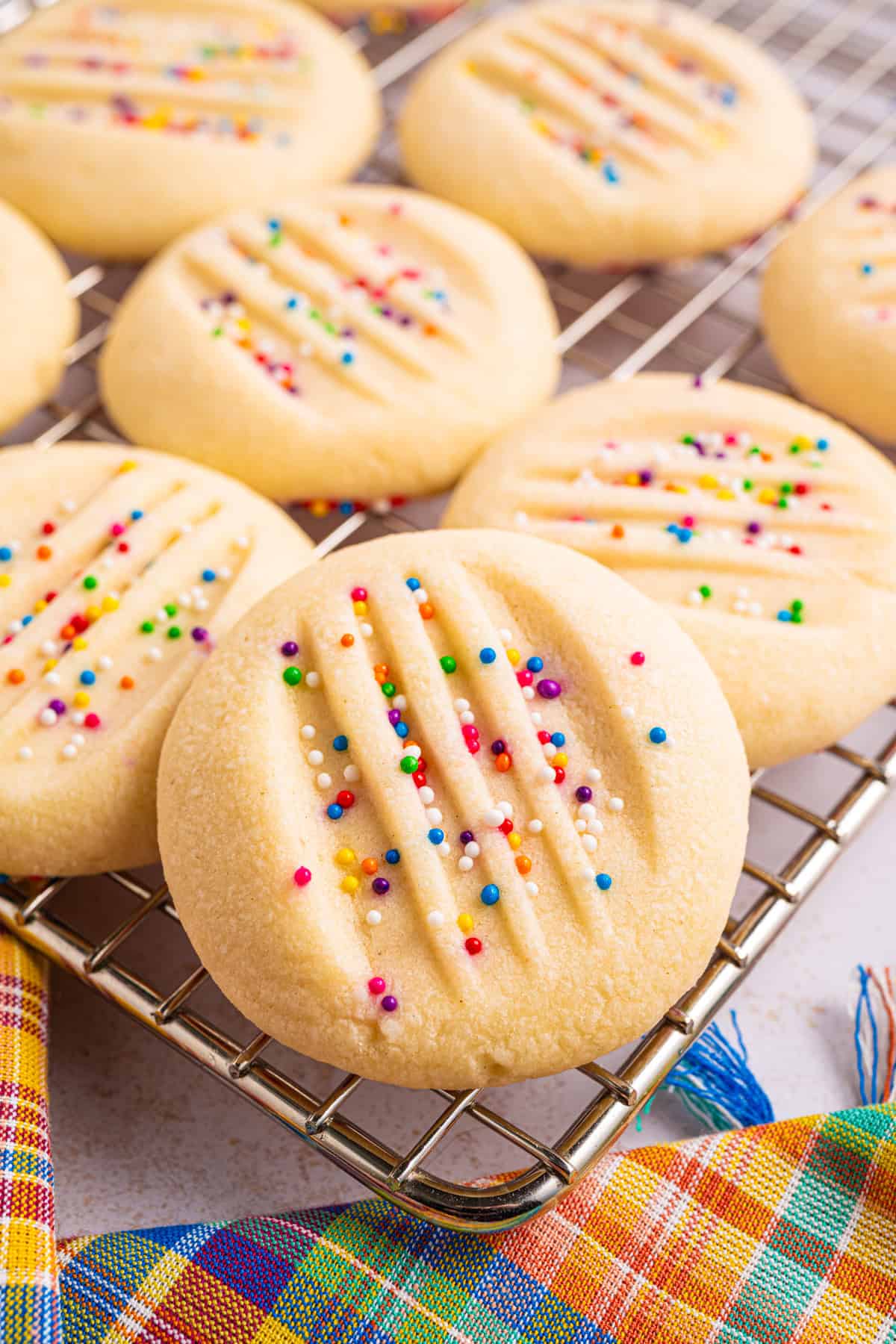
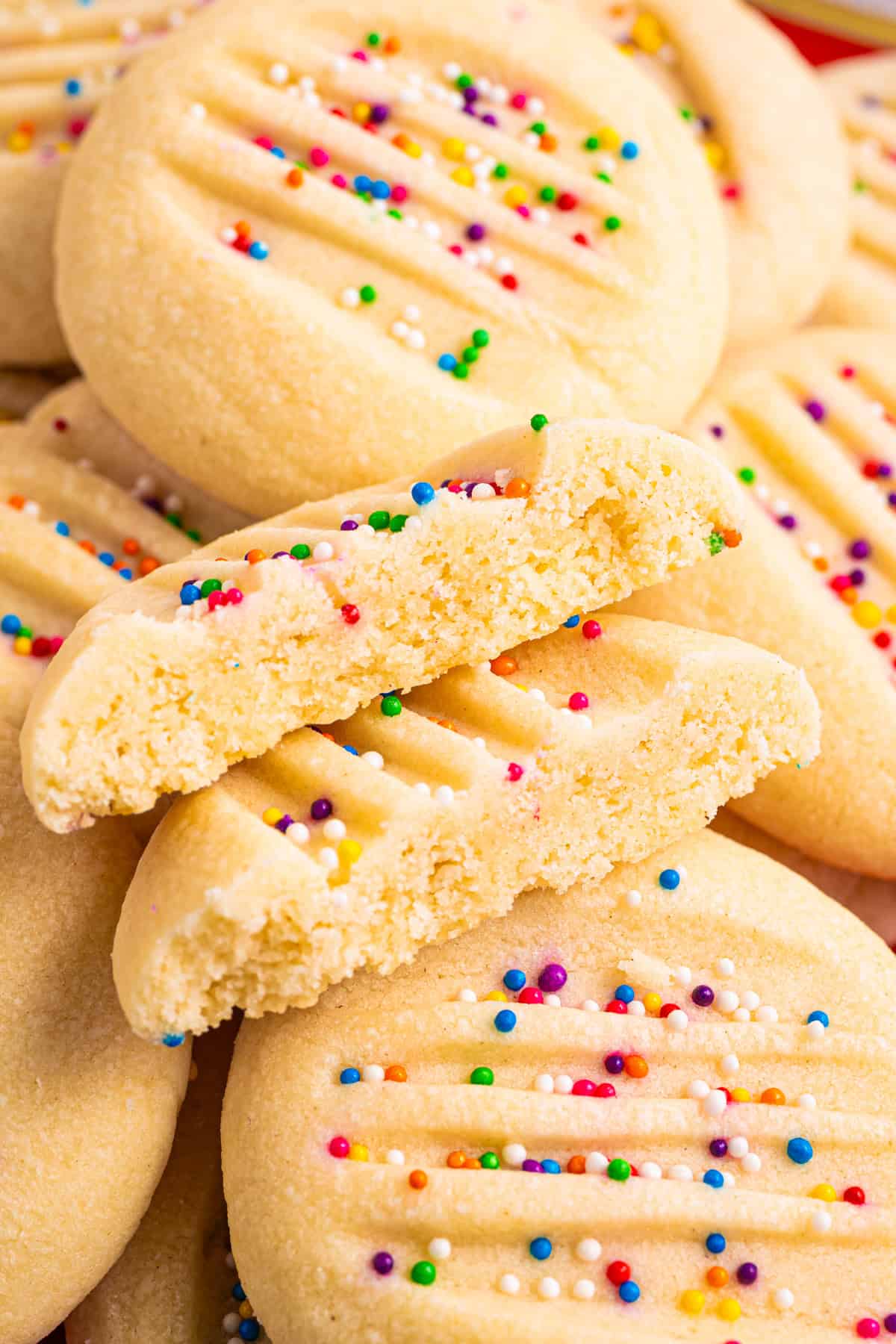
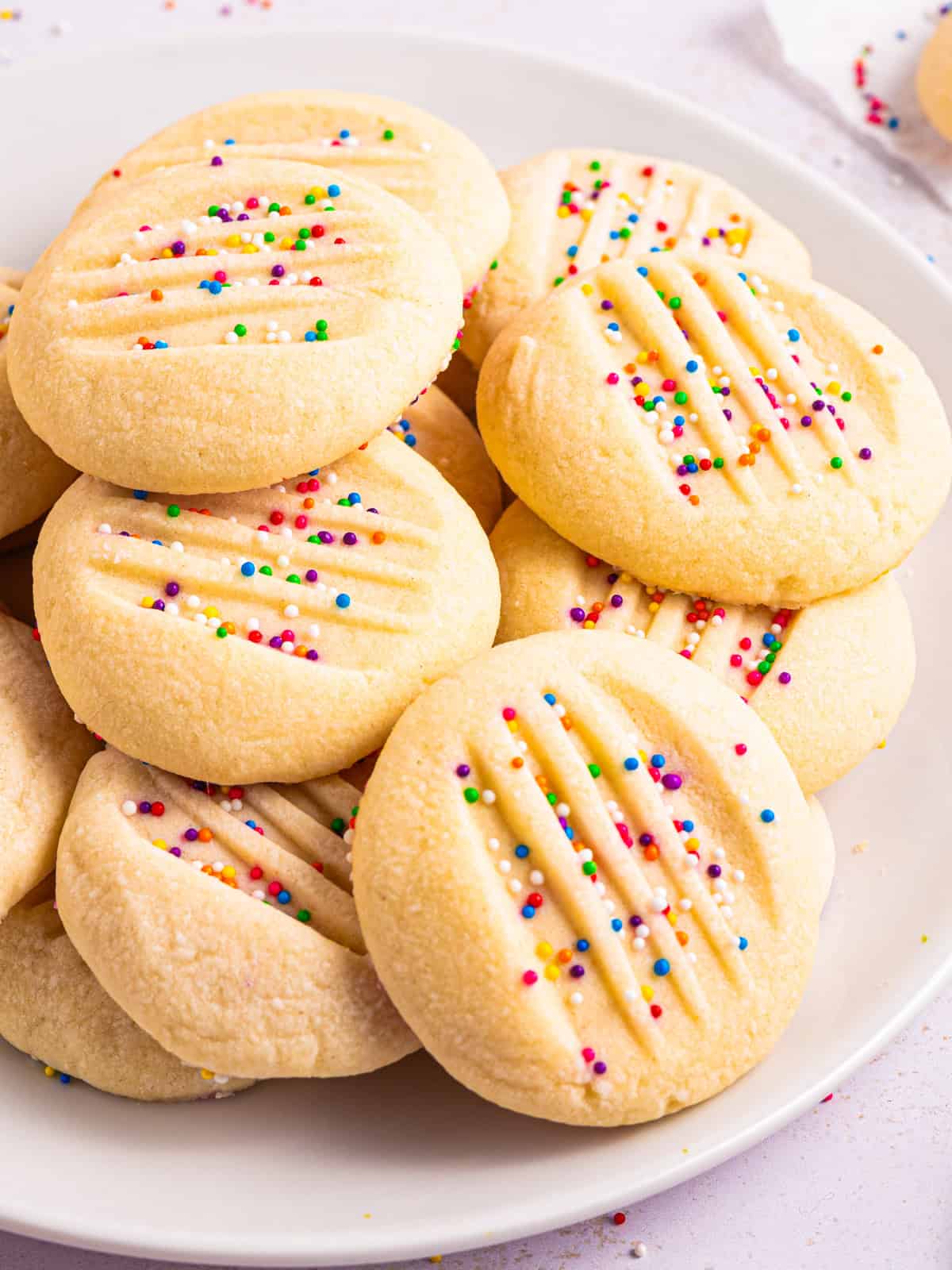
Searching for a classic Christmas cookie that truly melts in your mouth? This whipped shortbread uses 6 ingredients, requires only 15 minutes of prep time, no chilling required, and bakes up tender every time. The easiest Christmas cookies you'll ever make!
The Best Holiday Cookies: Whipped Shortbread
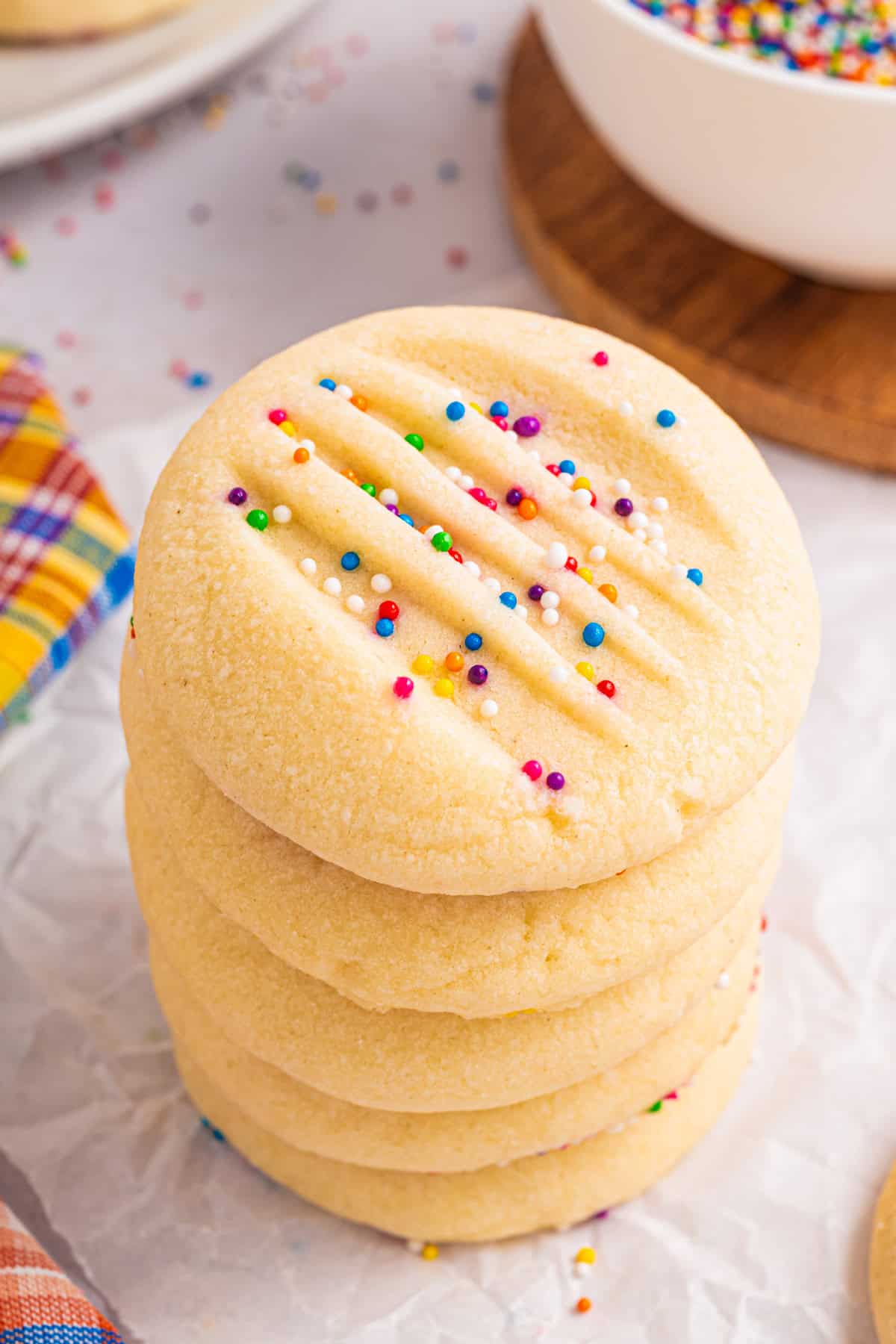
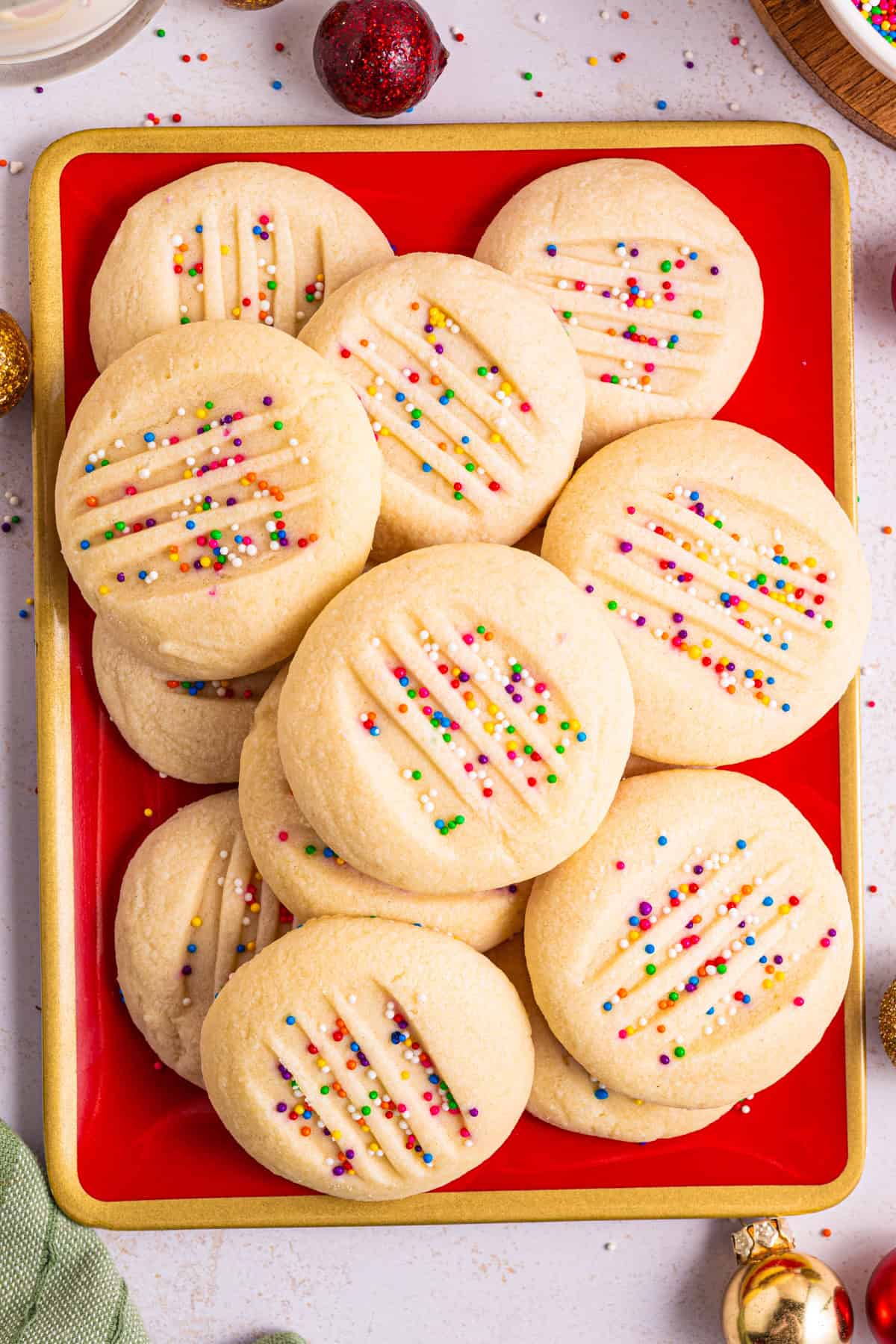
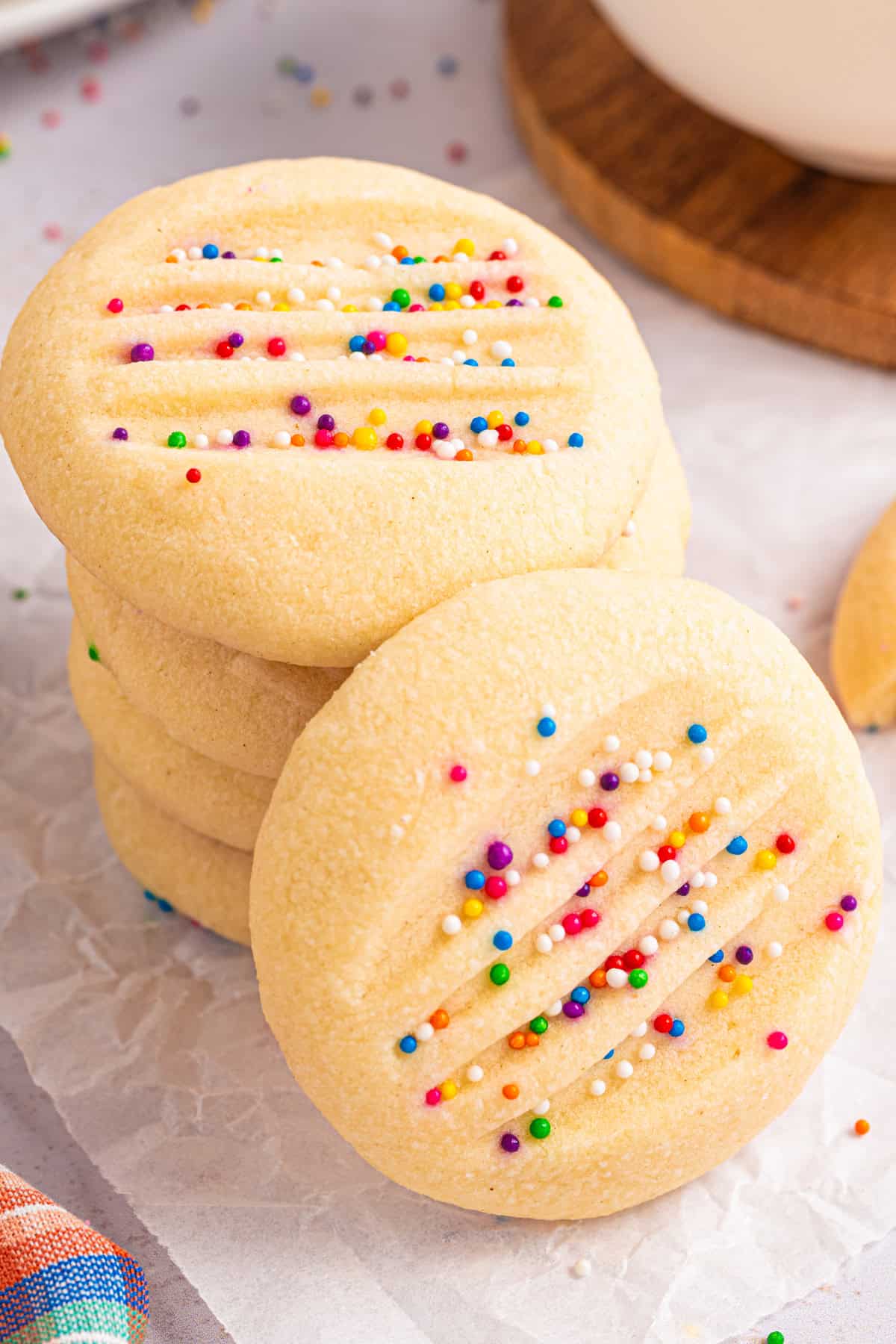
I've been baking and sharing recipes here since 2012, and I'm finally bringing you the classic Christmas cookie my readers ask for every year: whipped shortbread cookies with that signature melt-in-your-mouth crumb. This easy shortbread comes together with just 6 ingredients and a quick 15-minute prep (and only 15 minutes bake time) - perfect for busy holiday cookie baking and a last-minute addition to a Christmas cookie box. The best thing is that you can make these easy cookies year-round and decorate them seasonally. Think Christmas sprinkles in December, pastel nonpareils for Easter, red-white-blue for the 4th of July, or soft hues for baby showers. For more shortbread inspiration and Christmas cookie recipes, try my lemon curd thumbprints, simple hazelnut shortbread cookies, festive almond amaretto cookies, and pecan shortbread.
Key Shortbread Ingredients (and Why)
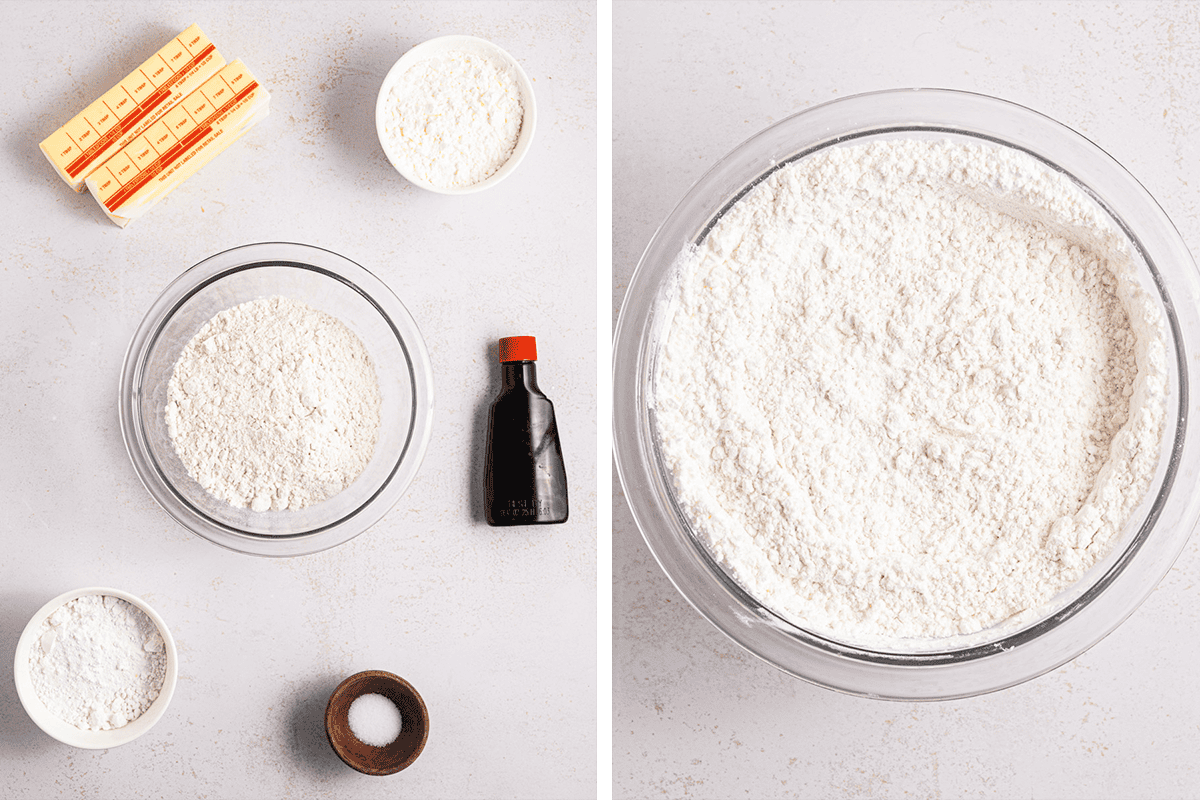
- Unsalted butter - Butter is the backbone of authentic shortbread and what gives these cookies their rich, classic flavor and crumbly texture; I use unsalted so I can control the salt level and get that clean buttery taste. You can use salted butter and reduce or omit the added salt. It's important to use softened butter, not melted or greasy.
- All-purpose flour - AP flour keeps these cookies tender yet structured.
- Powdered sugar - I use powdered sugar instead of granulated because it dissolves more easily into the butter and helps create that melt-in-your-mouth, almost sandy crumb you expect in whipped shortbread. If you only have granulated sugar, the cookies will be a bit crisper and less delicate.
- Cornstarch - Cornstarch is the secret ingredient that lightens the crumb and makes the cookies extra soft; I love adding it to shortbread for that ultra-tender texture.
- Salt - Just a small amount keeps the cookies from tasting flat and brings out the butter and vanilla; if using salted butter, adjust or skip the added salt.
- Vanilla extract - Vanilla rounds out the flavor. You can also try almond extract or use vanilla bean paste.
- Nonpareil sprinkles (optional) - I like nonpareils because they hold their color in the oven and add a fun crunch on top; you can swap them for jimmies, colored sugar, or seasonal sprinkle mixes depending on the holiday.
- You only need 6 ingredients and all of them are depicted here:

How to Make Whipped Shortbread Cookies (Step-by-Step)
Here's a quick overview (with helpful process photos). You'll find the full recipe with measurements in the recipe card below.
- Heat oven to 325°F; line 2 sheets with parchment.
- Beat butter until smooth; in another bowl, whisk flour, powdered sugar, cornstarch, and salt.
- Beat in vanilla and half the dry mix, then the rest; mix until thick and fluffy (≈2 min).

- Scoop 1½ Tablespoon balls, space 2 inches apart (about 12 per sheet).
- Flour a fork, press tops; add sprinkles if using.
- Bake one sheet at a time for 15 min, until puffed and tops look dry.
- Cool completely on the sheets.

Role of Cornstarch in Shortbread
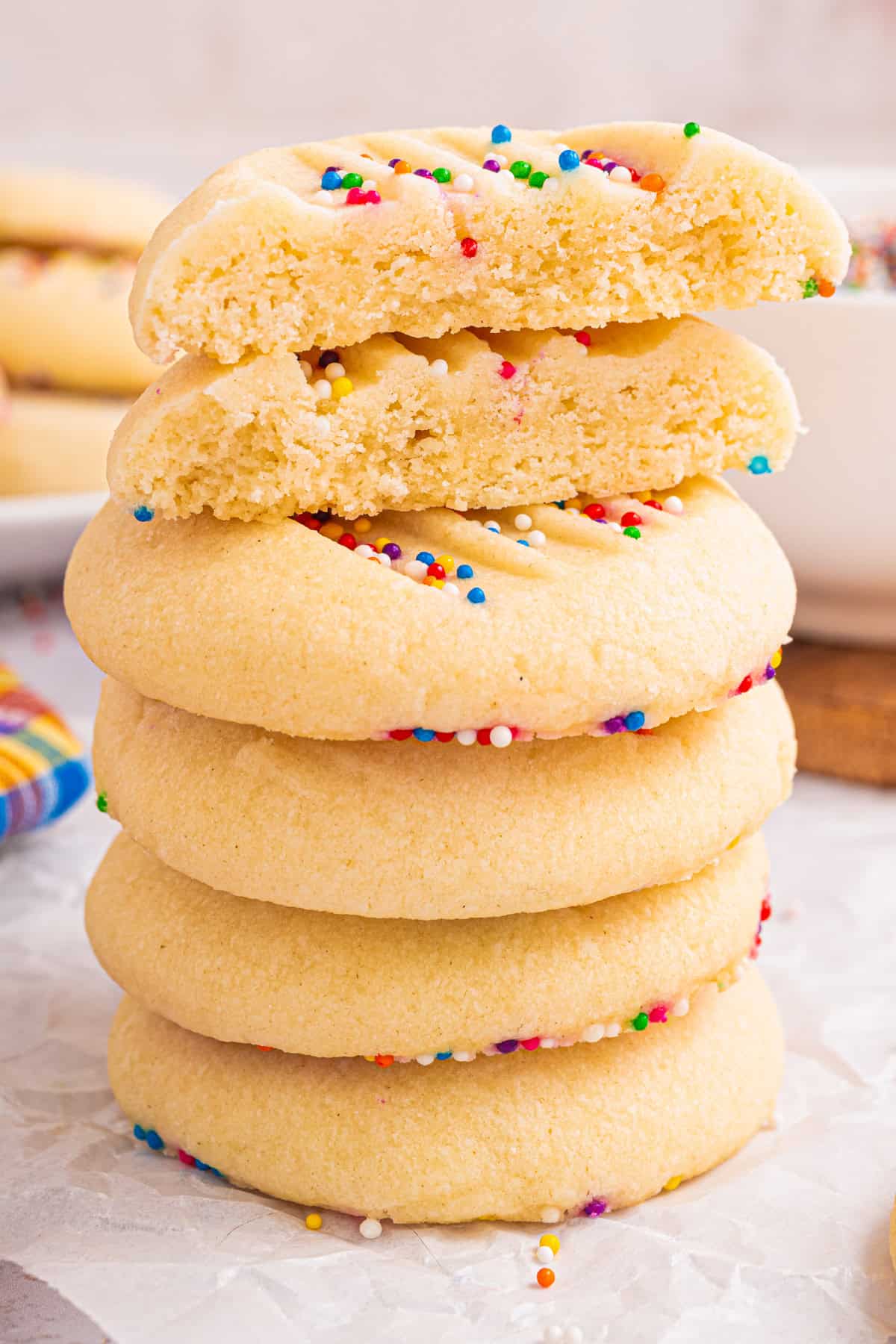
You may have noticed that I use a generous ½ cup of cornstarch in these whipped shortbread cookies because it's the secret to keeping them from spreading while they bake. It acts as a nearly pure starch, reducing gluten development in the flour, keeping the crumb soft, light, and slightly crumbly rather than chewy or tough. In this type of easy shortbread, cornstarch also helps the cookies bake up thicker and minimizes spreading, so they hold their shape and stay soft and delicate rather than thin and crispy.
Top 5 Frequently Asked Questions (FAQ)
1. Do I need to chill the dough for whipped shortbread cookies?
I usually don't chill this dough because it's designed to hold its shape while still staying soft, but if your kitchen is very warm or the dough feels sticky, a short chill (15-20 minutes) can help the cookies keep a neat shape without affecting the melt in your mouth texture.
2. Why are my whipped shortbread cookies spreading too much?
If your cookies are spreading, it's often because the butter was too soft or slightly melted, or there was not quite enough flour or cornstarch; next time, make sure the butter is soft but not greasy and measure the dry ingredients carefully, or chill the shaped cookies briefly before baking.
3. Can I freeze whipped shortbread cookies?
Yes, and I do it all the time for Christmas; once baked and cooled, freeze them in layers separated by parchment for up to 2-3 months, then thaw at room temperature, or freeze the unbaked dough balls and bake them straight from frozen with 1-2 extra minutes of bake time.
4. How do I keep whipped shortbread cookies soft?
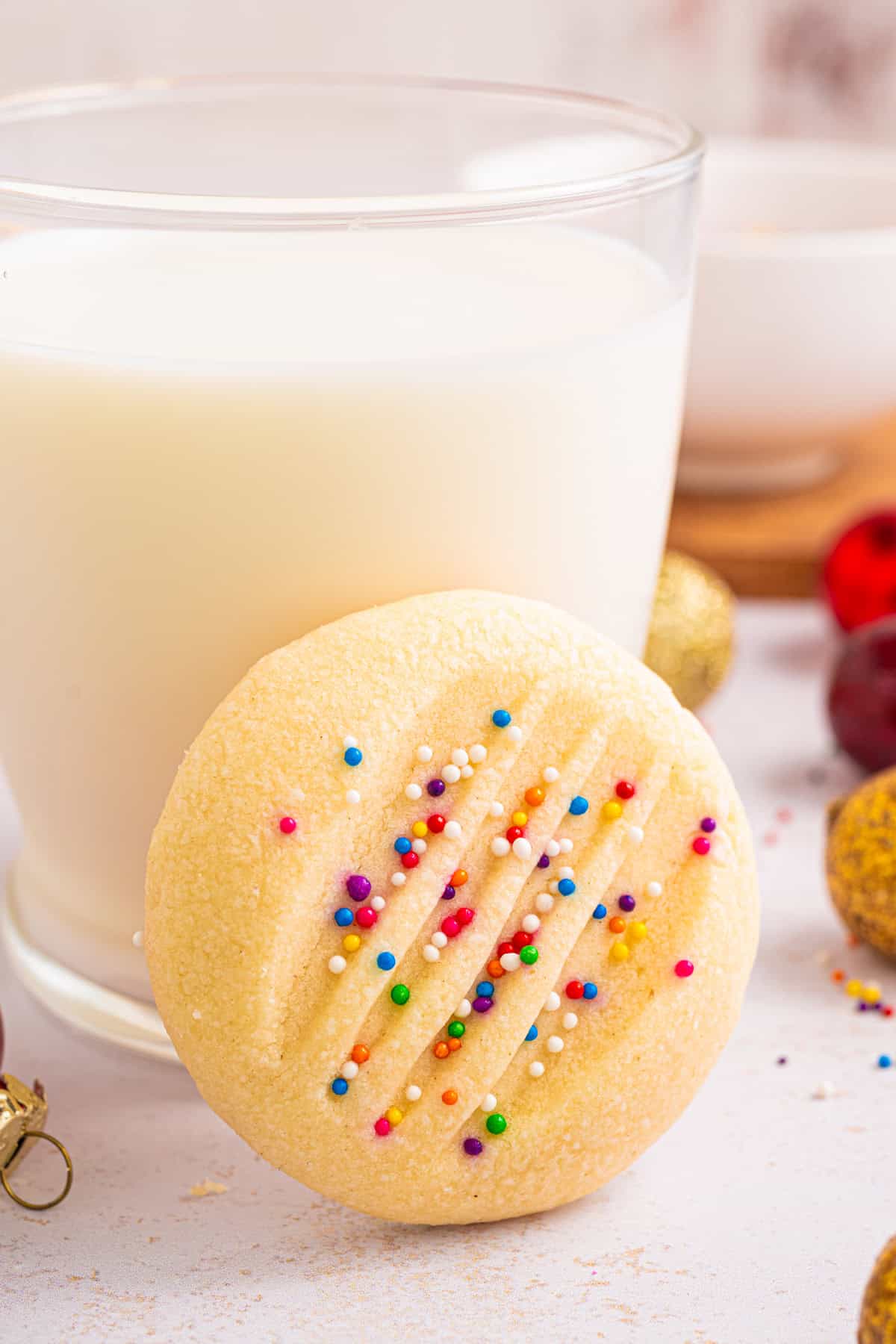
To keep them soft, avoid overbaking (they should stay pale, not golden), store them in an airtight container once they're completely cool, and if your climate is very dry, you can even tuck a small piece of bread into the container to help maintain some moisture.
5. Can I add flavors or mix-ins to this recipe?
Absolutely-this is a great master recipe; you can add citrus zest, finely chopped nuts, spices (like cinnamon or cardamom), or dip the cooled cookies in melted chocolate and sprinkle with sea salt or crushed nuts for lots of variation.

Whipped Shortbread Cookies
Ingredients
- 1 cup unsalted butter (2 sticks), softened
- 1 ¾ cup all-purpose flour (210 grams), plus extra for dusting the back of a fork
- ⅔ cup powdered sugar (75 grams)
- ½ cup cornstarch (70 grams)
- ¼ teaspoon salt
- 1 teaspoon vanilla extract
- Nonpariel sprinkles optional
Instructions
- Preheat oven to 325°F. Place parchment paper on 2 cookie sheets.
- Cream the butter in a large bowl with an electric mixer until smooth. Set aside.
- Whisk the flour, powdered sugar, cornstarch, and salt together in a small or medium bowl.
- Pour about half of the flour mixture into the large bowl with the butter and vanilla extract, and mix until combined. Add the remaining dry ingredients and continue mixing at medium speed until the cookie dough is thick and fluffy, at least 2 minutes.
- Use a medium cookie scoop (1 ½ tablespoons) to scoop out cookie dough and roll it into a tight ball between your palms. Place the cookie dough on the parchment-lined cookie sheets, about 2 inches apart. I fit 12 cookies on one cookie sheet and 10 on the other.
- Press the back of a fork into the top of each cookie. Dip the fork in extra flour so it won't stick to the cookies. Top each cookie with sprinkles, if desired.
- Bake the cookies, one cookie sheet at a time, for 15 minutes or until they have puffed up and the tops are dry.
- Let the cookies cool completely on the cookie sheets before serving.
Notes
- Can I double the recipe? Yes. Whip in a stand mixer to keep volume, scrape the bowl often, and bake in batches to maintain even heat.
- Do they need to be this pale? Yes - classic whipped shortbread should be pale with dry tops and set edges. If they're browning, your oven runs hot; reduce to 315-320°F.
- Can I add mix-ins? Keep them delicate and minimal - mini chips, finely chopped toasted pecans, or candied citrus peel. Too many heavy add-ins will deflate that airy texture.
My 5 Best Tips for Success
- Use very soft (but not melted) butter - Whipped shortbread depends on aeration, so I always make sure the butter is soft enough to dent easily with a finger but not greasy or melted; this helps the dough whip up light and fluffy.
- Whip the dough long enough - Don't rush the mixing step; giving the dough a solid 2-3 minutes with the mixer helps incorporate air and gives that signature melt-in-your-mouth texture, rather than dense, heavy cookies.
- Keep cookies similar in size - I like using a medium cookie scoop so all the cookies bake evenly; if some are smaller, they can overbake and lose that soft, tender center.
- Bake just until set, not browned - These shouldn't turn golden like sugar cookies; pull them out when the tops look dry, and the cookies feel set around the edges but still pale for the best texture.
- Decorate before baking for best adhesion - I always add sprinkles after pressing the fork pattern and before baking, so they grip into the dough and stay put on the finished cookies.
Storage, Reheating, Freezing, Make-Ahead
- Storage: Keep cookies in an airtight tin at room temperature for 5-7 days. Separate layers with parchment to protect the fork pattern and sprinkles.
- Reheating/refreshing: Shortbread doesn't need reheating, but to freshen day-4 cookies, warm on a sheet at 275°F for 4-5 minutes, then cool completely for snap-to-tender contrast.
- Freezing (baked): Freeze fully cooled cookies in a single layer, then transfer to a bag or container up to 2-3 months. Thaw uncovered at room temp to avoid moisture softening the tops.
- Freezing (unbaked): Scoop, roll, press with a fork, add sprinkles, then freeze on a sheet. Bake from frozen at 325°F, adding 1-3 minutes as needed.
- Make-ahead dough: Refrigerate portioned, pressed dough balls up to 48 hours; bake straight from the fridge. If the dough feels firm, give it 5 minutes on the counter.
Nutrition
Nutrition Disclaimer:
The nutritional information on this website is only an estimate and is provided for convenience and as a courtesy only. The accuracy of the nutritional information for any recipe on this site is not guaranteed. It should not be used as a substitute for a professional nutritionist's advice.
These were amazing!! Definitely going into our annual cookie box!
Alex, that makes my day! 🙂
Mine came out so dry. Is that normal?
Hi Shannon! The dryness you experienced isn’t “normal” but it can happen with shortbread when the butter isn’t fully developed or the dough gets a little powdery. With proper whipping and gentle mixing, this recipe should come out tender, crisp at the edge, and melt-y in the middle, not dry.
Here are my tips to prevent this "dryness":
1) Make sure the butter is room temp (not cold, not melty).
2) Whip the butter + sugar longer at the start — it should look light and fluffy.
3) When adding flour, mix just until combined — no more.
4) If it still seems dry or dusty, you can add a teaspoon or two of milk or cream to bring it together (not a lot — just enough for cohesion).
Just made exactly as written. They turned out just as pictured and are as delicious as they look!
Thank you, Eileen. So happy the cookies turned out well for you! 🙂
I never make shortbread, but these look too good not to try! Thank you for the recipe!
It's my pleasure to share these recipes! 🙂 Wishing you a very happy Holiday Season, Karen! 🙂
How do you recommend I change this recipe to make it Gluten Free?
You can definitely make them gluten-free, Anne! Use a 1:1 gluten-free all-purpose flour (one that includes xanthan gum), such as Bob’s Red Mill 1-to-1 or King Arthur Measure for Measure, and substitute it cup for cup for the regular flour. No other ingredient changes are needed.
A couple of quick tips: make sure the butter is very soft (whipped shortbread relies heavily on butter for structure), and don’t overmix once the flour is added. The texture will be just slightly more delicate, but the cookies will still melt in your mouth.