
This post may contain affiliate links. Read my disclosure policy.
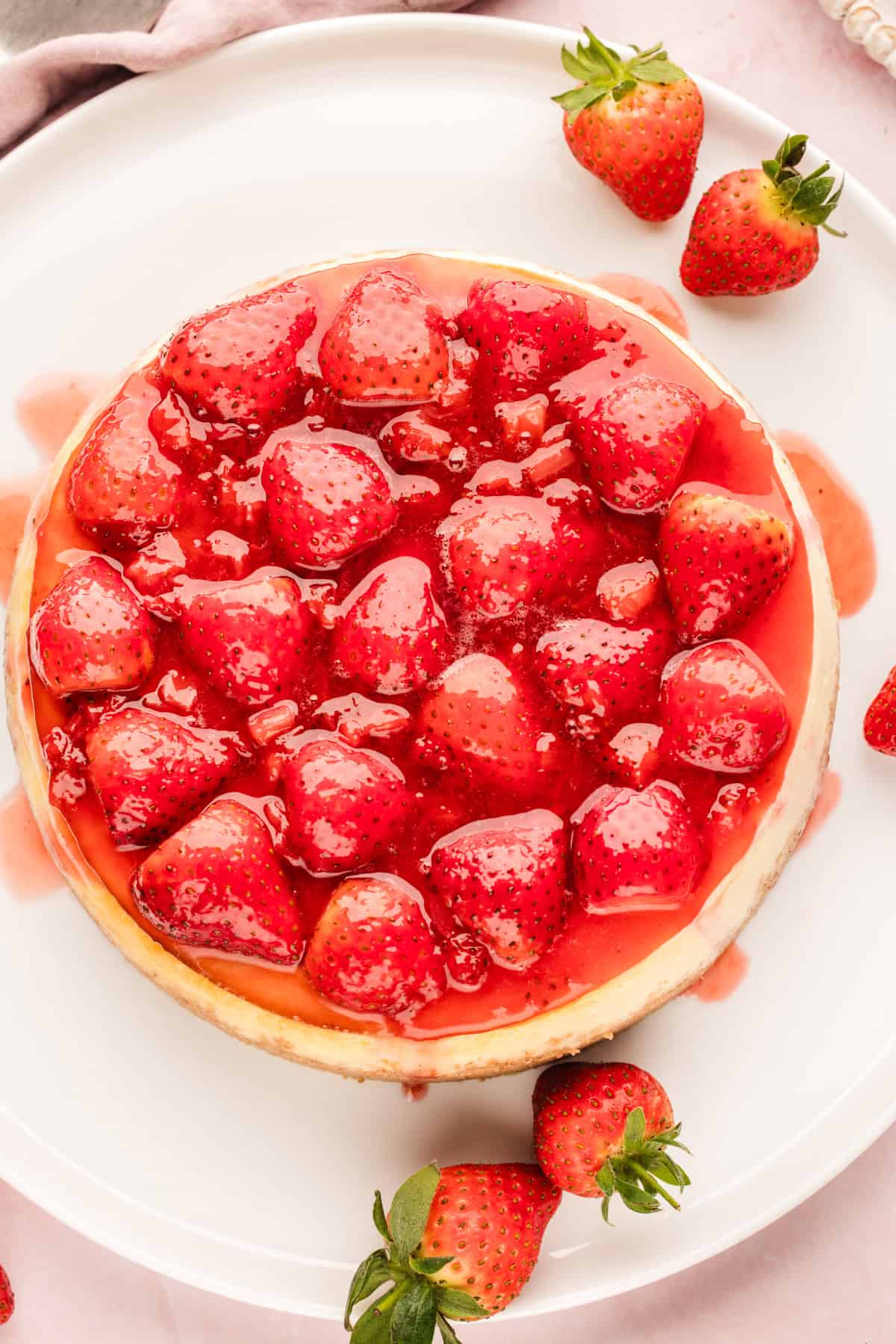
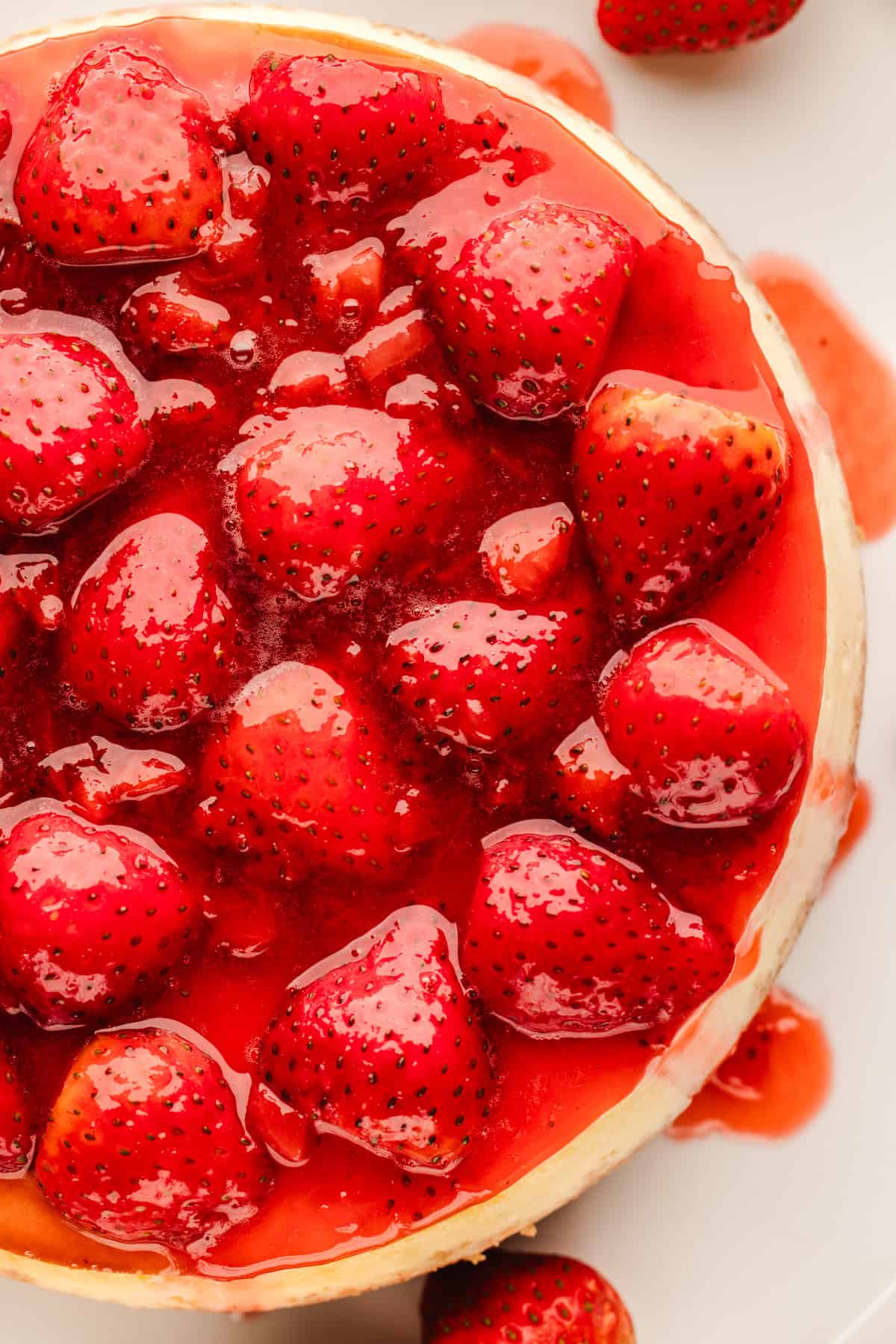
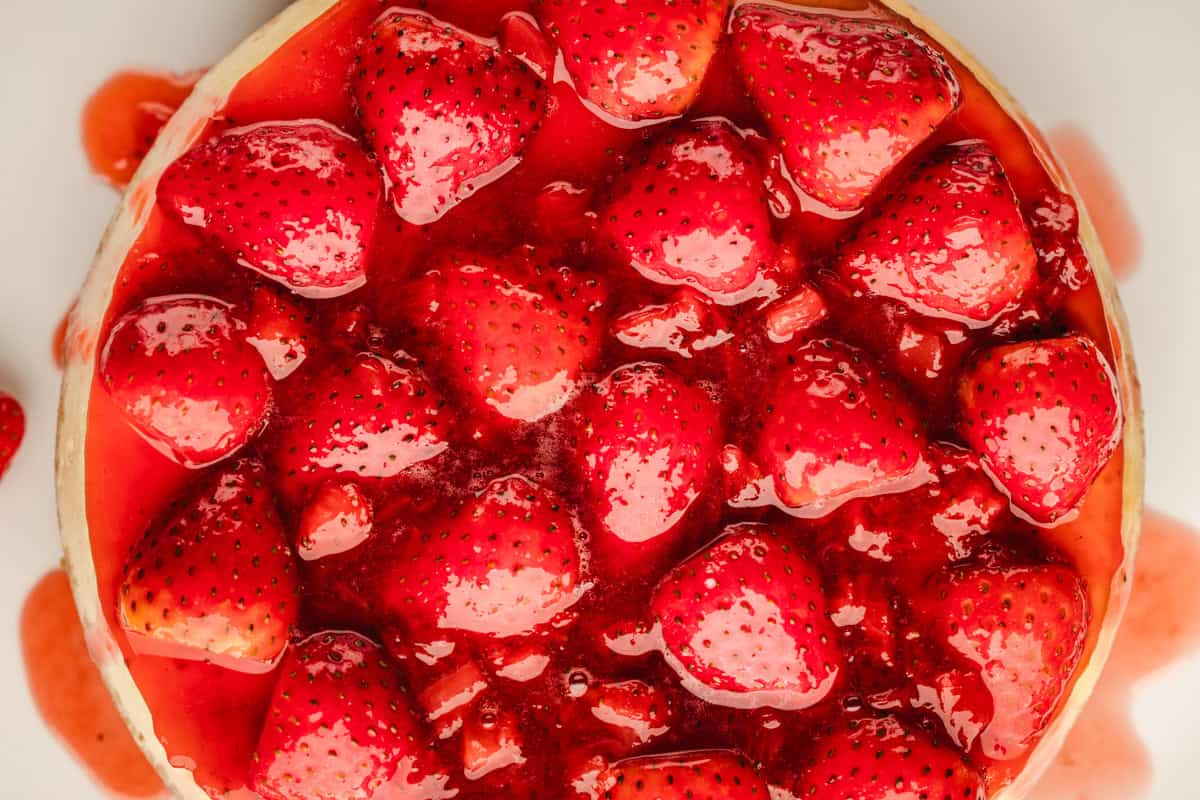
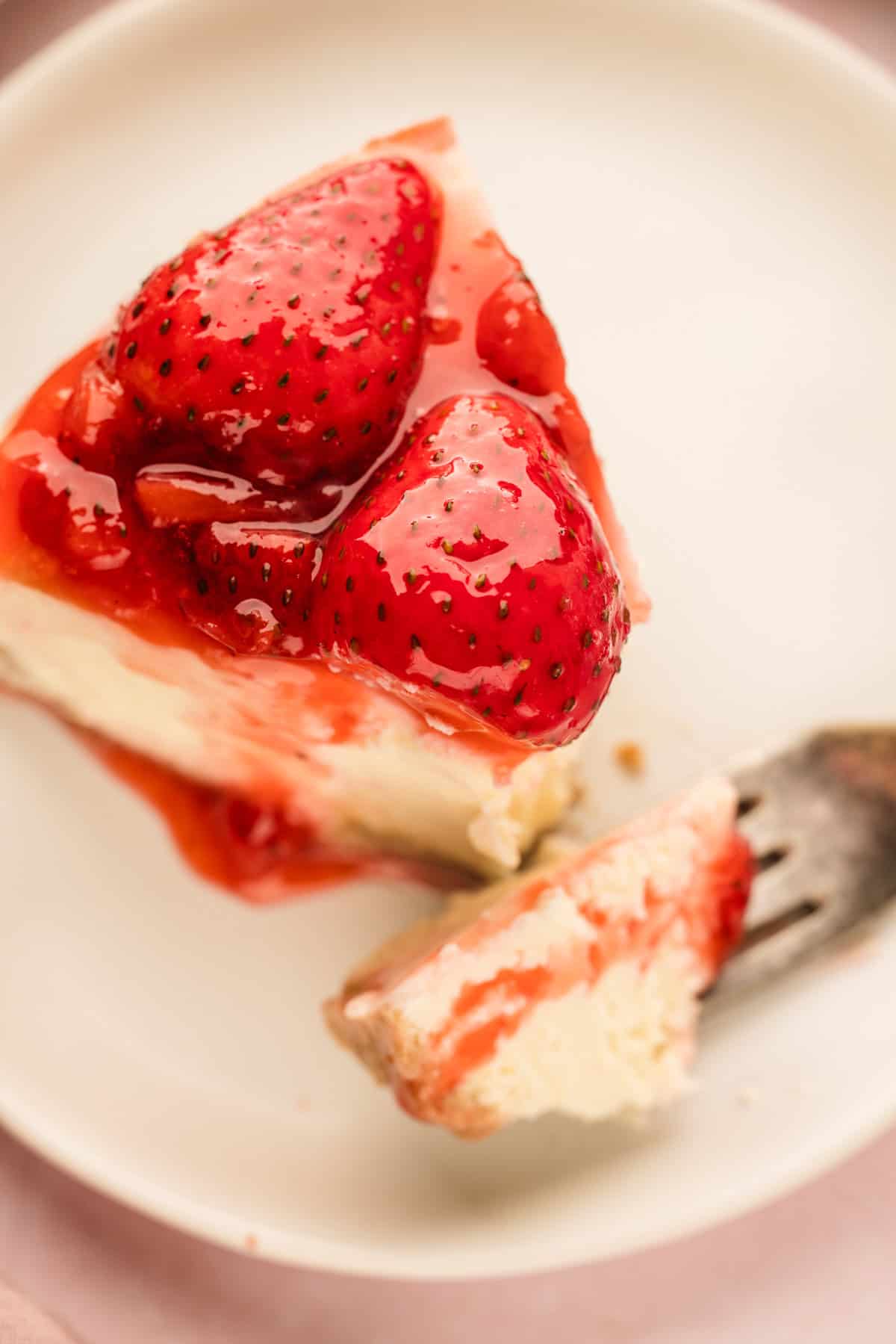
This thoroughly tested recipe makes the best New York-style cheesecake: tall, creamy, and baked on a buttery graham cracker crust, then finished with a classic, glossy fresh strawberry topping. No gelatin, no boxed glaze, no artificial red. It bakes low and slow in a water bath, which is exactly why it comes out silky, dense, and completely crack-free. Only 30 minutes of hands-on prep!
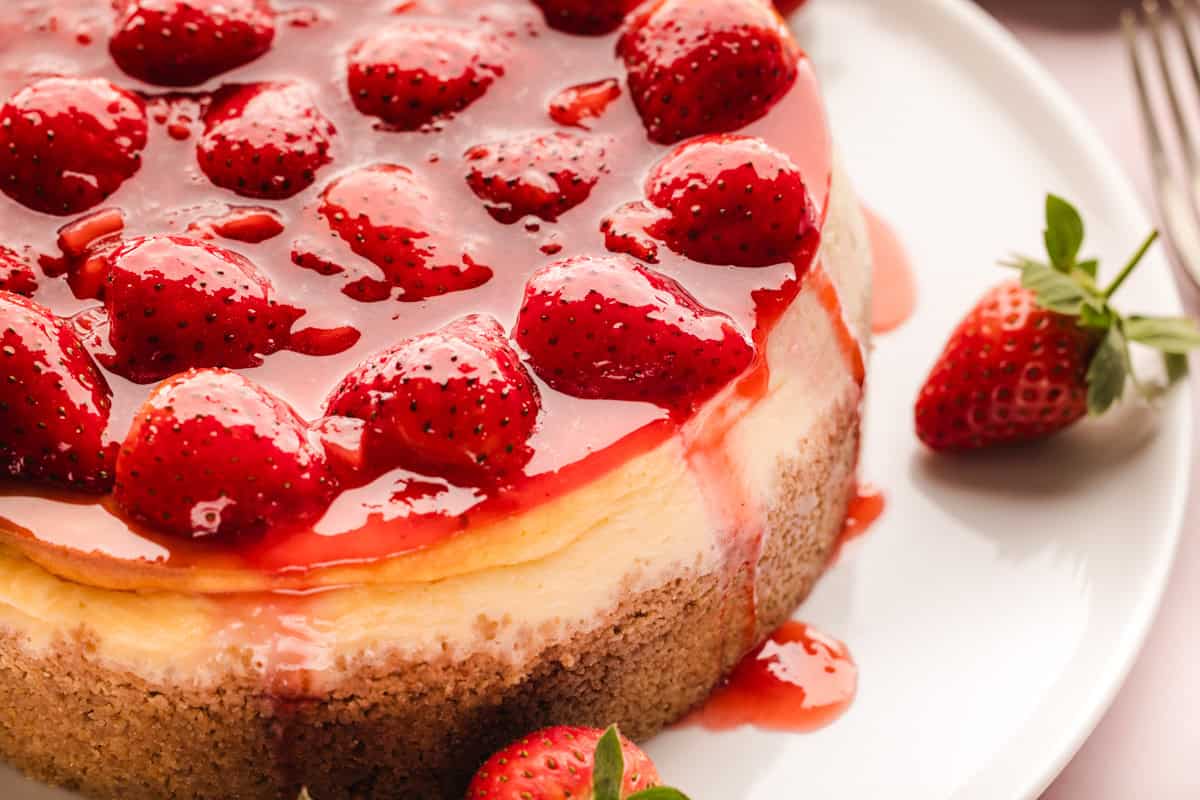
A Classic New York-Style Cheesecake Recipe You Can Use for Any Flavor
This is, without a doubt, the best cheesecake I've ever had and the only classic cheesecake recipe you'll ever need! I've made this cheesecake filling more times than I can count, testing bake times, mixing speeds, pan depths, water bath setups, and every cooling method I could think of - and not only here. I put the same testing into my salted caramel cheesecake, blueberry cheesecake bars, peach cobbler cheesecake, carrot cake cheesecake, mocha cheesecake, and blackberry cheesecake bars.
After so many batches, trials and errors, successes and breakthroughs, I finally reached the point where I was happy with every single detail. I'm still not quite sure why I treat cheesecake development like a scientific experiment... but apparently I do. And the results speak for themselves! I can now confidently say: This is truly a master recipe for classic New York-style cheesecake.
Every tip in this post came from an actual batch that taught me something, and I've included it all here so you don't have to learn the hard way like I did. My favorite topping is a classic homemade glossy fresh strawberry sauce, but this cheesecake is just as delicious with other berries or countless other toppings!
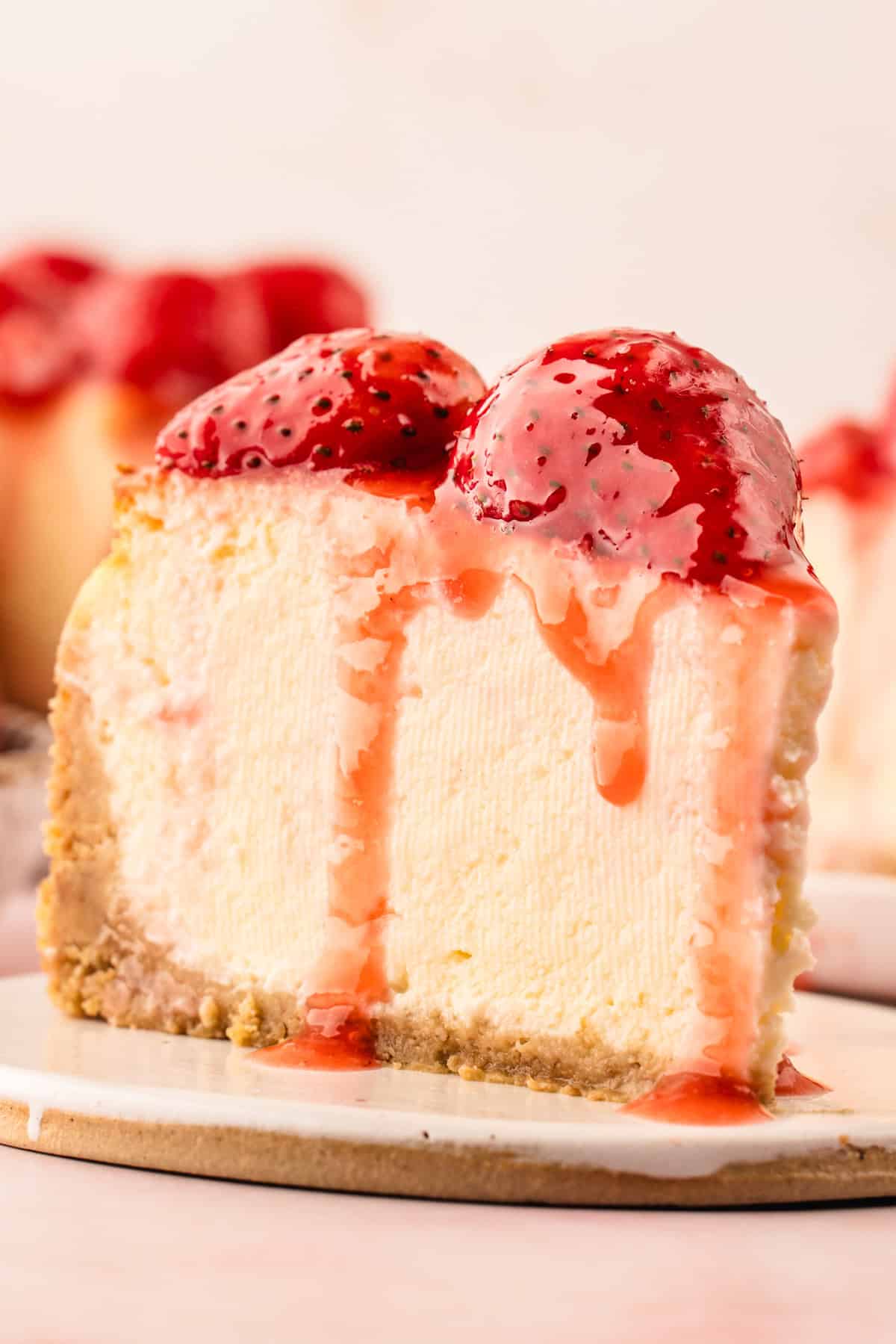
Swap the Topping, Keep the Filling
So please use it that way. Once you have this base down, you can swap the strawberry topping for blueberries, cherries, or salted caramel, trade the graham crackers for Biscoff or Oreo crumbs, or stir a little lemon zest into the filling. The basics stay exactly the same. Learn this one recipe, and you've quietly learned every cheesecake you'll ever want to make. Don't be intimidated. I'll walk you through every single step.
The whole recipe comes down to three simple rules: 1. Use room-temperature ingredients. 2. Mix on low speed. 3. Bake the cheesecake in a gentle water bath. I'll walk you through each one step by step. If my blueberry cheesecake and raspberry cheesecake taught me anything, it's that this method works every single time.
Why You'll Love This Classic Recipe
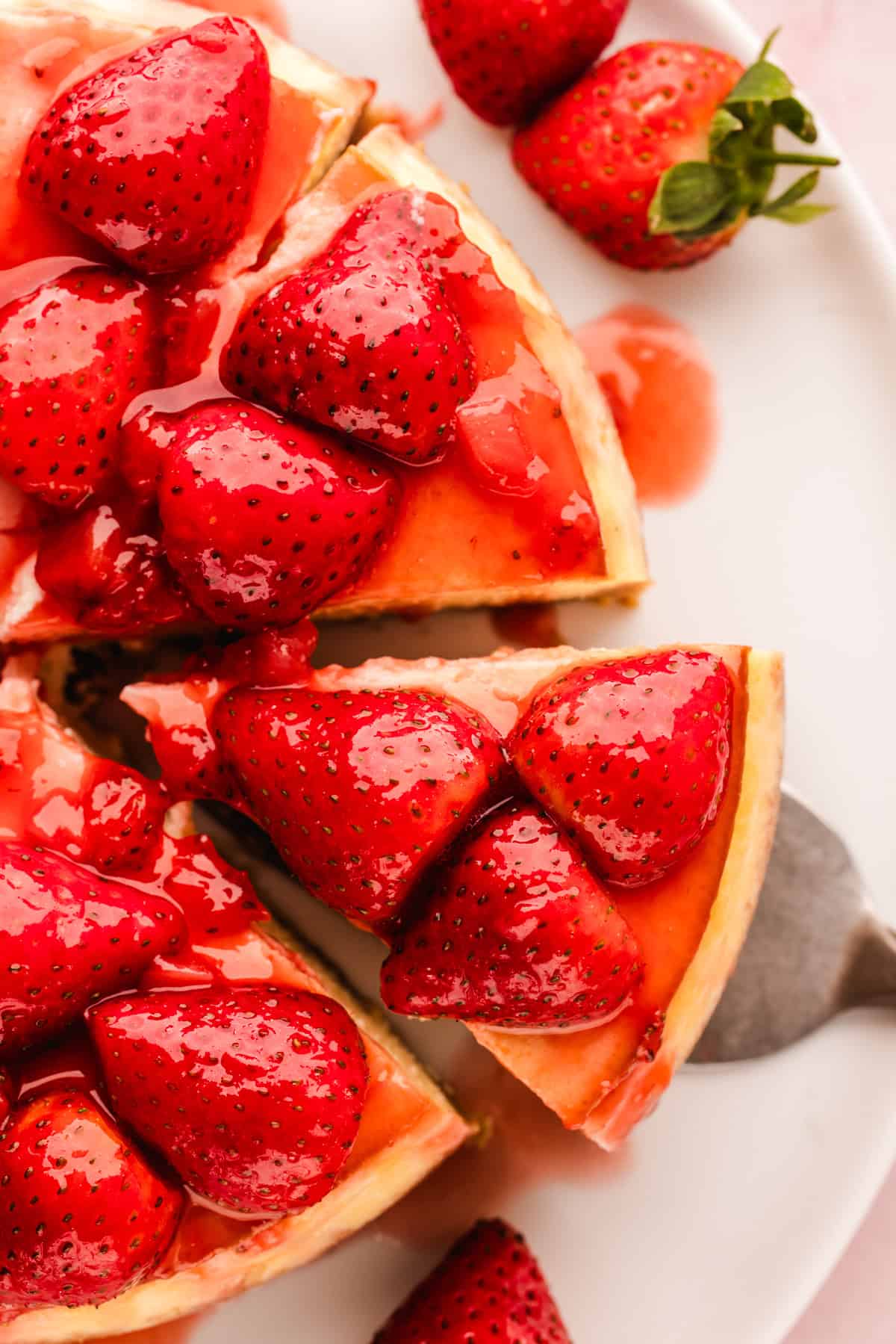
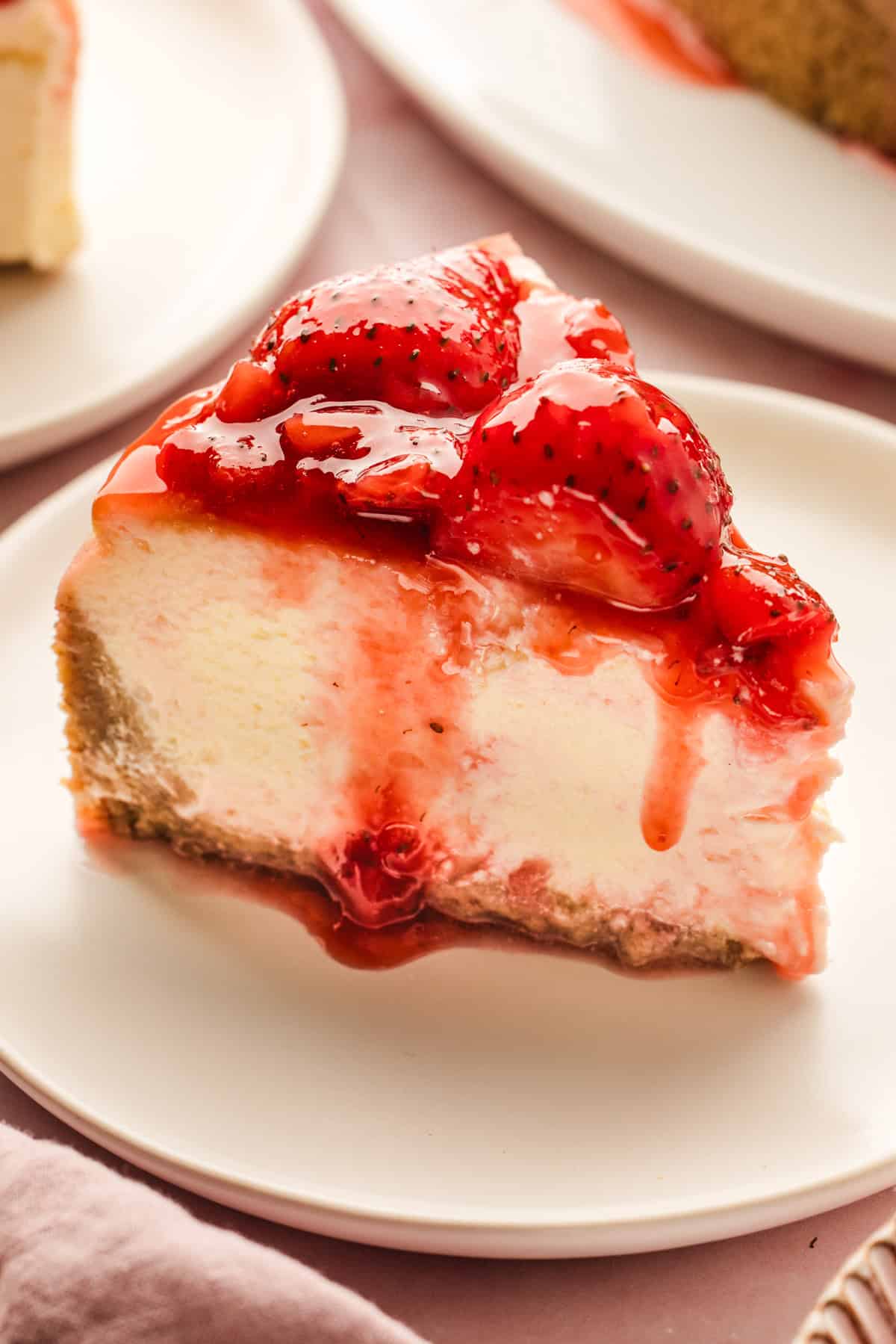
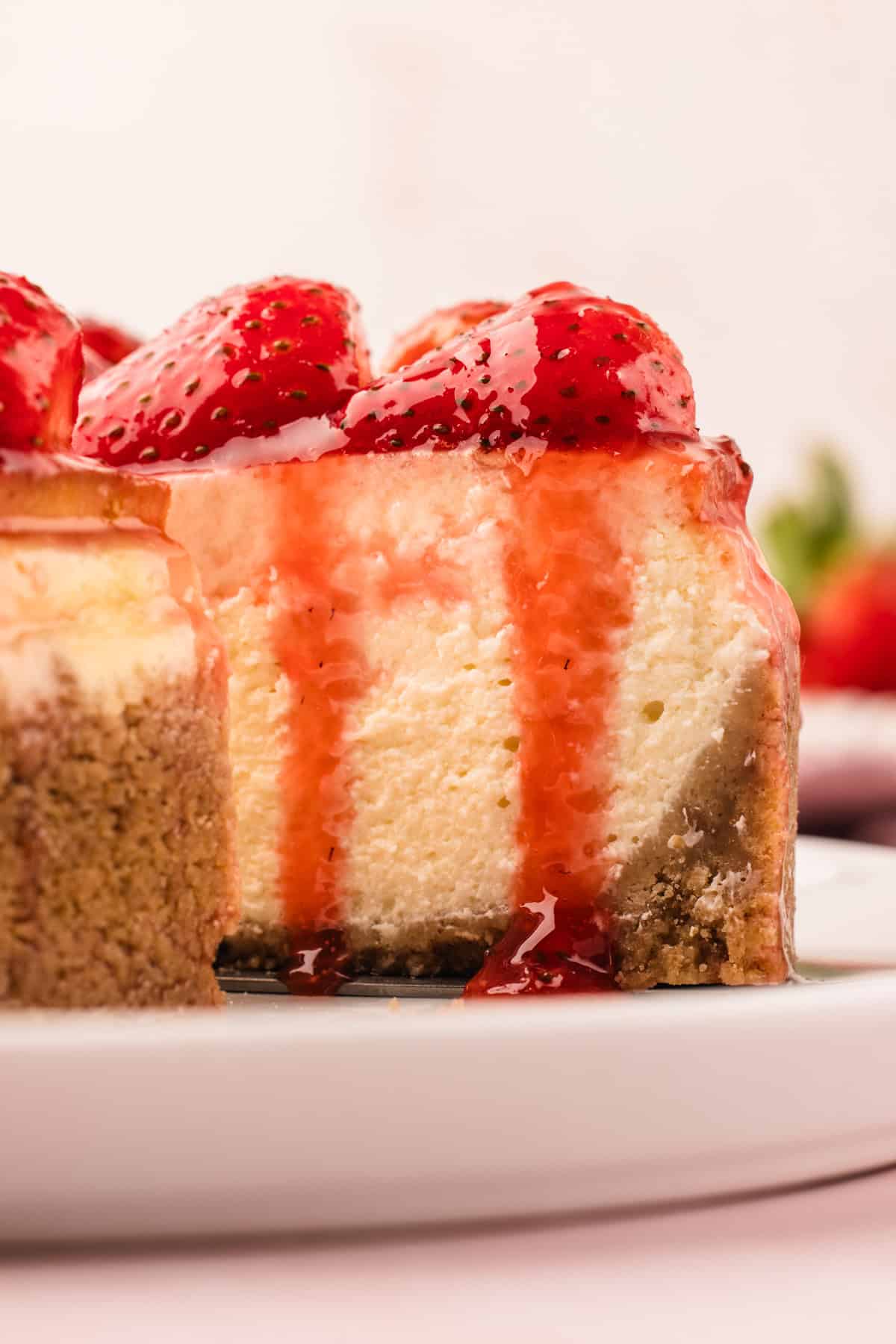
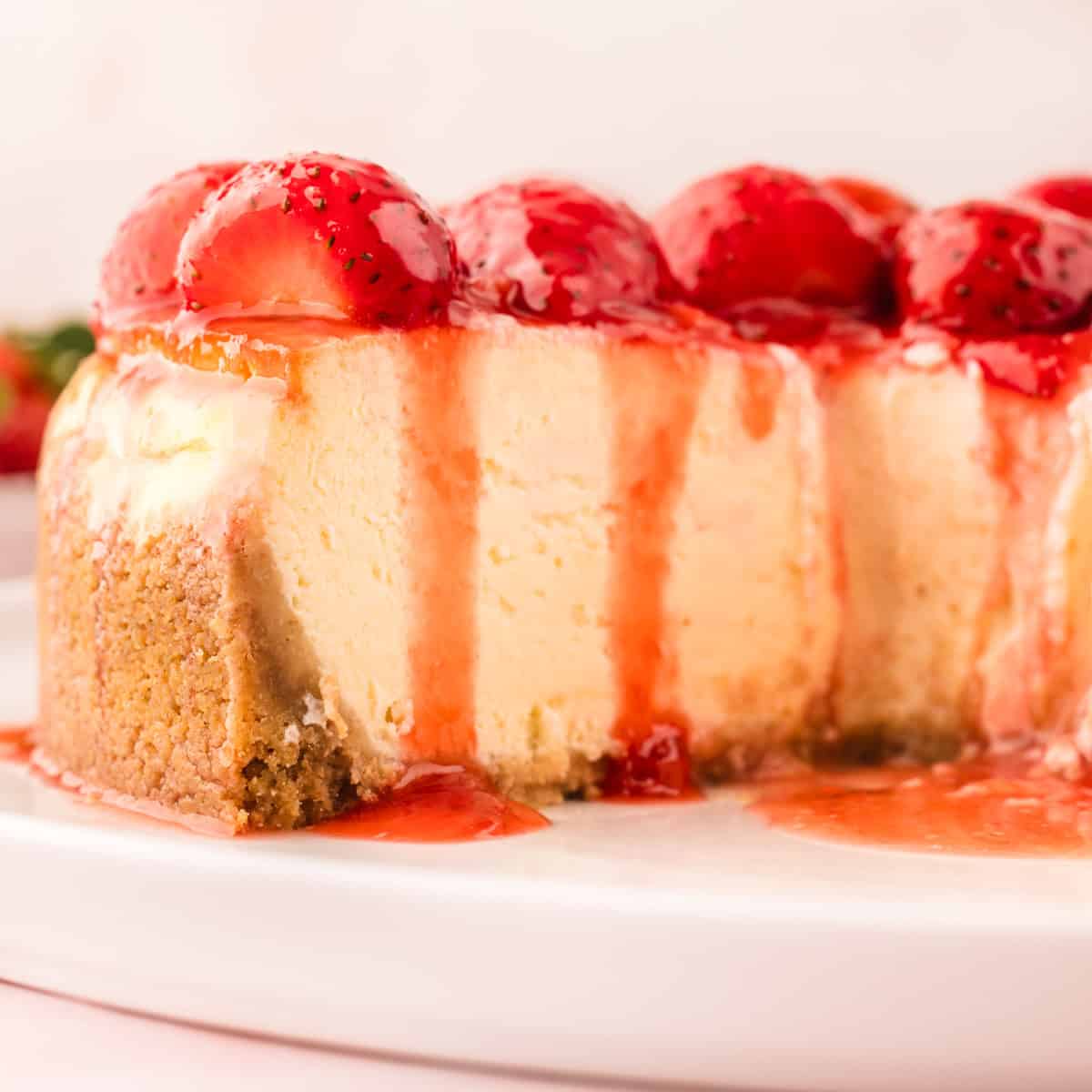
- Thick, tall, and genuinely New York-style. Two full pounds of cream cheese and a 9-inch deep springform pan give you those bakery-height slices.
- Creamy without being heavy. Sour cream keeps the filling silky and adds just enough tang to balance the sweet strawberries.
- No cracks. The water bath plus the slow cool-down in the turned-off oven does all the work for you.
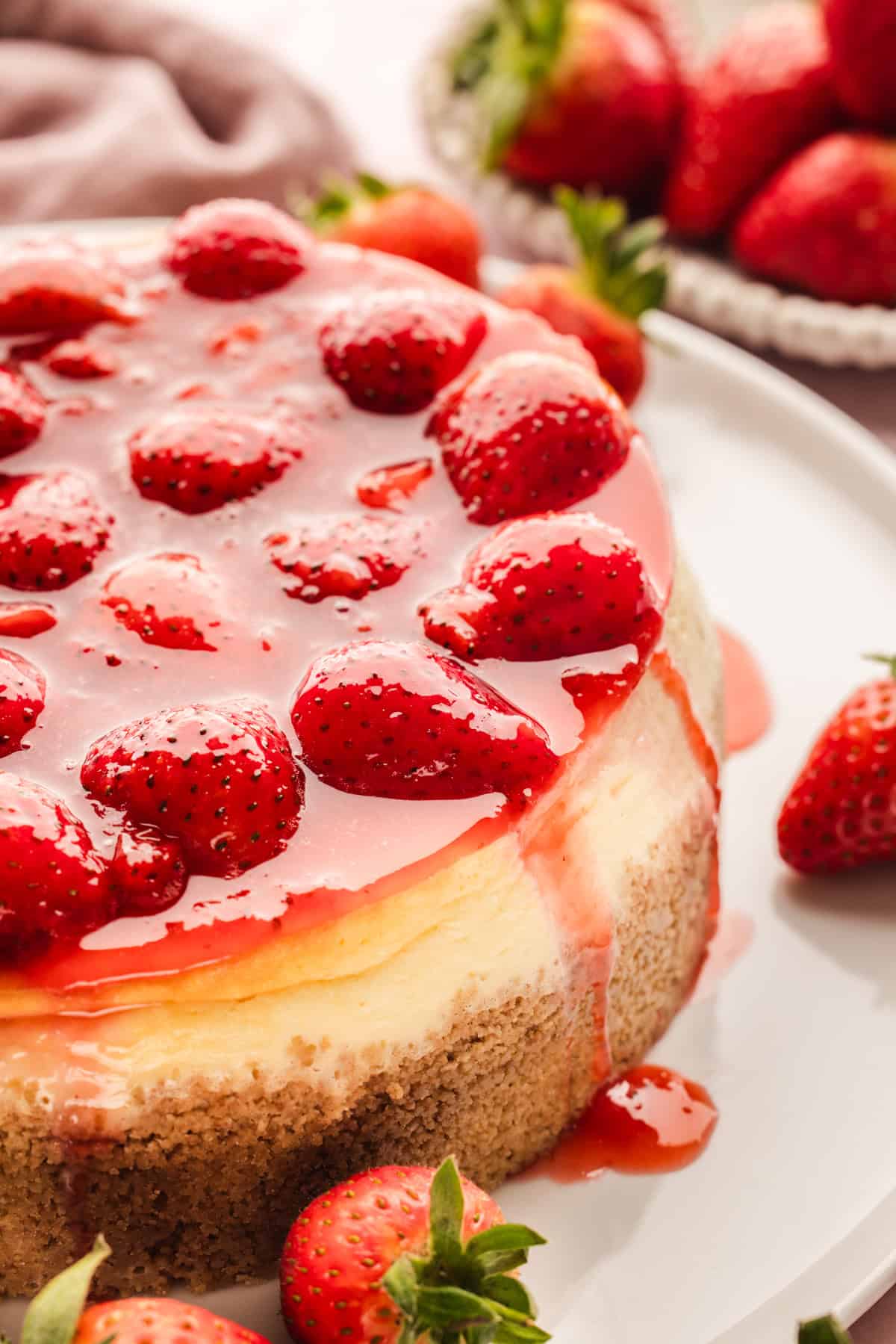
- Real fresh strawberry topping. Homemade, glossy, and made in one small saucepan in about 10 minutes. Similar to the sauce I swirl into my strawberry cheesecake bars, just glazier and spooned on top.
- Made completely ahead. Bake it the day before, top it an hour before serving. This is my favorite kind of party dessert.
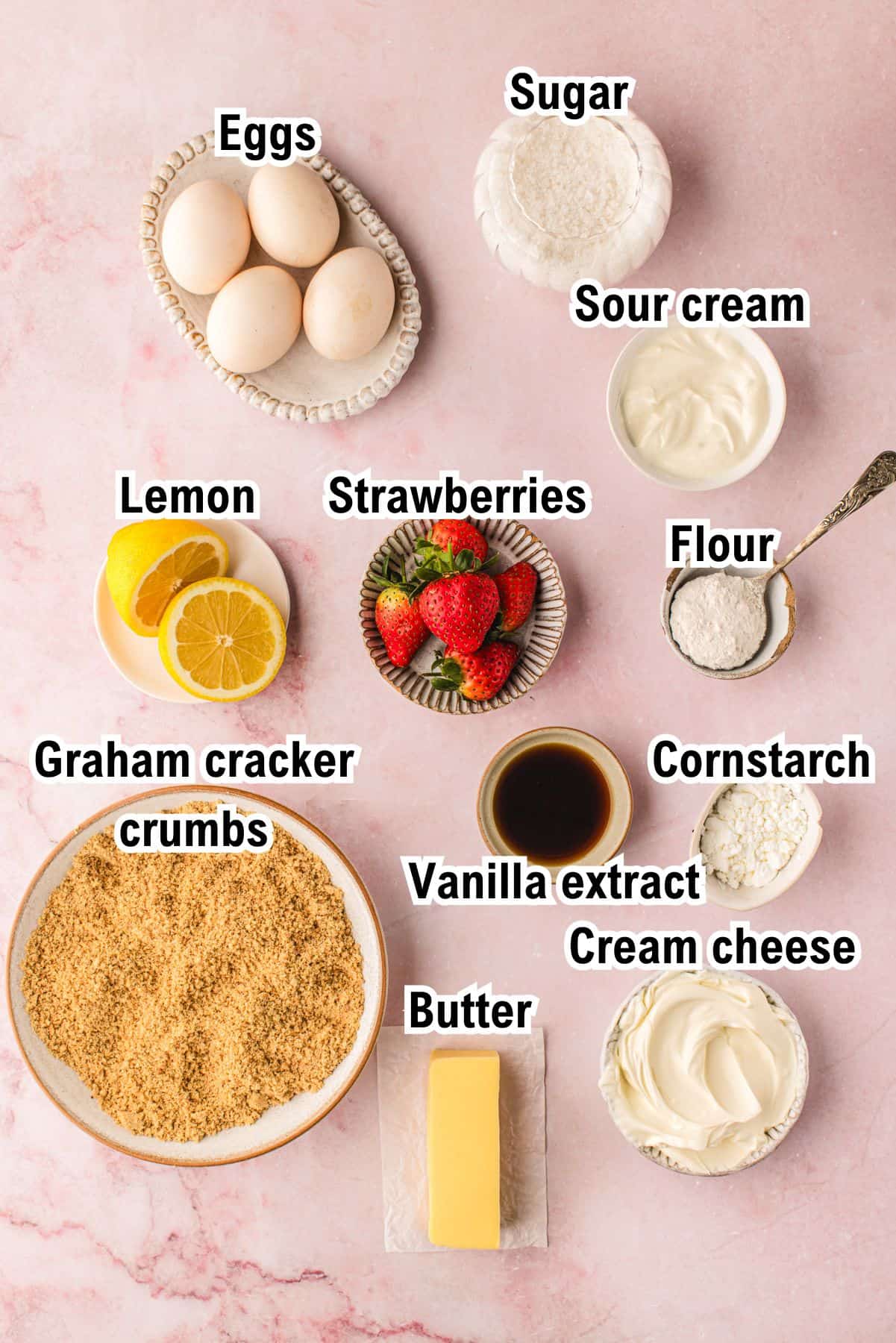
A Few Ingredient Tips Before You Shop:
You can jump straight to the printable recipe card below for the complete recipe with ingredient amounts and detailed instructions. However, I highly recommend reading my notes first (there aren't many). They'll help ensure your cheesecake turns out perfectly.
- Full-fat block cream cheese only. Not the whipped kind, not the tub kind, and not reduced-fat. Blocks have less water and more structure, which is exactly what a baked cheesecake needs. I use the same rule for my salted caramel cheesecake.
- Graham crackers. About 16 full sheets get you 2 cups of crumbs. A food processor makes fast work of it, but a zip-top bag and a rolling pin work too.
- Fresh strawberries. Look for berries that are deep red all the way to the shoulders. If yours are a little pale or out of season, add an extra teaspoon of lemon juice to the topping to wake them up.
- Bring everything to room temperature. Room temperature ingredients blend together smoothly and evenly. Cold cream cheese can stay lumpy, and cold eggs can make the batter seize or curdle. When everything is at room temperature, the ingredients come together properly, and you get a silky, uniform batter and a smooth finished texture.
- Use full-fat cream cheese. It gives you structure, richness, and stability. Reduced-fat versions contain more water and stabilizers, which can lead to a softer set and a slightly grainy texture. For a dense, creamy New York-style cheesecake, I think full-fat cream cheese is essential.
- Beat the eggs together before you add them. This ensures they mix evenly into the batter without overmixing. If you add whole eggs one at a time, you usually have to mix extra to break them down, and that introduces too much air. Too much air in the batter can make the cheesecake puff during baking and crack as it cools.
The Pan You'll Need
- Use a deep 9-inch springform pan. This recipe makes a lot of filling, so your pan needs to be at least 2 ¾ inches deep to hold it all. A shallow pan may overflow or bake unevenly. Pan height matters if you want that tall, impressive bakery-style slice.
- Wrap the pan before you bake the crust. I wrap the outside of the springform pan tightly with heavy-duty foil. It is much easier to get a tight seal while the pan is still cold, and proper wrapping keeps water from seeping into the crust during baking.
My Tips for Success
- Put a folded dish towel in the roasting pan. I place a folded dish towel in the roasting pan before I add the springform pan. It keeps the cheesecake from sliding and cushions it against direct heat from the bottom of the roasting pan. It also promotes gentler, more even baking, so the base is less likely to overcook.
- Start checking at the 90-minute mark. The cheesecake is done when the edges are set, but the center still has a slight jiggle. It will keep firming up as it cools. Gently tap the pan so you can see how much movement there is in the middle. If it looks sloshy, it needs more time. If it jiggles like jelly, it is ready.
- Take the temperature if you want to be sure. I recommend a temperature check. The thermometer will make a hole in the center, but it won't matter since you're covering the cheesecake with sauce.
- Cool it slowly in the oven. After baking, turn the oven off and leave the cheesecake inside with the door cracked. Sudden temperature changes can cause the surface to crack or the center to sink. This slow cooling helps the custard set gently and evenly.
- Cool completely before you chill it. If you refrigerate a warm cheesecake, condensation can form on the surface and create a slightly damp layer beneath the top. Let it cool fully at room temperature first, and you'll get a smooth, dry surface and an even texture throughout.
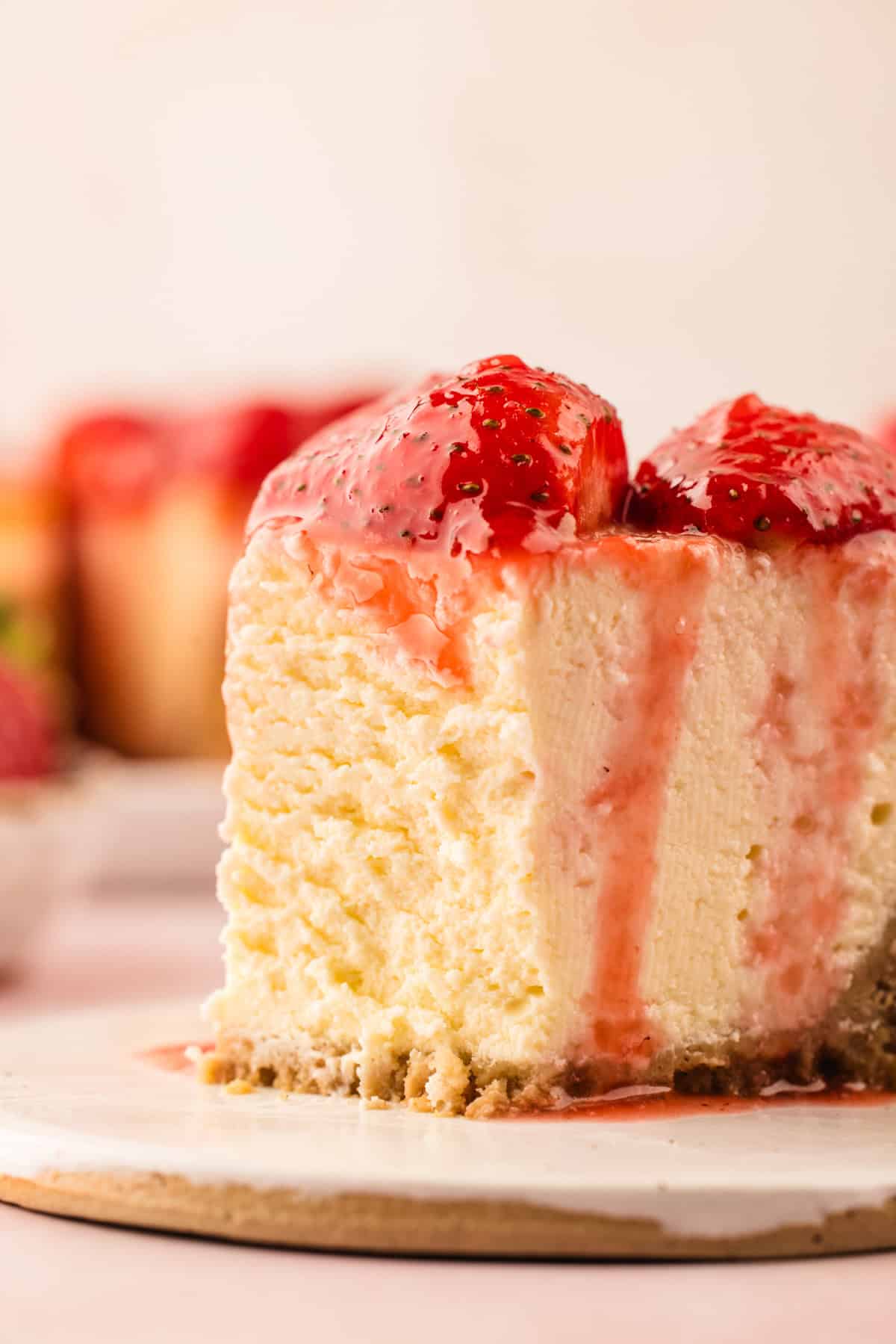
- Slice with a hot knife. Once the sauce is added and you're ready to serve, use a sharp knife dipped in hot water and wiped dry between each cut. That's how you get clean slices.
Troubleshooting Guide
1) Why Did My Cheesecake Crack?
Cracks are usually caused by one of three things: 1. Overmixing. 2. Overbaking. 3. Rapid temperature changes.
- Overmixing incorporates too much air into the batter. During baking, that air expands and causes the cheesecake to rise like a soufflé. As it cools, it collapses and cracks. Mix gently, especially after adding the eggs.
- Overbaking dries out the surface and causes it to split. Remember, the cheesecake is done when the edges are set, but the center still has a slight jiggle. It should not be fully firm in the middle when you remove it from the oven.
- Sudden temperature changes can also cause cracks. Always let the cheesecake cool gradually in the oven with the door cracked before moving it to room temperature.
2) Why Is My Batter Lumpy?
Lumps are almost always caused by cold cream cheese. Even slightly chilled cream cheese will not fully smooth out when mixed. Here's how to prevent it:
- Bring the cream cheese, eggs, and sour cream fully to room temperature.
- Beat the cream cheese and sugar until completely smooth before adding the other ingredients.
- Scrape down the bowl frequently.
If the batter still looks slightly lumpy, gently warm the outside of the mixing bowl over a pan of warm (not hot) water while you whisk. That usually smooths it out.
3) Why Is My Cheesecake Grainy?
A grainy texture can happen if:
- The batter was overmixed.
- You baked the cheesecake at too high a temperature.
- It was refrigerated while still warm.
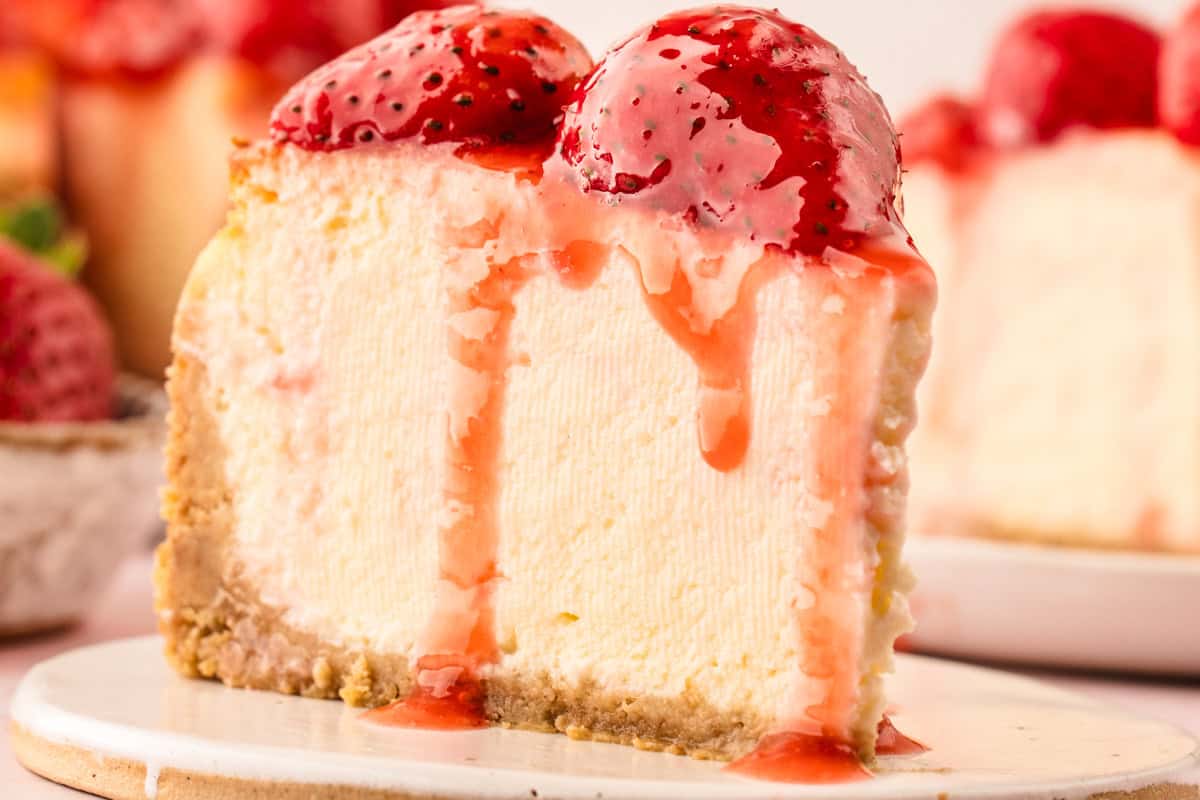
Remember: the cheesecake is a custard. It prefers gentle heat and gradual cooling. Baking low and slow in a water bath keeps the proteins from tightening too quickly, which keeps the texture creamy rather than curdled.
4) Why Is the Center Too Soft?
If the center is loose or mousse-like after chilling, you most likely underbaked it.
- Aim for about 150-155°F in the center before cooling.
- It should jiggle slightly when you remove it from the oven, but it should not look sloshy.
- When in doubt, bake a few minutes longer. I'd rather you go slightly over than pull it out too early.
5) Why Is There Moisture on Top?
Condensation forms when you cover a warm cheesecake or refrigerate it before it has fully cooled.
- Always cool it completely at room temperature before refrigerating.
- Don't cover it until it is fully chilled.
- If a little moisture does form, gently blot the surface with a paper towel before adding the topping.

The Best Cheesecake with Homemade Strawberry Topping
Ingredients
Graham Cracker Crust
- 2 cups graham cracker crumbs about 16 full sheets graham crackers
- ¼ cup light brown sugar
- 8 tablespoons unsalted butter melted
Cheesecake Filling
- 32 ounces full-fat cream cheese at room temperature
- 1 cup granulated sugar
- 2 tablespoons all-purpose flour
- 1 cup sour cream at room temperature
- 1 ½ teaspoons pure vanilla extract
- 4 large eggs at room temperature
Strawberry Topping
- 3 cups fresh strawberries 1 ½ cups diced, 1 ½ cups halved
- ⅓ cup granulated sugar
- 1 tablespoon lemon juice
- 2 tablespoons water divided
- 2 teaspoons cornstarch
- ¼ teaspoon vanilla extract
Instructions
- Preheat the oven to 325°F. Line the base of a 9-inch deep springform pan with parchment paper and lightly grease all over with nonstick baking spray. Wrap the outside of the springform pan with two layers of heavy-duty foil.
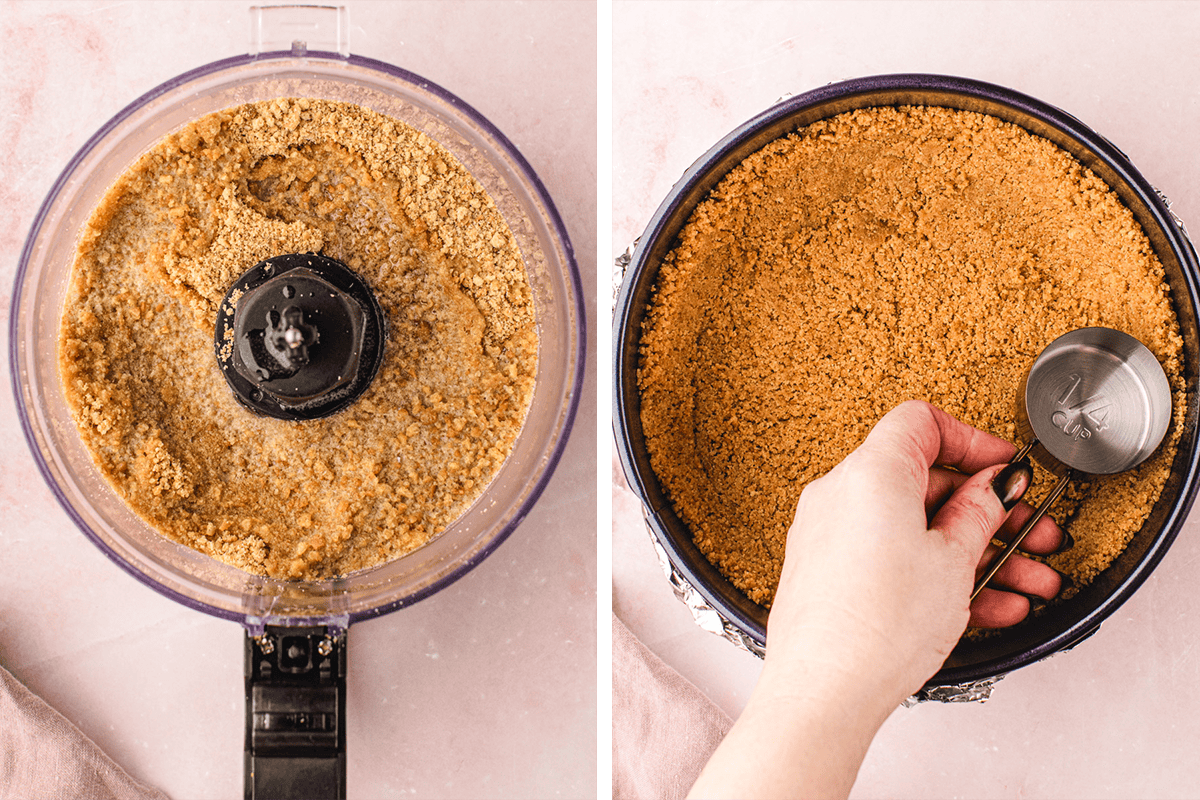
- Make the graham cracker crust: In a food processor, pulse the graham crackers into fine crumbs. Add the sugar and melted butter, then pulse until evenly combined and the mixture resembles wet sand.
- Press firmly into the base of the prepared pan, using the bottom of a measuring cup to create an even layer.
- Bake for 8-10 minutes. Remove and allow to cool completely while you prepare the filling.
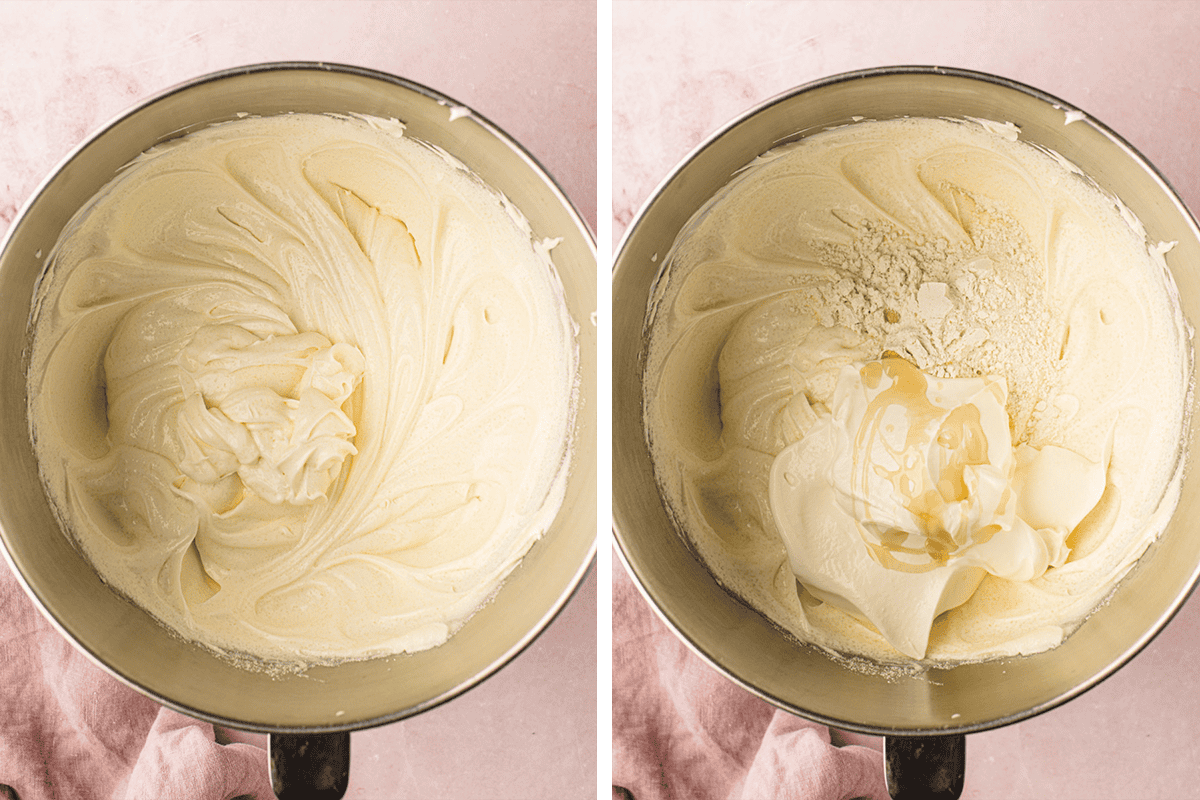
- Make the cheesecake filling: In the bowl of a stand mixer fitted with the paddle attachment, beat the cream cheese and sugar on medium speed until completely smooth and lump-free, scraping down the bowl as needed.
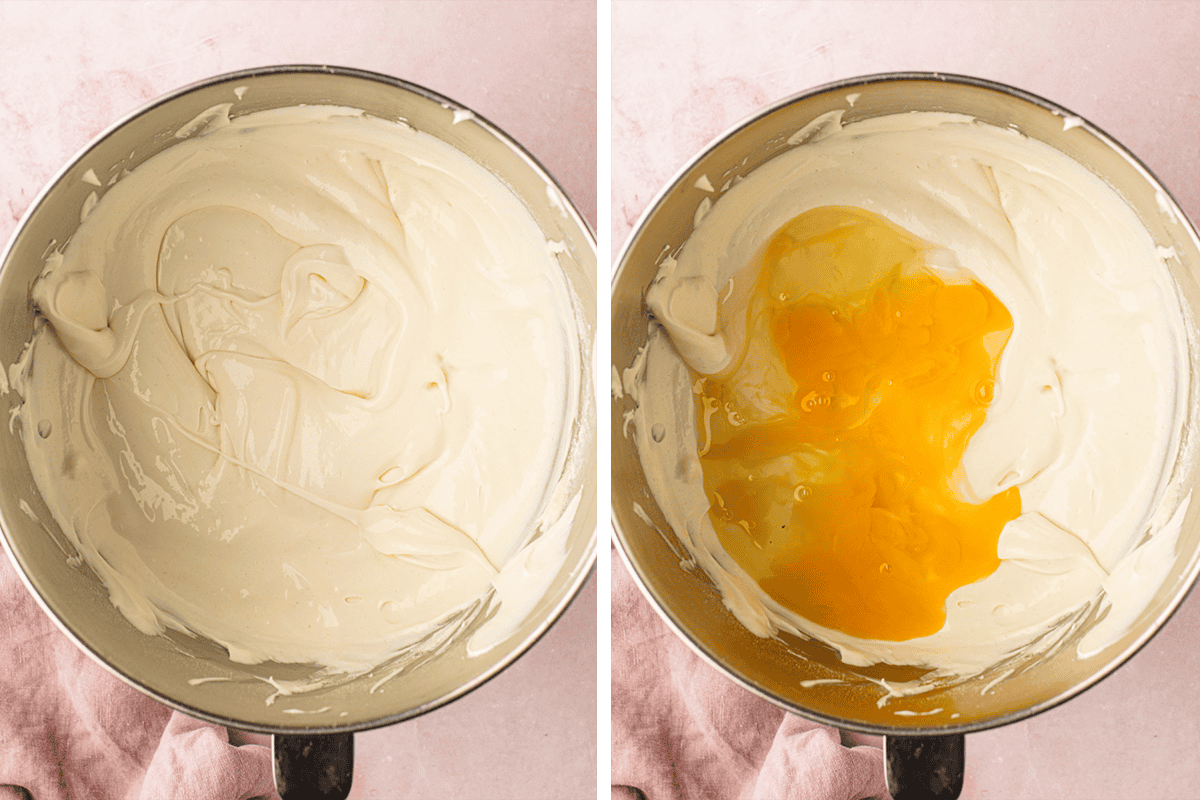
- Add the flour, sour cream, and vanilla extract. Mix on low speed just until incorporated.
- In a separate bowl, lightly beat the eggs. Add the eggs to the batter in two additions, mixing on low speed just until combined after each addition. Avoid overmixing. Remove the bowl from the mixer and use a rubber spatula to give the batter a few really good turns to make sure everything is combined and lump-free.
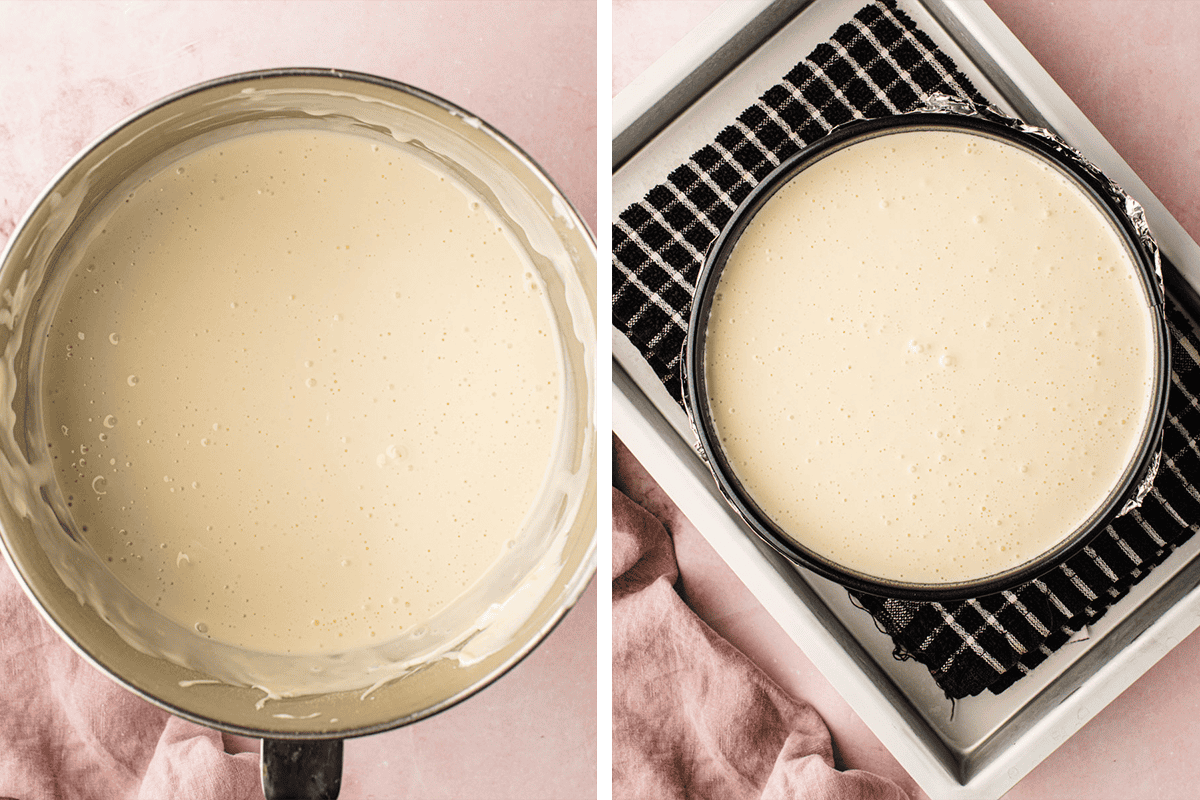
- Pour the batter over the cooled crust and smooth the top. Tap the pan gently on the counter to release any air bubbles.
- Fold a dish towel and place it in a large roasting pan, then set the cheesecake pan on top of it. Transfer to the oven and carefully pour hot water into the roasting pan until it reaches about 1 inch up the sides of the springform pan.
- Bake for 90-105 minutes, or until the edges are set and the center still has a slight jiggle. The internal temperature should reach approximately 150-155°F.
- Turn the oven off, crack the door open, and allow the cheesecake to cool in the oven for 1 hour.
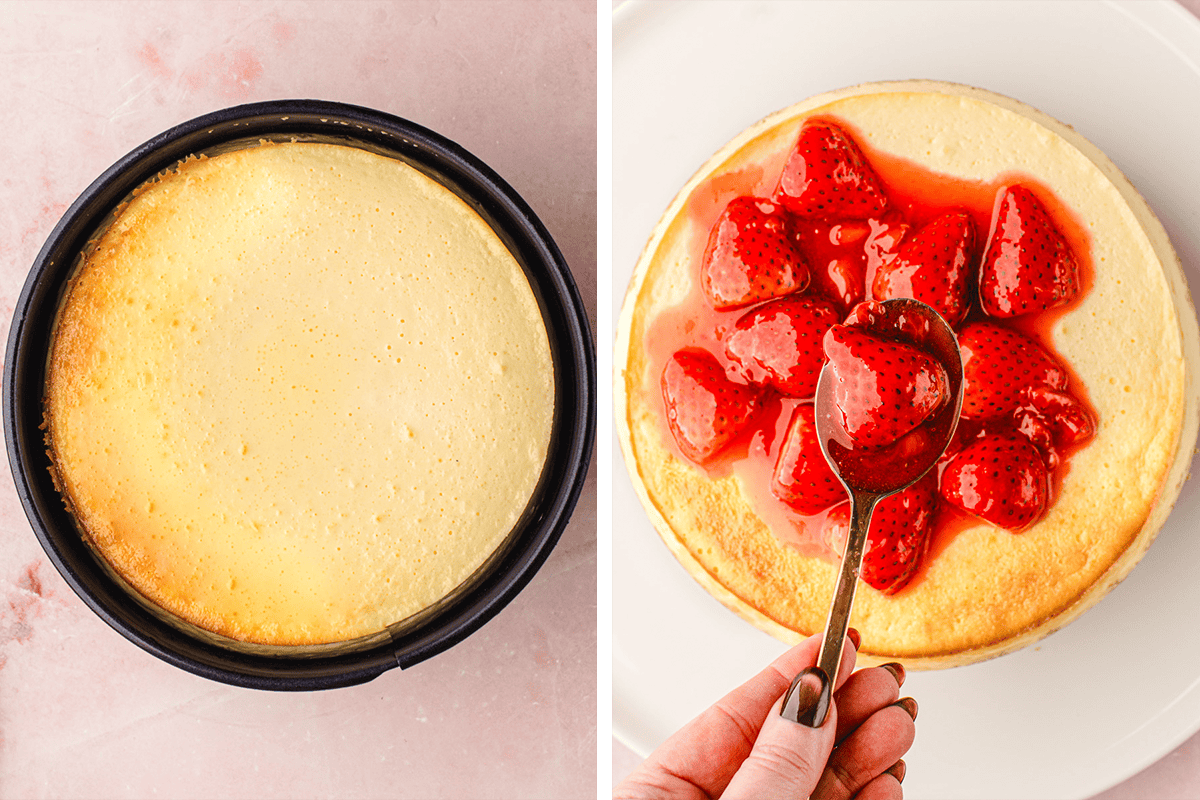
- Remove from the water bath and allow to cool completely at room temperature. Cover with cling wrap and refrigerate for at least 6 hours or overnight.
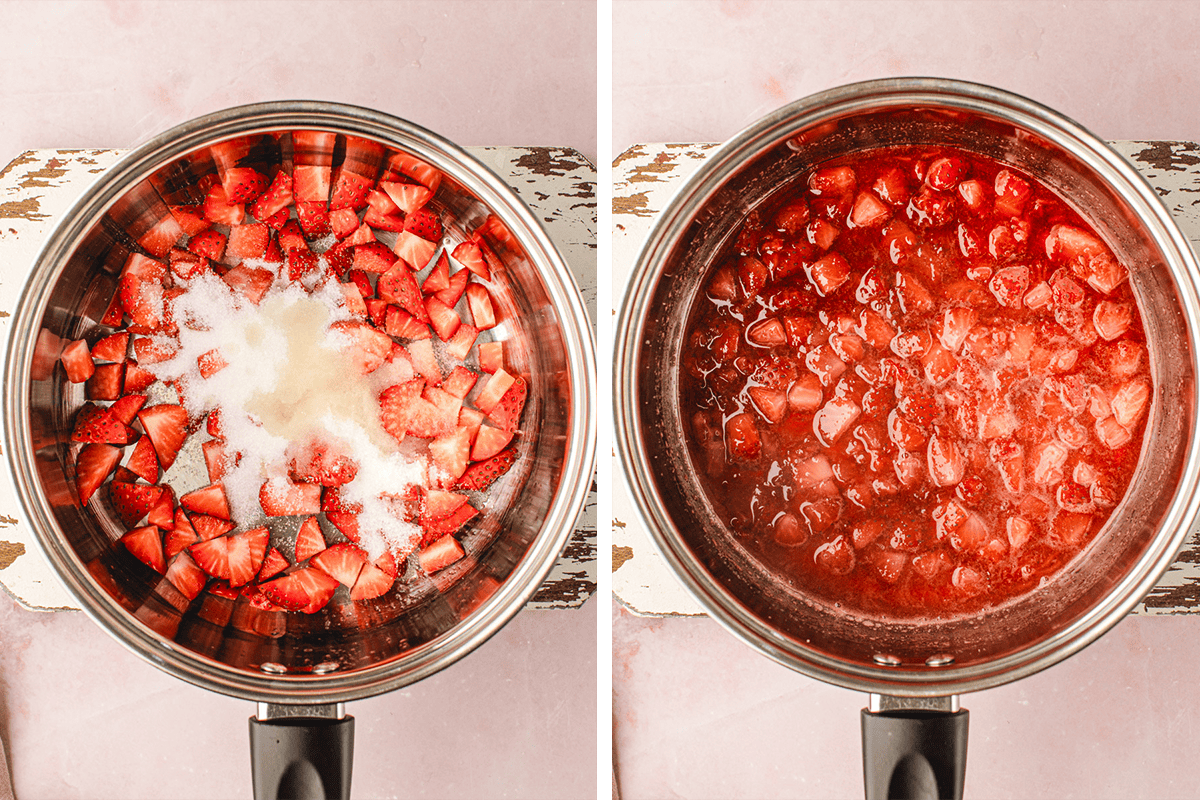
- Make the strawberry topping: In a small saucepan, combine the diced strawberries, sugar, lemon juice, and 1 tablespoon of water. Cook over medium heat for 6 minutes, stirring occasionally, until the strawberries release their juices and the mixture becomes syrupy.
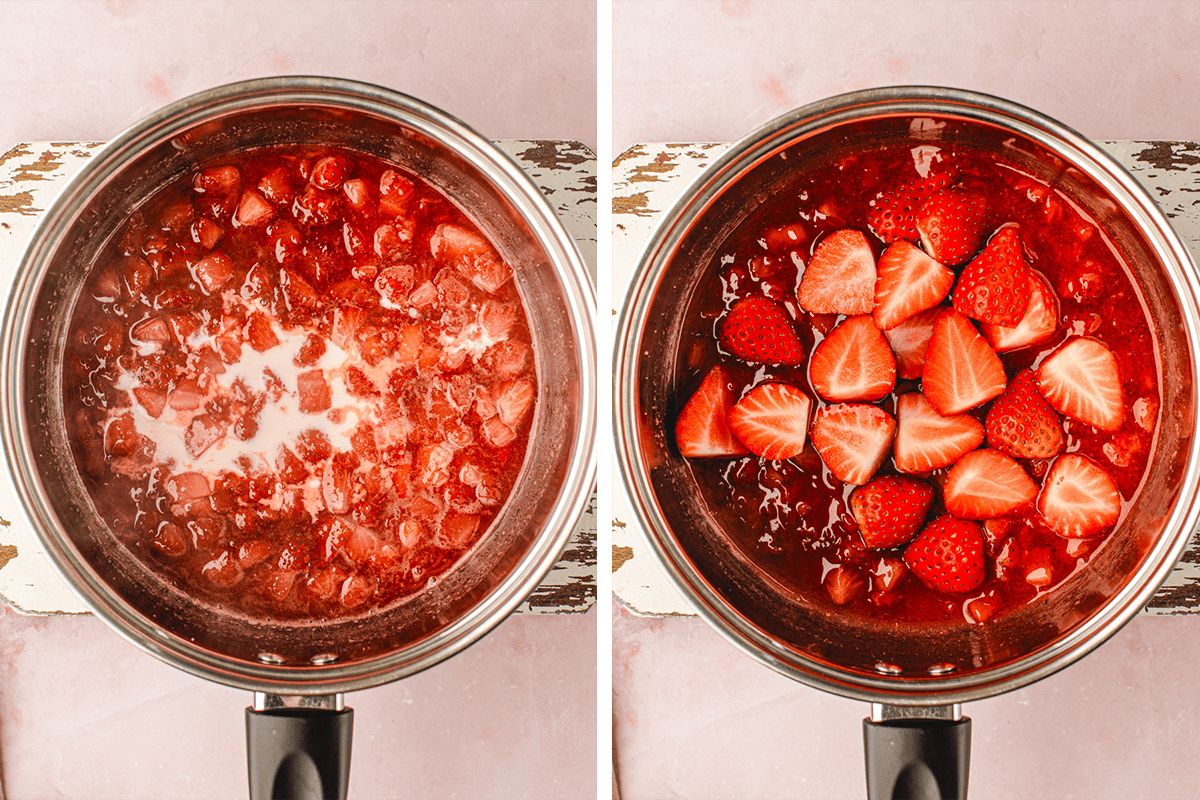
- In a small bowl, whisk together the cornstarch and 1 tablespoon of cold water until smooth. Stir the slurry into the saucepan and simmer for 2 minutes, until thickened and glossy.
- Remove from the heat and stir in the vanilla extract.
- Add the halved strawberries and gently fold them in, coating them in the glaze.
- Allow the topping to cool for 15 minutes before spooning it over the chilled cheesecake.
- Refrigerate for 20-30 minutes to allow the topping to set before slicing.
- Slice, serve, and enjoy!
- Note: I've included helpful step-by-step photos of the entire process below this recipe card if you'd like a visual guide.
Notes
- Room temperature ingredients are essential. Set the cream cheese, sour cream, and eggs on the counter about 2 hours before you start.
- Use full-fat block cream cheese for the creamiest, most sliceable texture.
- Add the eggs already beaten, in two additions. Lightly whisking the eggs in a separate bowl first means they blend into the batter with far less mixing, which means far less air. Less air, no cracks.
- Finish by hand. Pull the bowl off the mixer and give the batter a few good turns with a rubber spatula, scraping the very bottom. There's almost always a pocket of unmixed cream cheese hiding down there.
- Tap the pan on the counter before it goes in the oven. Firm little taps, five or six of them, to release trapped air bubbles that would otherwise rise and pit the surface.
- Bake times vary a lot with pan depth and oven. Mine took 95 minutes in a 9-inch deep springform. Start checking at 90 minutes, and use the jiggle test and the thermometer rather than the clock.
- If a crack does appear, don't panic. You're covering the whole top with strawberry topping anyway. This is the most forgiving showstopper dessert.
- Chill it properly - at least 6 hours, and overnight is better. A cheesecake that hasn't fully set will smear no matter how good your knife is.
- Use a long, thin knife dipped in hot water. Dip, wipe dry, cut one slice, then repeat. Wiping between every single slice is the whole trick.
- Loosen the ring before releasing it. Run a thin offset spatula or a paring knife around the inside edge of the pan first, then unlatch. Don't force the ring off a cheesecake that's still clinging to the sides.
Storage Instructions
- Refrigerator: Store the cheesecake covered in the refrigerator for up to 4 days. For the best texture, let slices sit at room temperature for 10-15 minutes before serving.
- Freezer: The cheesecake freezes well for up to 2 months without the topping. Chill it completely overnight, then wrap it tightly in plastic wrap and again in foil.
- Thaw frozen cheesecake overnight in the refrigerator before serving. I don't recommend freezing it with the fresh strawberry topping, because the fruit will release excess moisture as it thaws.
Nutrition
Nutrition Disclaimer:
The nutritional information on this website is only an estimate and is provided for convenience and as a courtesy only. The accuracy of the nutritional information for any recipe on this site is not guaranteed. It should not be used as a substitute for a professional nutritionist's advice.
How to Make Strawberry Cheesecake (Step-by-Step)
The step-by-step photos below are meant as a visual overview of the recipe. For the complete recipe with ingredient amounts and detailed instructions, use the printable recipe card above.
- PREP: Preheat the oven to 325°F. Line and grease a 9-inch deep springform pan, then wrap the outside in two layers of heavy-duty foil.
- CRUST: Pulse graham crackers into crumbs, mix with brown sugar and melted butter, press into the pan, and bake 8-10 minutes.
- BEAT: Beat the cream cheese and sugar on medium speed until completely smooth and lump-free.
- MIX: Add flour, sour cream, and vanilla on low speed, then the lightly beaten eggs in two additions. Do not overmix.
- FILL: Pour the batter over the cooled crust, smooth the top, and tap the pan to release air bubbles.
- WATER BATH: Set the pan on a folded towel in a roasting pan, then add hot water 1 inch up the sides once it's in the oven.
- BAKE: Bake 90-105 minutes, until the edges are set and the center jiggles slightly (150-155°F).
- COOL: Turn the oven off, crack the door, and cool in the oven for 1 hour, then at room temperature, then chill 6 hours or overnight.
- TOPPING: Simmer diced strawberries with sugar, lemon juice, and water, then stir in the cornstarch slurry until thick and glossy. Fold in the halved berries.
- FINISH: Cool the topping for 15 minutes, spoon it over the chilled cheesecake, and refrigerate for 20-30 minutes before slicing.
More Cheesecake Recipes
- No-Bake Strawberry Cheesecake
- Strawberry Cheesecake Bars
- Blueberry Cheesecake
- Raspberry Cheesecake
- Salted Caramel Cheesecake
- Raspberry Peach Cheesecake
- Carrot Cake Cheesecake
- Mocha Cheesecake
- No-Bake Ricotta Cheesecake
More Strawberry Desserts
- Strawberry Shortcake Cake
- Strawberry Blueberry Cake
- Strawberry Tiramisu
- Strawberry Coffee Cake
- Strawberry Peach Cake
- Strawberry Chocolate Chip Cake
If you try this cheesecake, I'd love to hear how it turned out! Please leave a review in the comments below. If you have any questions along the way, ask away-I'm here to help. Julia

Comments