
This post may contain affiliate links. Read my disclosure policy.
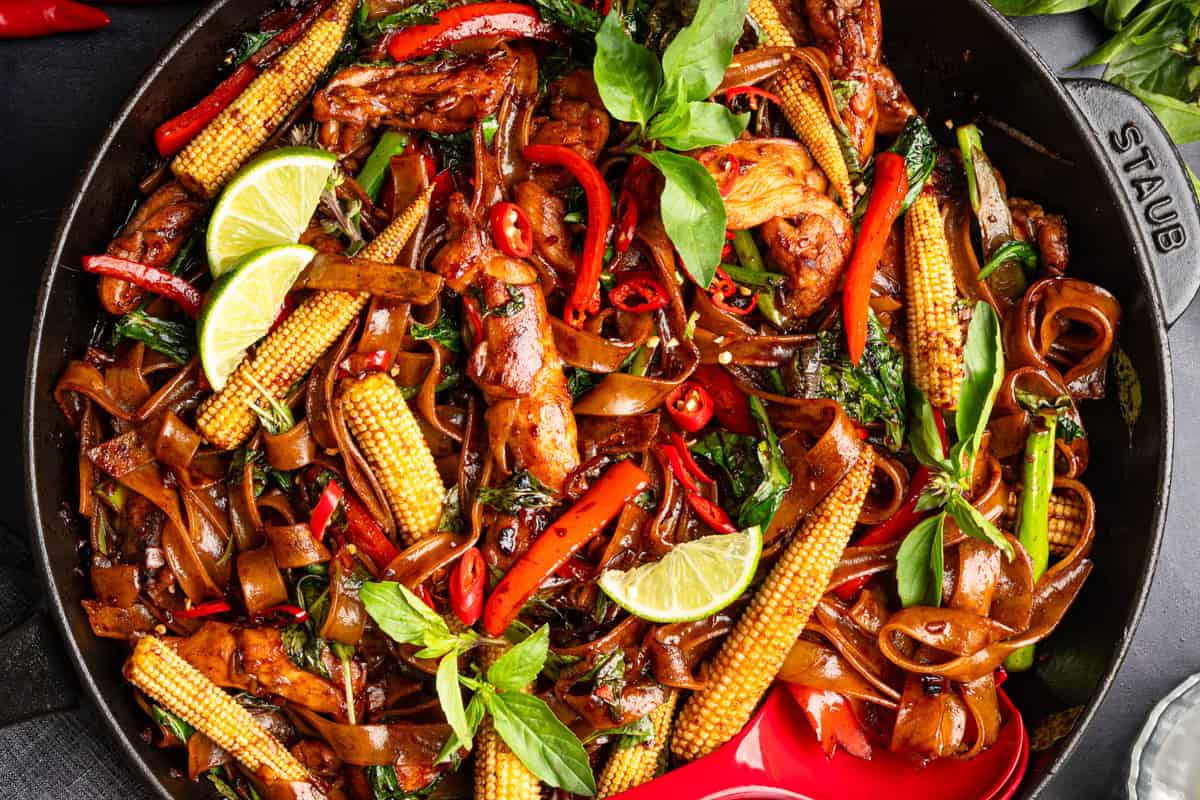
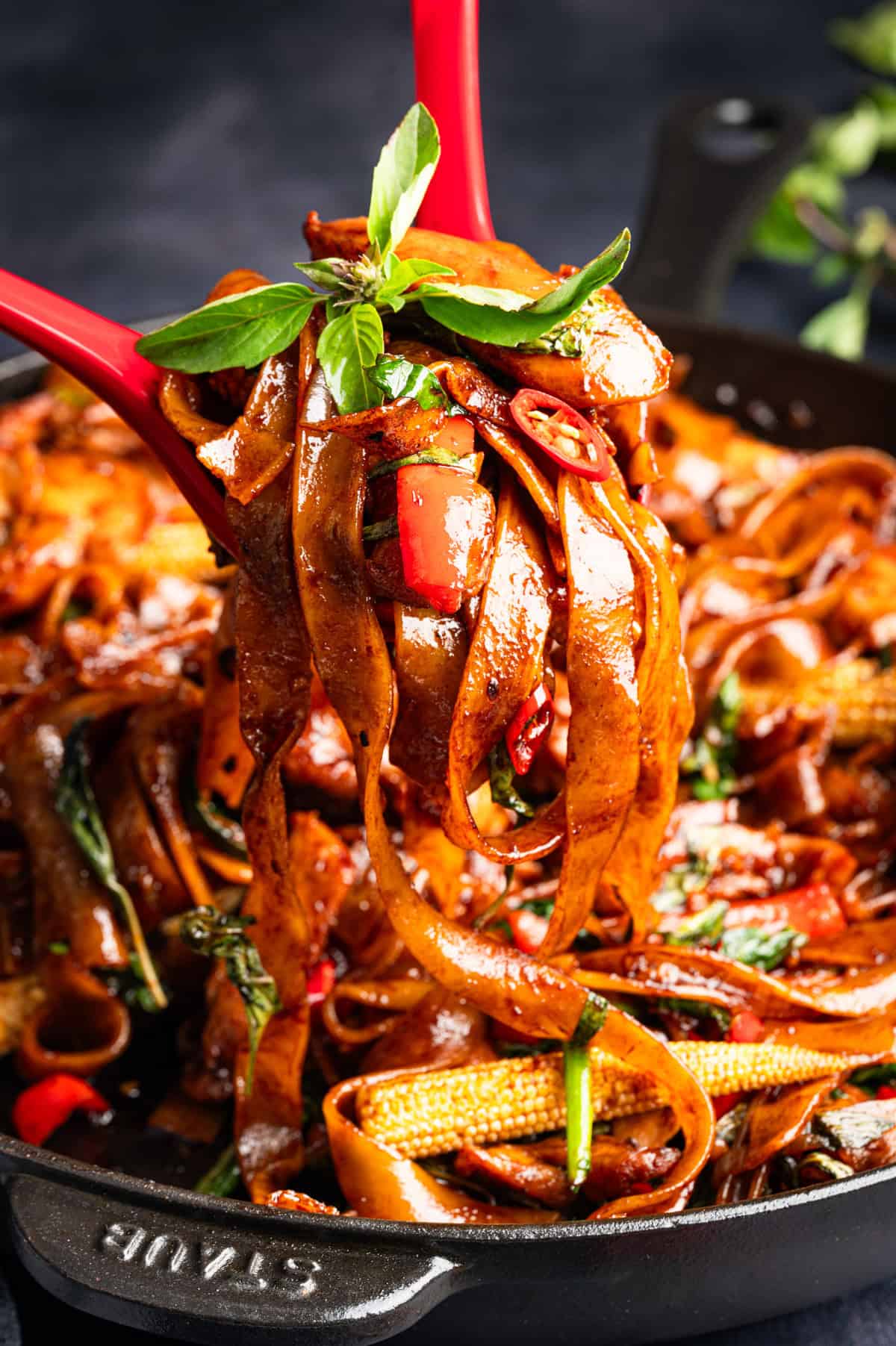
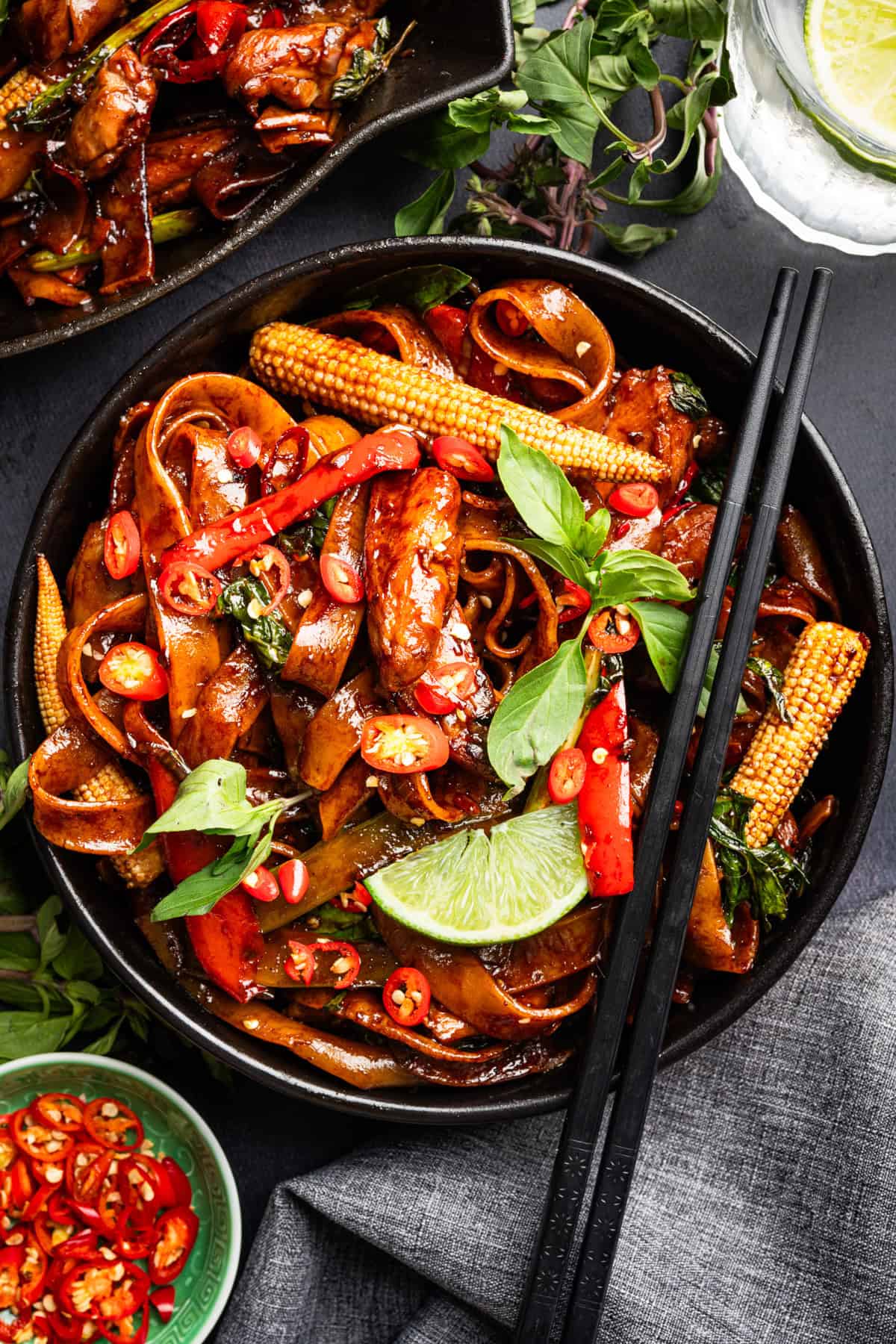
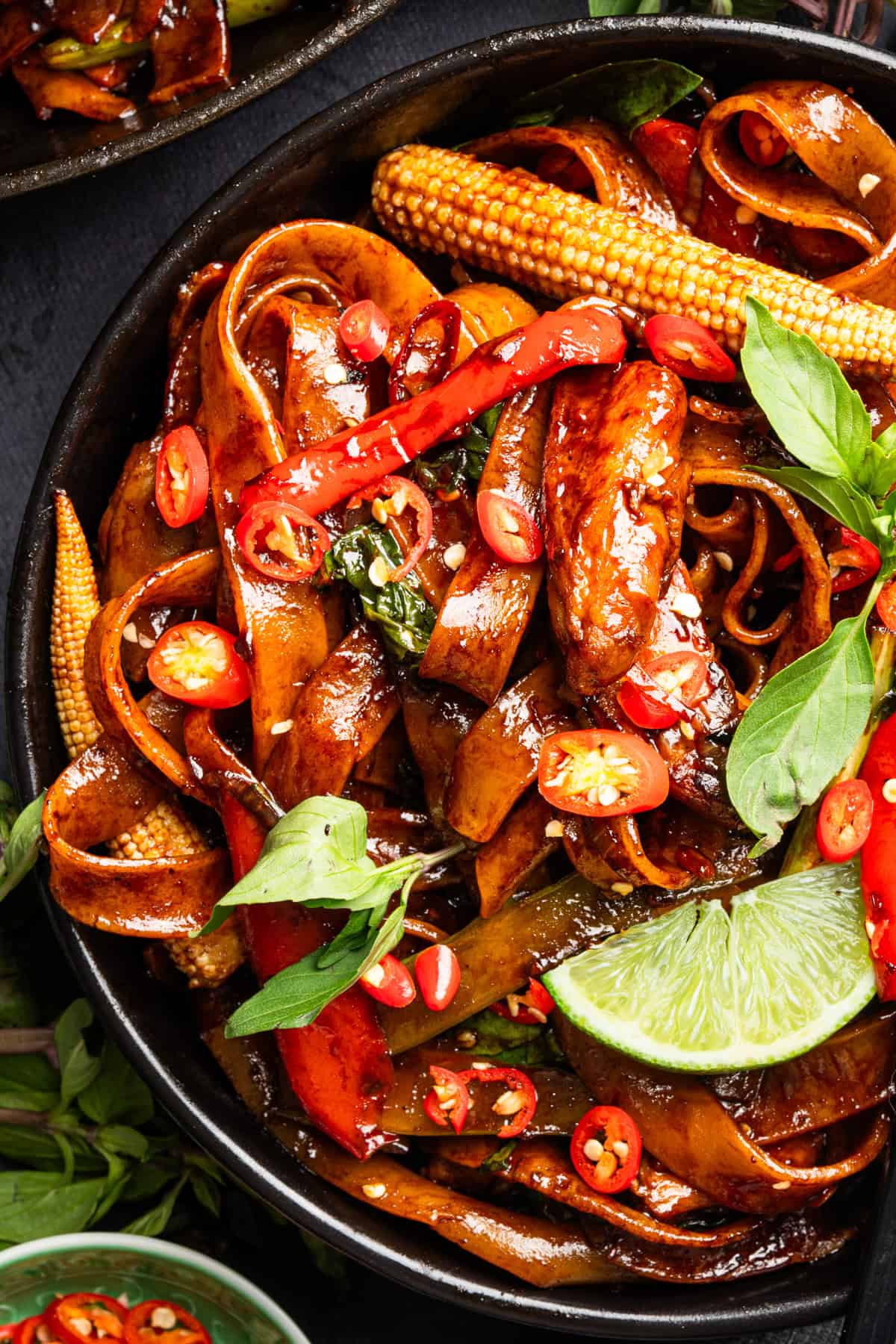
Authentic Thai drunken noodles, or pad kee mao, are wide rice noodles stir-fried over high heat with marinated chicken thighs, garlic, Thai chiles, Chinese broccoli, and a packed cup of Thai basil. The sauce is savory, glossy, and slightly sweet. Spicy, fast, and better than takeout.
What Are Drunken Noodles? (Pad Kee Mao)
Pad Kee Mao (ผัดขี้เมา) translates roughly to "drunkard's stir fry." However, the dish contains no alcohol. The most common explanation is that it is the food you want after a night out: salty, spicy, and bold enough to sober you up. Another popular story says it is what you throw together when you cook with whatever is left in the fridge.
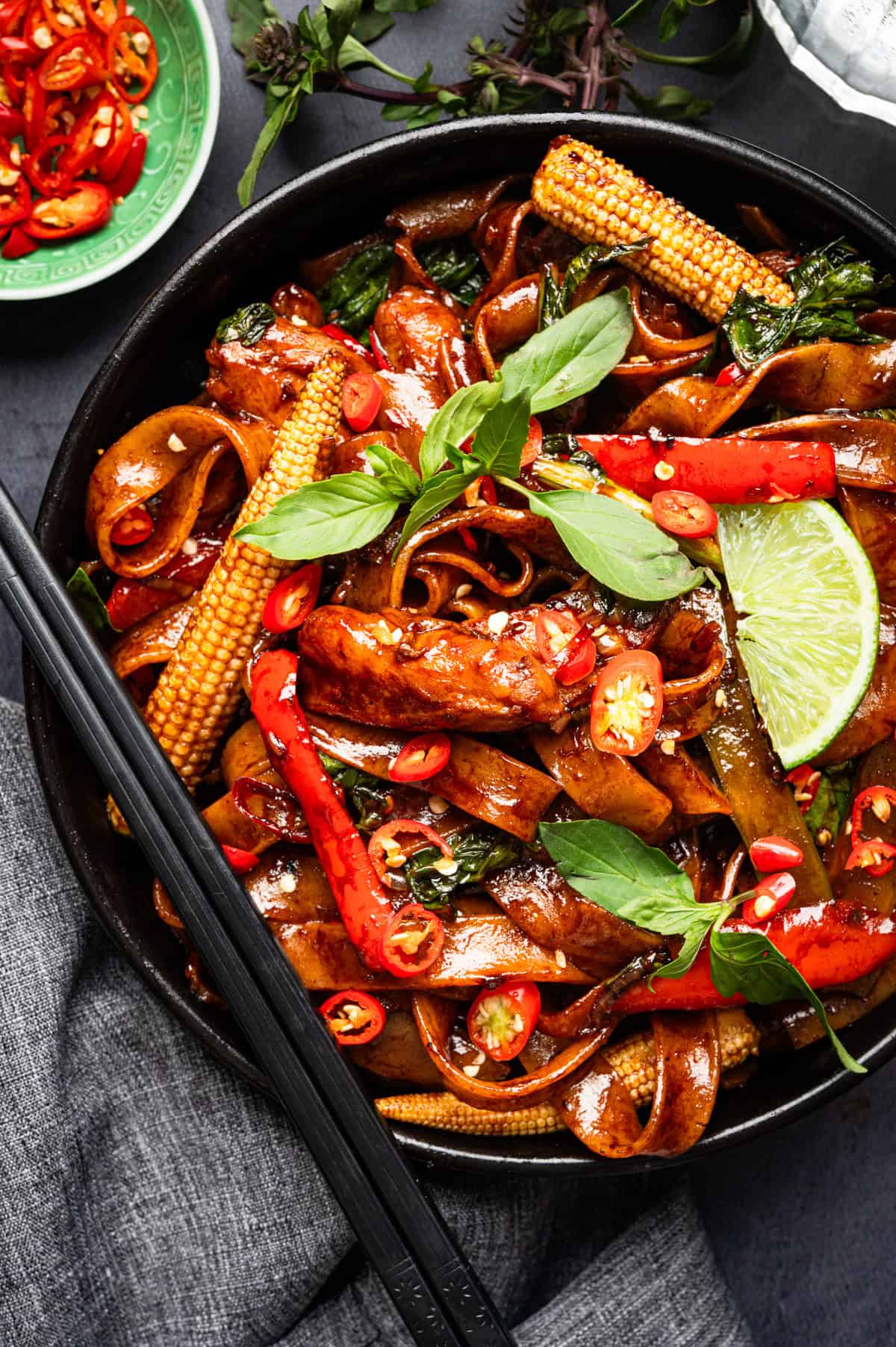
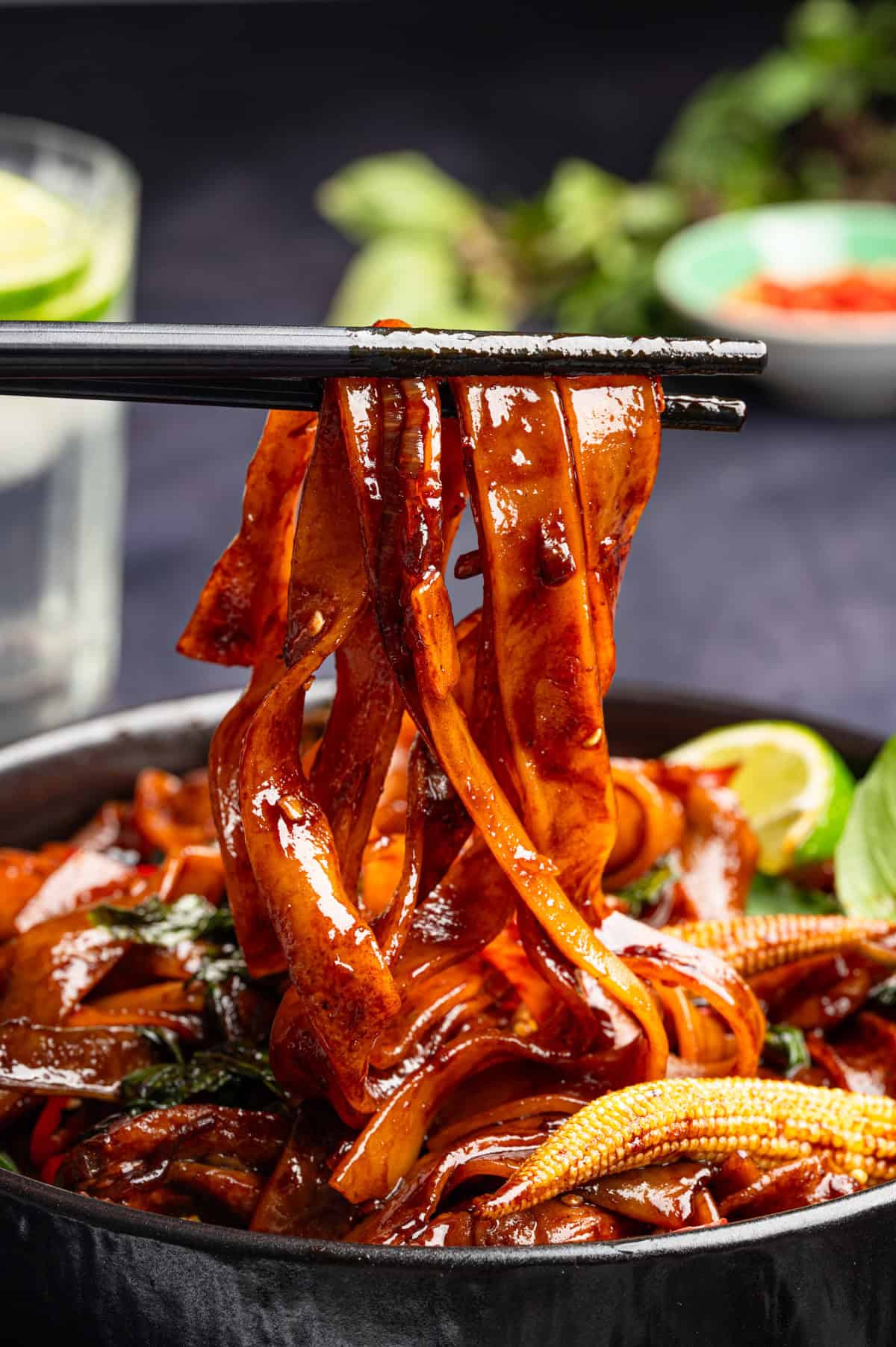
Drunken Noodles (Pad Kee Mao) has three distinctive elements: wide rice noodles with charred edges, real heat from fresh Thai chiles, and a generous amount of Thai basil folded in off the heat. The dish is Thai-Chinese in origin and closely related to Pad See Ew, which uses the same wide rice noodles but tastes sweeter and milder.
My version follows tradition closely. I marinate the chicken briefly in fish sauce and white pepper, I sear the noodles undisturbed so they pick up a little char, and I keep the vegetables crisp instead of soft. If you like to explore other authentic Thai recipes, try my Thai beef salad (yum nua), traditional Pad Thai, family-favorite Thai Chicken Curry, and Thai Red Curry Duck next!
Drunken Noodles vs. Pad Thai
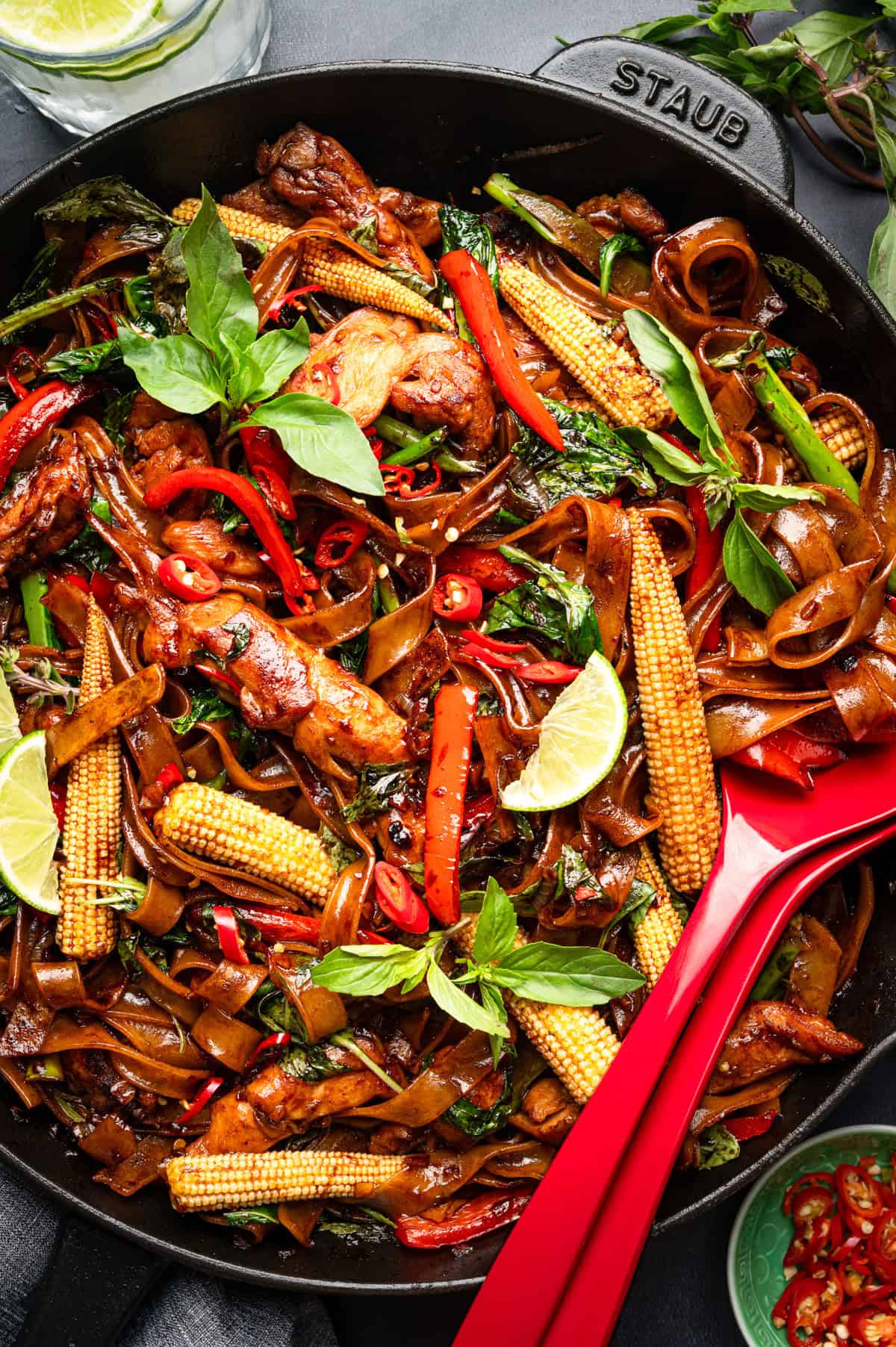
These get confused all the time, so let me set the record straight. Pad thai is sweet and tangy from tamarind and palm sugar, and it is finished with peanuts and lime. Drunken noodles are savory and spicy, with dark soy sauce doing most of the heavy lifting. Pad thai uses thin rice noodles. Drunken noodles use wide ones. Compare it yourself against my pad thai, and you'll taste the difference immediately.
Ingredients and Substitutions
I encourage you to read my helpful notes about the ingredients, but you can also skip right ahead to the recipe card at the bottom of this post.
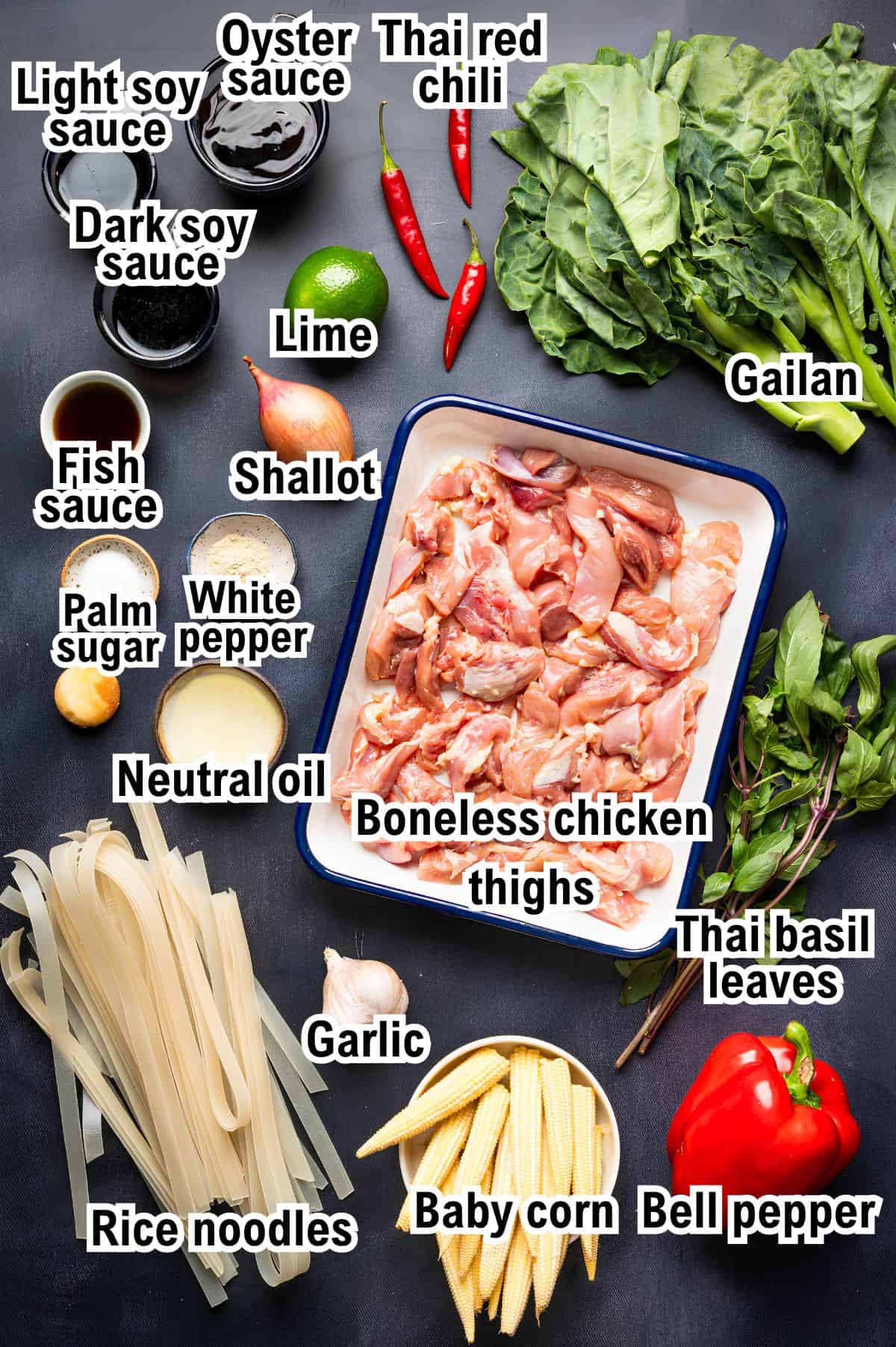
- Chicken Thighs: I used boneless, skinless chicken thighs because they stay juicy over high heat and cook in about 3 minutes once I slice them thin. You can use chicken breast, pork loin, beef sirloin, shrimp, or extra-firm tofu instead.
- Marinade: I marinated the chicken in a classic Thai mix of fish sauce, sugar, and white pepper. Use black pepper if you don't have white pepper.
- Wide rice noodles (sen yai): I use dried wide, flat rice noodles, the same ones used in pad see ew. If you're having a hard time finding wide noodles, just replace them with the thinner ones! It will taste just as good! Fresh noodles are best for this recipe, but they aren't always easy to find, especially if you don't have an Asian grocery store nearby.
- Oyster sauce: This is what gives the sauce its distinctive savory flavor. Mushroom "oyster" sauce is a vegetarian substitution.
- Light and dark soy sauce: Light soy sauce brings the salt, and dark soy sauce gives the noodles that deep mahogany color. If you only have all-purpose soy sauce, use 3 tablespoons total and add ½ teaspoon of molasses.
- Fish sauce: I add a tablespoon to the sauce on top of what goes into the marinade. I use Thai Kitchen brand.
- Palm sugar: Traditional, and I love its caramel-like sweetness. You can use light brown sugar as it is a very close swap.
- Shallots and garlic: I use shallots rather than yellow onion because they are sweeter and more delicate. Five cloves of garlic sounds like a lot, but it's not for Thai drunken noodles.
- Thai red chiles (prik kee noo): These small bird's eye chiles are what make this dish "drunken." Serranos or Fresnos are the closest swap, or use ½ teaspoon of red pepper flakes. Even jalapeños could work!
- Gailan (Chinese broccoli): Called kana in Thai, and it is the traditional green for Drunken Noodles. I separate the stems from the leaves so each one cooks properly. Broccolini is the best substitute, and bok choy, broccoli florets, or Chinese cabbage all work too.
- Red bell pepper and fresh baby corn: I add these for color and crunch against all that salt and chile. I buy fresh baby corn at my Asian market. If you use canned, drain it well and pat it dry so it sears instead of steams.
- Thai basil (bai horapha): I fold in a full, packed cup off the heat, and yes, you need that much. It has purple stems, narrow leaves, and an anise flavor that Italian basil does not have. Street vendors in Thailand often use holy basil (bai kaprao), which is peppery and more traditional. It is hard to find here, so grab it if you spot it. Using Genovese basil works, but just note that the flavor will be much different and more mild and less peppery.
- Note about veggies: I recommend using the veggies listed above that are very common in Thai Drunken Noodles. However, sliced yellow onion and tomatoes are also great additions! It's so versatile that you can use almost anything you like!
- Garnish: I finish every plate with extra Thai basil, sliced Thai chiles, and lime wedges.
- Tip: Take a screenshot of the ingredient list below for your shopping trip.
Key Preparation Tips
- Prep everything before you turn on the stove. This is the single most important tip on this page. The stir-fry takes about 10 minutes from start to finish, and you can't pause to chop garlic once you begin. Line up every bowl next to the stove: chicken, minced garlic, sliced shallots, gailan stems, gailan leaves, bell pepper, baby corn, sauce, noodles, basil.
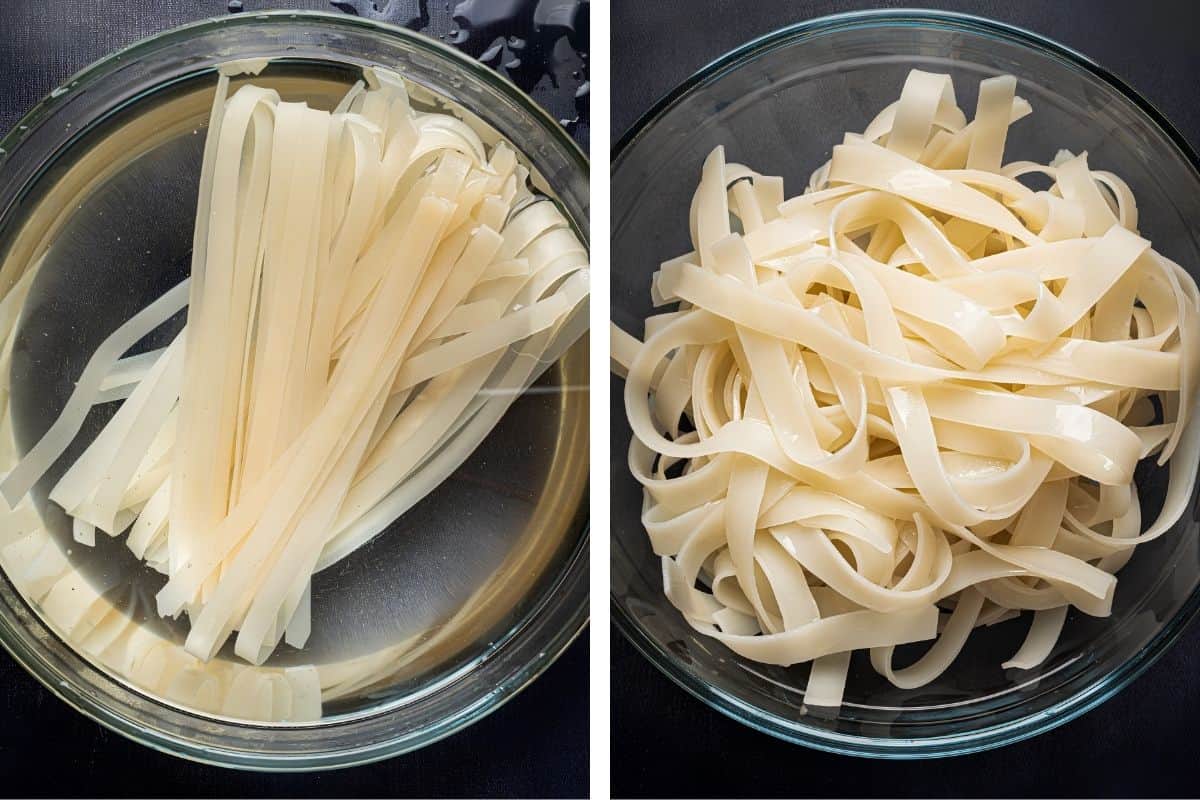
- Do not oversoak your noodles. Soak dried wide rice noodles in boiling water (212°F / 100°C) until they are flexible and fully separated but still slightly firm in the center, about 15 to 20 minutes. They finish cooking in the pan. If your noodles are mushy, they are more likely to break.
- Toss the drained noodles with oil right away. Rice noodles clump into a solid brick within minutes. A tablespoon of neutral oil and a quick toss with your hands prevent that.
- Get the pan seriously hot. You want the pan just starting to smoke before you add the noodles, which is roughly 450°F to 500°F (230°C to 260°C) on a home burner. Carbon steel or cast iron holds heat far better than nonstick here.
- Turn on your hood fan. I am serious about this. Hot oil plus sliced Thai chiles creates fumes that will have your whole family coughing. Turn on the fan, crack a window, then cook.
- Leave the noodles alone. When they hit the pan, do not stir them for a full 1 to 2 minutes. That undisturbed contact is what browns them. Constant stirring gives you steamed noodles instead of seared ones.
Frequently Asked Questions
- Is there alcohol in drunken noodles? No. Pad kee mao contains no alcohol at all. The name refers to the dish being late-night food after drinking and to the level of Chile heat.
- What is the difference between pad kee mao and pad see ew? They use the same wide rice noodles, and that is where the similarity ends. Pad see ew is sweeter and mellower, made with soy sauce, egg, and gailan. Pad kee mao is spicy, garlicky, and loaded with fresh basil, with no egg.
- Why did my noodles break apart? Almost always oversoaking. The noodles should still feel slightly firm when you drain them, since they finish cooking in the pan. Tossing them with oil immediately after draining also helps them stay intact.
- Can I use spaghetti or linguine or wide pappardelle? It will not be authentic, but yes. Cook it slightly under al dente and follow the rest of the recipe as written. The sauce and basil carry a lot of the flavor.
- How spicy is this really? With two Thai chiles, it is medium and very approachable. With three, it has real bite. The garnish chiles on top add more, so leave those off if you are cooking for a mixed crowd.
- Do I need a wok? No. A large carbon steel or cast iron skillet holds heat well and works fine. What matters more is not crowding the pan. If your skillet is small, cook the noodles in two batches.
Spicy Thai Drunken Noodles (Better Than Takeout)
Ingredients
Chicken Marinade
- 1 pound boneless skinless chicken thighs sliced thin
- 1 tablespoon fish sauce
- ½ teaspoon sugar
- ½ teaspoon white pepper
Noodles
- 8 ounces dried wide rice noodles or 14 ounces fresh wide rice noodles
- 1 tablespoon neutral oil
Sauce
- 4 tablespoons oyster sauce
- 2 tablespoons light soy sauce
- 2 tablespoons dark soy sauce
- 1 tablespoon fish sauce
- 2 tablespoons palm sugar or light brown sugar
- 2 tablespoons water
Stir Fry
- 2 tablespoons neutral oil divided
- 2 small shallots thinly sliced
- 5 garlic cloves minced
- 2 to 3 Thai red chiles thinly sliced
- 3 cups gailan (Chinese broccoli) washed well and cut into 2-inch pieces (stems and leaves separated)
- 1 medium red bell pepper sliced
- 8 ounces fresh baby corn see my note below
- 1 cup Thai basil leaves
Garnish
- Thai basil leaves
- Thai red chiles thinly sliced
- Lime wedges
Instructions
Marinate the Chicken
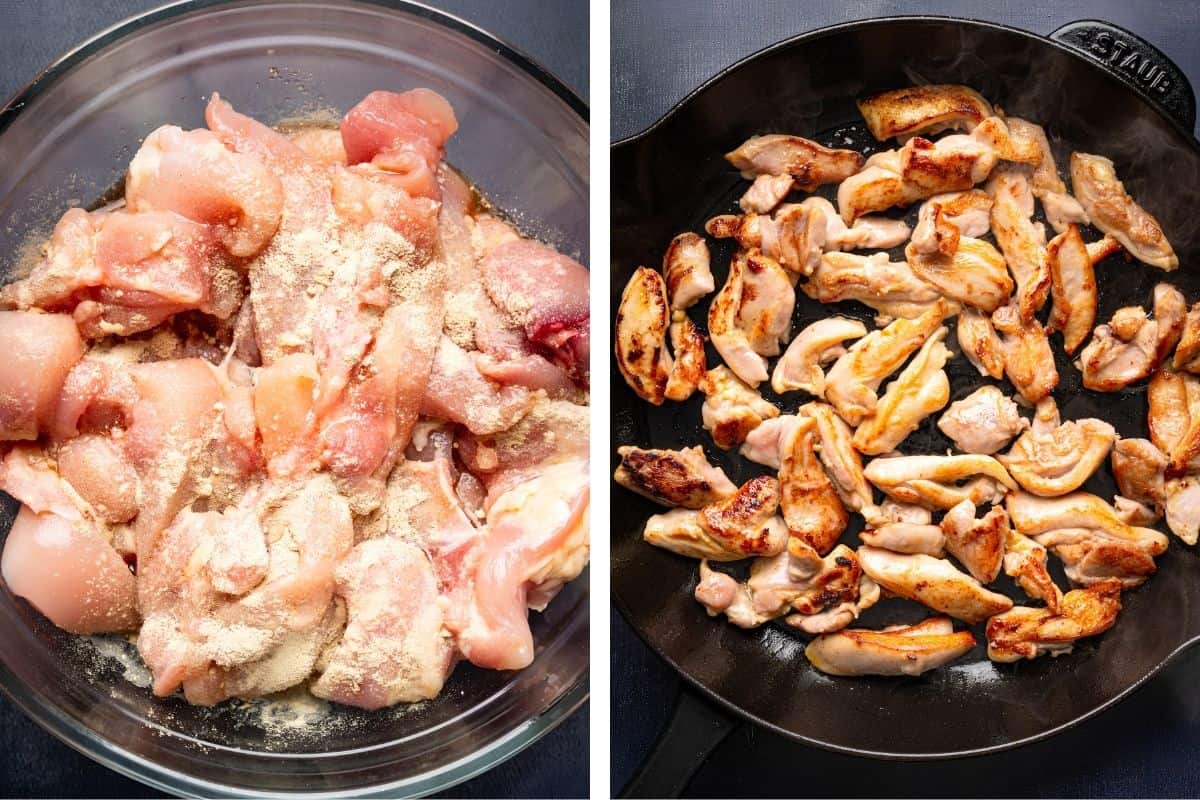
- In a medium bowl, combine the sliced chicken thighs with the fish sauce, sugar, and white pepper. Toss to coat evenly and let marinate for at least 30 minutes.
Prepare the Noodles
- For dried rice noodles: Soak the noodles in boiling water (212°F / 100°C) until flexible and fully separated but still slightly firm, about 15 to 20 minutes. Drain very well, then toss lightly with the oil to prevent sticking.
- For fresh rice noodles: Gently separate the noodles into a large bowl and toss with the oil to prevent sticking.
Mix the Sauce
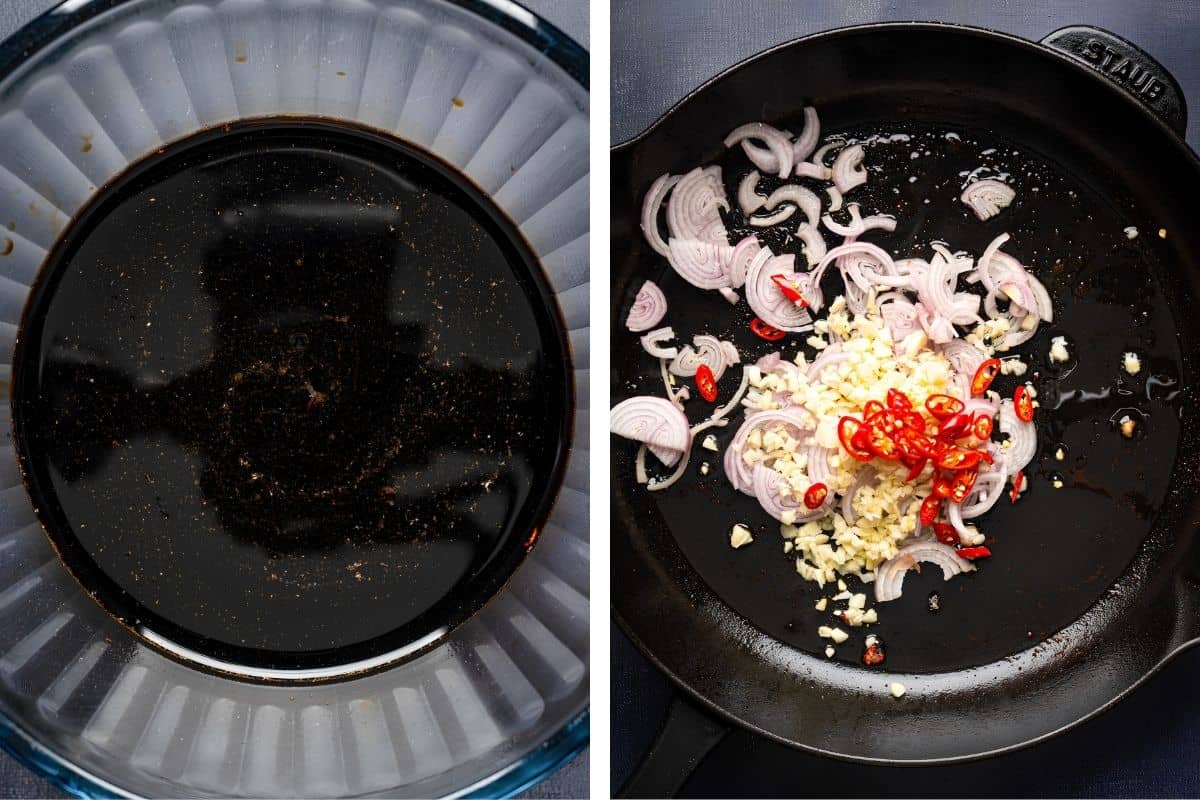
- In a small bowl, whisk together the oyster sauce, light soy sauce, dark soy sauce, fish sauce, palm sugar, and water until the sugar dissolves. Set aside near the stove.
Stir Fry
- Turn on the fan over your stove. Heat your wok or skillet over high heat, roughly 450°F to 500°F (230°C to 260°C), and add 1 tablespoon of oil.
- Add the chicken in a single layer and cook 1 to 2 minutes without moving it, until browned. Flip and cook another 1 to 2 minutes until almost cooked through. Remove the chicken to a large bowl and set aside.
- Add the shallots, garlic, and Thai chiles to the pan. Cook until fragrant, about 30 to 45 seconds.
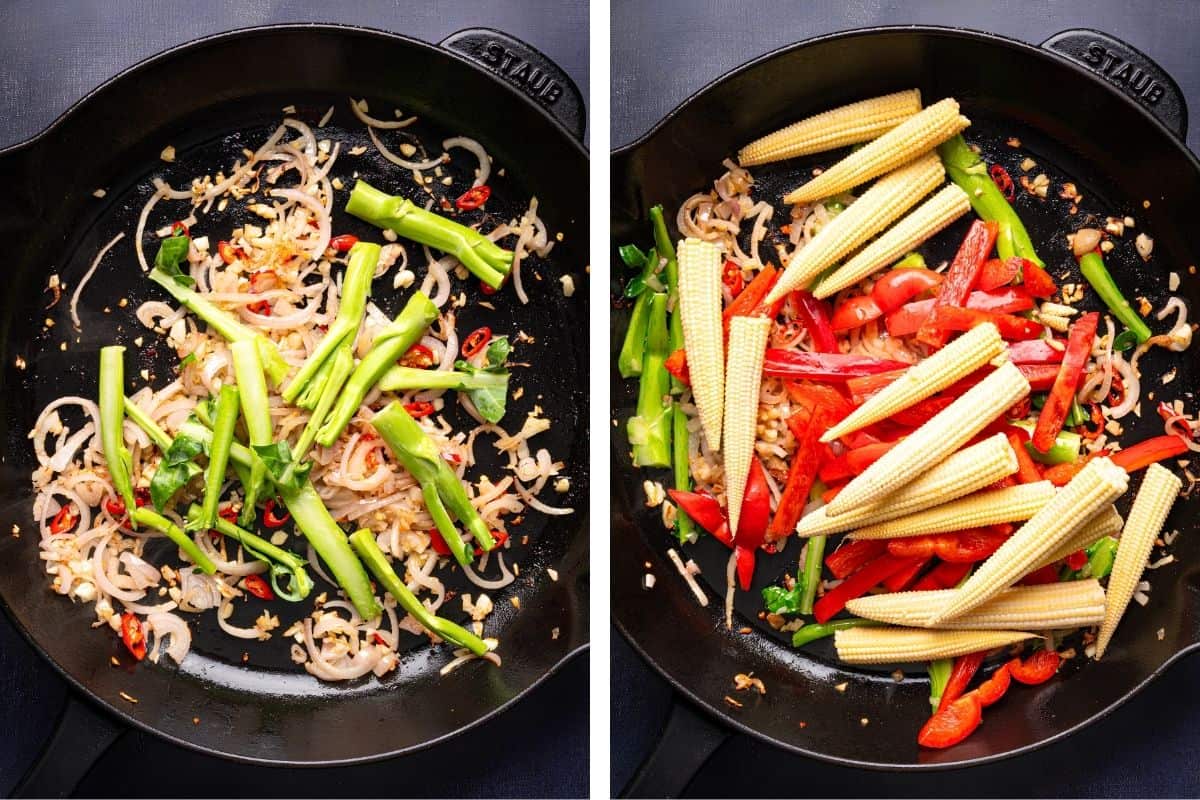
- Add the gailan stems and cook about 1 minute.
- Add the red bell pepper and baby corn and cook another 2 to 3 minutes, until bright but still crisp.
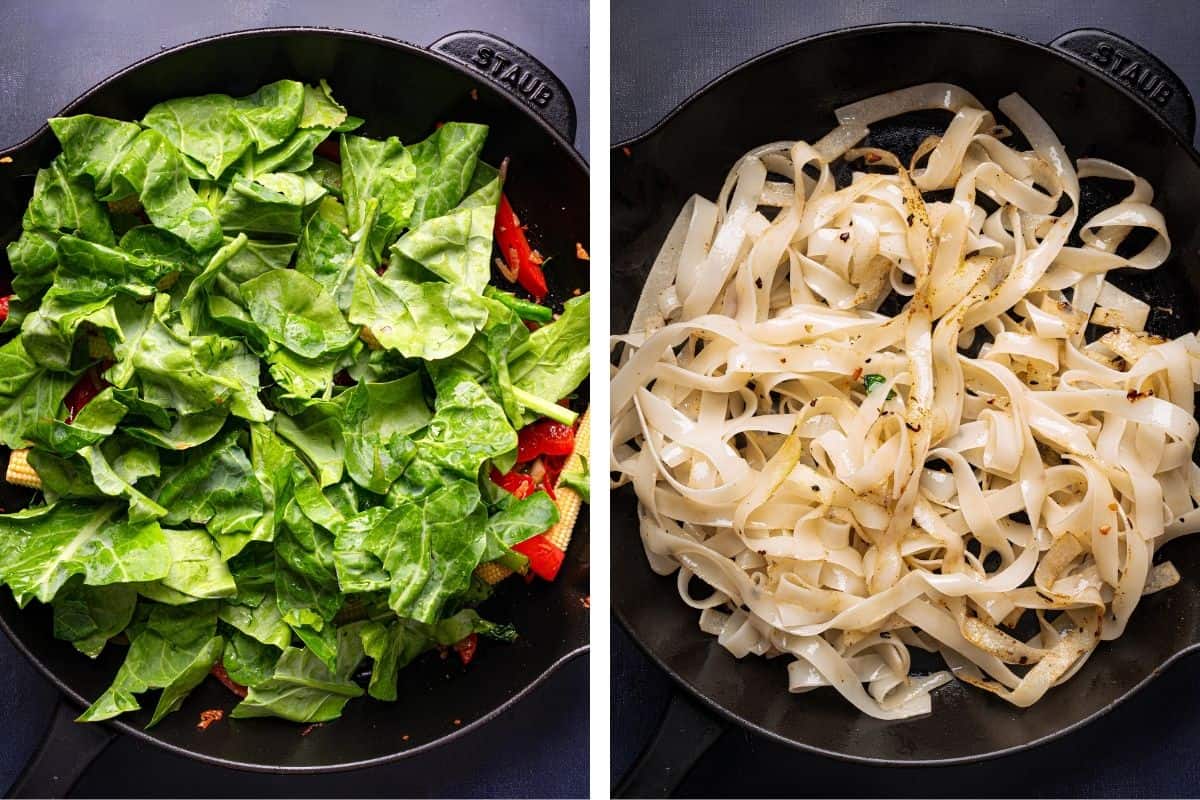
- Toss in the gailan leaves and cook until slightly wilted, about 2 minutes.
- Transfer everything from the pan to the bowl with the cooked chicken. It is fine if tiny bits of garlic and shallot stay behind.
- With the pan still on high, let it come back to smoking, then add the remaining tablespoon of oil. Gently place the noodles into the pan and do not move them for 1 to 2 minutes, letting them brown. Flip them over and brown for another 1 to 2 minutes.
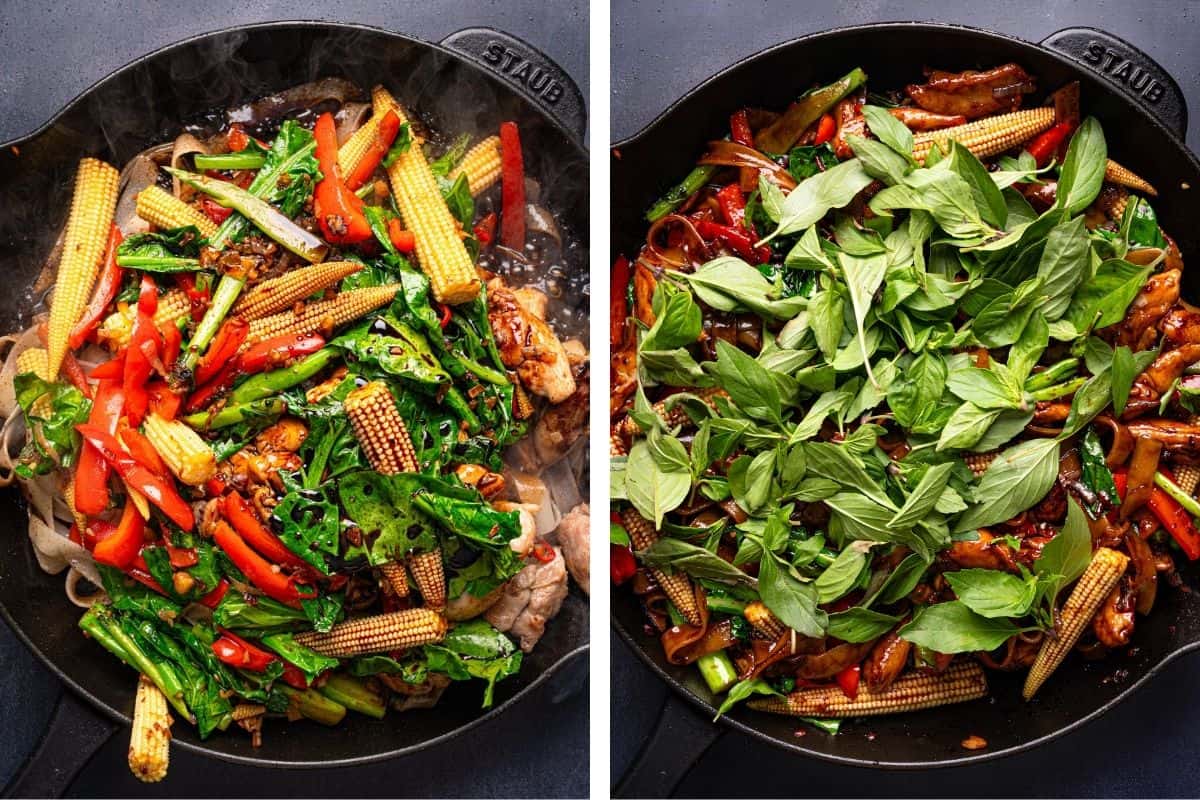
- Add the sauce, cooked vegetables, and chicken with all its juices into the pan. Stir to combine and evenly coat the noodles and other ingredients. If the pan becomes too dry, add 1 to 2 tablespoons of water.
- Turn off the heat and fold in the Thai basil.
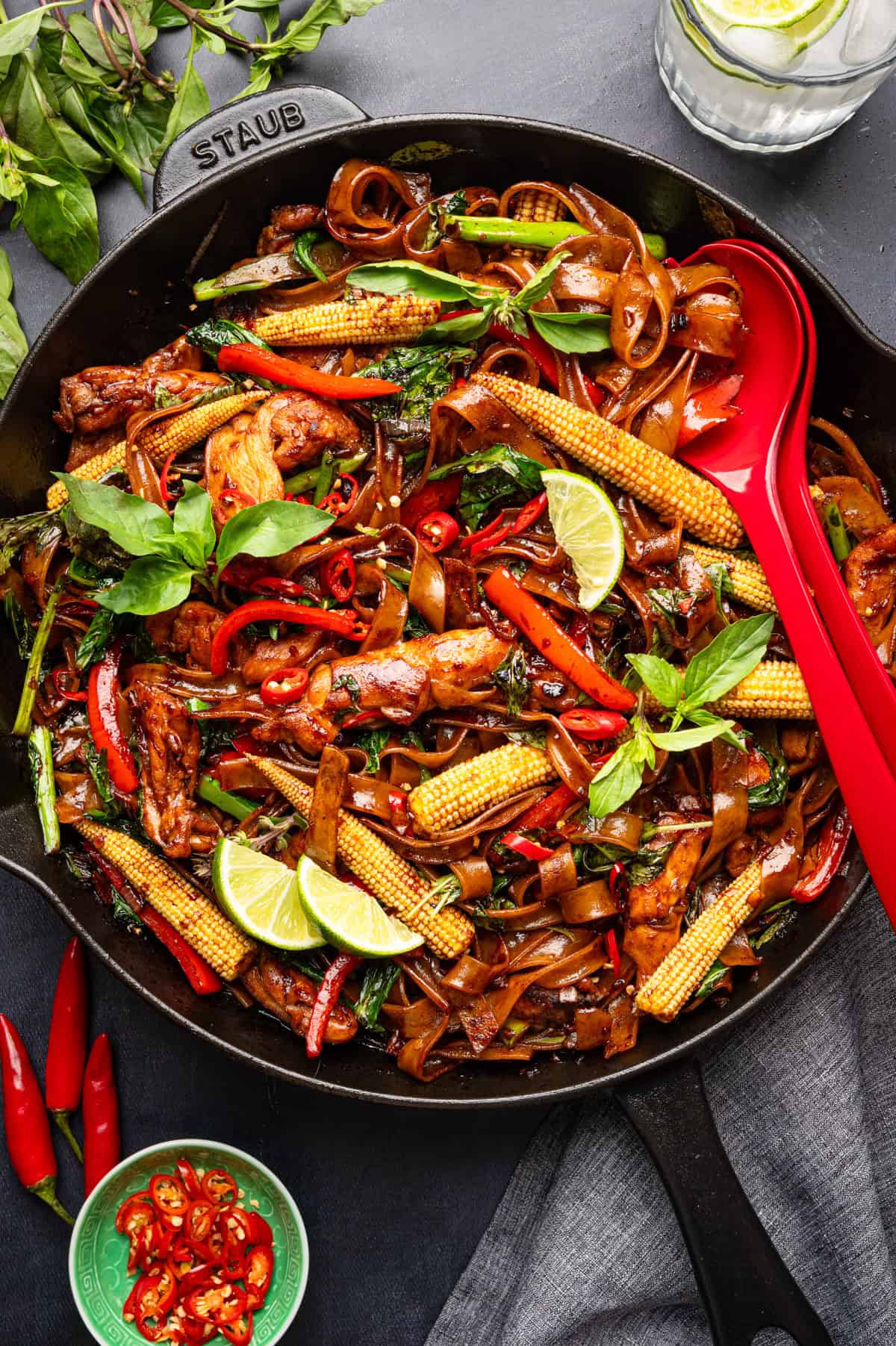
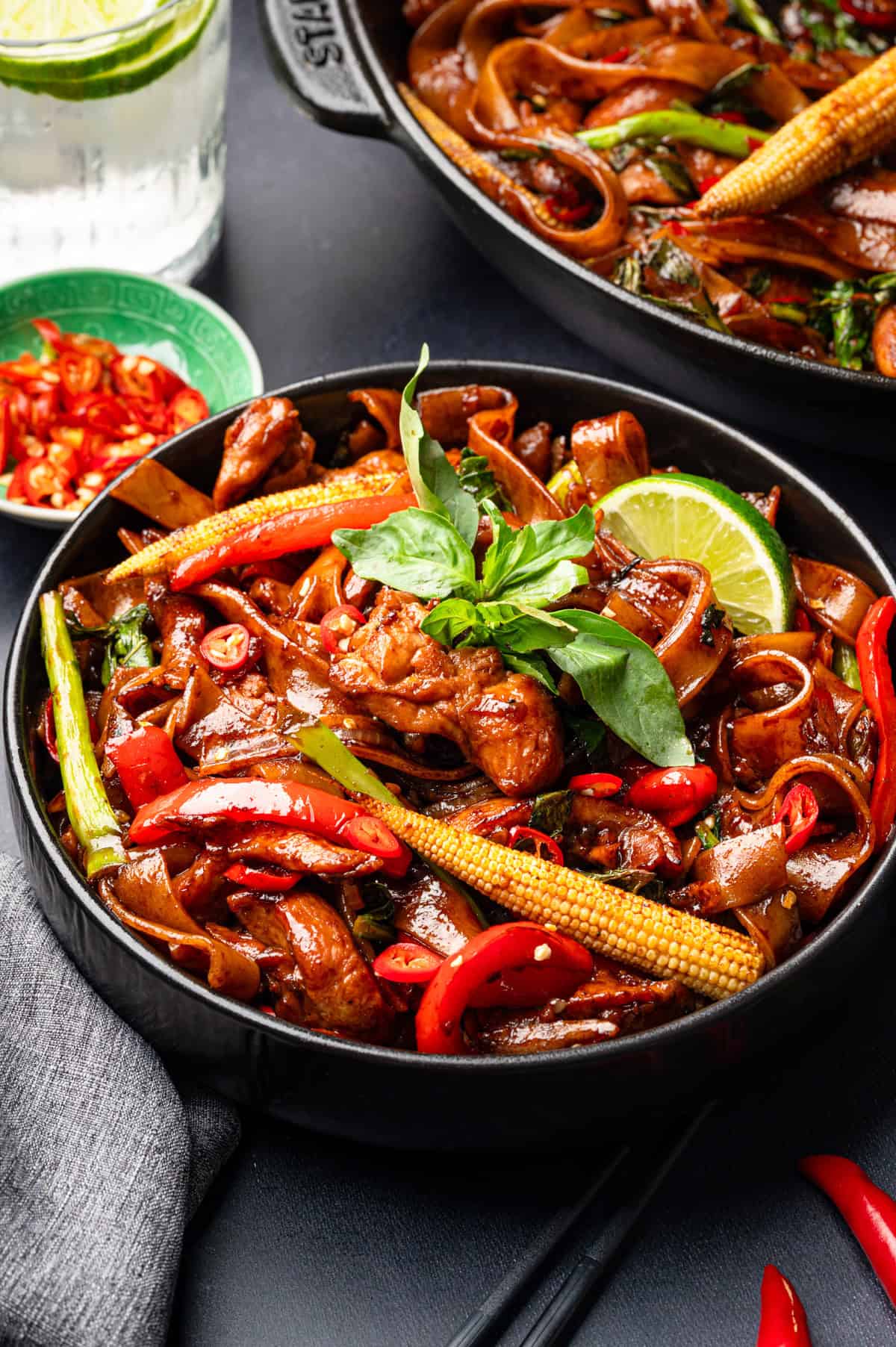
- Garnish with additional basil, sliced Thai chiles, and lime wedges. Serve right away.
Notes
- Prep everything first. The stir-frying moves fast and there is no time to chop mid-cook. Have all your components measured and lined up before the pan gets hot. You will need to move quickly to complete this dish!
- Don't overcrowd the skillet: If you plan to double the recipe, make sure to make this in batches!
- Do not oversoak the dried noodles. They should still have a slight bite when you drain them, since they keep cooking in the sauce. Oversoaked noodles turn to mush in the pan.
- Browning noodles: Make sure your pan is scorching hot, and the oil is heated through before adding the noodles. This helps prevent them from sticking. Also, allowing the noodles to sit undisturbed for a minute or two develops lightly caramelized edges and adds smoky, restaurant-style flavor.
- Separate the gailan stems and leaves: The stems take much longer to cook than the leaves so it's important to separate them to cook them accordingly.
- Baby corn: Fresh baby corn is crisp and slightly sweet and is usually found at Asian markets. Canned baby corn works well too. Drain it, rinse it, and pat it completely dry so it sears rather than steams.
- Adjust spice levels: If Thai chiles are a bit spicy for you, either omit them or reduce the amount you use!
- Do not overcook the basil. Fold it in after the heat is off. Its aroma fades quickly over a live flame.
- Substitutions: Broccolini or baby bok choy can replace the gailan. Serrano chiles can replace Thai chiles (use about double). Light brown sugar can replace palm sugar.
- You will need these supplies: a large wok or a 12-inch carbon steel or cast iron skillet, a large heatproof bowl for soaking noodles, a colander, a sharp knife, a cutting board, and a few small prep bowls.
- YOUR FEEDBACK: If you have questions or feedback about this recipe, I always look forward to hearing from you in the comments below.
Variations
- Pad Kee Mao with Beef or Pork: Thinly sliced sirloin or pork loin both work beautifully. Slice against the grain and sear the same way.
- Seafood version: Use large shrimp or scallops. Sear them for about 1 minute per side and remove them early so they do not turn rubbery.
- Vegetarian and vegan: Swap the chicken for pressed extra-firm tofu, use mushroom "oyster" sauce, and replace the fish sauce with a vegan fish sauce or an extra tablespoon of light soy sauce.
- Gluten-free: Use tamari or gluten-free soy sauce, a gluten-free oyster sauce, and check that your rice noodles are certified gluten-free.
- Extra vegetables: Shiitake mushrooms, snow peas, carrots cut into matchsticks, or Chinese cabbage all belong here. Use what you have on hand.
- Milder for kids: Skip the chiles in the pan and serve them sliced on the side, so everyone can adjust their own plate.
Storage Tips
- Fridge: Store leftovers in an airtight container for up to 4 days.
- Freezer: Transfer the cooled drunken noodles to a freezer-safe container and freeze for up to 2 months.
- Reheat: If frozen, thaw overnight in the refrigerator. Reheat in a skillet over medium heat with a splash of water until warmed through. You can also microwave the noodles in 30-second intervals, stirring between each interval, until they reach your desired temperature.
Nutrition
Nutrition Disclaimer:
The nutritional information on this website is only an estimate and is provided for convenience and as a courtesy only. The accuracy of the nutritional information for any recipe on this site is not guaranteed. It should not be used as a substitute for a professional nutritionist's advice.
How to Make Thai Drunken Noodles (Step-by-Step)
Note: This is only an overview of the recipe with helpful step-by-step photos. The complete recipe with exact ingredient amounts is in the recipe card at the bottom of this post.
- Marinate the chicken: Toss the sliced chicken thighs with fish sauce, sugar, and white pepper. Let it sit for at least 30 minutes.
- Soak the noodles: For dried noodles, soak in boiling water 15 to 20 minutes until flexible but still firm. Drain and toss with oil. For fresh noodles, just separate them and toss with oil.
- Whisk the sauce: Combine both soy sauces, oyster sauce, fish sauce, palm sugar, and water. Set it next to the stove.
- Line up your prep. Sliced shallots, minced garlic, and sliced chiles in one bowl. Gailan stems in a second. Gailan leaves in a third. Bell pepper and baby corn in a fourth. Basil ready to grab.
- Turn on your vent fan: I mean it. This gets smoky.
- Sear the chicken: Heat the oil in a wok or large skillet over high heat. Lay the chicken in a single layer and leave it alone for 1 to 2 minutes, then flip and cook 1 to 2 minutes more. Move it to a large bowl.
- Cook the aromatics: Add shallots, garlic, and chiles to the hot pan. Stir for 30 to 45 seconds until fragrant.
- Add the vegetables in order: Gailan stems first for 1 minute, then bell pepper and baby corn for 2 to 3 minutes, then the gailan leaves for about 2 minutes until barely wilted. Move everything to the bowl with the chicken.
- Char the noodles. Let the empty pan return to smoking hot, then add the remaining tablespoon of oil. Add the noodles and leave them completely alone for 1 to 2 minutes. Flip and brown the other side for another 1 to 2 minutes. You want visible dark spots.
- Bring it together: Add the sauce, the vegetables, and the chicken with any juices. Toss to coat. If the pan looks dry, splash in 1 to 2 tablespoons of water.
- Finish off the heat: Turn off the burner and fold in the Thai basil so it wilts without turning dark.
- Garnish and serve: Top with more basil, sliced chiles, and lime wedges. Eat right away.
Excellent! Followed the directions with only a minor substitution. Was a hit with the family. Salty, spicy, umami - so tasty. Thank you.