Spicy Thai Drunken Noodles (Better Than Takeout)
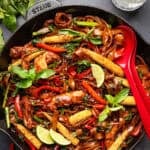
This drunken noodles recipe is a traditional Thai stir-fry made with wide rice noodles, marinated chicken thighs, Chinese broccoli, fresh baby corn, and a full, packed cup of Thai basil. The sauce is salty, a little sweet, and dark enough to coat every noodle.
Servings 4
Calories 581kcal
Ingredients
Chicken Marinade
- 1 pound boneless skinless chicken thighs sliced thin
- 1 tablespoon fish sauce
- ½ teaspoon sugar
- ½ teaspoon white pepper
Noodles
- 8 ounces dried wide rice noodles or 14 ounces fresh wide rice noodles
- 1 tablespoon neutral oil
Sauce
- 4 tablespoons oyster sauce
- 2 tablespoons light soy sauce
- 2 tablespoons dark soy sauce
- 1 tablespoon fish sauce
- 2 tablespoons palm sugar or light brown sugar
- 2 tablespoons water
Stir Fry
- 2 tablespoons neutral oil divided
- 2 small shallots thinly sliced
- 5 garlic cloves minced
- 2 to 3 Thai red chiles thinly sliced
- 3 cups gailan (Chinese broccoli) washed well and cut into 2-inch pieces (stems and leaves separated)
- 1 medium red bell pepper sliced
- 8 ounces fresh baby corn see my note below
- 1 cup Thai basil leaves
Garnish
- Thai basil leaves
- Thai red chiles thinly sliced
- Lime wedges
Instructions
Marinate the Chicken
- In a medium bowl, combine the sliced chicken thighs with the fish sauce, sugar, and white pepper. Toss to coat evenly and let marinate for at least 30 minutes.
Prepare the Noodles
- For dried rice noodles: Soak the noodles in boiling water (212°F / 100°C) until flexible and fully separated but still slightly firm, about 15 to 20 minutes. Drain very well, then toss lightly with the oil to prevent sticking.
- For fresh rice noodles: Gently separate the noodles into a large bowl and toss with the oil to prevent sticking.
Mix the Sauce
- In a small bowl, whisk together the oyster sauce, light soy sauce, dark soy sauce, fish sauce, palm sugar, and water until the sugar dissolves. Set aside near the stove.
Stir Fry
- Turn on the fan over your stove. Heat your wok or skillet over high heat, roughly 450°F to 500°F (230°C to 260°C), and add 1 tablespoon of oil.
- Add the chicken in a single layer and cook 1 to 2 minutes without moving it, until browned. Flip and cook another 1 to 2 minutes until almost cooked through. Remove the chicken to a large bowl and set aside.
- Add the shallots, garlic, and Thai chiles to the pan. Cook until fragrant, about 30 to 45 seconds.
- Add the gailan stems and cook about 1 minute.
- Add the red bell pepper and baby corn and cook another 2 to 3 minutes, until bright but still crisp.
- Toss in the gailan leaves and cook until slightly wilted, about 2 minutes.
- Transfer everything from the pan to the bowl with the cooked chicken. It is fine if tiny bits of garlic and shallot stay behind.
- With the pan still on high, let it come back to smoking, then add the remaining tablespoon of oil. Gently place the noodles into the pan and do not move them for 1 to 2 minutes, letting them brown. Flip them over and brown for another 1 to 2 minutes.
- Add the sauce, cooked vegetables, and chicken with all its juices into the pan. Stir to combine and evenly coat the noodles and other ingredients. If the pan becomes too dry, add 1 to 2 tablespoons of water.
- Turn off the heat and fold in the Thai basil.
- Garnish with additional basil, sliced Thai chiles, and lime wedges. Serve right away.
Notes
- Prep everything first. The stir-frying moves fast and there is no time to chop mid-cook. Have all your components measured and lined up before the pan gets hot. You will need to move quickly to complete this dish!
- Don’t overcrowd the skillet: If you plan to double the recipe, make sure to make this in batches!
- Do not oversoak the dried noodles. They should still have a slight bite when you drain them, since they keep cooking in the sauce. Oversoaked noodles turn to mush in the pan.
- Browning noodles: Make sure your pan is scorching hot, and the oil is heated through before adding the noodles. This helps prevent them from sticking. Also, allowing the noodles to sit undisturbed for a minute or two develops lightly caramelized edges and adds smoky, restaurant-style flavor.
- Separate the gailan stems and leaves: The stems take much longer to cook than the leaves so it’s important to separate them to cook them accordingly.
- Baby corn: Fresh baby corn is crisp and slightly sweet and is usually found at Asian markets. Canned baby corn works well too. Drain it, rinse it, and pat it completely dry so it sears rather than steams.
- Adjust spice levels: If Thai chiles are a bit spicy for you, either omit them or reduce the amount you use!
- Do not overcook the basil. Fold it in after the heat is off. Its aroma fades quickly over a live flame.
- Substitutions: Broccolini or baby bok choy can replace the gailan. Serrano chiles can replace Thai chiles (use about double). Light brown sugar can replace palm sugar.
- You will need these supplies: a large wok or a 12-inch carbon steel or cast iron skillet, a large heatproof bowl for soaking noodles, a colander, a sharp knife, a cutting board, and a few small prep bowls.
- YOUR FEEDBACK: If you have questions or feedback about this recipe, I always look forward to hearing from you in the comments below.
Variations
- Pad Kee Mao with Beef or Pork: Thinly sliced sirloin or pork loin both work beautifully. Slice against the grain and sear the same way.
- Seafood version: Use large shrimp or scallops. Sear them for about 1 minute per side and remove them early so they do not turn rubbery.
- Vegetarian and vegan: Swap the chicken for pressed extra-firm tofu, use mushroom "oyster" sauce, and replace the fish sauce with a vegan fish sauce or an extra tablespoon of light soy sauce.
- Gluten-free: Use tamari or gluten-free soy sauce, a gluten-free oyster sauce, and check that your rice noodles are certified gluten-free.
- Extra vegetables: Shiitake mushrooms, snow peas, carrots cut into matchsticks, or Chinese cabbage all belong here. Use what you have on hand.
- Milder for kids: Skip the chiles in the pan and serve them sliced on the side, so everyone can adjust their own plate.
Storage Tips
- Fridge: Store leftovers in an airtight container for up to 4 days.
- Freezer: Transfer the cooled drunken noodles to a freezer-safe container and freeze for up to 2 months.
- Reheat: If frozen, thaw overnight in the refrigerator. Reheat in a skillet over medium heat with a splash of water until warmed through. You can also microwave the noodles in 30-second intervals, stirring between each interval, until they reach your desired temperature.
Nutrition
Calories: 581kcal | Carbohydrates: 78g | Protein: 31g | Fat: 17g | Saturated Fat: 2g | Polyunsaturated Fat: 5g | Monounsaturated Fat: 9g | Trans Fat: 0.1g | Cholesterol: 108mg | Sodium: 2446mg | Potassium: 843mg | Fiber: 5g | Sugar: 11g | Vitamin A: 1855IU | Vitamin C: 107mg | Calcium: 92mg | Iron: 3mg