
This post may contain affiliate links. Read my disclosure policy.
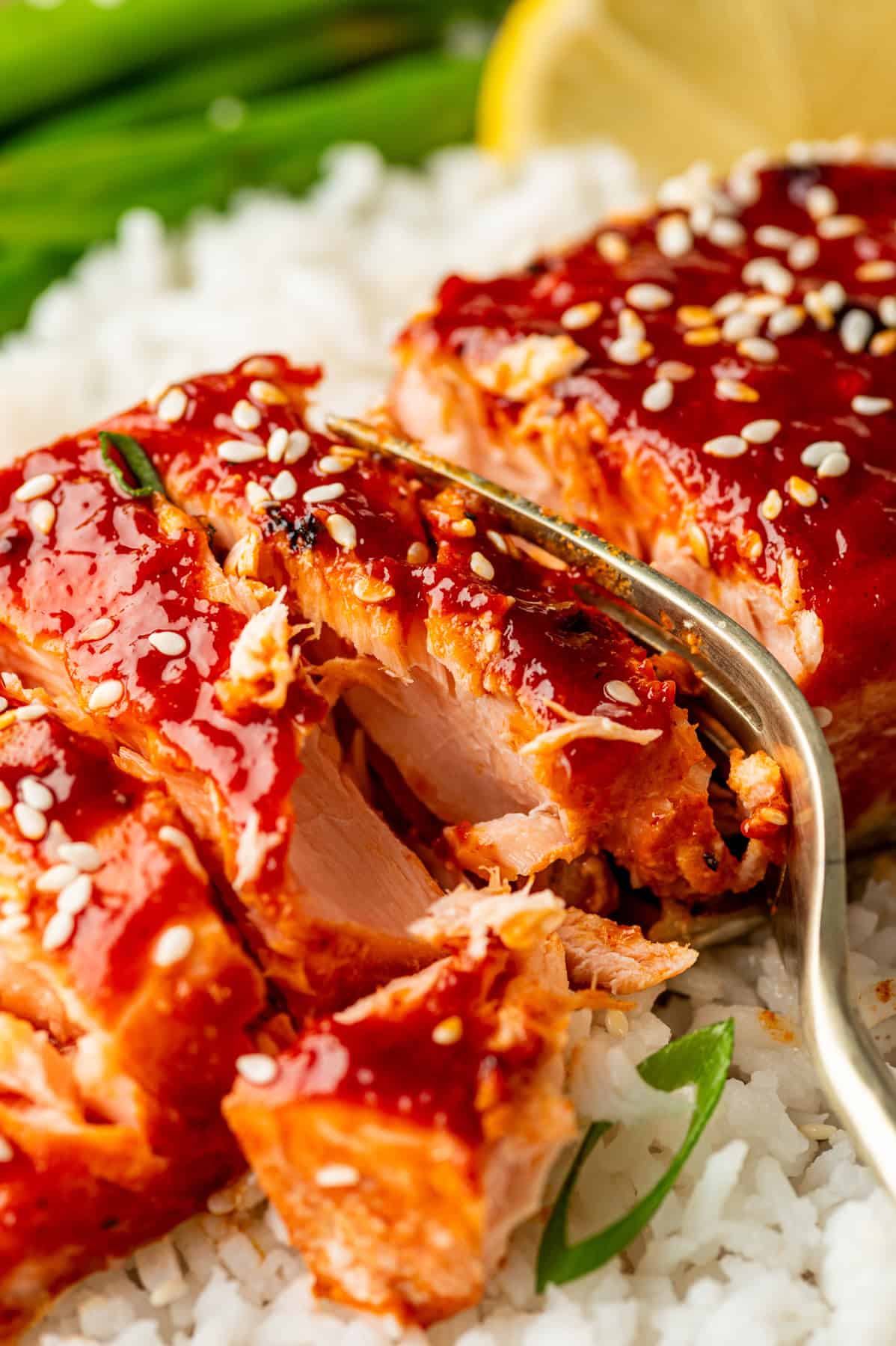
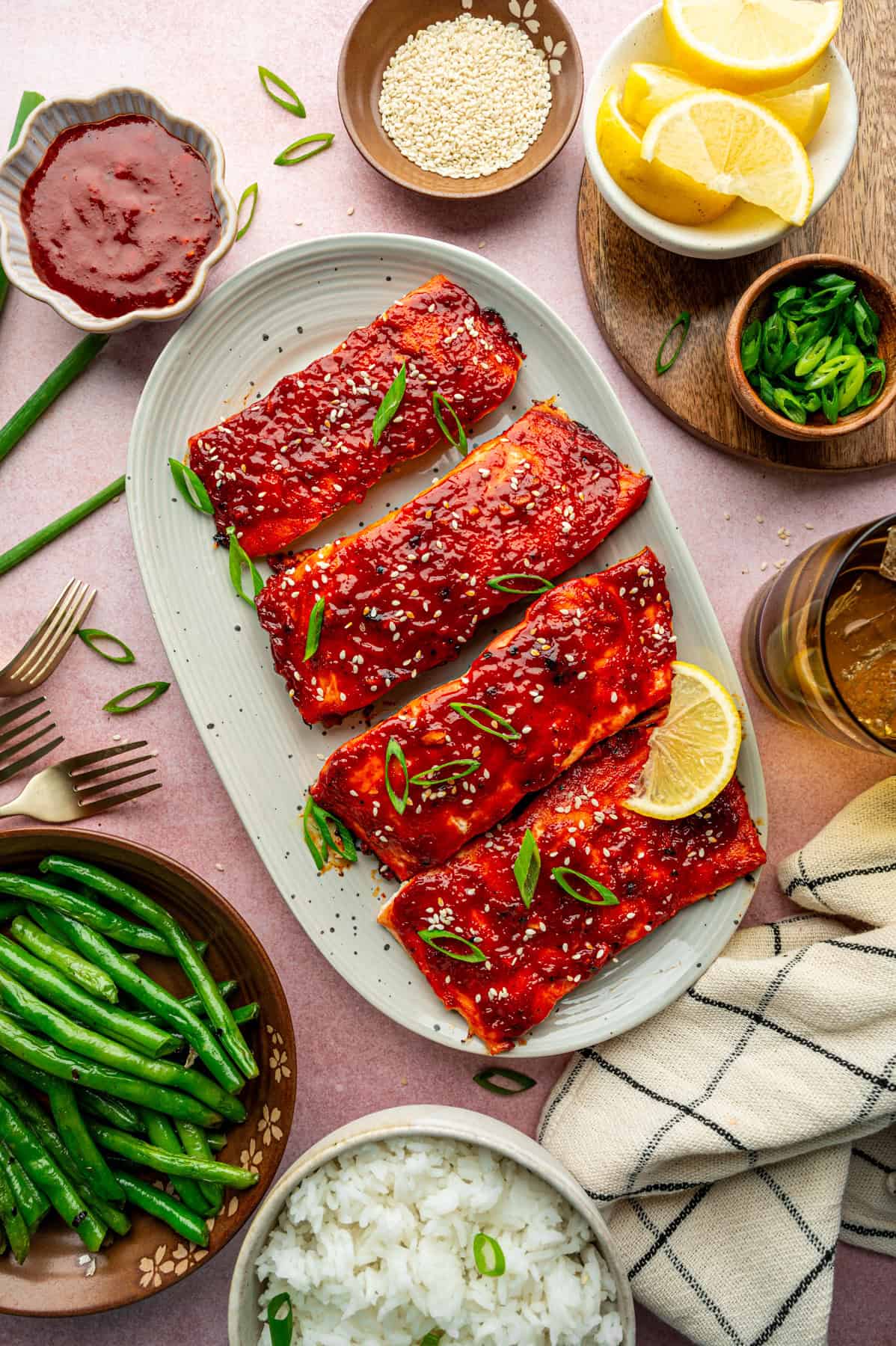
Gochujang salmon brings the bold flavors of Korean cuisine to tender salmon fillets with a mixture of Korean chili paste, honey, ginger, and garlic. Make this spicy salmon in 30 minutes for a delicious weeknight dinner.
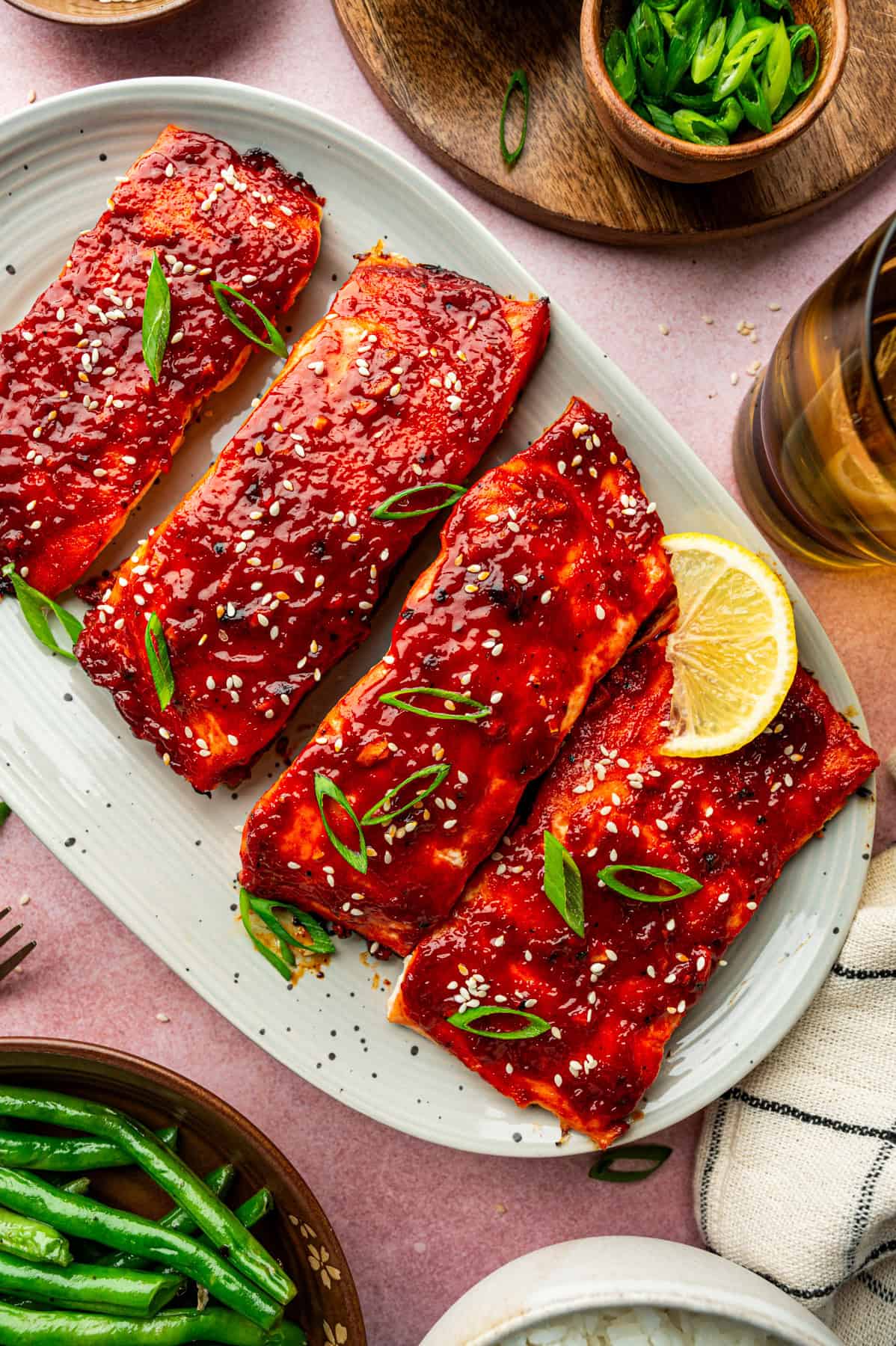
Gochujang Salmon: Bold Flavor in 30 Minutes
This spicy gochujang salmon is one of my favorite ways to add the bold flavors of Korean cuisine to fish. Here's why you'll love this delicious salmon dish:
- Weeknight friendly: My spicy gochujang salmon takes less than 30 minutes to make, start to finish. It's quick enough to make on a busy weeknight but delicious enough to serve at any dinner party!
- Maximum flavor, minimal effort: This recipe couldn't be easier. The salmon gets covered in a gochujang glaze and baked in the oven. Minimal steps and minimal cleanup required!
- Allergy friendly: Gochujang salmon is already dairy free and you can easily make it gluten free.
- Protein adaptable: Use this glaze on shrimp, chicken, or even tofu!
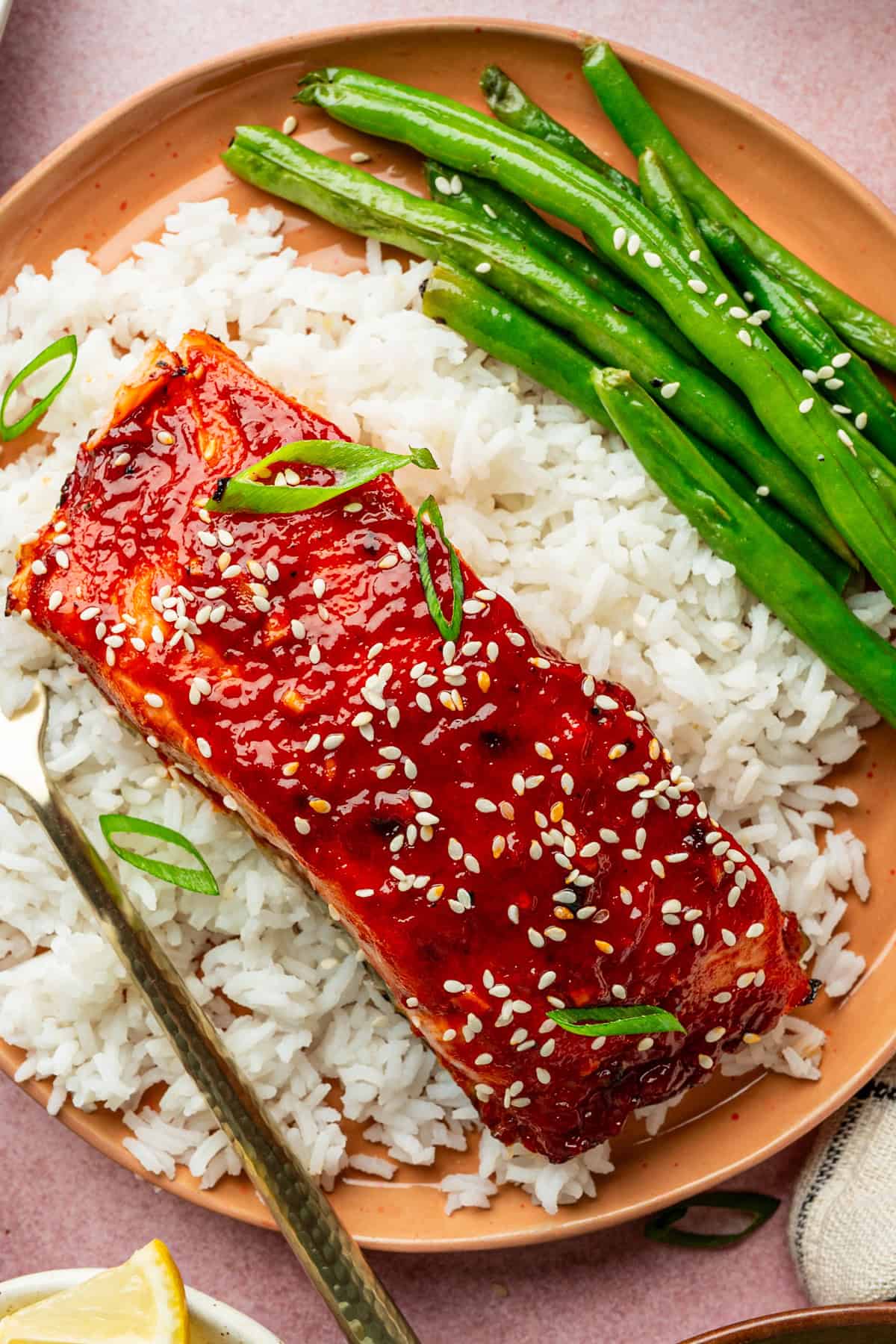
What is Gochujang?
Gochujang is a Korean red chili paste that is commonly used in dishes such as bibimbap, tteokbokki, and bulgogi. It is made from red chili peppers, glutinous rice, fermented soybeans, and salt, with some sweeteners added occasionally.
Gochujang is a cornerstone of Korean cooking used in sauces, stews, marinades, and glazes. This thick, red paste has a bold, concentrated umami flavor that adds a spicy kick to recipes. It can range from mild to very hot depending on the brand and recipe.
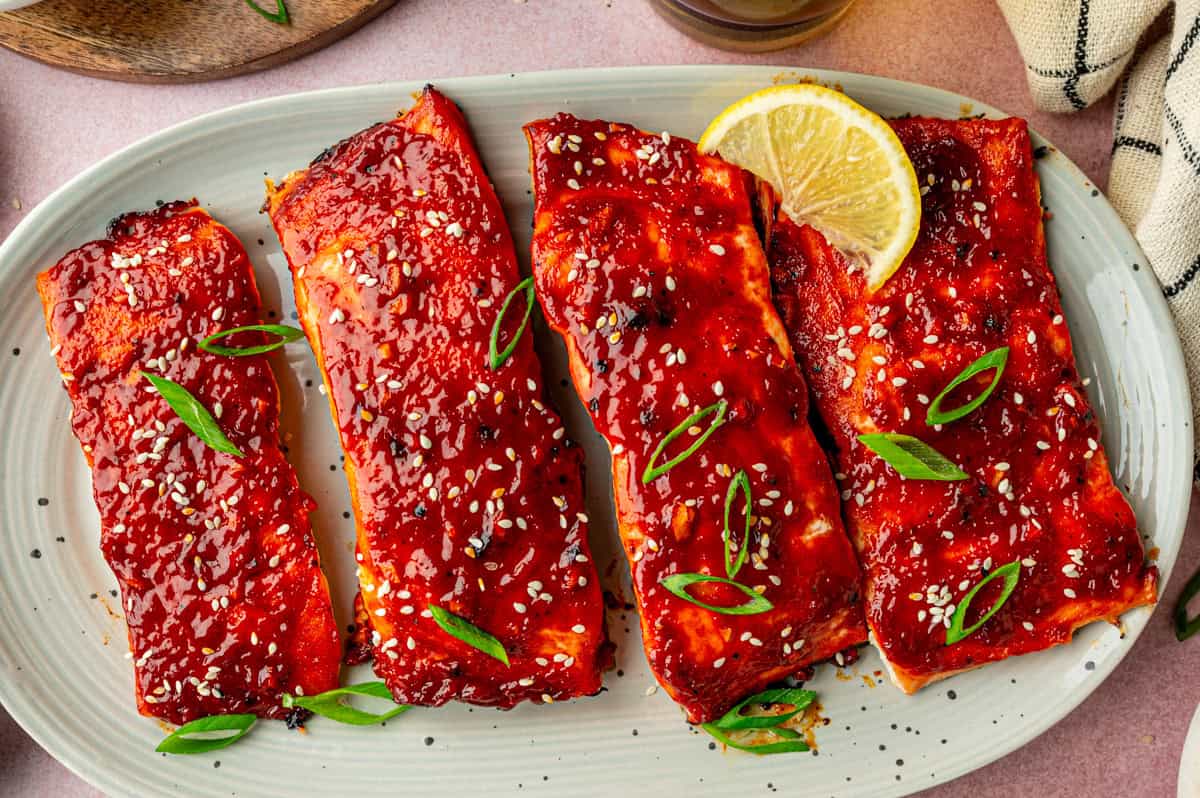
Where to Buy It?
Look for gochujang in the international section of mainstream grocery stores, at your local Asian market, or online. Store it in the refrigerator after opening and use it in recipes like this gochujang salmon, beef bulgogi, and Korean BBQ chicken.
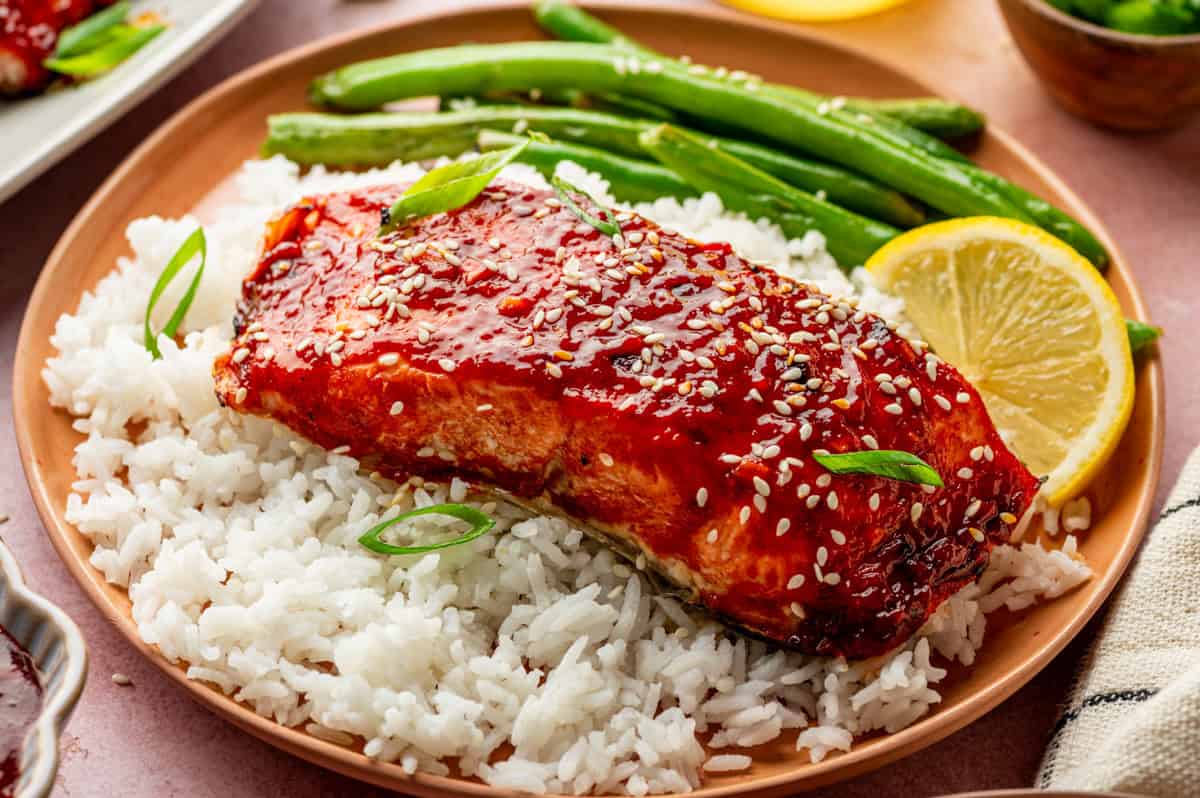
Is Gochujang Gluten-Free?
Gochujang traditionally includes barley malt, but many brands now make gluten-free versions. Be sure to look for gluten-free gochujang if you are cooking for anyone with a gluten allergy or intolerance.
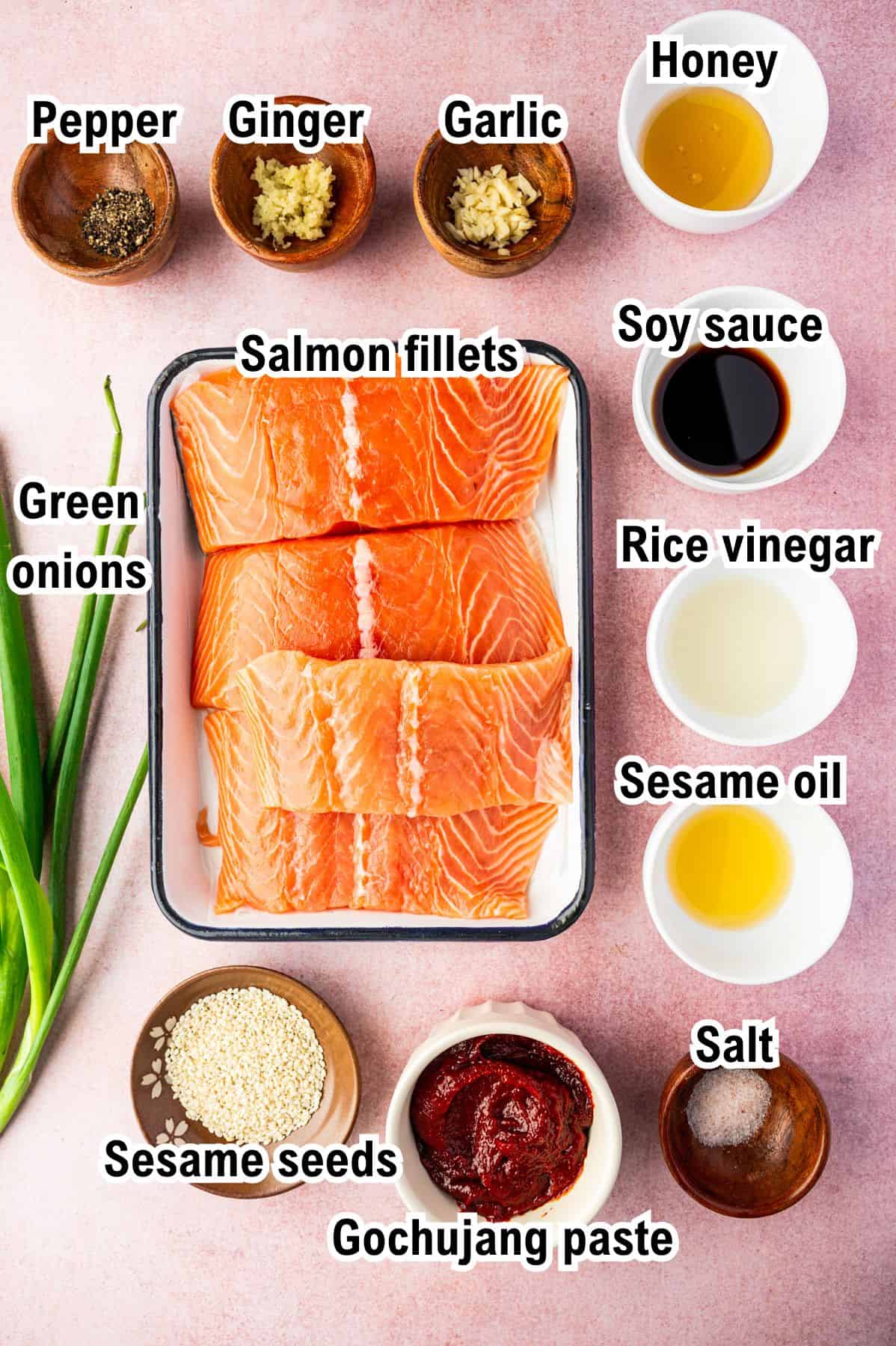
Ingredients and Substitutions
- Salmon fillets: Look for fillets weighing about 6 ounces each.
- Gochujang paste: If you are sensitive to spice, start with just 1 tablespoon and increase accordingly. Use gluten-free gochujang for a gluten-free version of this recipe.
- Low-sodium soy sauce: Using low-sodium soy sauce allows you to better control the salt in the recipe. Use tamari for a gluten-free version.
- Honey: Adds a touch of sweetness that balances the heat of gochujang and helps the chicken caramelize during baking. You can use brown sugar instead.
- Rice vinegar: Provides acidity to cut through the richness and balance flavors. Sometimes labeled as rice wine vinegar.
- Garlic: Minced.
- Sesame oil: This adds a toasty flavor but is very strong, so I like to use a small amount, similar to my Asian chicken soup recipe.
- Grated fresh ginger: Freeze leftover fresh ginger in an airtight freezer bag or container for up to 6 months for use in other recipes like honey garlic shrimp and Thai duck curry.
- Garnish: I like to finish this gochujang salmon with sliced green onions and sesame seeds.
- You will also need salt and black pepper.
How to Make Gochujang Salmon (Step-by-Step Photos)
This is a recipe overview. Scroll down to find the complete instructions + ingredient amounts in the recipe card below.
- Set up: Preheat the oven to 400°F and line a baking sheet with parchment. Set the salmon fillets on the covered pan and set aside. Make sure to place the salmon skin side down if it is not skinless.
- Make the glaze: Whisk together the gochujang, soy sauce, honey, rice vinegar, garlic, sesame oil, ginger, and salt and pepper until smooth.
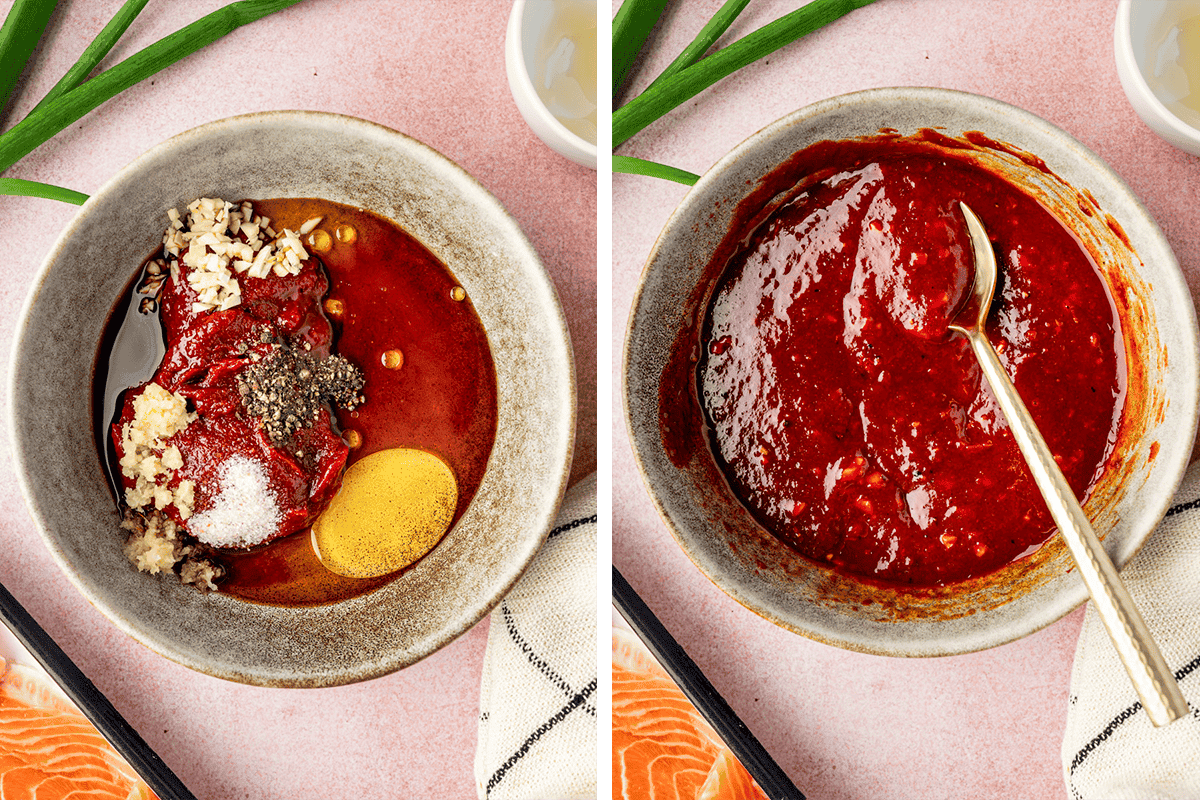
- Top the salmon: Spoon the glaze over the salmon fillets, spreading it out to cover the fish evenly.
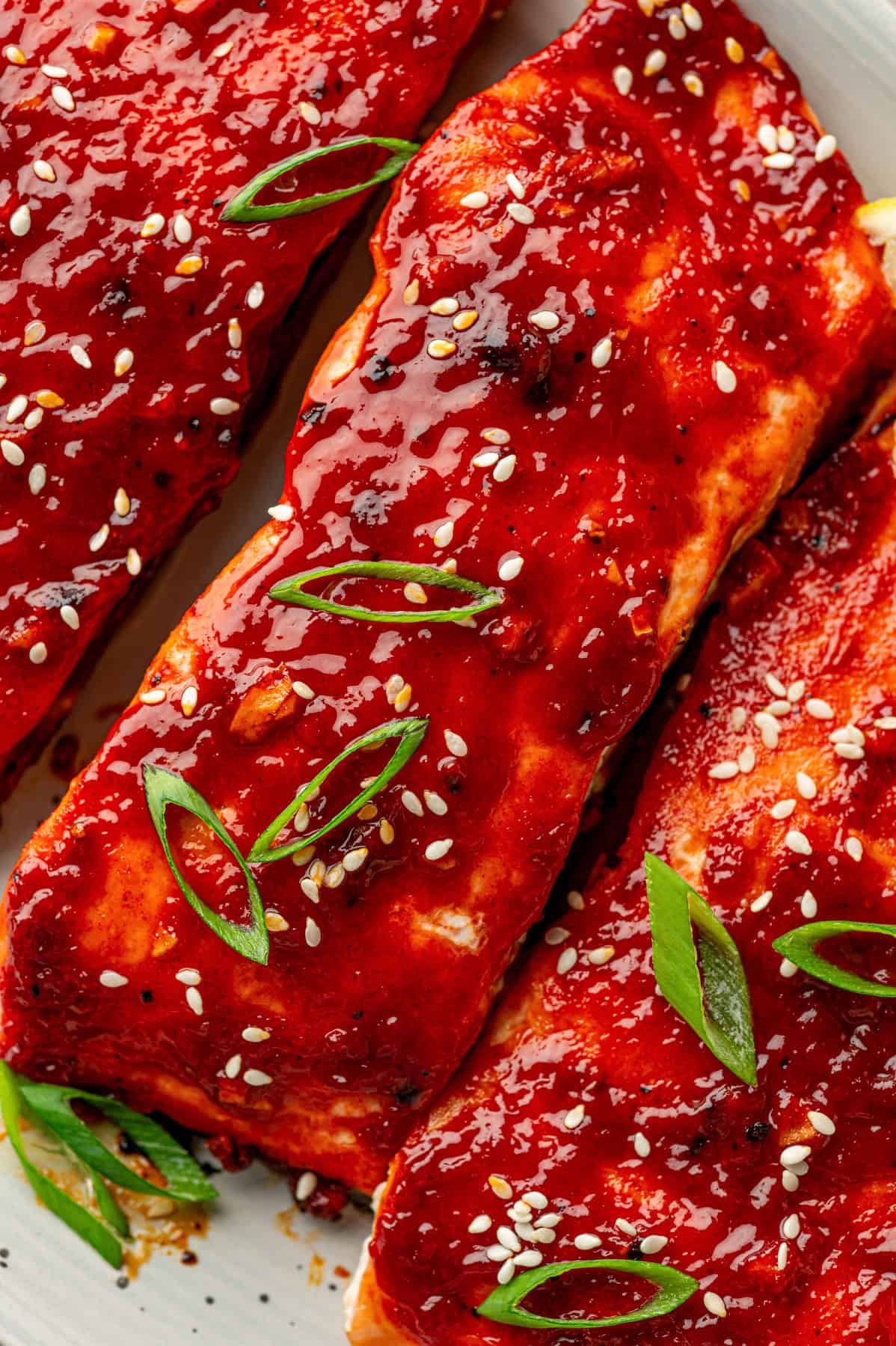
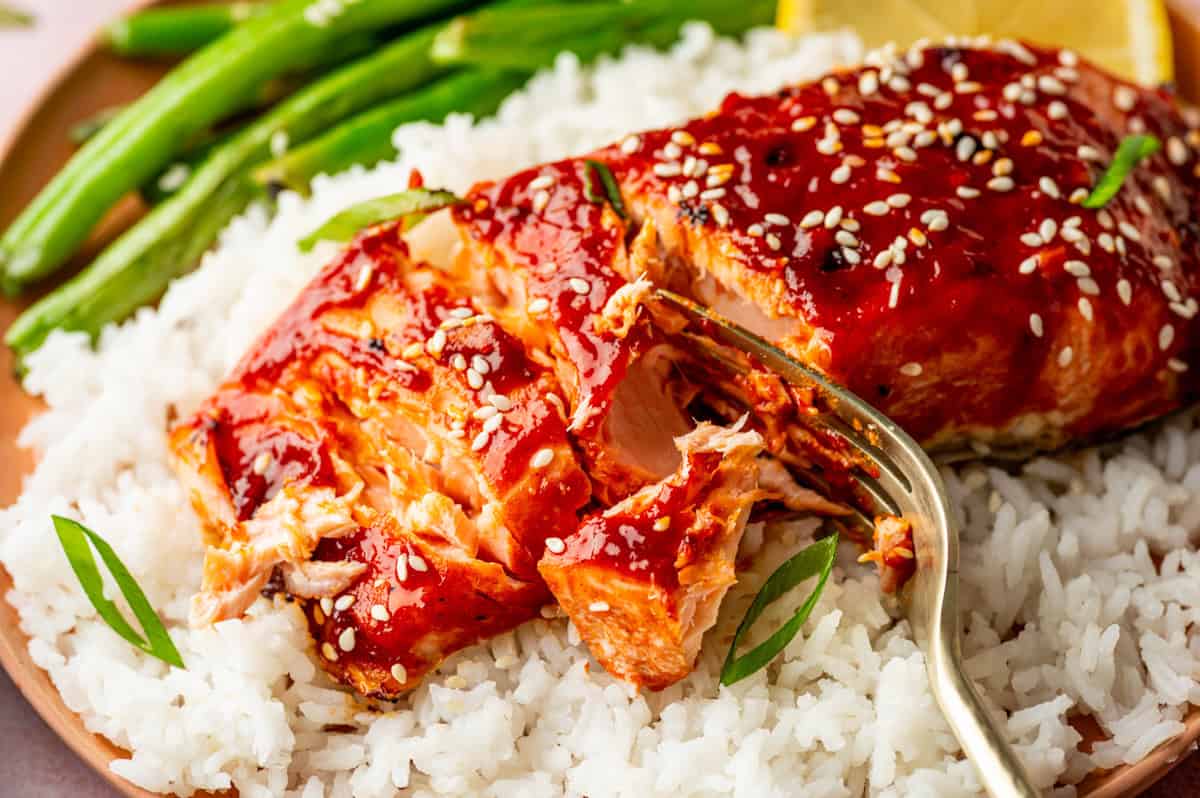
- Bake: Bake the fish for 12-15 minutes. The salmon is done when it flakes evenly with a fork and the internal temperature is between 125°F-130°F for medium-rare to medium.
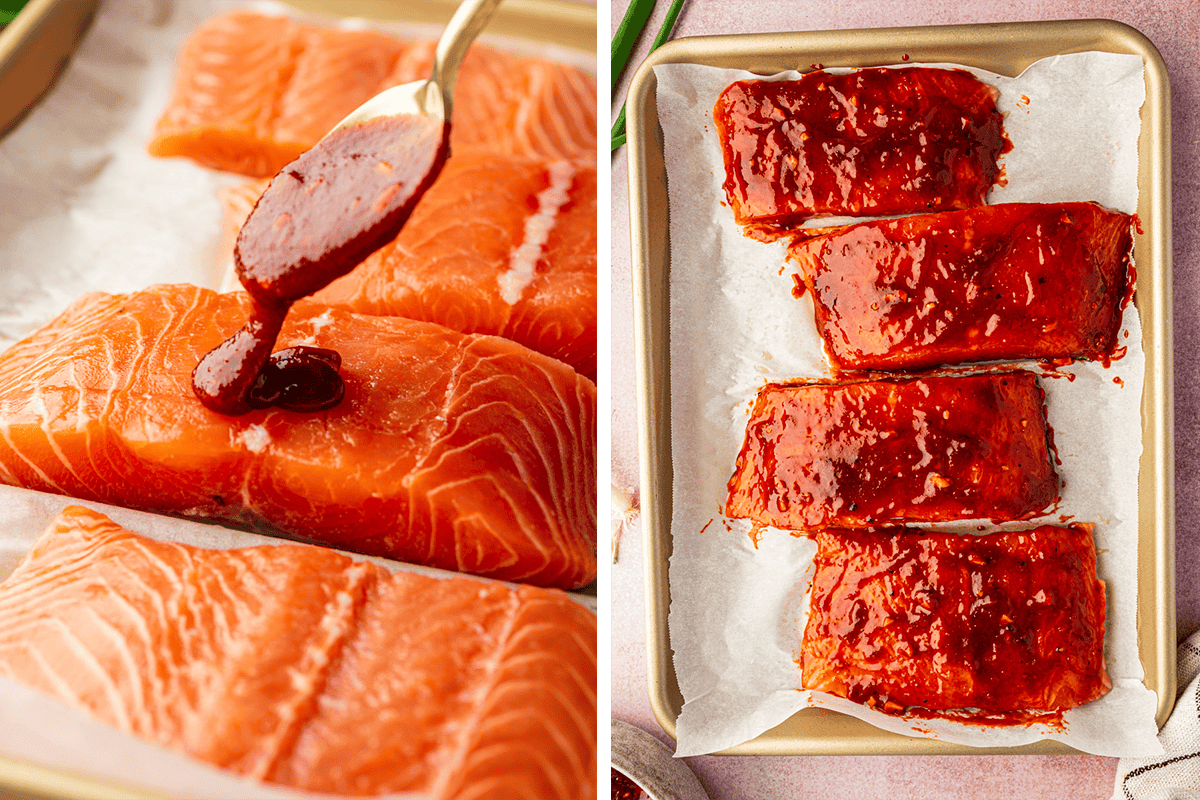
- Garnish and enjoy: Top the gochujang salmon with sesame seeds and sliced green onions before serving. Store leftovers in an airtight container in the fridge for up to 2 days.
Serving Suggestions
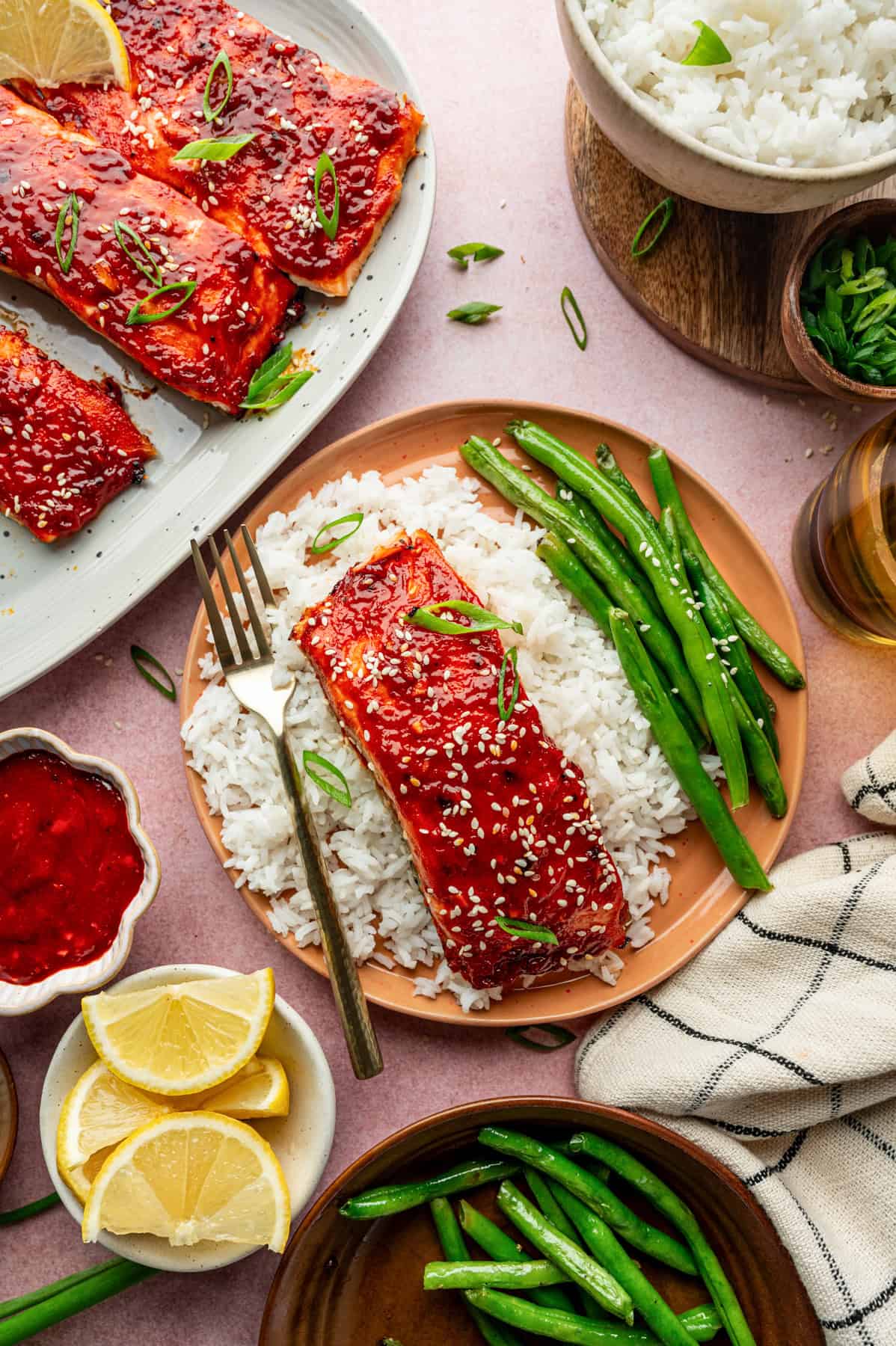
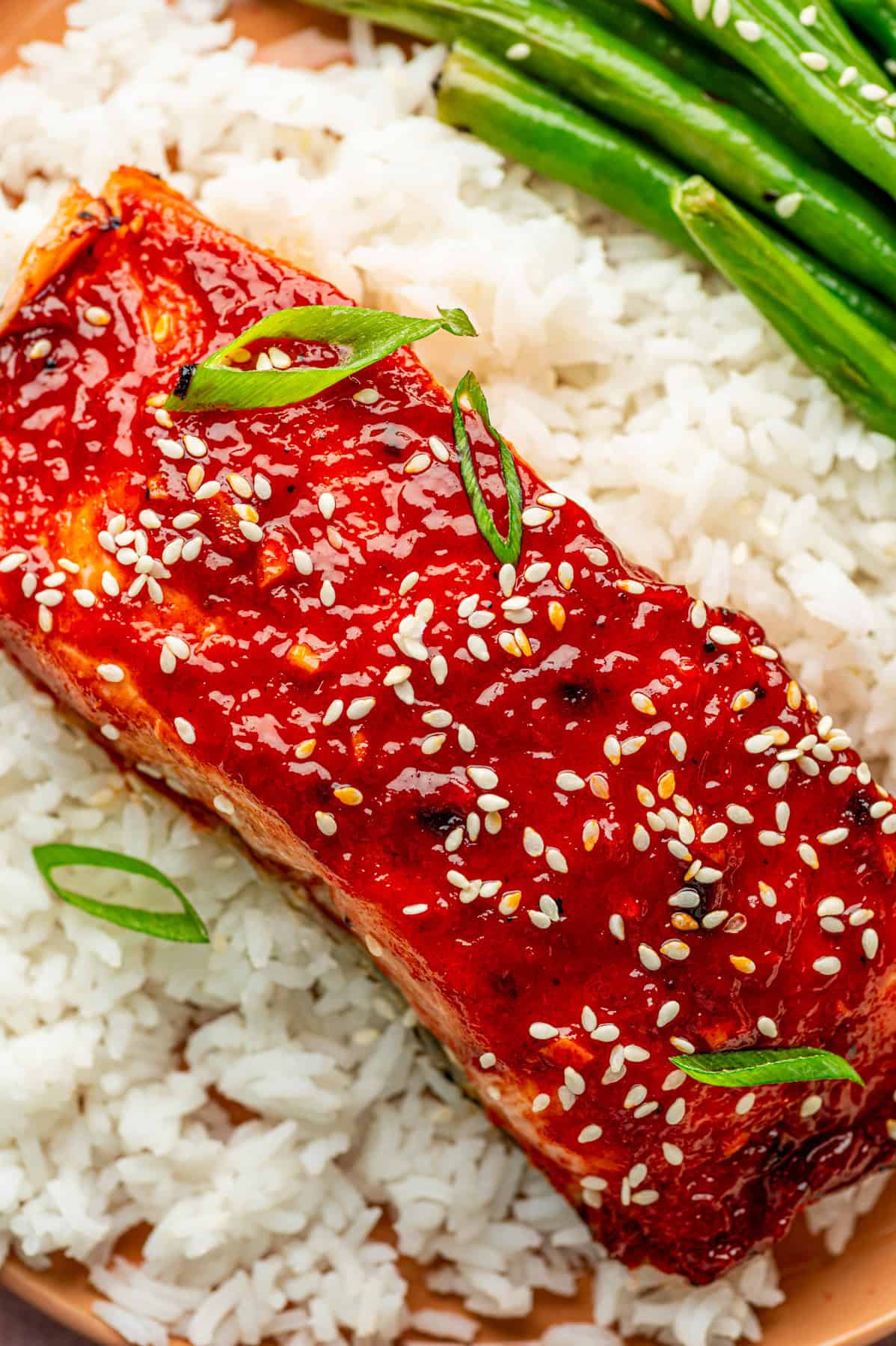
Serve classic with steamed white or brown rice and sautéed bok choy (or spinach) to soak up that glossy sauce, just like street-food bowls in Korea. Keep things quick and easy by pairing spicy gochujang salmon with sautéed green beans, steamed broccoli, smashed Asian cucumbers, or stir-fried zucchini. You could also try making homemade kimchi to go along with it! I also love serving it over Korean noodles (japchae) or with my crunchy Asian salad.
Frequently Asked Questions
Absolutely! Place salmon fillets in the air fryer basket and cook for 8-10 minutes at 375°F. For a stickier glaze, brush with a little extra marinade and air fry for an additional 1-2 minutes.
Yes, but thaw it completely and pat it dry before marinating so the glaze sticks well and the fish cooks evenly.
It has a mild to medium heat. If you want it spicier, add extra gochujang or a pinch of red pepper flakes. For a milder version, reduce the gochujang and add more honey.
I bake skin-side down; it protects the flesh and releases easily after cooking. Slide a spatula between skin and flesh to lift off cleanly.
More 30-Minute Salmon Recipes
Spicy Gochujang Salmon (Korean-Inspired)
Equipment
- Baking sheet
- Small mixing bowl
- Whisk
Ingredients
- 4 fillets salmon about 6 oz/170 g each
- 2 tablespoons gochujang paste Korean chili paste
- 1 tablespoon low sodium soy sauce
- 1 tablespoon honey
- 1 tablespoon rice vinegar
- 2 cloves garlic minced
- 1 teaspoon sesame oil
- 1 teaspoon grated fresh ginger
- ¼ teaspoon salt
- ¼ teaspoon black pepper
- Chopped green onions to garnish
- Sesame seeds to garnish
Instructions
- Preheat the oven to 400°F (200°C). Line a baking sheet with parchment paper and place the salmon fillets on it. Set aside.
- In a small bowl, whisk together gochujang, soy sauce, honey, rice vinegar, garlic, sesame oil, ginger, salt, and pepper until smooth.
- Spoon the marinade over the salmon and coat evenly.
- Bake for 12-15 minutes, until the salmon is cooked through and flakes easily with a fork. (For extra caramelization, broil the salmon for 1-2 minutes at the end.)
- Garnish with sesame seeds and green onions. Serve with steamed rice and sautéed greens to enjoy.
Notes
- Gochujang paste varies in heat, so start with 1 tablespoon if you're sensitive to spice, and increase for a bolder kick.
- You can use other proteins: This recipe works with shrimp, chicken, or tofu.
- To make the marinade spicier, add more red pepper flakes, sriracha, or gochujang
- For a gluten-free version, look for gluten-free gochujang and use tamari in place of the soy sauce.
- To air fry, cook the salmon at 375°F for 8-10 minutes.
Storage, reheating, freezing, make-ahead
- Storage: Refrigerate cooled salmon in an airtight container up to 3 days. Keep garnishes separate.
- Reheating: Warm gently at 275°F (135°C) for 8-10 minutes or microwave at 50% power in 30-second intervals to avoid drying. I recommend adding a dab of water or extra glaze.
- Freezing: Cooked salmon freezes well up to 2 months. Wrap tightly; thaw overnight in the fridge, then reheat gently.
- Make-ahead: Whisk the glaze up to 5 days in advance and refrigerate it (separate from the salmon). You can marinate salmon up to 12 hours (covered, chilled). For the best texture, bake just before serving.
Nutrition
Nutrition Disclaimer:
The nutritional information on this website is only an estimate and is provided for convenience and as a courtesy only. The accuracy of the nutritional information for any recipe on this site is not guaranteed. It should not be used as a substitute for a professional nutritionist's advice.
Submit your question or provide a review of the recipe + star rating RIGHT HERE.