
This post may contain affiliate links. Read my disclosure policy.
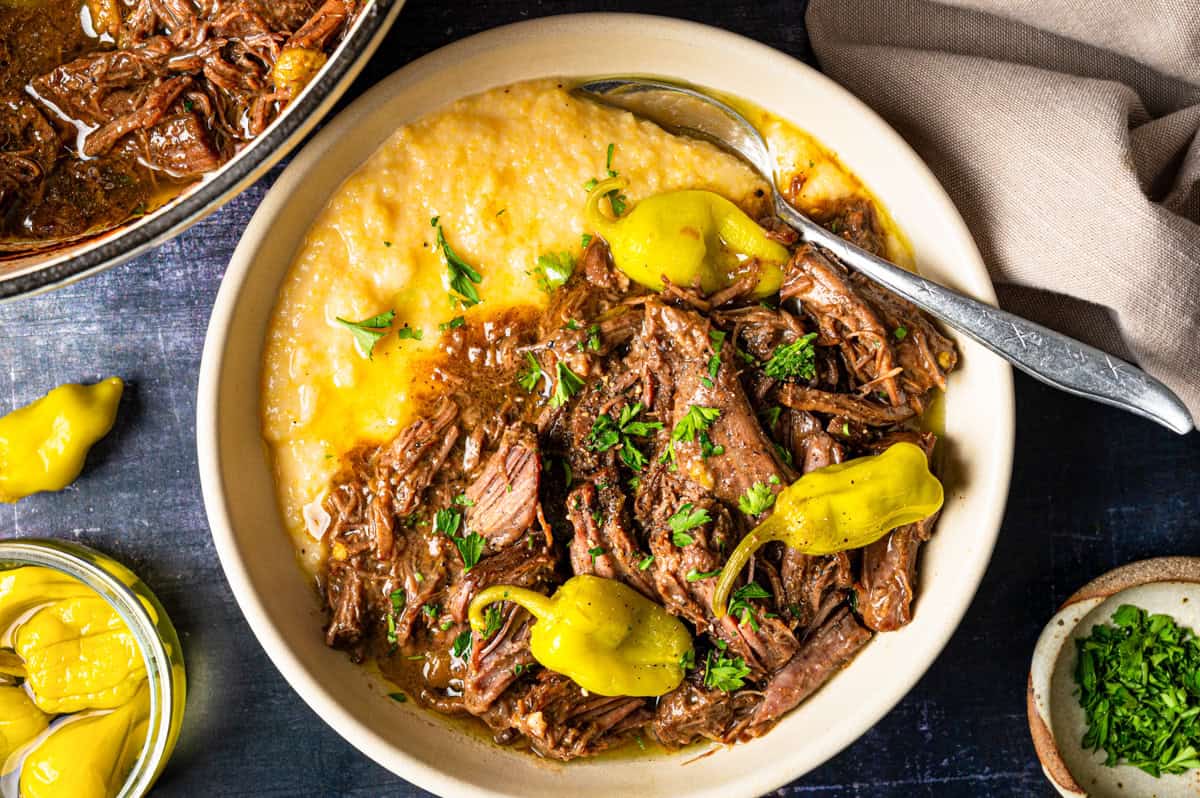
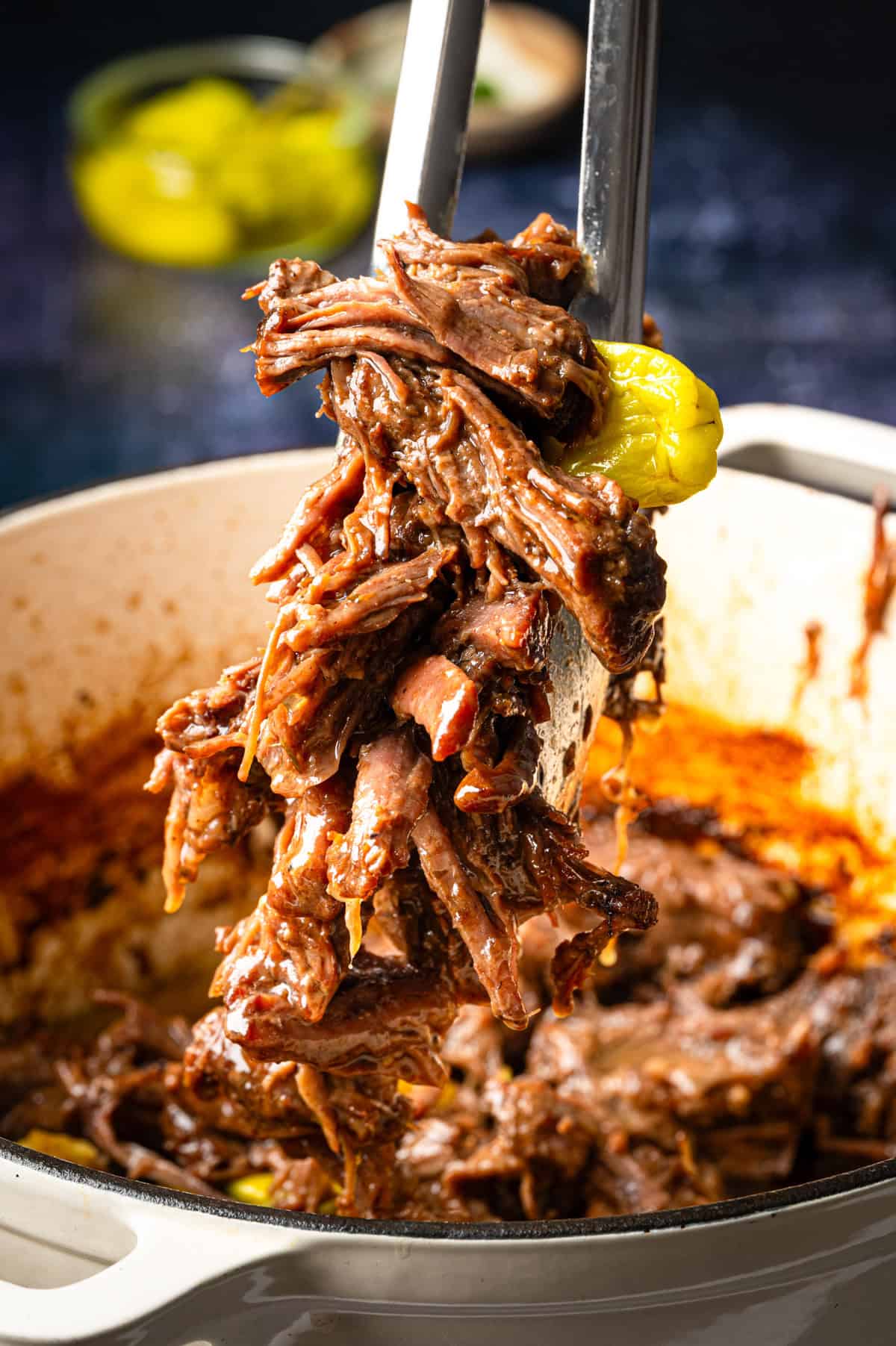
This Mississippi pot roast is a five-ingredient Southern classic made with a fall-apart tender chuck roast, ranch seasoning, au jus gravy mix, tangy pepperoncini peppers, and a whole stick of butter. It's a one-pot dinner with about 20 minutes of hands-on work, and the leftovers make the best sandwiches. Make it in the oven, in an Instant Pot, or in a Slow Cooker.
What Is Mississippi Pot Roast? (Brief History)
Mississippi Pot Roast is one of the few modern American classics with a traceable birth certificate. A home cook named Robin Chapman created it in Ripley, Mississippi, in the 1990s, when she took her aunt's roast (which used a packet of Italian dressing mix) and swapped in ranch to make it milder for her kids. She added pepperoncini, au jus gravy mix, and a stick of butter, and set the slow cooker on low. Her friend Karen Farese put it in the Beech Hill Church of Christ cookbook, bloggers found it there, and by 2016 the New York Times called it the roast that owns the internet. Nobody in Ripley called it Mississippi Pot Roast. They called it roast.
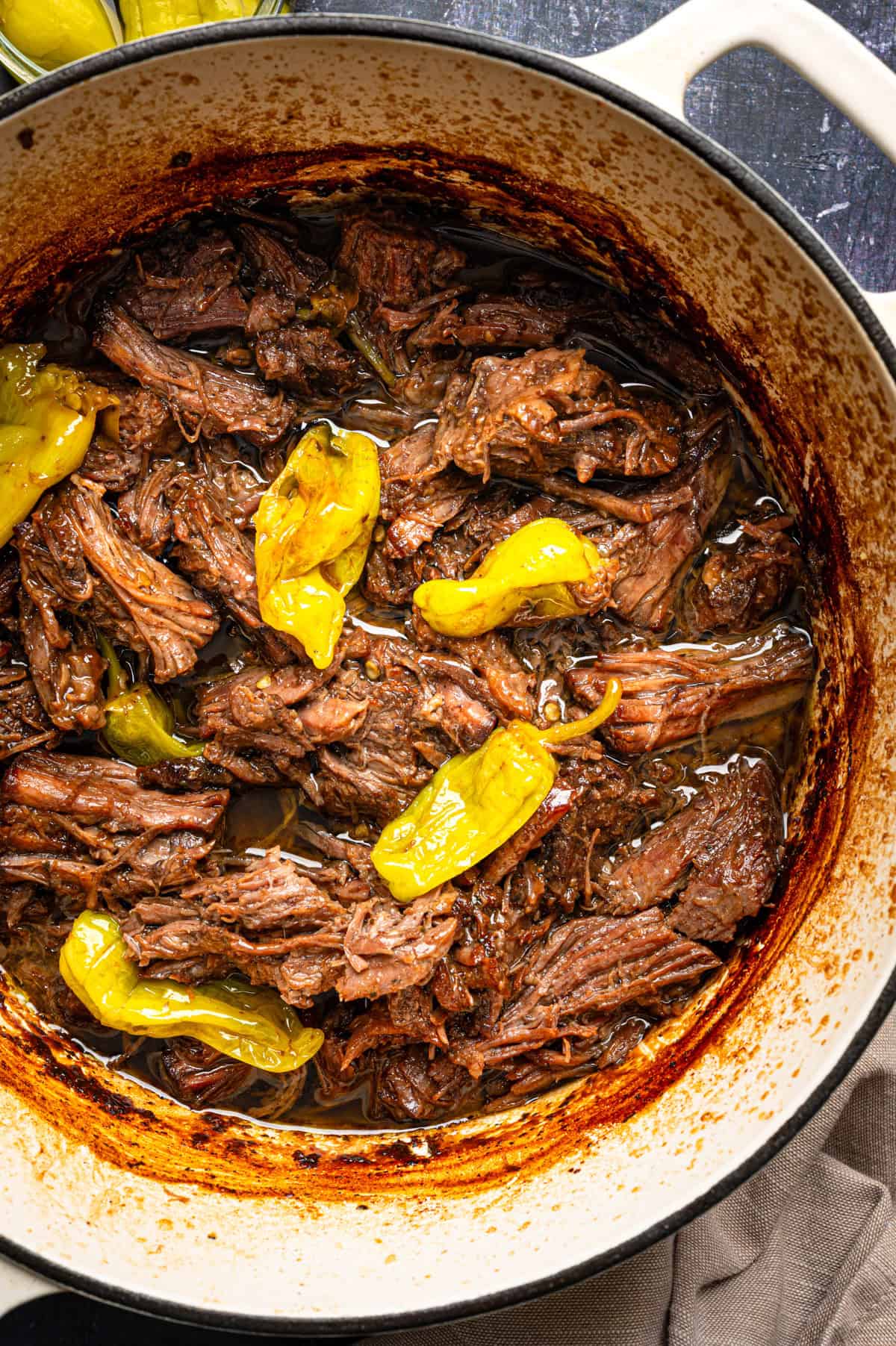
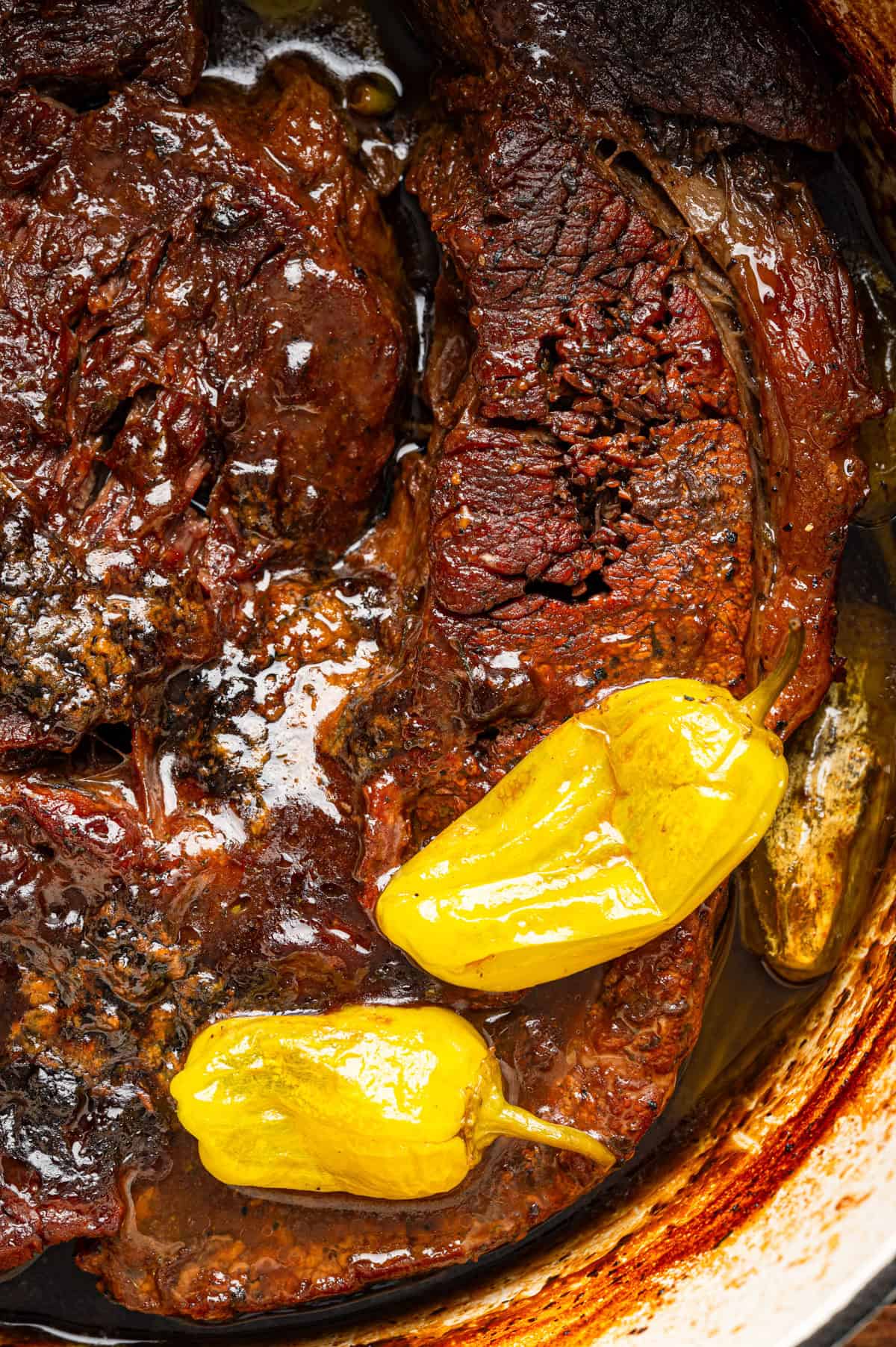
I stayed faithful to those five original ingredients, and I only made two changes: I sear the chuck roast first, and I braise it in the oven in a Dutch oven instead of the slow cooker. Searing gives you a deep brown crust and a base of browned bits that turn the jus glossy and beefy instead of flat. The oven holds a steadier temperature than a slow cooker and gives you better texture at the end. However, you can definitely make Mississippi Pot Roast in a crockpot and even in an Instant Pot - I provide 3 cooking methods in my recipe card below.
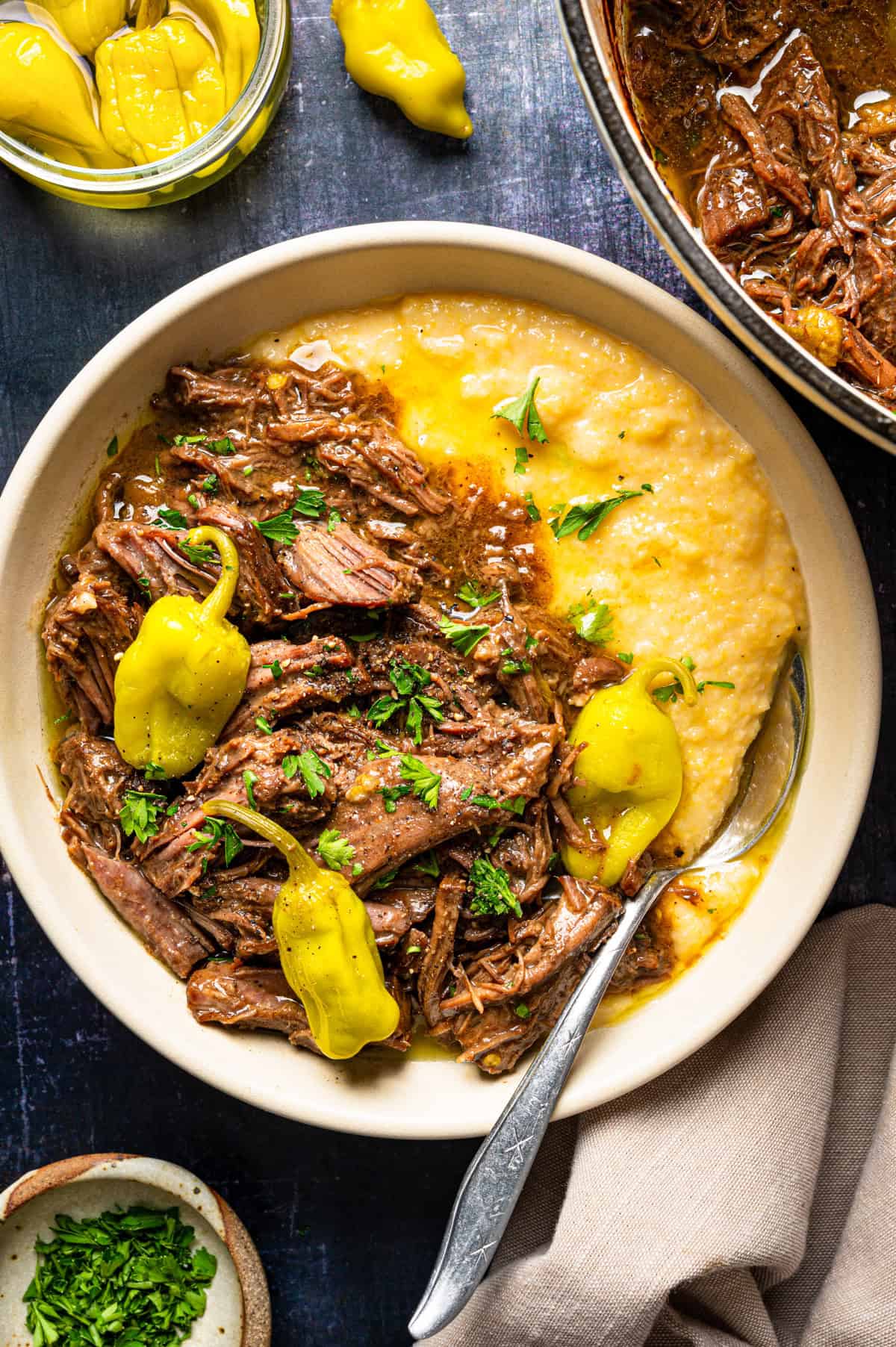
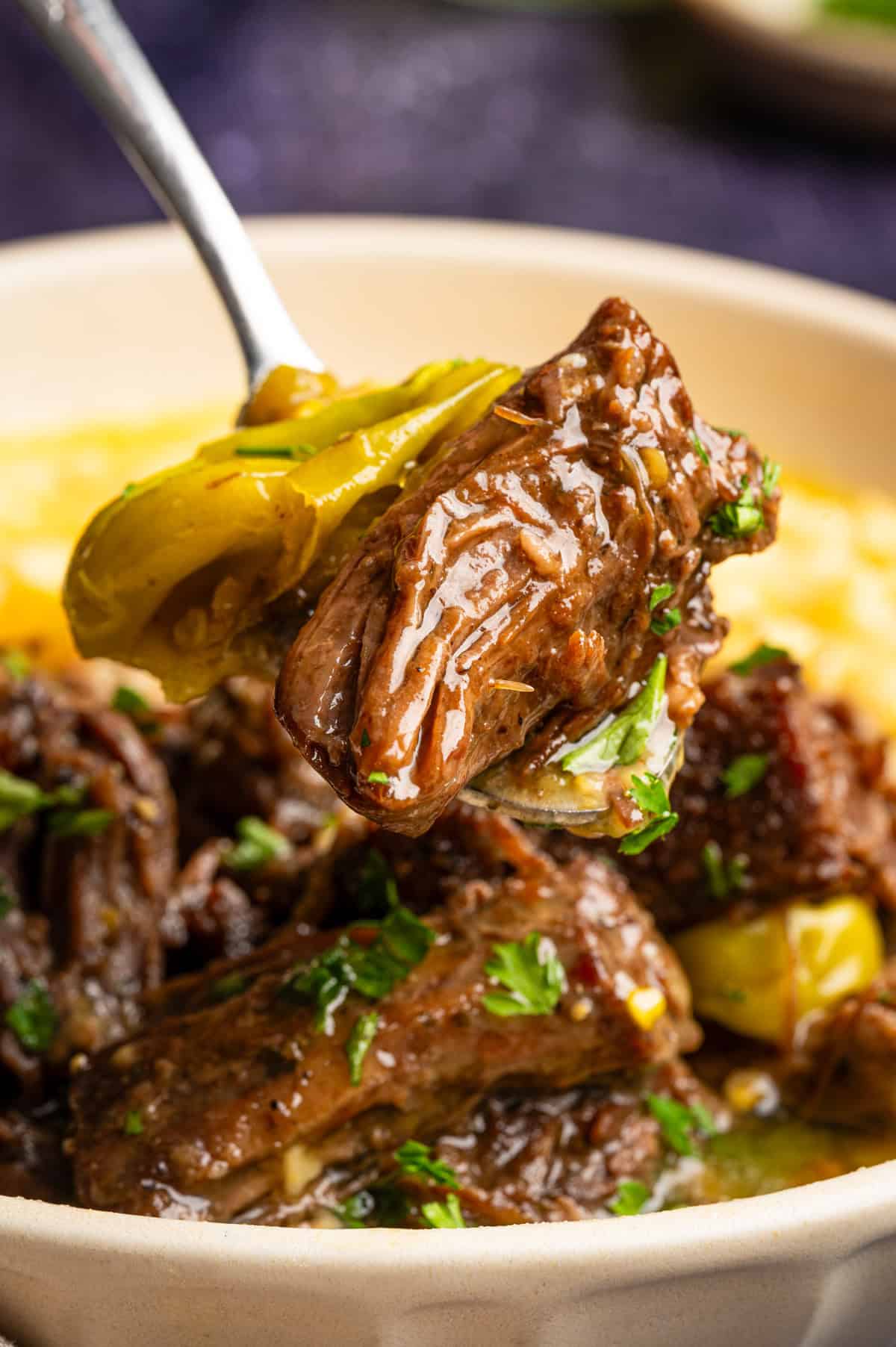
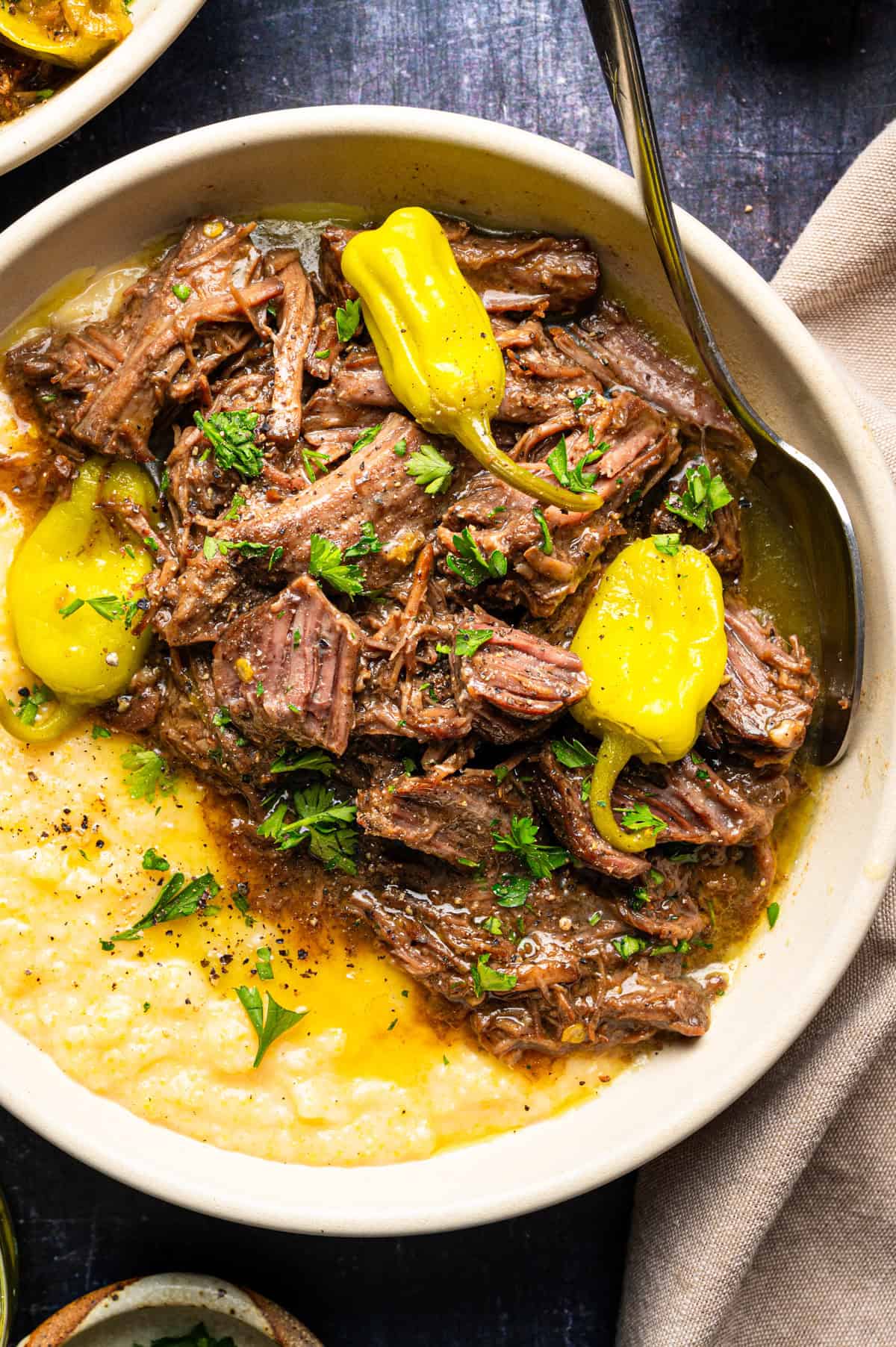
The flavor is salty, buttery, and just a little tangy from the pepperoncini brine. It is rich without being heavy, and it makes enough for leftovers, which reheat beautifully. Serve it over roasted garlic mashed potatoes, creamy yellow polenta, buttered egg noodles, or rice, with a pile of my Parmesan garlic green beans on the side and my garlic butter dinner rolls for the jus.
The Ingredients (and Substitutions) for Mississippi Pot Roast
Read my important tips on choosing the right ingredients and making substitutions, or skip ahead to the fully printable recipe card below.
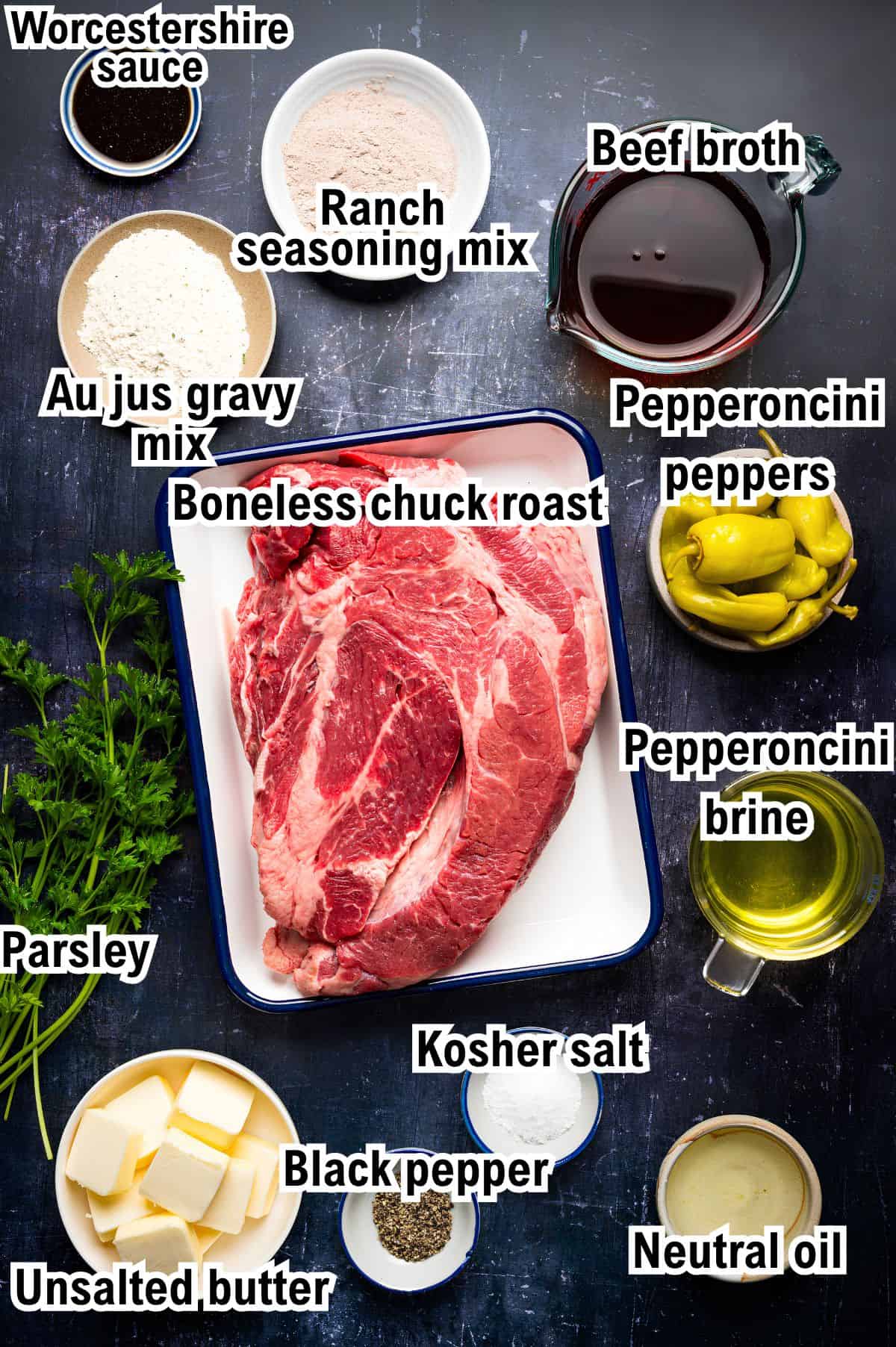
- Boneless chuck roast: I used a 3-pound boneless chuck roast, the same cut Robin Chapman used. It is heavily marbled and full of connective tissue that melts down over a long braise, which is what makes the beef shred into glossy strands. Use a beef shoulder roast or brisket flat if chuck roast is unavailable. You can sub rump roast, sirloin tip, or bottom round, but they are leaner and shred a little drier.
- Salt and pepper: I season the roast with ½ teaspoon kosher salt and 1 teaspoon freshly ground black pepper. That is light on purpose, because the ranch and au jus packets bring plenty of salt later. If you are using fine table salt, use ¼ teaspoon instead.
- Neutral oil: Use avocado oil, canola oil, vegetable oil, or another high-smoke-point oil for searing. I sear the roast in 2 tablespoons of avocado oil. Olive oil smokes before the pan gets hot enough, and butter burns, so save both for later.
- Beef broth: Add ½ cup low-sodium beef broth to deglaze the pot and lift the browned bits off the bottom. You can substitute low-sodium chicken or vegetable broth, though beef broth provides the richest flavor. Water works just as well, and the original recipe used no broth at all.
- Worcestershire sauce: I add a tablespoon of Worcestershire, which isn't traditional and is a slight departure from the original five-ingredient recipe, but it deepens the jus. You can sub soy sauce, coconut aminos, or even fish sauce. You can also skip it entirely if you want the classic version. If you're adventurous, try miso paste!
- Ranch seasoning mix: I sprinkle between half and a full 1-ounce packet of dry ranch seasoning right over the top of the roast. The original recipe uses Hidden Valley brand. If you want to control the salt, you can make your own with buttermilk powder, dried dill, parsley, chives, onion powder, and garlic powder.
- Au jus gravy mix: I use between half and a full 1-ounce packet. It turns the butter and brine into an actual sauce and gives it that roasted beef flavor. Brown gravy mix or dry onion soup mix both sub well, though onion soup mix is saltier.
- Pepperoncini and brine: I arrange 8 whole pepperoncini around the roast and pour in ½ cup of brine straight from the jar. This is the signature ingredient, and the vinegar is what cuts through all that butter. They are mild, so 8 peppers will not make it spicy. Banana peppers can provide a similar tangy, mild flavor.
- Unsalted butter: I lay a full stick of unsalted butter, cut into pats, over the roast. It is traditional, and it is what makes the jus silky. Use unsalted here, since salted butter on top of two seasoning packets is too much. You can drop to 4 tablespoons if a whole stick feels like a lot.
- Fresh parsley: I top the plated dish with a big handful of chopped flat-leaf parsley. On a dish this rich and brown, it is not just for looks. Chives or thinly sliced scallions do the same job.
Key Preparation Tips
- Pat the roast completely dry. Wet beef steams instead of browning. I press paper towels against every surface until they come away dry, then season. If your roast came in a wet package, leave it uncovered on a rack in the fridge for 15 minutes first.
- Get the pan properly hot before the beef goes in. The oil should shimmer and move like water when you tilt the pot. Sear 4 to 5 minutes per side without touching or moving the roast, and let it release on its own. If it sticks, it is not ready to flip.
- Use a Dutch oven with a tight lid. A heavy enameled or cast iron Dutch oven holds steady heat and traps the steam that does most of the work. If your lid does not seal well, lay a sheet of foil across the pot before setting the lid on.
- Do not add extra liquid. Half a cup of broth plus half a cup of brine plus a stick of butter looks like nowhere near enough for a 3-pound roast, and that is correct. The chuck releases a lot of its own moisture as it cooks, and the finished jus should be concentrated, not soupy.
- Taste the braising liquid before you shred anything back into it. This is the step people skip and then complain the dish was too salty. Spoon a little onto a spoon, let it cool for a second, and taste. If it is sharp, whisk in warm water a few tablespoons at a time until it tastes right.
- Give it the full time it needs. I check at 3 hours and it is often not ready. Fork-tender means a fork twists in the meat with almost no resistance. If it still pulls back, cover it and give it another 30 to 60 minutes.
How to Make Mississippi Pot Roast (Step-by-Step Photos)
This is a recipe overview. Scroll down for complete instructions and ingredient amounts in the recipe card below.
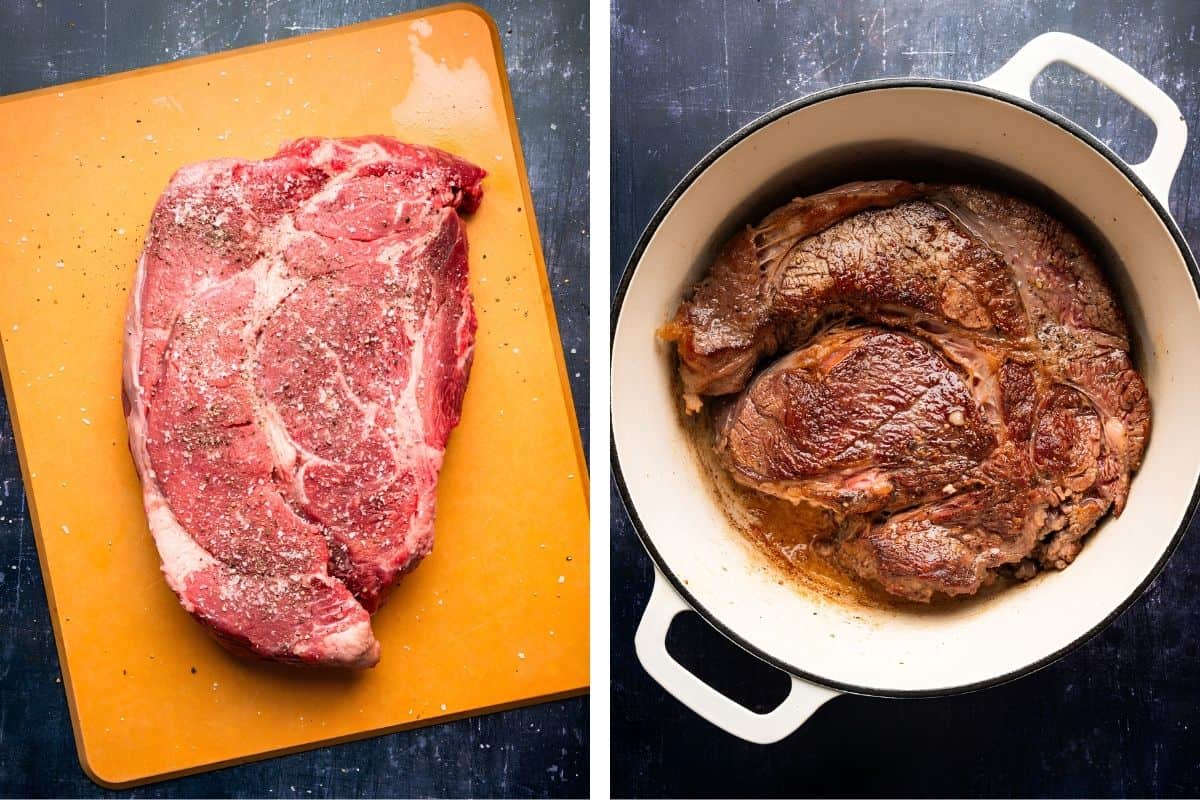
- Season and sear: Pat the chuck roast very dry, season all over with salt and pepper, and sear in hot oil for 4 to 5 minutes per side, until a deep brown crust forms. Transfer it to a plate.
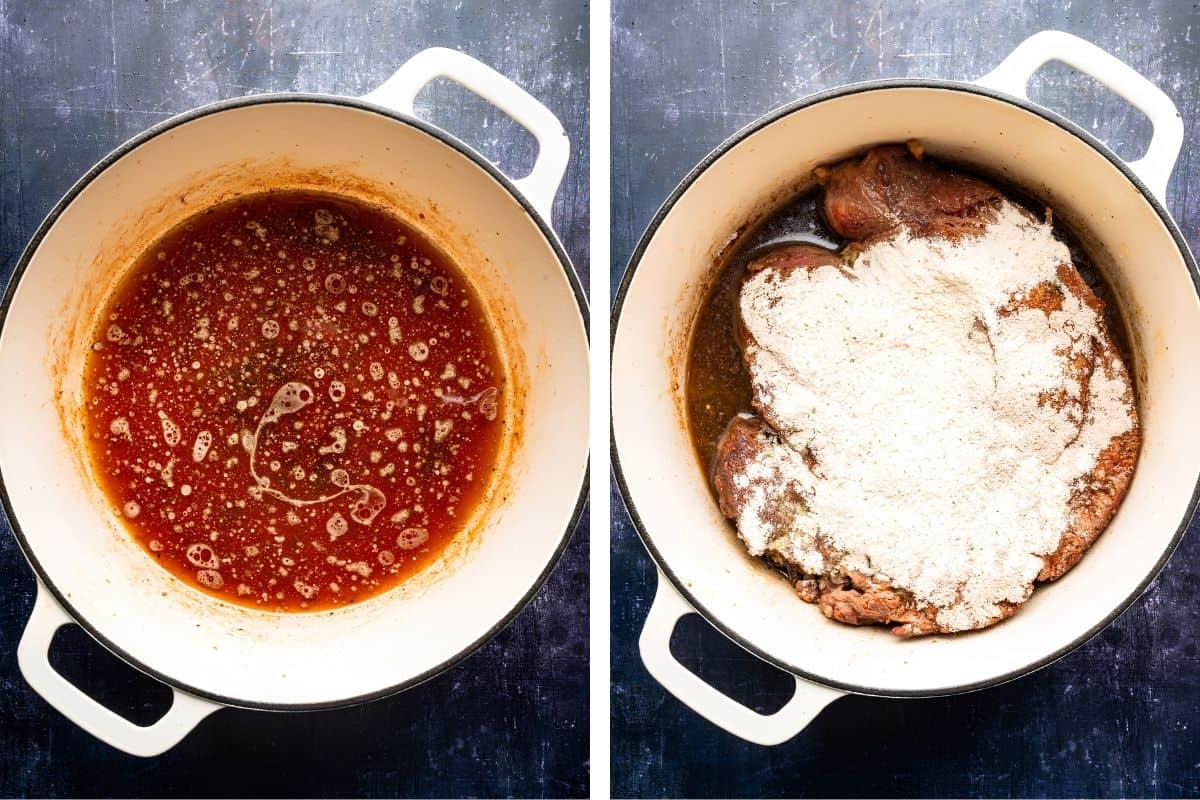
- Deglaze: Pour the beef broth and Worcestershire into the hot pot and scrape up every browned bit from the bottom.
- Layer everything in: Return the roast to the pot. Sprinkle the ranch seasoning and au jus mix evenly over the top, tuck the pepperoncini around the sides, pour in the brine, and lay the butter pats across the roast.
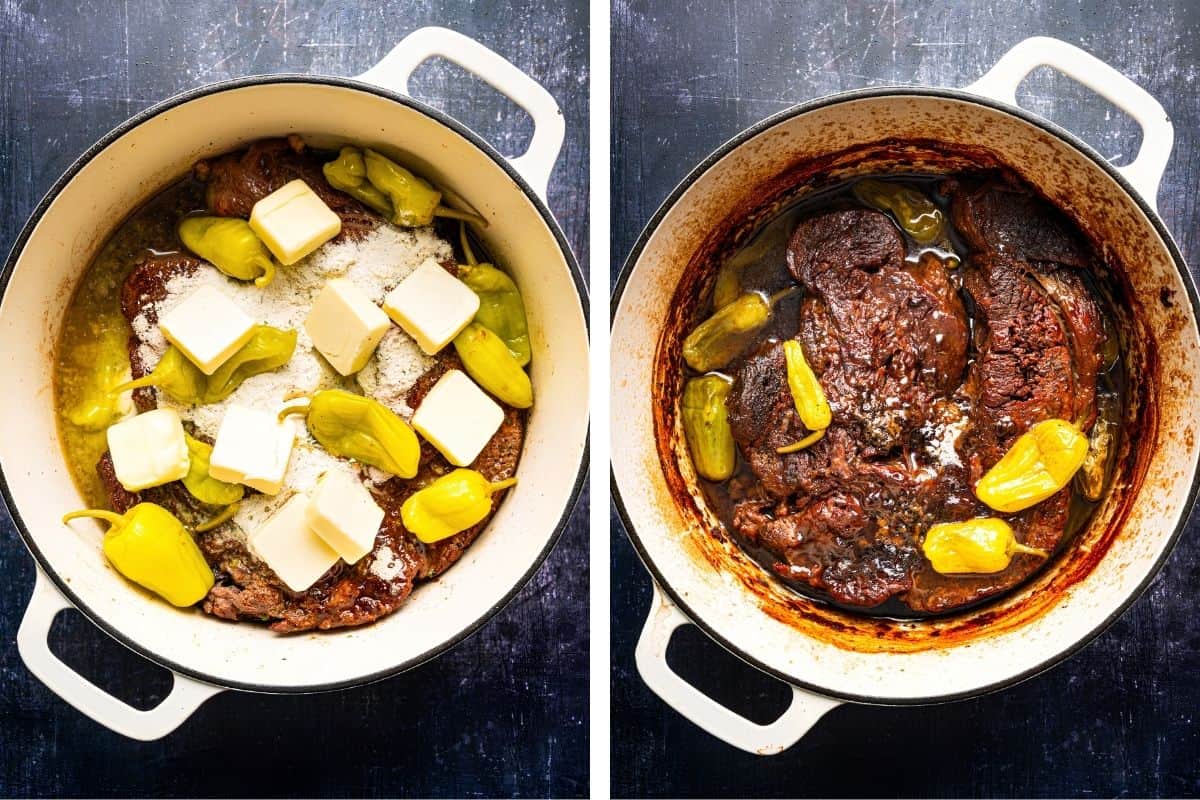
- Braise: Cover and cook at 300°F (150°C) for 3 to 4 hours, until a fork twists easily in the meat. Start checking at the 3-hour mark.
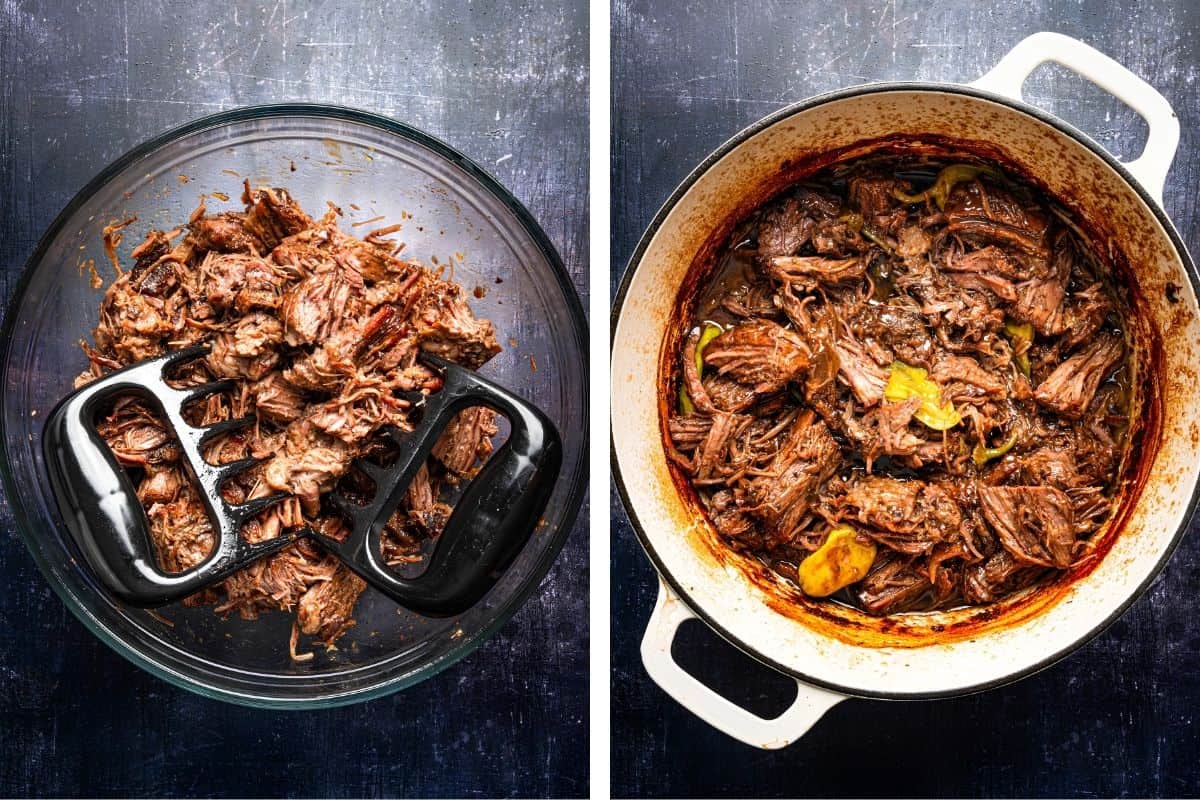
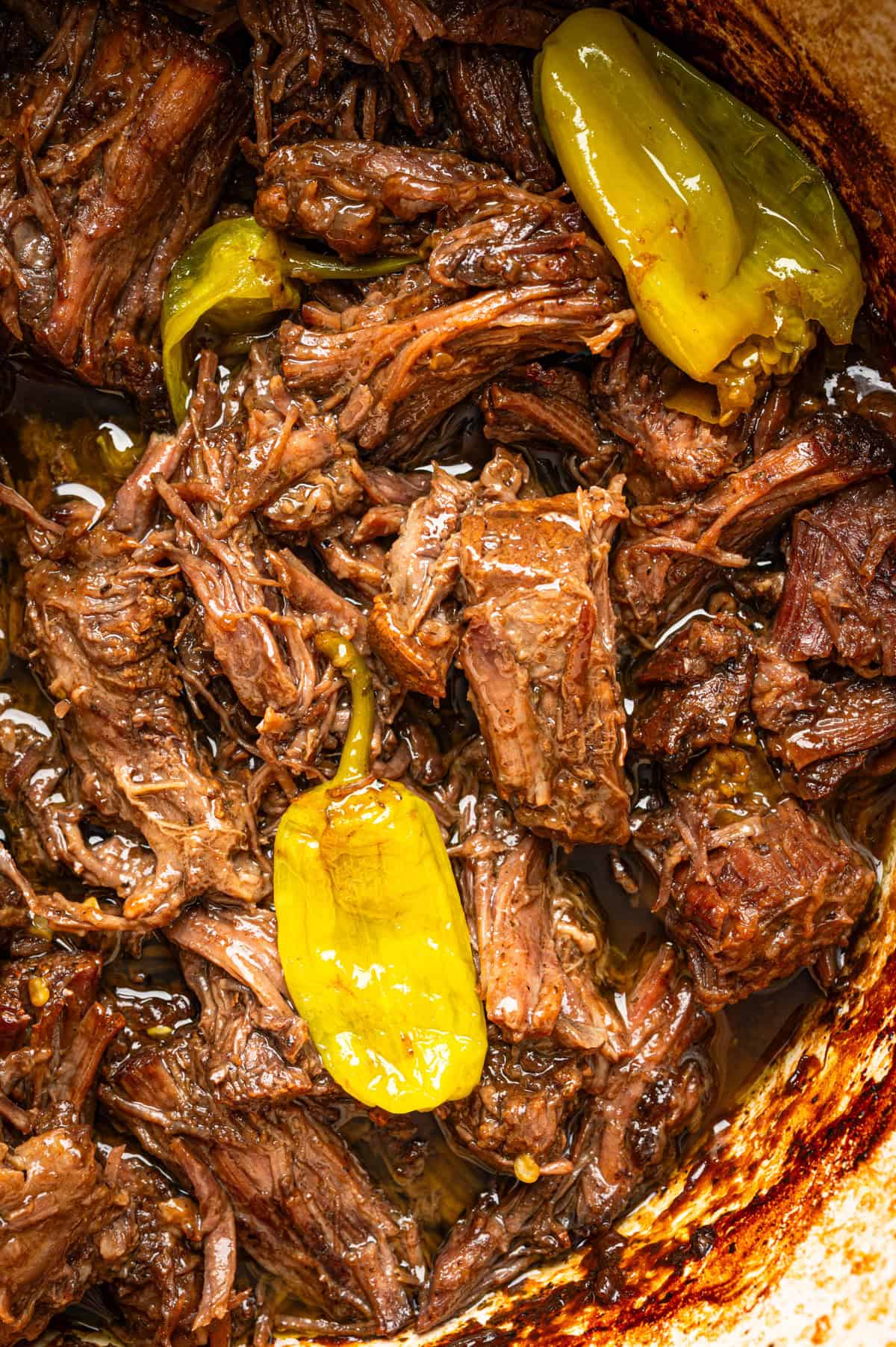
- Shred and coat: Move the roast to a bowl and shred it with two forks. Taste the braising liquid first and thin it with a splash of water if it is too salty, then return the beef to the pot and stir until every strand is coated.
A Note About Salt
Ranch seasoning, au jus mix, and pepperoncini brine all contribute a lot of salt to the dish, but they are standard in making Mississippi Pot Roast. This makes the end result quite salty. Many recipes call for a full packet of each, and I find that overwhelming, especially if you also use regular beef broth.
I recommend starting with half a packet of each. You can always stir more in at the end. I also use low-sodium beef broth and only ½ teaspoon of kosher salt on the meat itself. I highly recommend using unsalted butter and keeping other ingredients that add salt to a minimum. If your finished sauce still tastes too salty, thin it with a splash of water or unsalted broth. I explain how to fix it in the instructions.
To further reduce the salt, you can also add halved baby potatoes and chunks of carrot under the chuck meat while it braises. Lastly, serving this dish with a blander version of polenta, mashed potatoes, or noodles will also help balance the saltiness.
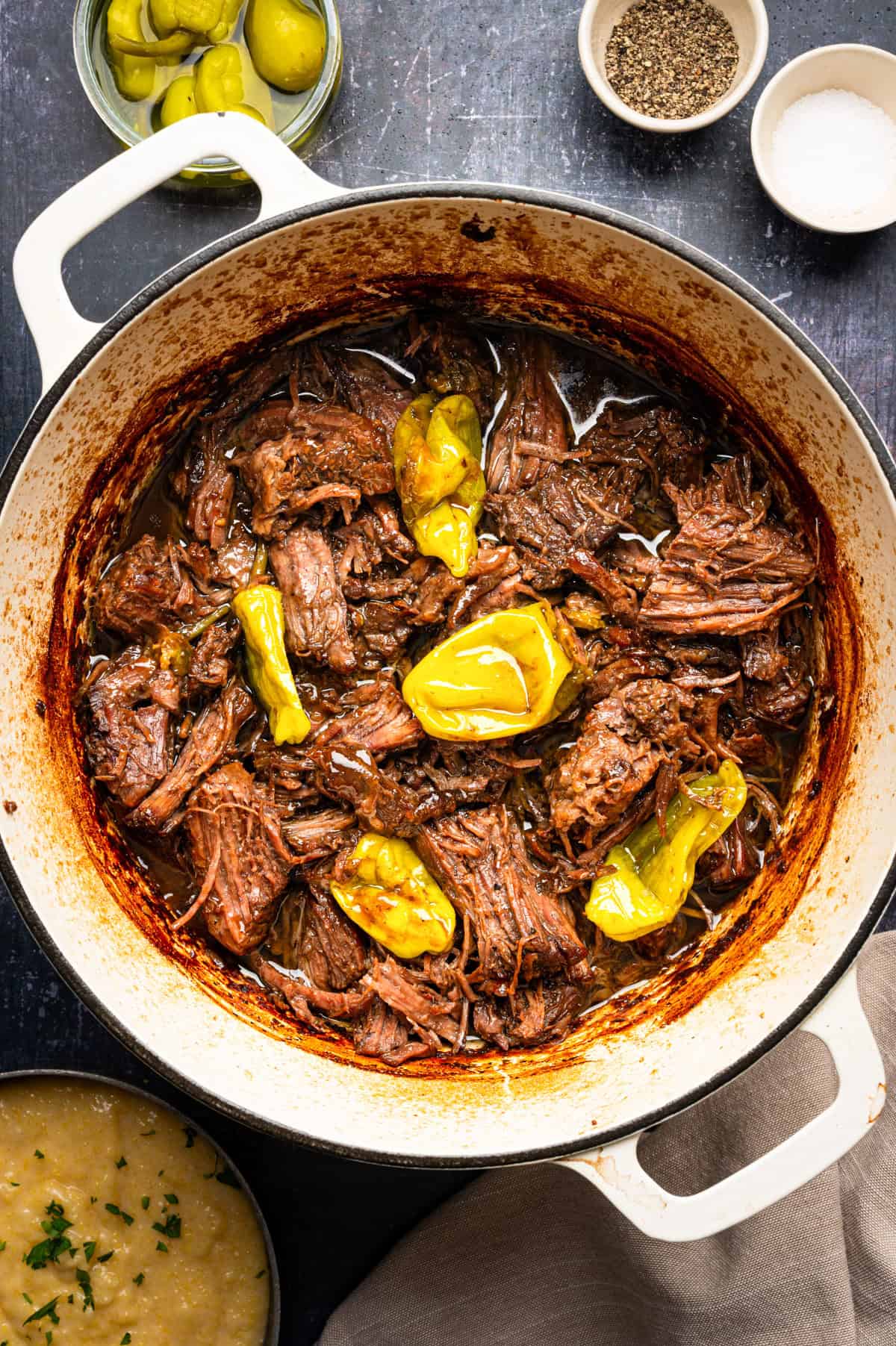
Classic Side Dishes for Mississippi Pot Roast
- Creamy mashed potatoes are the most traditional pairing. My roasted garlic mashed potatoes are perfect here, or go richer with scalloped potatoes.
- Buttered egg noodles or wide pappardelle soak up the sauce beautifully, the same way they do in my braised pork ragu pappardelle.
- Creamy yellow polenta is my personal favorite with this roast. You can find my go-to polenta recipe inside my braised short ribs post.
- White or brown rice is the easiest option of all and soaks up the sauce beautifully!
- For bread, I love garlic butter dinner rolls, garlic bread, or a slice of my homemade bread machine loaf to mop the pot clean.
Veggie Side Dishes
This roast is rich, so I like something green and simple next to it. A few ideas:
- My Parmesan Garlic Lemon Green Beans are a reader favorite and the pairing I make most often.
- Baked Asparagus with Bacon and Cheese is one of the most popular sides on my whole site.
- Roasted Brussels Sprouts with Bacon
- Roasted Sweet Potatoes and Broccoli
- Mashed sweet potatoes, which you will find in my steak with spinach sauce post.
- Steamed or sautéed broccoli for the fastest possible option.
What to Do With the Leftovers
Leftover Mississippi pot roast might be the best part of making it. Pile the shredded beef on toasted garlic rolls with a little provolone for the easiest French-dip-style sandwiches. Spoon it over baked potatoes. Fold it into tacos. Or stir it into a pot of broth and vegetables the way I do with the beef in my vegetable beef soup.

Mississippi Pot Roast (Authentic Oven-Braised Chuck Roast)
Ingredients
- 3 pounds boneless chuck roast
- ½ teaspoon kosher salt
- 1 teaspoon freshly ground black pepper
- 2 tablespoons neutral oil
- ½ cup low-sodium beef broth or water
- 1 tablespoon Worcestershire sauce
- ½ ounce dry ranch seasoning mix (1-ounce packet) **see salt note
- ½ ounce au jus gravy mix (1-ounce packet) **see salt note
- 8 whole pepperoncini peppers
- ½ cup pepperoncini brine
- ½ cup unsalted butter (1 stick), cut into pats
- Fresh parsley chopped, for garnish
Instructions
- Position a rack in the center of the oven and preheat to 300°F (150°C).
- Pat the chuck roast dry with paper towels and season all over with the salt and pepper.
- Heat the oil in a large Dutch oven over medium-high heat. Once shimmering, sear the roast for 4 to 5 minutes per side, until a deep brown crust forms. Transfer the roast to a plate.
- Pour in the beef broth and Worcestershire sauce and scrape up any browned bits from the bottom of the pot.
- Return the chuck roast to the Dutch oven and sprinkle the ranch seasoning and the au jus gravy mix evenly over the top of the roast.
- Arrange the pepperoncini around the roast, pour in the pepperoncini brine, and arrange the pats of butter evenly on top of the roast.
- Cover and transfer to the oven for 3 to 4 hours, until the beef is fork-tender and shreds easily. Check the roast at 3 hours and continue braising if needed.
- Transfer the roast to a large bowl and shred it with forks or BBQ claws.
- Taste the braising liquid. If it is too salty, add water to thin it out. Return the shredded beef to the pot and stir until evenly coated with the sauce.
- Serve warm with creamy polenta, mashed potatoes, or buttered noodles, and garnish with freshly chopped parsley.
Notes
- About the salt levels: Both seasoning packets (1-ounce each) are very salty, and the sauce concentrates as it braises. I recommend starting with half of each packet (½ ounce each) and low-sodium beef broth. Taste at the end and adjust from there.
- Use well-marbled chuck roast: The fat and connective tissue break down during cooking, creating tender, flavorful meat.
- Dry the beef thoroughly. A wet surface will steam in the pan instead of browning.
- Do not skip the sear. A deep brown crust creates the foundation of the flavor and helps the finished sauce taste richer.
- Keep the lid on: Opening the Dutch oven releases heat and moisture, which can slow the cooking process. Only do this around the 3-hour mark to check for doneness.
- Cooking time: A 3-pound piece of chuck will take roughly 3-4 hours depending on your cooking vessel and oven efficiency. Keep in mind that if you use a smaller or larger cut of beef, it will change the time it takes to cook, and you will also need to adjust the other ingredients as well.
- Do not rush the braise. A higher oven temperature will tighten the meat instead of tenderizing it. If your roast is not shredding at 3 hours, it needs more time, not more heat.
- How to know it is done: Do not go by time alone. Twist a fork into the thickest part. If it turns easily and the meat gives way, it is ready. If it fights you, cover it and give it another 30 minutes. Chuck roast is usually there around an internal temperature of 203°F (95°C).
- Return meat to sauce: Resting for 10-15 minutes in the braising liquid allows the meat to absorb the delicious flavors.
- Gravy: You are more than welcome to make a thicker gravy with the braising liquid before returning the shredded meat back in. Combine ¼ cup flour or cornstarch with ½ cup of liquid (low sodium beef broth or water), then pour into the braising liquid, cooking it on the stove until it just starts to thicken.
- Is Mississippi pot roast spicy? No. Pepperoncini are very mild, and after several hours of braising they mostly contribute tang rather than heat. If you want spice, add a few sliced hot peppers or a pinch of red pepper flakes.
- Special Tools: Large Dutch oven (at least 5 quarts), Knife, cutting board, Measuring spoons, Measuring cups, Large mixing bowl, Fork or BBQ claws.
- YOUR FEEDBACK: If you have any questions or feedback about this recipe, I look forward to hearing from you in the comments below.
How to Make Mississippi Pot Roast in a Slow Cooker
- Sear the roast on the stovetop, then transfer everything to a slow cooker.
- Cook on low for 8 hours or on high for 4 to 5 hours, until fork-tender.
- Shred and return to the sauce.
How to Make Mississippi Pot Roast in an Instant Pot
- Sear the roast using the sauté function, then add the remaining ingredients.
- Pressure cook on high for 60 minutes with a 15-minute natural release.
- Shred and return to the sauce.
Variations
- Add vegetables: Add halved baby potatoes and thick-cut carrots during the last 1½ hours of braising.
- Mississippi Chicken: Swap in 3 pounds of boneless, skinless chicken thighs and reduce the braise to about 1 hour 30 minutes at 300°F (150°C).
- Mississippi Pork: A 3-pound boneless pork shoulder works beautifully with the same seasonings and timing, similar to my apple cider braised pork shoulder.
- Spicier: Use 12 pepperoncini instead of 8, or add a few sliced jalapeños or a pinch of red pepper flakes.
- Sandwiches: Pile the shredded beef over toasted brioche or in a hoagie roll, melted provolone or your favorite cheese, pickled onions, and extra pepperoncini, and serve the braising liquid alongside for dipping.
- Lower butter version: Cut the butter to 4 tablespoons. The sauce will be slightly less silky but still rich.
- From-scratch seasoning: Replace the ranch packet with your own blend of buttermilk powder, dried dill, dried parsley, dried chives, onion powder, and garlic powder, and use 1 teaspoon of beef base plus 1 teaspoon of cornstarch in place of the au jus packet.
Storage Tips
- Fridge: Store the shredded beef in its sauce in an airtight container for up to 4 days. The flavor is even better on day two.
- Freezer: Freeze the beef and sauce together in a freezer-safe container for up to 3 months. Thaw overnight in the fridge.
- Reheat: Warm gently in a covered pot over medium-low heat with a splash of broth or water, or microwave individual portions with a lid on.
Nutrition
Nutrition Disclaimer:
The nutritional information on this website is only an estimate and is provided for convenience and as a courtesy only. The accuracy of the nutritional information for any recipe on this site is not guaranteed. It should not be used as a substitute for a professional nutritionist's advice.
Submit your question or provide a review of the recipe + star rating RIGHT HERE.