
This post may contain affiliate links. Read my disclosure policy.
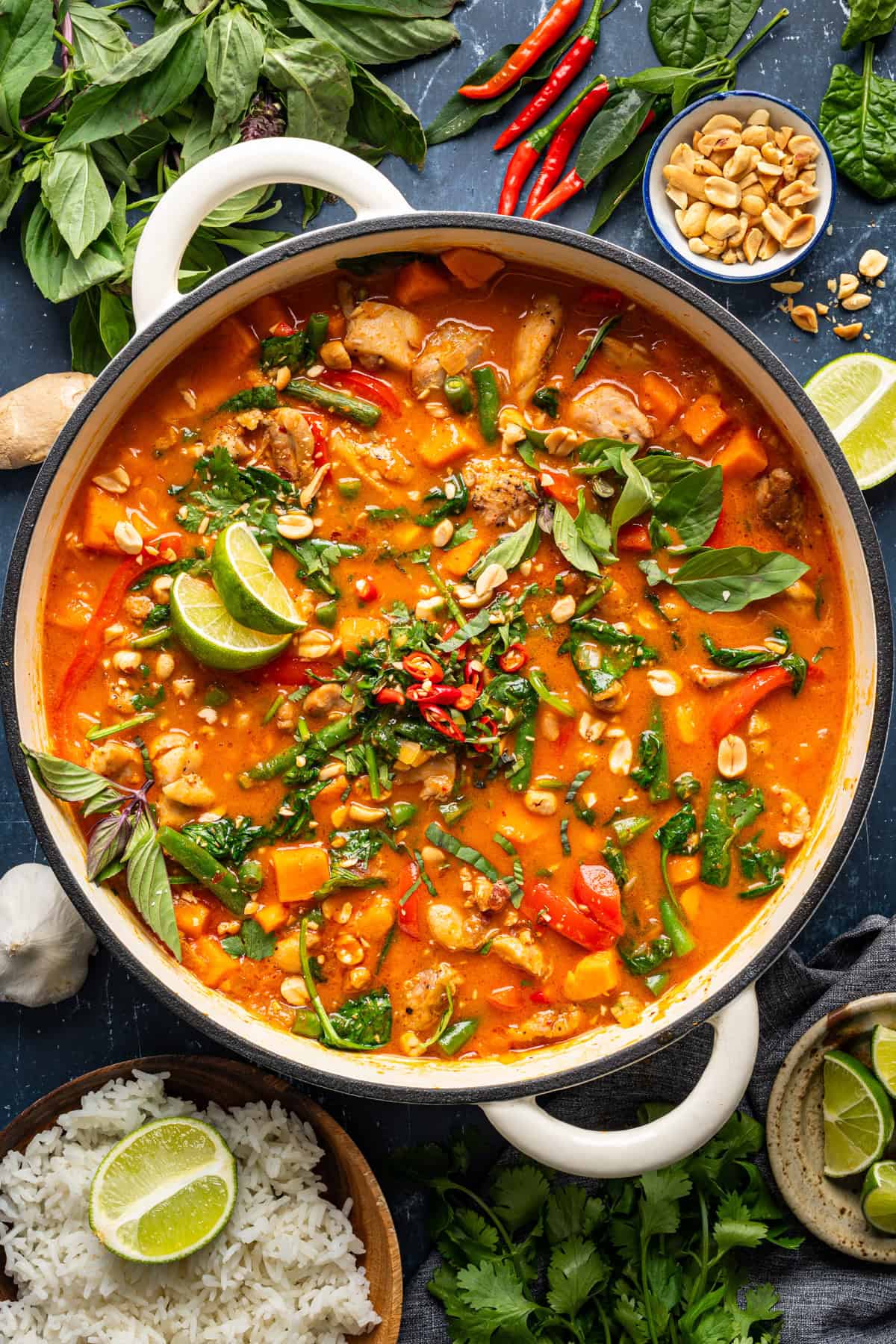
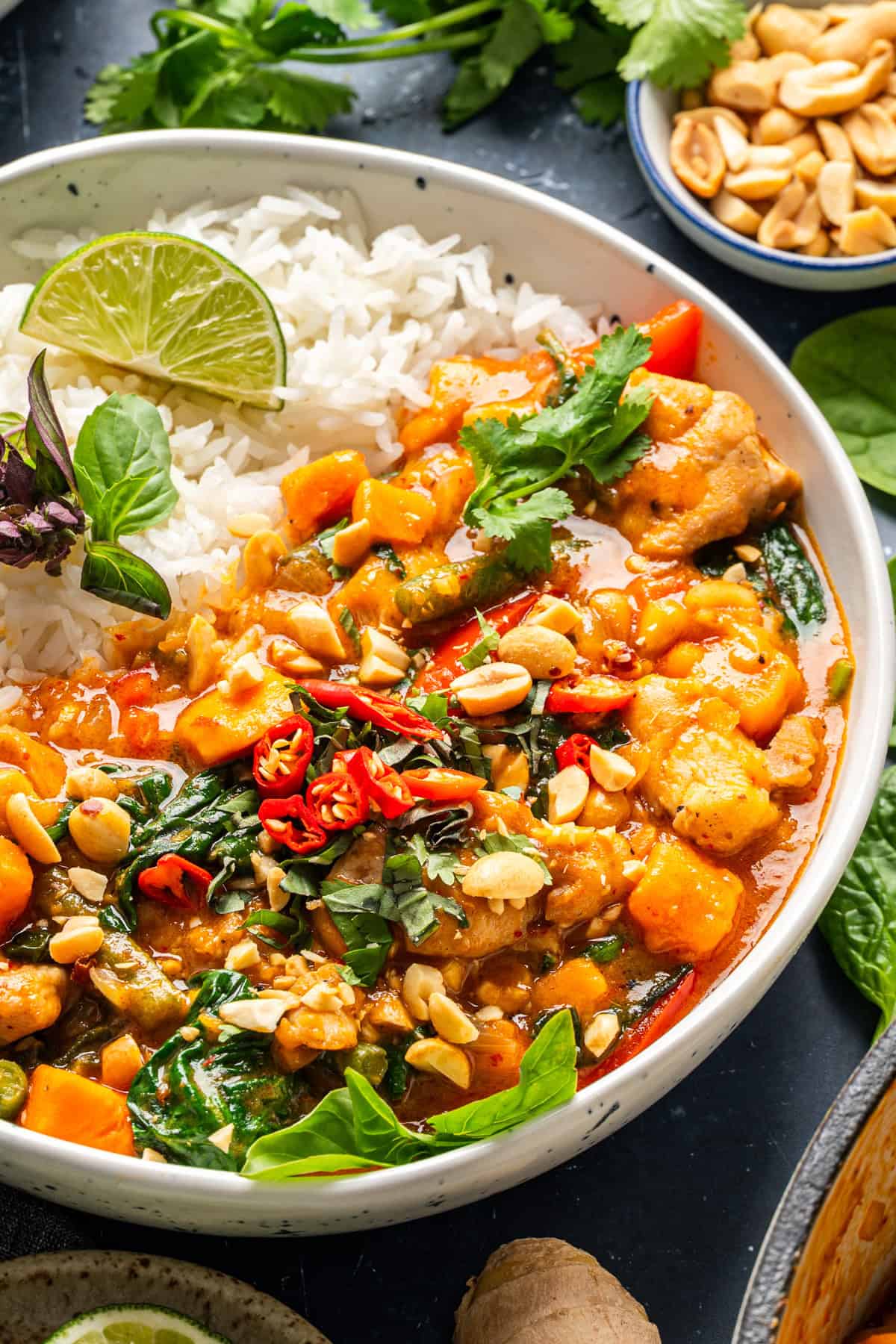
This Thai Chicken Curry is a creamy, one-pan dinner made with seared chicken thighs simmered in coconut milk and Thai red curry paste, with sweet potato, bell pepper, green beans, and spinach. It's a perfect weeknight dinner when you want restaurant-quality Thai food at home.
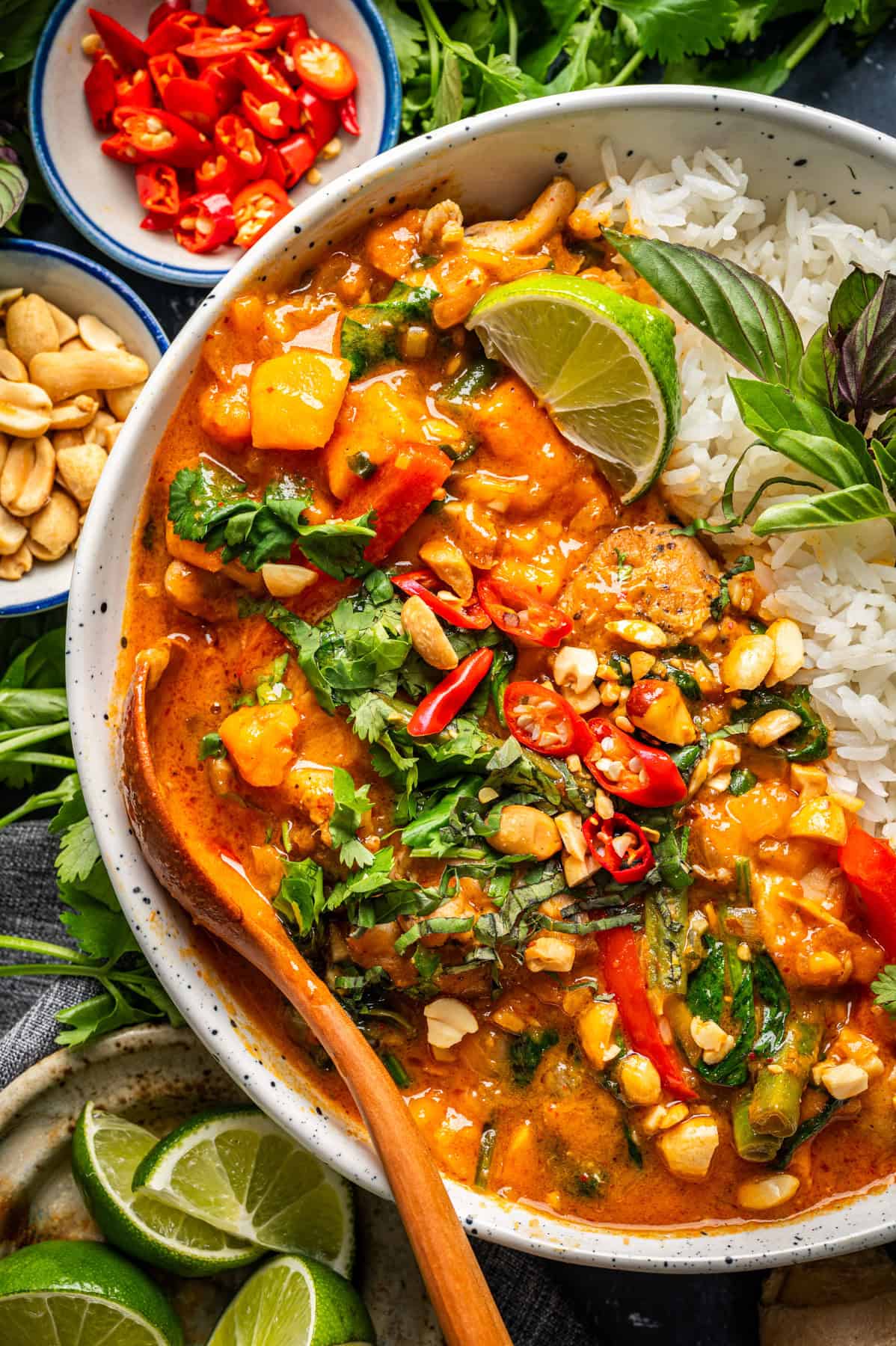
One-Pan Thai Chicken Curry
This is the Thai curry recipe I make when I want "an almost authentic" Thai curry feel at home. After my trip to Thailand, I got picky about what makes a curry taste "right." It's not just heat. It's that balance of savory, sweet, and bright (fish sauce, a touch of sugar, and lime at the end). This one nails that.
It comes together in under an hour, uses one pan, and reheats beautifully. The sweet potato makes it hearty enough to stand on its own over rice, and the leftovers are even better the next day once everything has had time to settle.
It's also flexible. You can use shrimp, salmon, cubed white fish like halibut or cod, extra firm tofu, or even beef instead of chicken. Or make Thai curry vegetarian by omitting the chicken and adding more veggies like zucchini, eggplant, bamboo shoots, baby corn, and canned or fresh chopped tomatoes!
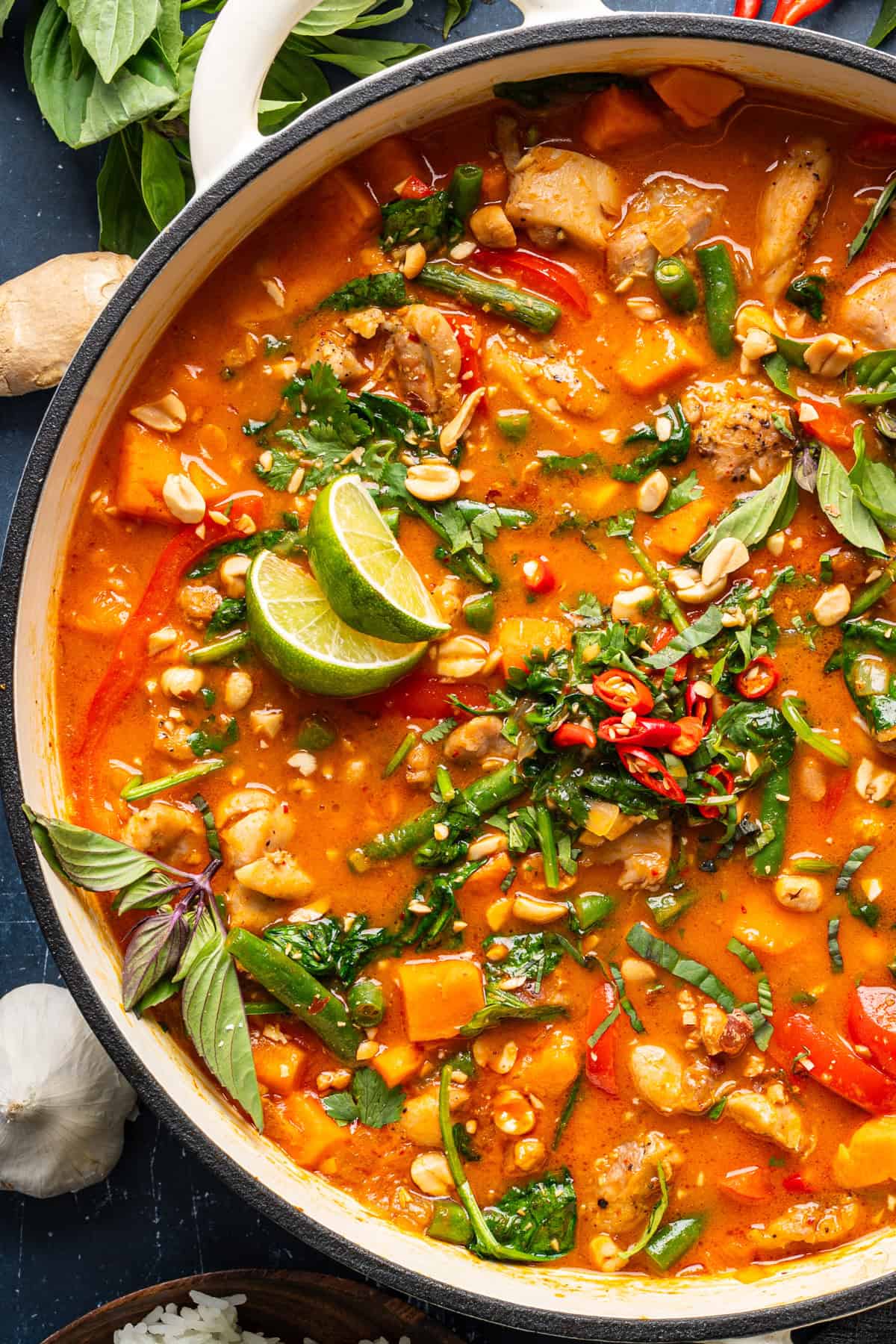
This Thai Curry Is Better Than Takeout
This recipe is as close as I could get to authentic Thai curry chicken while keeping it doable on a weeknight. I'd argue it's even better in some ways because it uses accessible ingredients and easy cooking techniques that work in a home kitchen. If you want it more authentic, use palm sugar instead of brown sugar and add kaffir lime leaves (among other additions).
What I love the best about my chicken curry is that it still falls into the healthy weeknight dinner category, as it's packed with vegetables, protein, and healthy fats.
Literally everybody loves it! I've made it for casual dinners with friends, doubled it for meal prep for my family, and adjusted the heat depending on who's at the table. It scales well and doesn't fall apart if you tweak it slightly.
And if you're exploring more Thai recipes, you're in for a treat. My website has quite a few popular Thai curry recipes, like Thai Coconut Curry Salmon and Thai Duck Curry, plus Thai Shrimp Soup and Thai Chicken Curry Soup when you want something brothy.
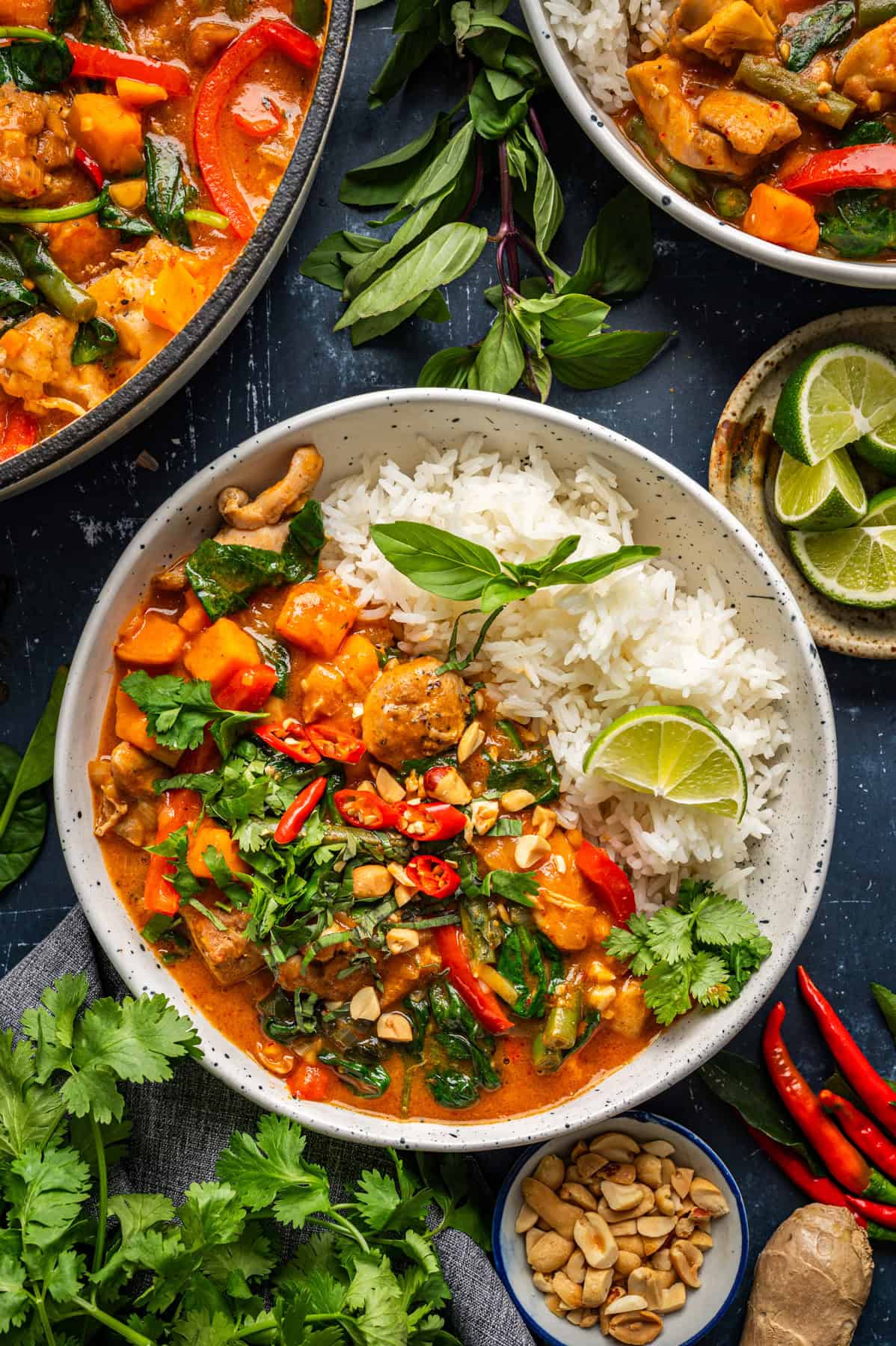
5 Reasons You'll Love It
- One-pan meal that's ready in 40 minutes - perfect for weeknight dinners when you're craving Thai takeout.
- Uses easy-to-find ingredients from regular grocery stores, no specialty shopping required.
- Chicken thighs stay tender and don't dry out like breast meat would.
- Sweet potato adds natural sweetness and makes the Thai curry more filling and substantial.
- I tested the spice level multiple times so it's flavorful but not overwhelming-you can adjust the curry paste to your preference
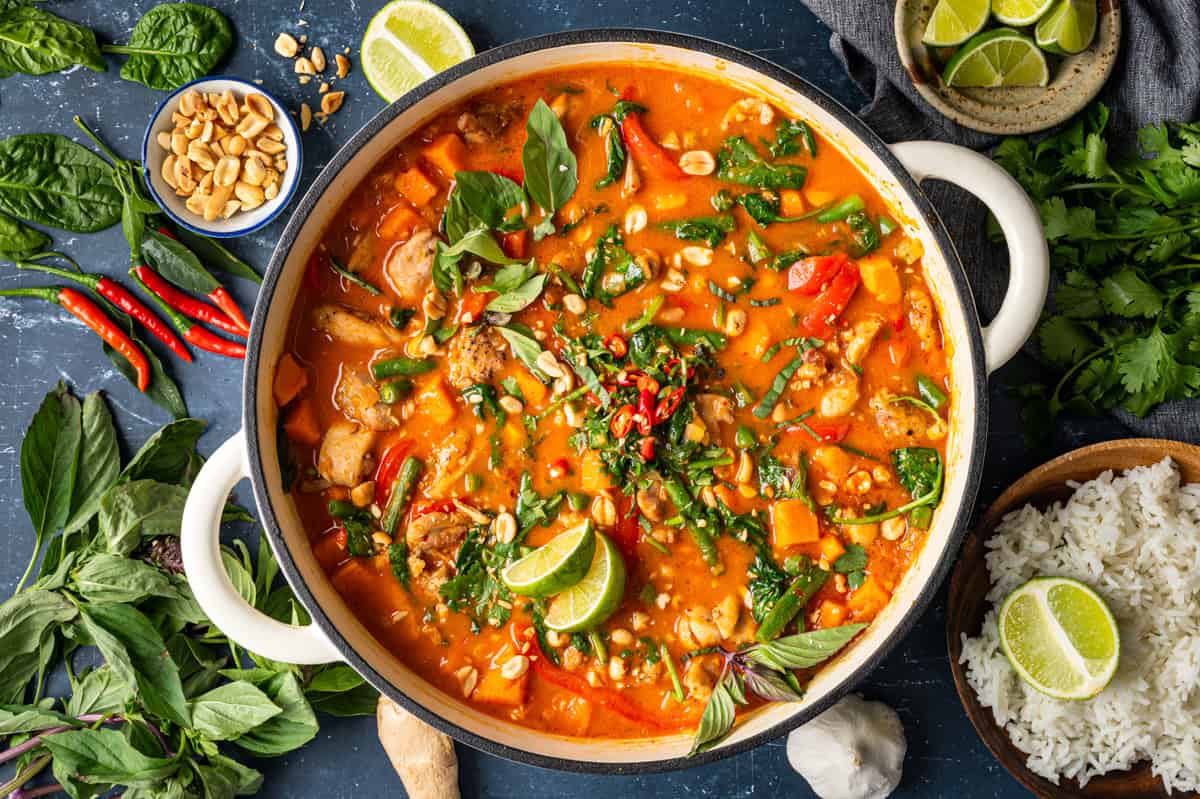
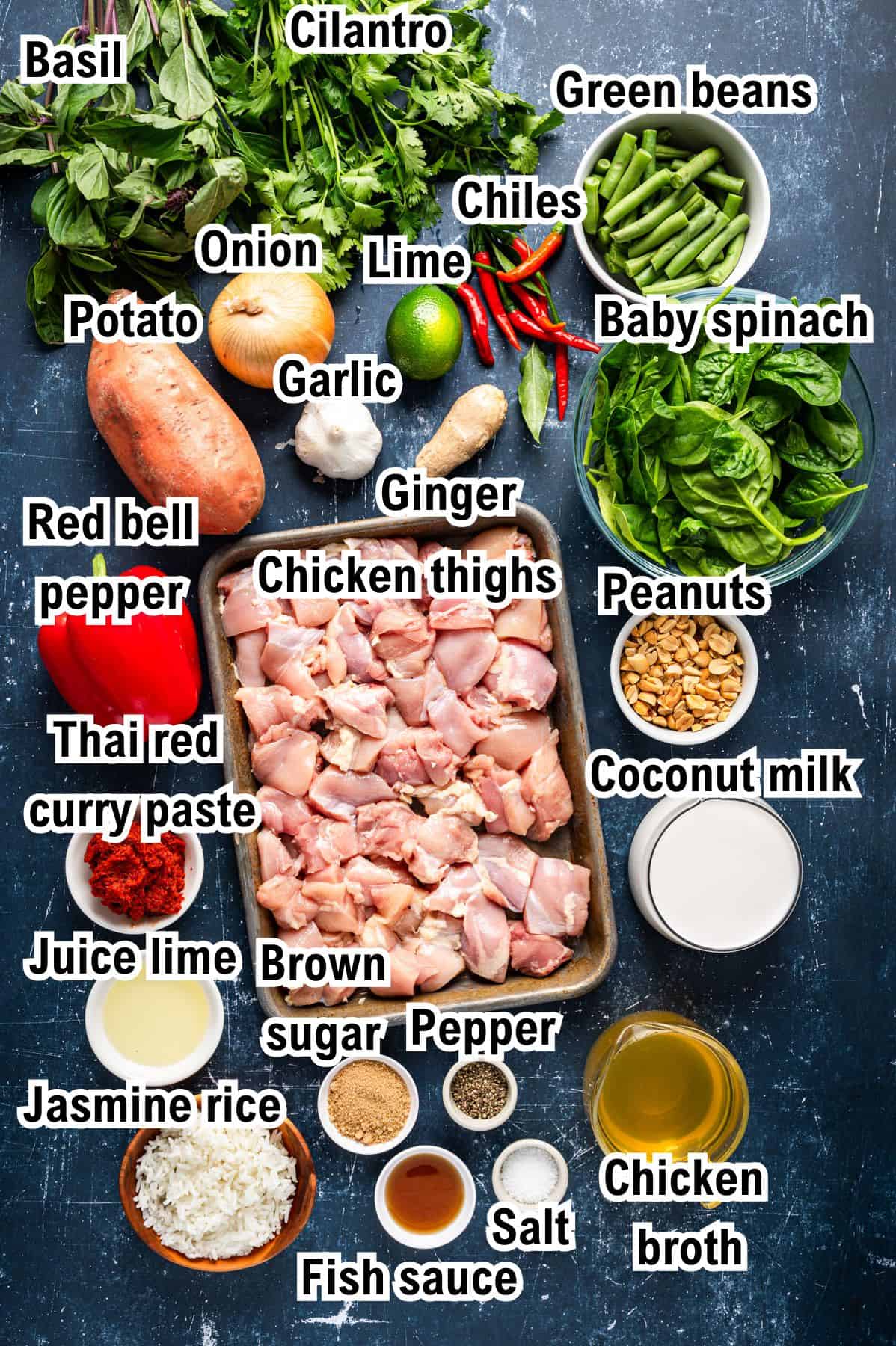
Ingredients and Substitutions
- Chicken: I use boneless skinless thighs because they stay moist and tender even if slightly overcooked. Chicken breasts work but tend to dry out. Leftover rotisserie chicken can be shredded and added in the last 5 minutes just to heat through. Shrimp, cubed white fish like halibut or cod, extra firm tofu, or even beef can work in place of chicken. Chickpeas work well in Thai curry, too!
- Sweet potato: Butternut squash, pumpkin, or kabocha squash make great substitutions.
- Thai red curry paste: I like Thai Kitchen brand - it's widely available and reliably good. Yellow, panang, or green curry paste can substitute, but the flavor will change completely (still really good!). Don't use Indian curry powder - it's not the same thing.
- Brown sugar or palm sugar: Coconut sugar or half the amount in white sugar would be great!
- Coconut milk: You are welcome to use lite coconut milk or, you can halve the amount of full-fat coconut milk and add more chicken broth instead.
- Fresh garlic and ginger: No way to source fresh? Use 2 teaspoons of dried garlic and 2 teaspoons of dried ginger powder instead.
- Spinach: Kale, Bok Choy, or Swiss chard can be great replacements for spinach! Just remember these take a bit longer to cook, so add about ½ way into the curry being finished instead of waiting until the end.
- Neutral oil: Use canola, vegetable, or avocado oil. You can also use light olive oil labeled as suitable for frying.
- Fish sauce: It adds savory, salty flavor that balances the sweetness of the coconut milk and sugar. There's no fishy taste in the final dish, just enhanced savoriness. You can use soy sauce instead, but add a bit less since it's saltier.
- Lime juice: Lemon juice can substitute, but lime is more traditional and tastes better here.
Serving Suggestions
- Rice: I almost always serve Thai curry the traditional way - over hot jasmine rice. The fluffy grains soak up the sauce perfectly. It's also great with brown rice, coconut rice, or even rice noodles.
- Cauliflower rice is a lower-carb option that still absorbs the sauce well.
- Noodles: Create an Asian fusion combo by spooning the chicken curry over rice noodles, ramen noodles, or even soba noodles. The sauce clings to noodles differently than rice and makes it feel like a completely different meal.
Best Topping for Thai Curry
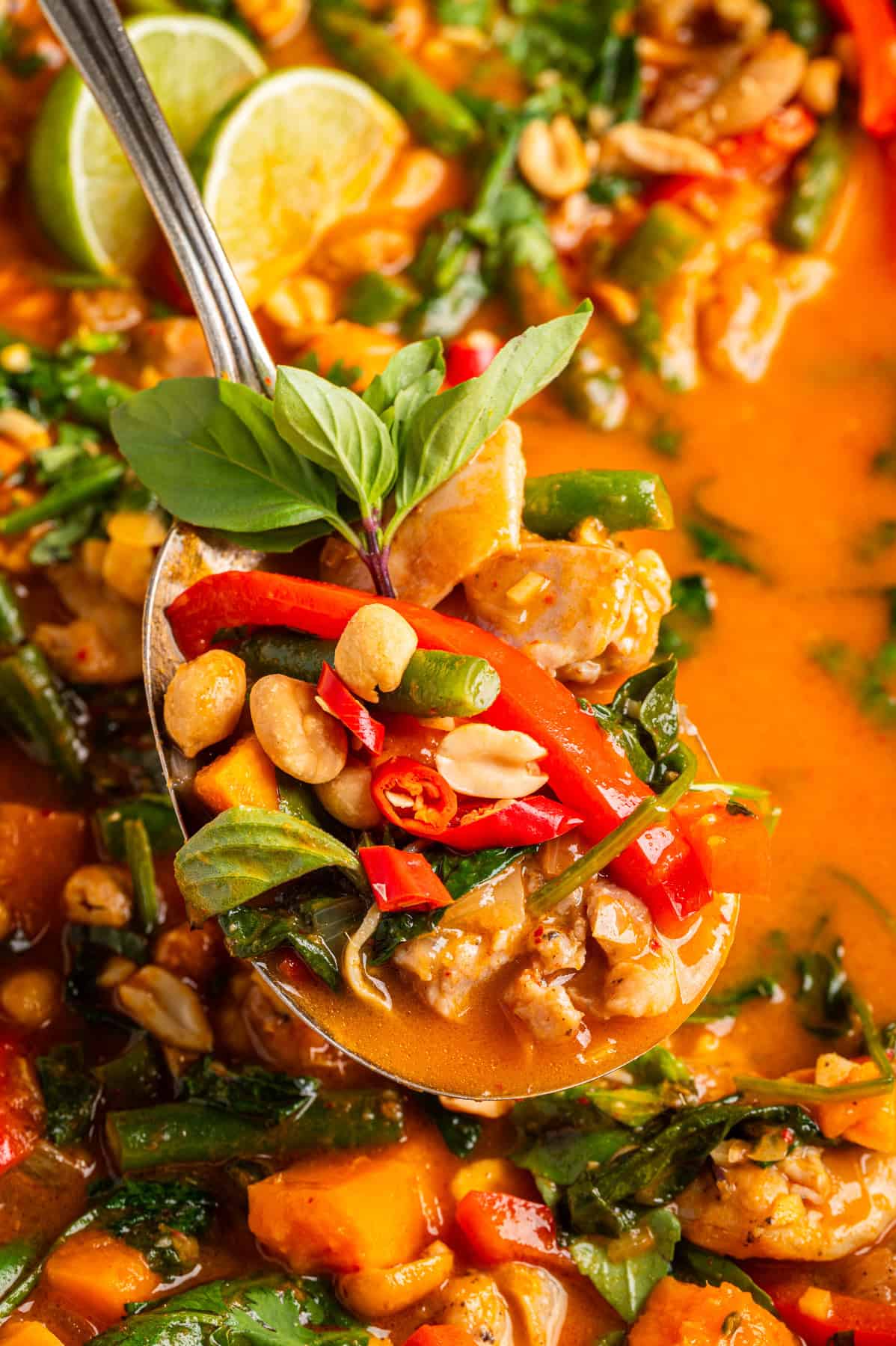
When I serve this, I treat toppings seriously. They change the whole bowl. Here is what I recommend:
- Chopped roasted salted peanuts for crunch. You can also use cashews or sesame seeds.
- Fresh Thai basil (if you can find it). You can also use regular basil or fresh cilantro
- Lime wedges
- Thinly sliced Thai chiles, if you like heat
- Crispy shallots
Can I use curry powder instead of curry paste?
No, they're completely different ingredients. Curry powder is a dry spice blend (usually Indian-style), while Thai curry paste is a wet mixture of chiles, lemongrass, garlic, galangal, and other ingredients. Using curry powder will give you a totally different dish that doesn't taste like Thai curry. If you can't find curry paste at regular grocery stores, check the Asian foods aisle or order it online - it's shelf-stable and lasts months in the fridge after opening.
Variations
- Veggie-forward/Vegetarian: Omit the chicken and fish sauce, or use a vegetarian-friendly alternative! Add zucchini, eggplant, bamboo shoot, baby corn, canned or fresh chopped tomatoes, or other veggies you love!
- Tropical: Add pineapple chunks at the last step for a fruity twist!
- Peanut forward: Add 2 tablespoons or more to the Thai curry for a rich, nuttier flavor.
More Thai-Inspired Recipes
Thai Chicken Curry
Ingredients
Thai Curry with Chicken
- 1 ½ pounds boneless skinless chicken thighs cut into bite-sized pieces
- Salt and pepper to taste
- 4 tablespoons neutral oil divided
- 1 small yellow onion diced small
- 5 cloves garlic minced
- 1 inch fresh ginger peeled and finely minced
- 2 tablespoons Thai red curry paste adjust to taste (up to 3 tablespoons)
- 1 small sweet potato peeled and cut into ½ inch cubes
- 14 oz full-fat coconut milk (1 can)
- ¾ cup chicken broth or water (adjust for desired consistency)
- 1 medium red bell pepper thinly sliced
- 1 cup green beans (4 ounces) trimmed and halved
- 1 tablespoon fish sauce
- 1 tablespoon brown sugar or palm sugar
- 1 medium lime
- 3 cups baby spinach (3 ounces) packed
For Serving
- Jasmine rice cooked
- Roasted and salted peanuts chopped
- Thai basil leaves
- cilantro
- Lime wedges
- Thai chiles sliced
Instructions
- In a medium bowl, season chicken with salt and pepper.
- Heat 2 tablespoons of oil in a large high-sided skillet or wok over medium-high heat. Add the chicken and sear until golden brown on the outside. (It doesn't need to be fully cooked yet.) Transfer to a plate and set aside.
- Add the remaining 2 tablespoons of oil and reduce heat to medium. Add the onion and cook for 2-3 minutes until softened.
- Stir in the garlic and ginger; cook for about 1 minute, until fragrant.
- Stir in the Thai red curry paste and cook another minute, letting it darken slightly and release its aroma.
- Add the sweet potato, coconut milk, and chicken broth. Stir to combine, scraping up any browned bits from the pan. Bring to a gentle boil, then reduce heat to low, and simmer uncovered for about 6 minutes, or until the sweet potatoes are just tender.
- Stir in the seared chicken, red bell pepper, and green beans. Simmer uncovered for 5-7 minutes, until the chicken is cooked through and vegetables are crisp-tender.
- Stir in the fish sauce, brown sugar, and lime juice. Taste and adjust seasoning by adding more fish sauce for saltiness, sugar for balance, or lime juice for brightness.
- Turn off the heat and fold in the baby spinach until wilted.
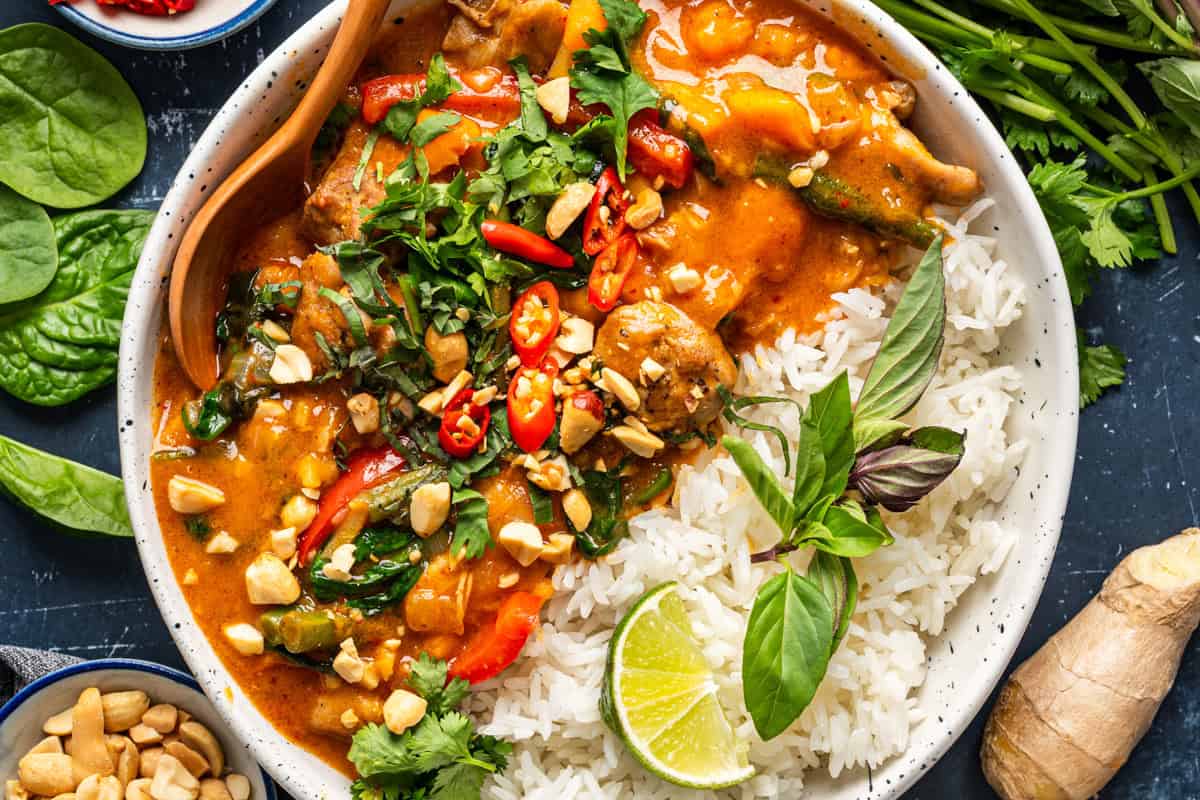
- Spoon the curry over hot jasmine rice. Garnish with chopped peanuts, Thai basil, cilantro, lime wedges, and sliced Thai chiles.
- Note: I provide helpful step-by-step photos + tips below this recipe card. ⬇️⬇️
Notes
- Adding the spinach at the very end helps to preserve the color and texture.
- Want a thicker curry? Simmer a few extra minutes to reduce the sauce a bit more before adding your chicken, green beans, and bell peppers.
- Want a thinner curry? Add a splash of broth or water until it's the consistency you like. Coconut curry always thickens as it cools, so I usually loosen it slightly when reheating.
- Don't boil the curry or you will burn the bottom of your pan!
- Can I make this dairy-free and gluten-free? It's naturally dairy-free with coconut milk. For gluten-free, the main thing is fish sauce/curry paste brands - most are gluten-free, but always check labels. If subbing soy sauce, use tamari.
- If the curry tastes bland, add a splash more fish sauce or lime juice. It usually needs one of those.
- Can I add more vegetables? Absolutely. Zucchini, carrots, broccoli, or snap peas work well. Just adjust cooking time so they stay crisp-tender.
- Note: The calorie count DOES NOT INCLUDE the Ingredients listed under the "For Serving" section.
Storage Tips
- Fridge: Store the curry and rice separately in airtight containers for up to 4 days.
- Freezer: Cool completely, then freeze in a freezer-safe container for up to 2 months. Thaw overnight in the fridge before reheating.
- Reheating: Warm gently on the stovetop for best texture. Microwave works, but stir halfway through and add a splash of liquid if needed. Simmer uncovered so the sauce reduces slightly and thickens naturally.
Supplies
- Knife
- Cutting board
- Measuring spoons
- Measuring cups
- High-sided pan, skillet, or wok with a lid
Nutrition
Nutrition Disclaimer:
The nutritional information on this website is only an estimate and is provided for convenience and as a courtesy only. The accuracy of the nutritional information for any recipe on this site is not guaranteed. It should not be used as a substitute for a professional nutritionist's advice.
How to Make Thai Chicken Curry (Step-by-Step Photos)
- Sear the chicken (seasoned with salt and pepper) in 2 tablespoons of cooking oil in a large pot until golden on the outside (it won't be fully cooked yet); transfer to a plate.
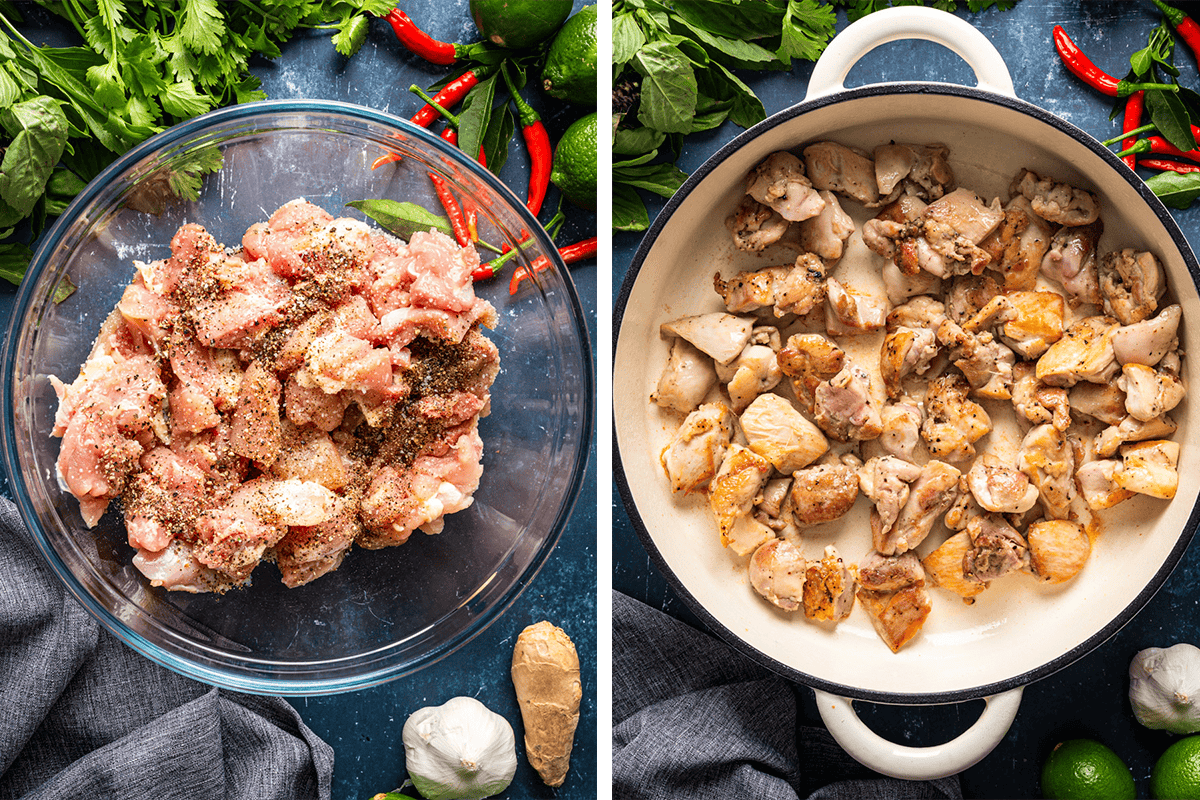
- Sauté the onion with 2 extra tablespoons of cooking oil for 2-3 minutes until softened, then stir in garlic and ginger and cook for more 1 minute.

- Stir in red curry paste and cook 1 minute, letting it darken slightly and release its aroma.
- Add sweet potato, coconut milk, and broth; stir and scrape up browned bits. Bring to a gentle boil, then simmer, uncovered, on low for about 6 minutes, until the sweet potato is just tender.

- Add chicken back in with bell pepper and green beans; simmer uncovered 5-7 minutes until chicken is cooked through and veggies are crisp-tender.
- Season the broth: Stir in fish sauce, brown sugar, and lime juice. Taste and adjust.

- Fold in spinach (off heat) until wilted.
- Serve Thai curry over jasmine rice, garnished with peanuts, Thai basil, cilantro, lime wedges, and sliced Thai chiles.


Submit your question or provide a review of the recipe + star rating RIGHT HERE.