
This post may contain affiliate links. Read my disclosure policy.
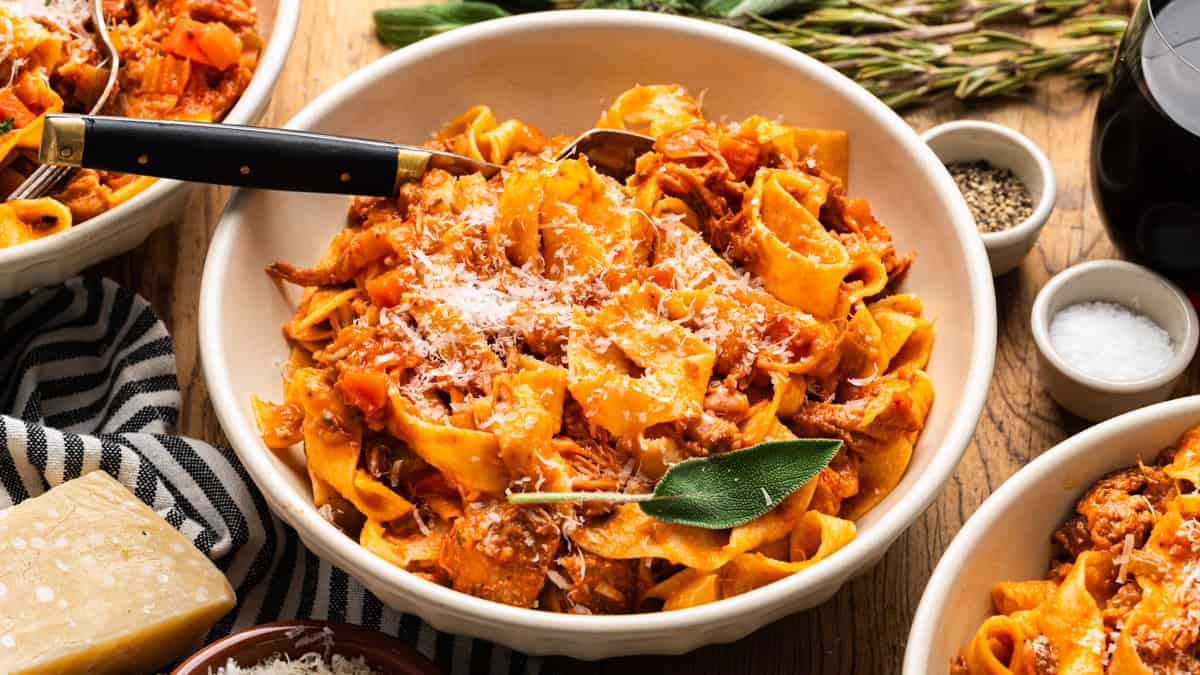
Slow-braised pork shoulder in a tomato and red wine sauce, tossed with wide pappardelle pasta for classic Italian comfort food.
Restaurant-Quality Pork Ragu
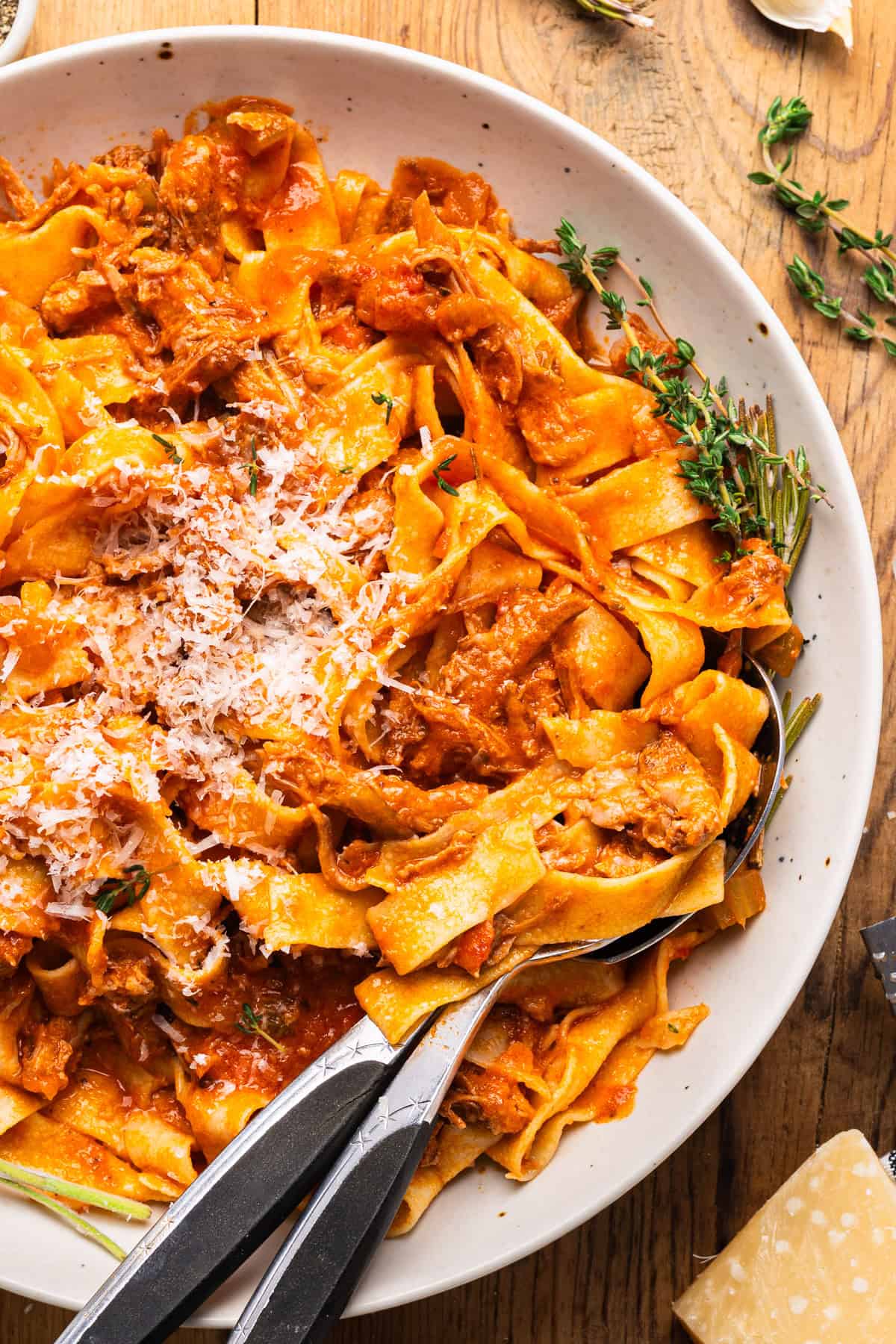
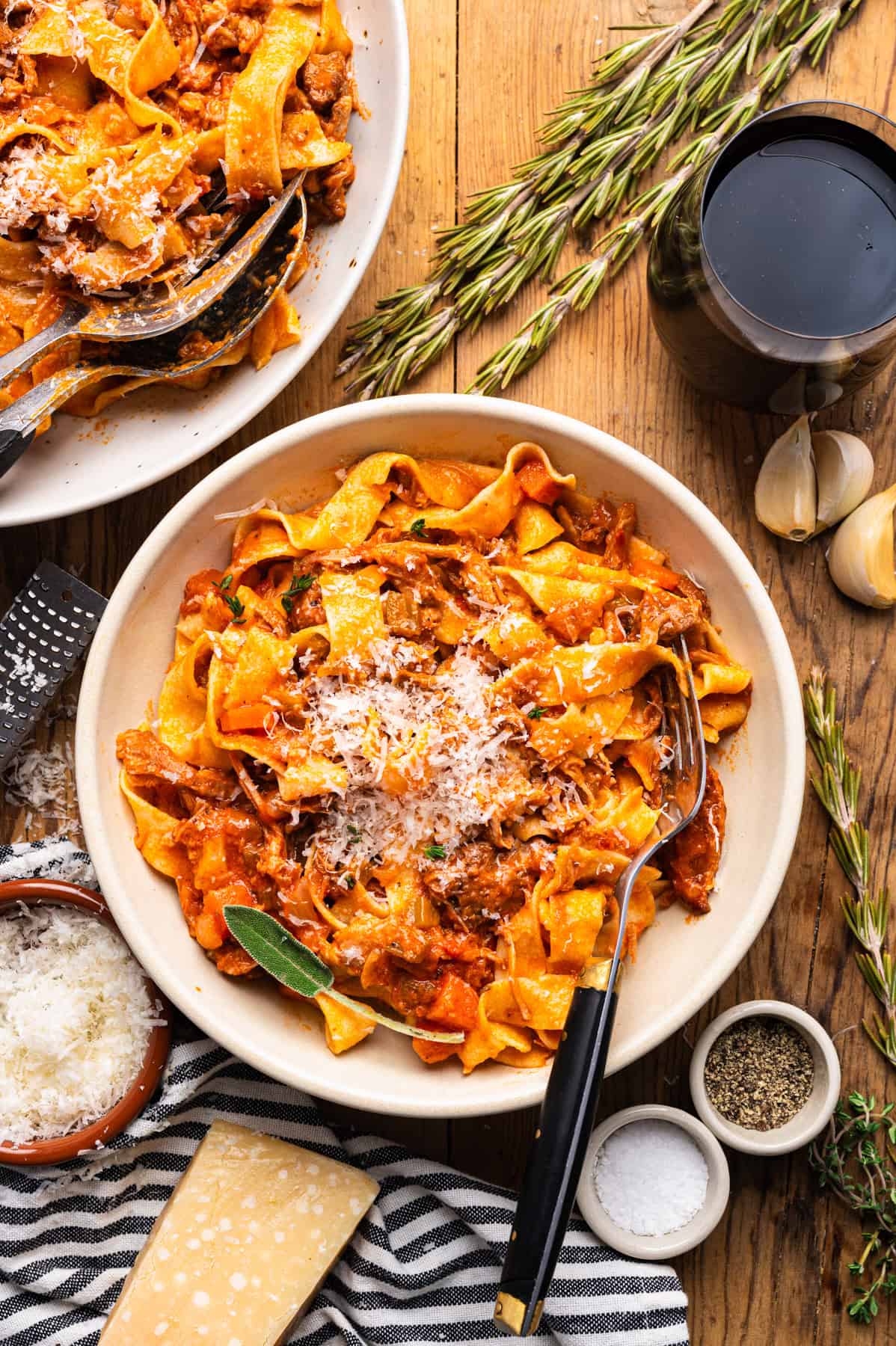
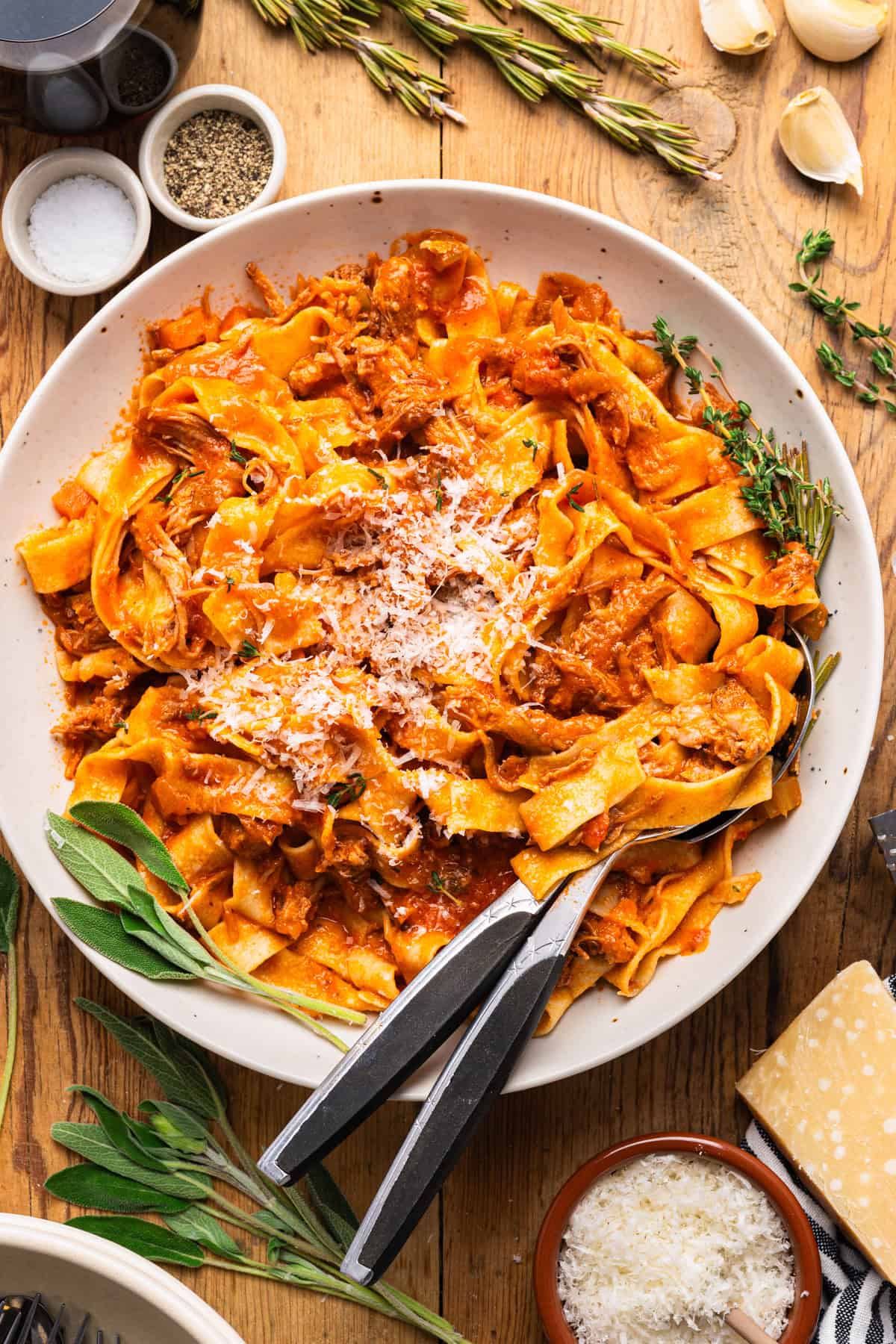
This braised pork ragu is the ultimate cozy dinner: fall-apart tender pork shoulder slow-braised with veggies, herbs, red wine, and tomatoes until it turns into a rich, silky sauce that clings perfectly to wide ribbons of pappardelle pasta. It tastes like something you'd order at an authentic Italian restaurant, but it's easy enough to make at home. Yes, it takes time, but most of that is hands-off-making it perfect for a weekend dinner, date night in, or entertaining. I love tossing the pasta right into the sauce, but you can also serve it ladled over polenta, creamy Parmesan roasted garlic mashed potatoes, crusty Italian garlic bread, or garlic butter dinner rolls. Pair it with my apple spinach salad or blueberry mango spinach salad to cut through the richness of pork ragu.
The Ingredients & Substitutions
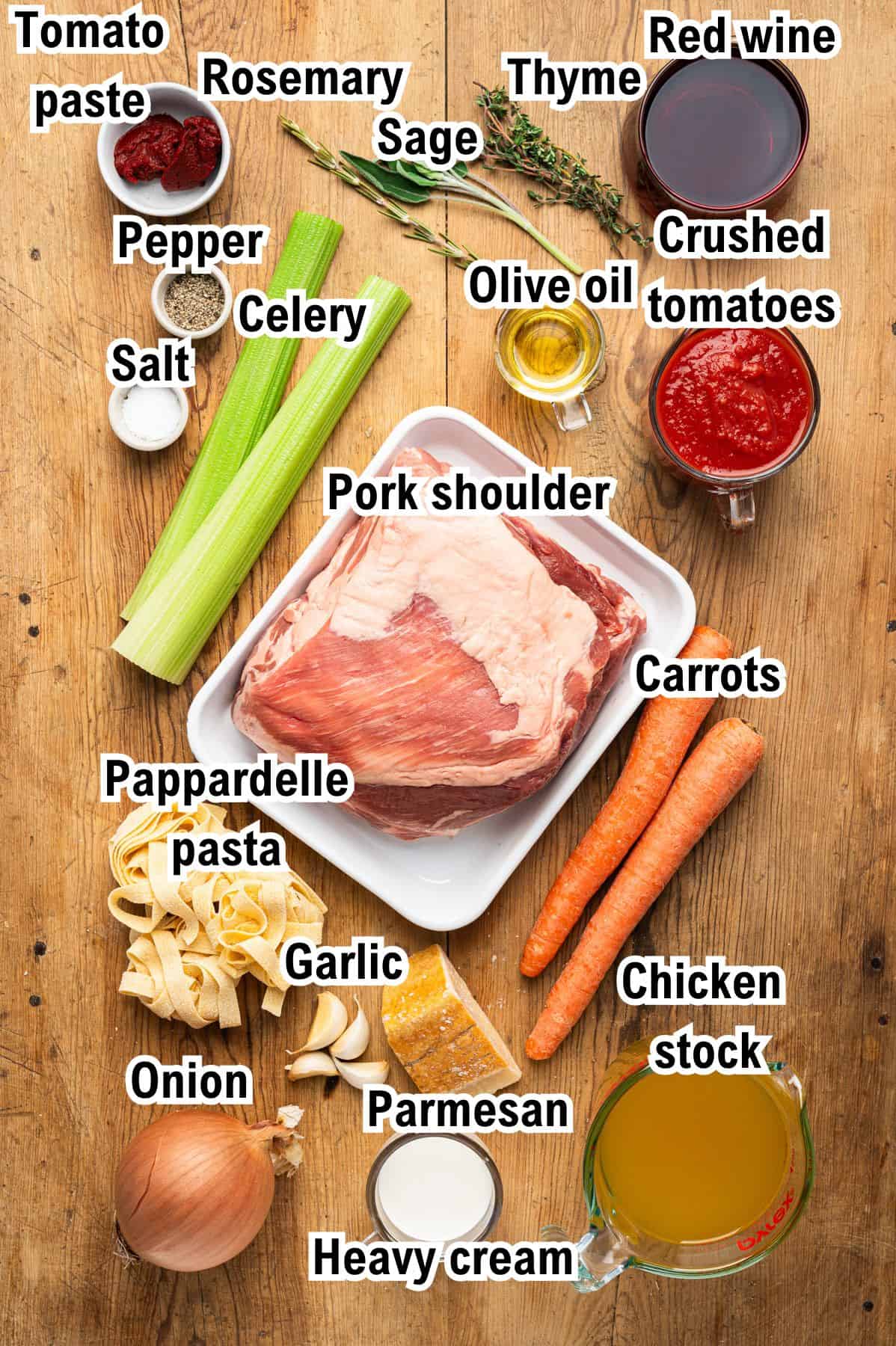
- Pork shoulder can be replaced with ground pork if you like. Just remember to brown it and remove it just as you would for the pork shoulder. You don't have to cook it as long either, about 1 ½ hours. The texture and flavor, of course, won't be the same, but it will be delicious nonetheless.
- Onions or shallots: If you like, feel free to sub out the onions for shallots for a sweeter end flavor. Use about 2-3 shallots depending on the size to replace the onion.
- Herbs: You don't have to add all of the herbs listed. If you are adverse to any of them, leave them out. If you like, you can add in fennel as well.
- Wine: Using white wine instead of traditional red will make just as delicious pork ragu! It's your choice!
- Tomatoes: I am using canned crushed tomatoes. Feel free to use whole tomatoes if you like! Just remember to crush them by hand prior to putting them in the Dutch oven.
- Stock: Whatever stock you have on hand except seafood works well for the ragu. Vegetable, mushroom, beef, or pork stock are all great options.
- Cream or no cream: I stir in just ¼ cup of heavy cream towards the end when I am about to add pappardelle. If you don't want dairy, either omit the cream or add your favorite unsweetened version of cream that you prefer.
- Pasta: Pappardelle is the most popular and traditional pasta for pork ragu. Flat wide pastas like fettuccine work well for this dish or short ridged ones like penne.
- Polenta or gnocchi: Sometimes the ragu is served alongside some delicious creamy polenta or mixed with gnocchi.
What Is Authentic Pork Ragu?
Ragu is a traditional Italian meat sauce, slow-cooked for rich flavor. Unlike Bolognese with ground meat, pork ragu uses larger braised chunks, shredded into the sauce. Inspired by Tuscan and Emilia-Romagna styles, it's often served with wide pappardelle that captures every bit of its rustic, hearty goodness.
Frequently Asked Questions
- Can I Use a Different Cut of Pork? - Pork shoulder (also called Boston butt) is ideal because it's well-marbled and becomes tender when braised. Leaner cuts like pork loin will dry out. You can use bone-in pork shoulder for extra flavor-just remove the bones before shredding.
- Why Is My Ragu Watery? - Either it wasn't cooked long enough for the liquid to reduce, or you added too much pasta water at the end. Let it simmer uncovered for the last 20-30 minutes of cooking if needed, and add pasta water gradually.
- Can I Make This Without Wine? - Yes, replace it with extra chicken stock plus a splash of balsamic vinegar for acidity. The flavor won't be quite as deep, but it'll still be rich and delicious.
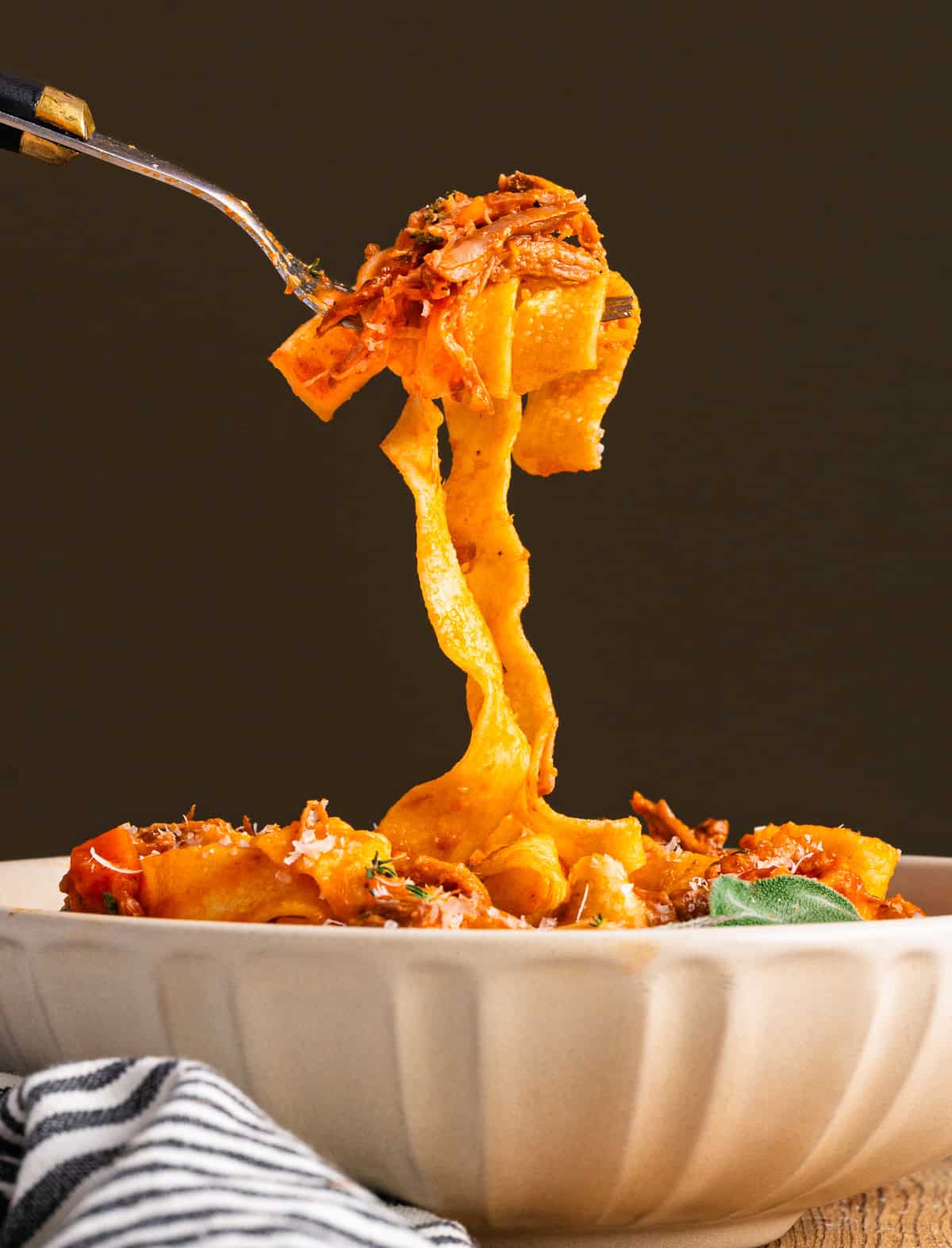
Chef's Note: Why Large Pieces of Pork Make a Better Ragu
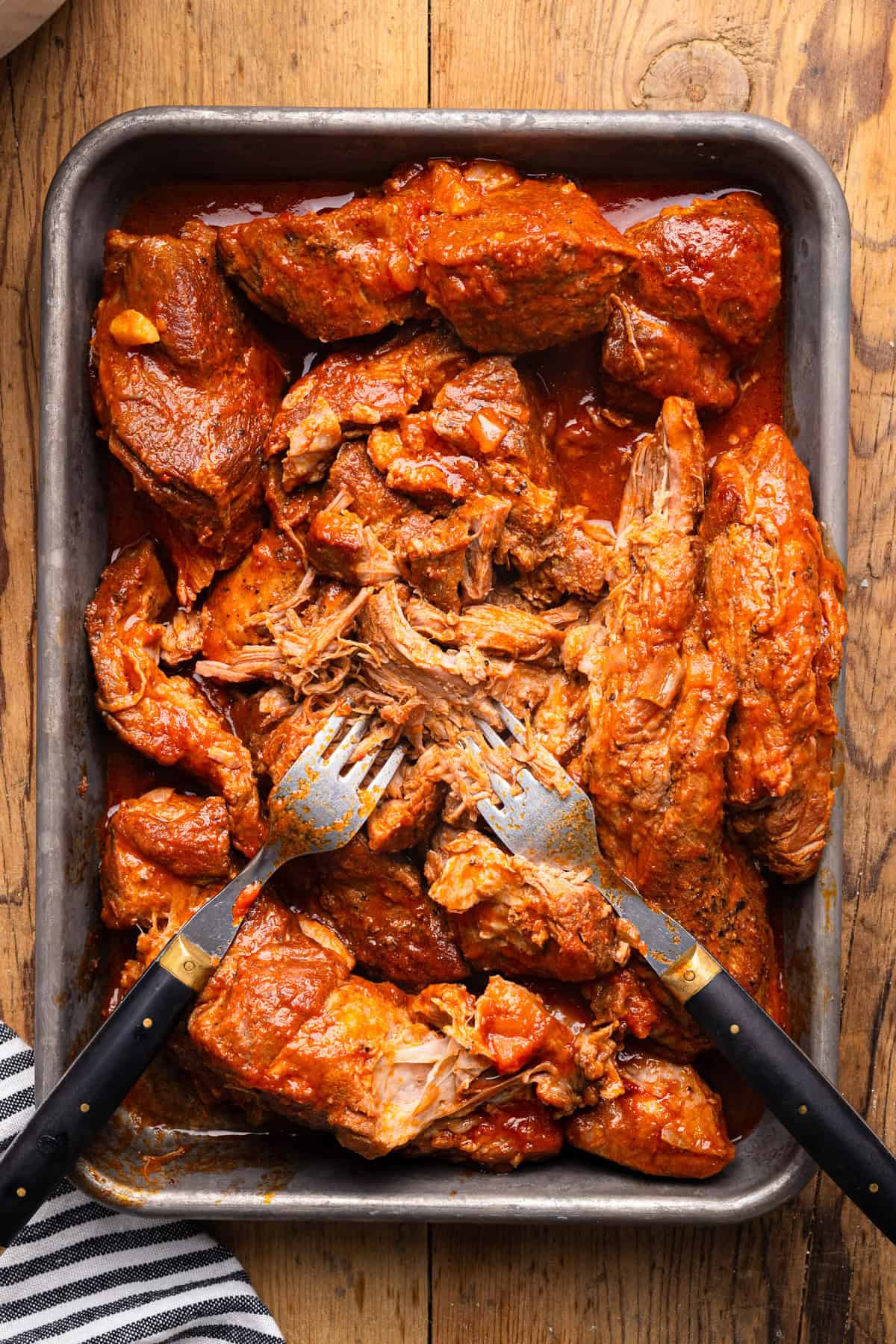
I always braise the pork shoulder in large chunks instead of cutting it small before cooking. Here's why: big pieces stay juicier during the long cook because less surface area is exposed to heat, meaning the meat loses less moisture. It also gives you control over the final texture-once the pork is tender, you can shred it finely for a silky sauce or leave some larger, fall-apart chunks for a rustic, restaurant-style presentation. Plus, braising whole pieces lets the meat sear better at the start, building that gorgeous caramelized crust that deepens the flavor of the entire ragu.
Variations
- Spicy: Add 2-3 teaspoons of crushed red chile flakes to your mix or to keep it Italian, some calabrian chiles or Nduja!
- More creamy: If you prefer an even creamier version, add ¾ cup of cream or even 4 tablespoons of butter.
- Sicilian Inspired: Pine nuts, raisins, and cinnamon can add a unique twist to this dish.
What to Serve With It
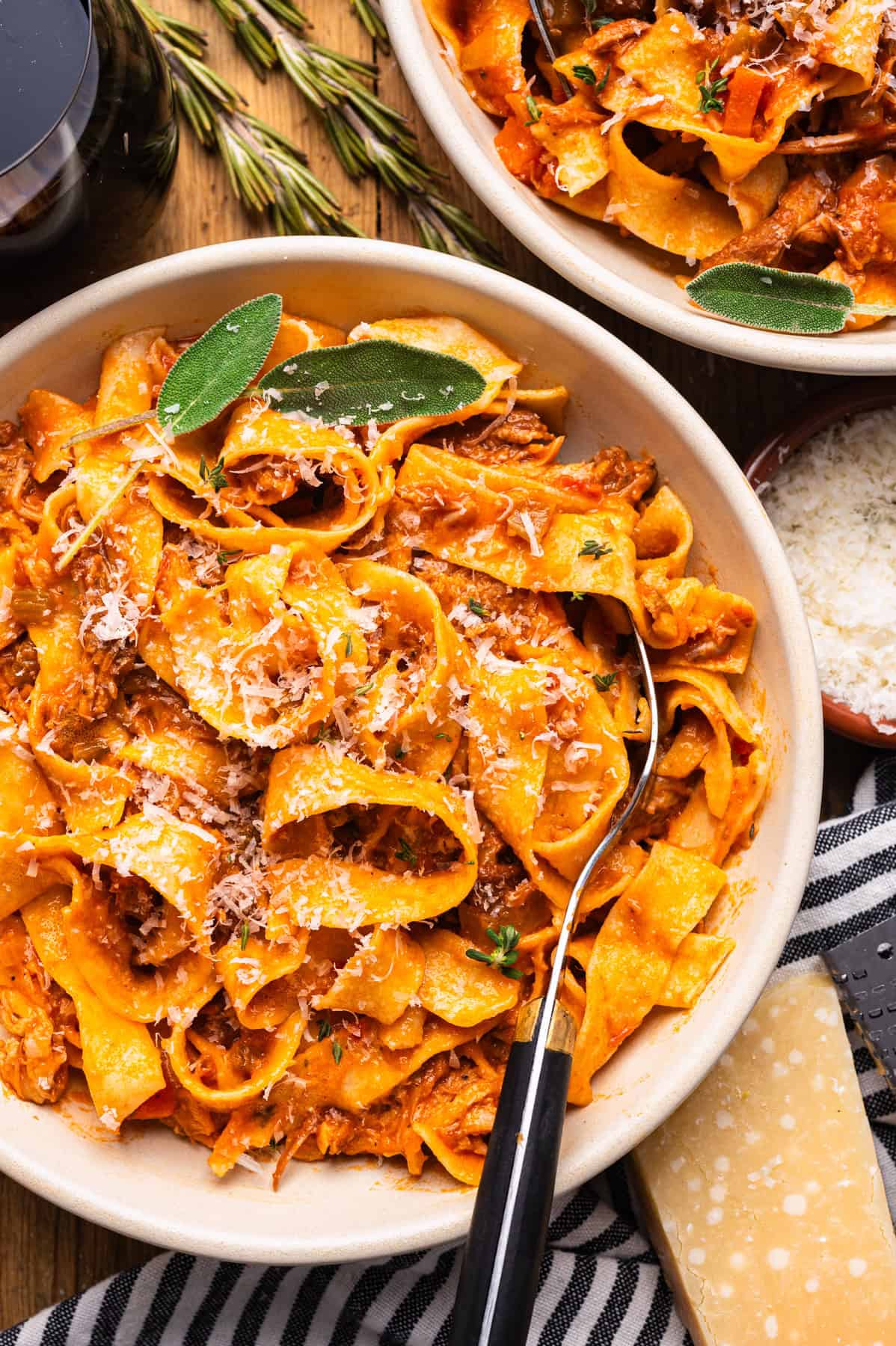
Of course, pappardelle is classic, but this pork ragu also shines over roasted garlic mashed potatoes, creamy polenta, spinach gnocchi, or buttered egg noodles. For sides, think baked asparagus with bacon and cheese, roasted Brussels sprouts, Fall-inspired butternut squash pasta salad or garlicky sautéed spinach to cut through the richness. For something more unexpected, I've served it with savory bacon and cheddar cheese scones or garlic rolls for scooping, or over roasted spaghetti squash. And yes, a glass of Chianti is basically mandatory.

Braised Pork Ragu Pappardelle
Ingredients
- 3 pounds boneless pork shoulder cut into 6 even pieces
- salt and pepper to taste
- 3 tablespoons olive oil
- 1 large brown or yellow onion diced
- 2 medium carrots peeled and diced
- 2 stalks celery diced
- 4 cloves garlic minced
- 4 sprigs fresh thyme
- 1 sprig fresh rosemary
- 1 sprig fresh sage
- 2 tablespoons tomato paste
- 1 cup red wine
- 28 ounces crushed tomatoes (canned)
- 2 cups chicken stock
- ¼ cup heavy cream
- 1 pound pappardelle pasta cooked and drained, 1-2 cups pasta water saved
Garnish
- parmesan freshly grated
- leaves fresh thyme optional
Instructions
- Preheat your oven to 325 degrees.
- Heat the olive oil in a large Dutch oven that has a lid over high heat while you coat your pork pieces generously with salt and pepper.
- Brown each piece on all sides, working in batches, about 7 minutes per batch. Don't overcrowd the pot with the pork or it can inhibit browning. Once browned, remove from the Dutch oven, put on a tray or plate, and set aside.
- With the rendered fat still in the Dutch oven, reduce your heat to medium and saute the onions, carrots, and celery until the onion becomes translucent, but not browned, 5 minutes.
- Add the garlic, thyme, rosemary, and sage, sauteing until fragrant, about 2 minutes.
- Add the tomato paste and cook until darkened, about another minute.
- Turn the heat on high and deglaze the pot with the red wine. Cook off the alcohol for about 5 minutes before adding the crushed tomatoes and chicken stock. Stir to combine.
- Add the pork pieces and juices back into the pot, cover, and braise in the oven for 3 - 3 ½ hours, or until the pork shreds easily when pulled with a fork. Check at the 2 ½ hour mark and add more time if necessary.
- 15 minutes before the pork is finished cooking, make the pasta according to the instructions on the package. Save 1-2 cups of pasta water.
- Once the pork is finished cooking, place the Dutch oven on a heat proof surface, remove the pork pieces, placing them on a tray or into a bowl, and shred to your desired consistency. You can make fine shreds or leave some larger chunks.
- Stir in the heavy cream and ½ cup pasta water at a time, until you reach the desired consistency prior to placing the pork back into the sauce, stirring gently. Remember that once you add the pork back in it will thicken significantly, so make sure you add enough pasta water to balance out the ragu. Season with salt and pepper if necessary.
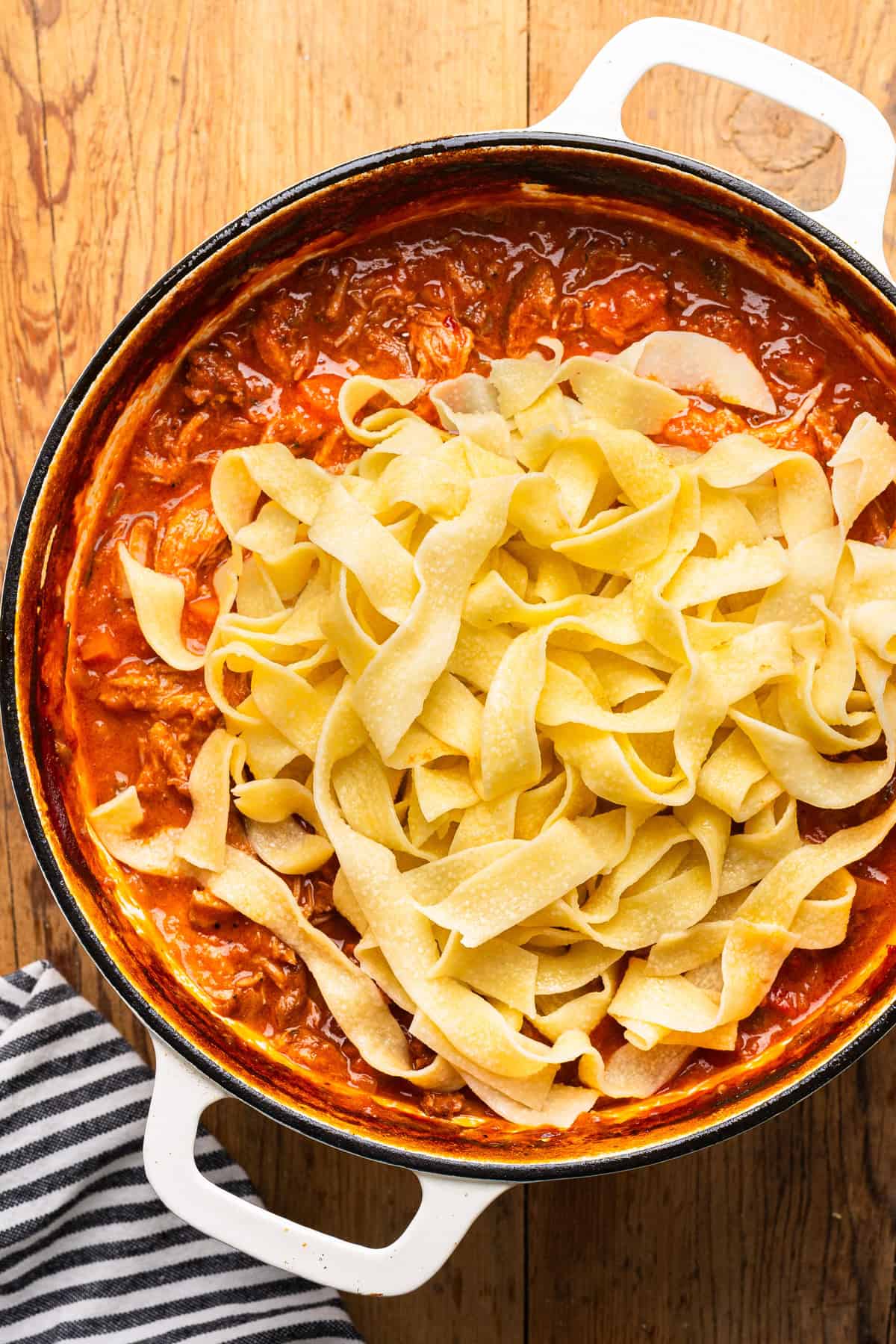
- For each serving, toss the desired amount of pasta into the ragu until coated and the sauce sticks to the pasta. Serve immediately, garnish with freshly grated parmesan cheese, and tiny leaves of thyme if you wish. Enjoy!
- I provide helpful step-by-step photos BELOW this recipe card. Also, below I provide 3 alternative cooking methods for pork ragu: Stovetop Method, Slow Cooker Method, and Instant Pot / Pressure Cooker Method. Scroll down if interested.
Notes
- Don't crowd the pot when you're searing and browning the pork. It will toughen the pork as well as take longer to brown.
- How to cut pork for ragu? Some recipes tell you to cut the pork into 1" cubes, but that doesn't leave the possibility for long strands of pork once cooked. However, if you like the shorter strands, you can cut the pork into smaller pieces, but you will spend more time browning.
- Reduce wine: You should cook out as much of the alcohol from the red wine as you can. Even though it cooks for a long time in the oven, evaporating the alcohol prior to this just ensures your end product is more focused on the tomato and pork flavors than the alcohol.
- Add Parmesan: To add even MORE umami to this dish, you can mix in some parmesan cheese to the ragu sauce. Add as much as your heart desires, but remember to thin out the sauce with the pasta water for even coating of the noodles.
- How to cook pork ragu in a slow cooker: You can definitely make this recipe in a crock pot sans oven. Follow the directions up until it needs to braise and instead transfer all everything into a crockpot. You can keep it on low for up to 8 hours.
Storage & Reheating Tips
- Refrigerate: The cooled ragu and cooled pasta can be stored separately in air tight containers for up to 5 days in the fridge. You can, of course, store sauced pasta (everything mixed together) as well, it will just get soggier that way.
- To reheat, combine the pasta, ragu sauce, and a tablespoon of water (this helps rehydrate everything a little) into a bowl and heat until it reaches your desired temperature.
- Freeze: I don't recommend freezing the pasta, but you can freeze the sauce. It's best to put the cooled sauce in gallon freezer ziploc bags, remove all the air, and make them flat. Place them flat into your freezer. They can last up to 3 months.
- To defrost, place on a plate overnight and reheat with a fresh batch of pasta once ready to eat.
You will need these supplies
- cutting board
- knife
- large Dutch oven
- tongs
- grater or microplaner
- forks or meat claws for shredding
Nutrition
Nutrition Disclaimer:
The nutritional information on this website is only an estimate and is provided for convenience and as a courtesy only. The accuracy of the nutritional information for any recipe on this site is not guaranteed. It should not be used as a substitute for a professional nutritionist's advice.
How to Make Pork Ragu Pappardelle (Step-by-Step)
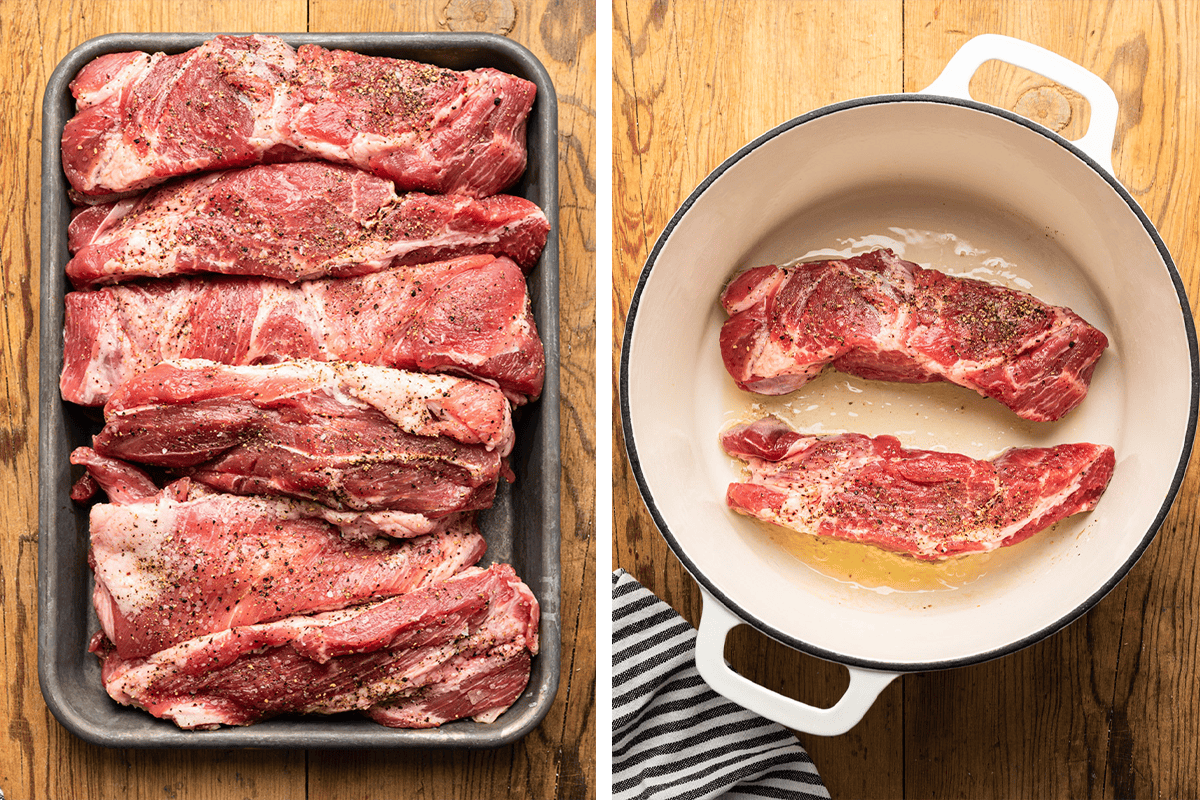
Brown the Pork: Preheat the oven to 325°F. In a large Dutch oven over high heat, warm the olive oil while seasoning the pork generously with salt and pepper. Brown the pork in batches for about 7 minutes per batch, avoiding overcrowding, then transfer to a plate.
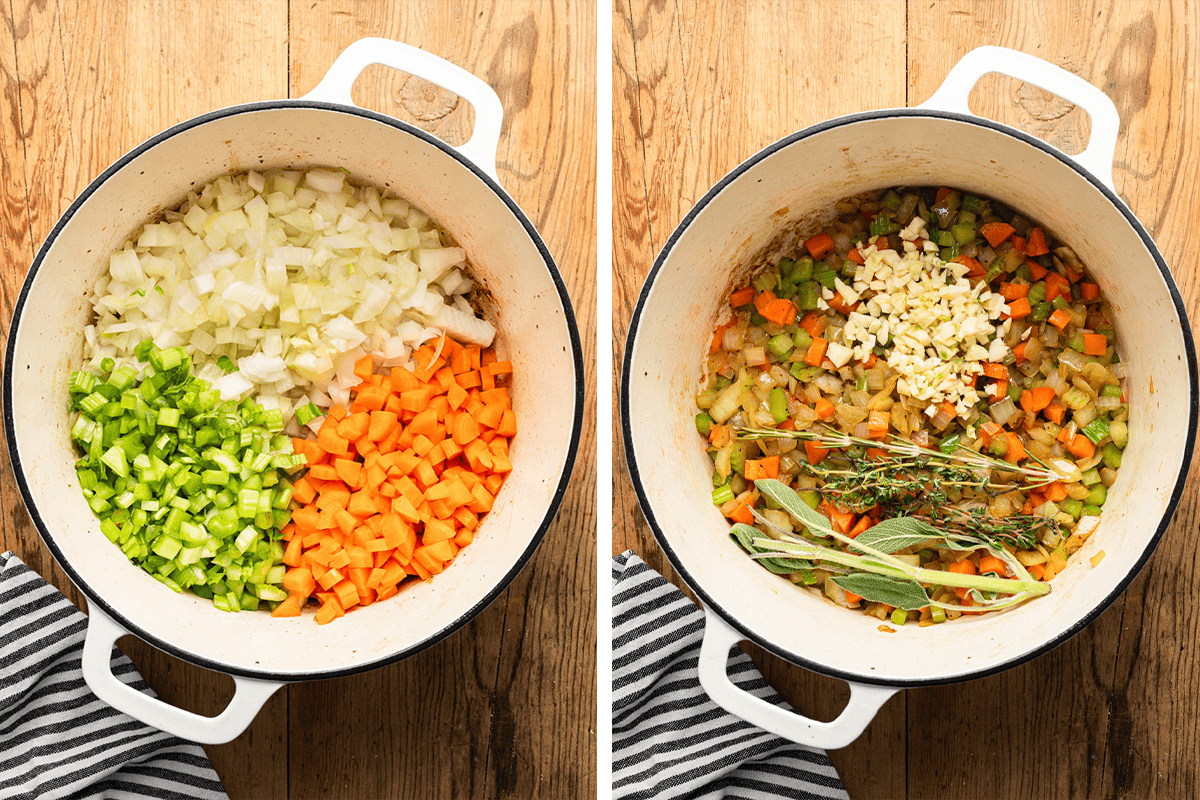
Make the Soffritto: Lower the heat to medium and sauté the onions, carrots, and celery in the rendered fat until the onions are translucent, about 5 minutes. Add the garlic, thyme, rosemary, and sage, cooking until fragrant, then stir in the tomato paste and cook until darkened.
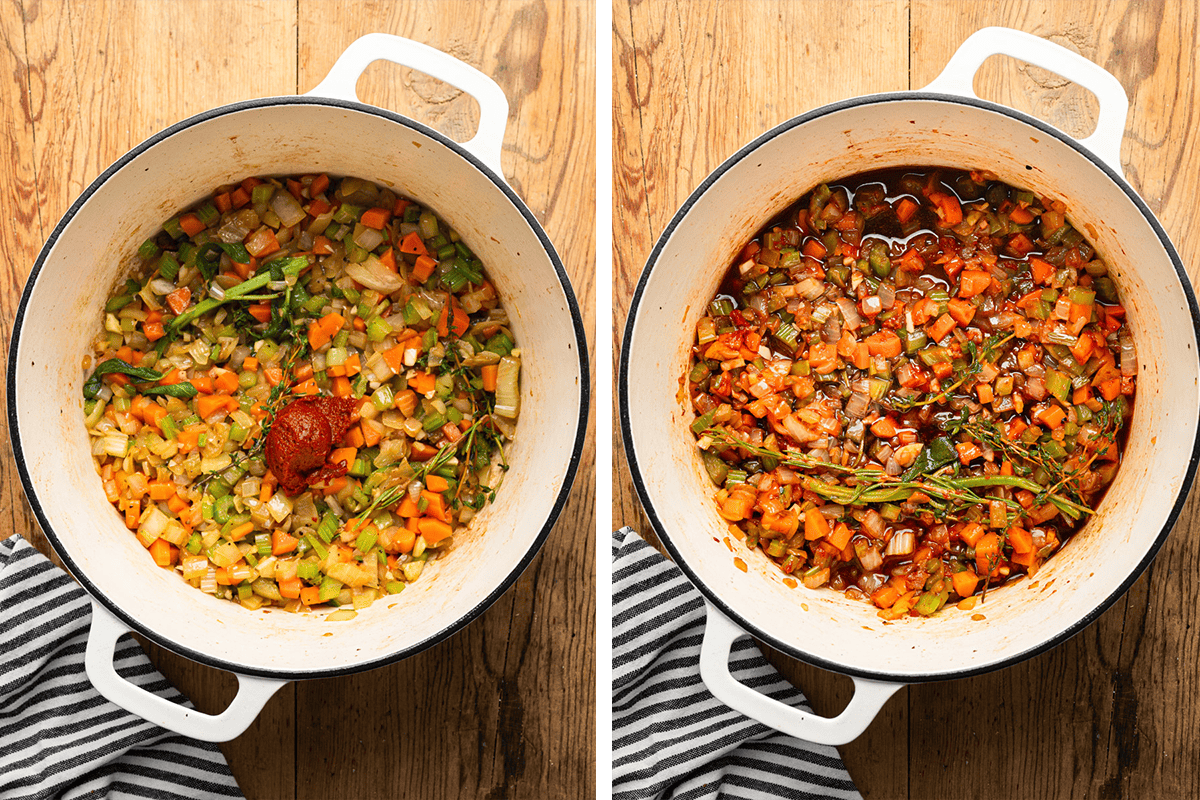
Deglaze with Wine: Increase the heat, deglaze with red wine, and cook for 5 minutes before adding crushed tomatoes and chicken stock.
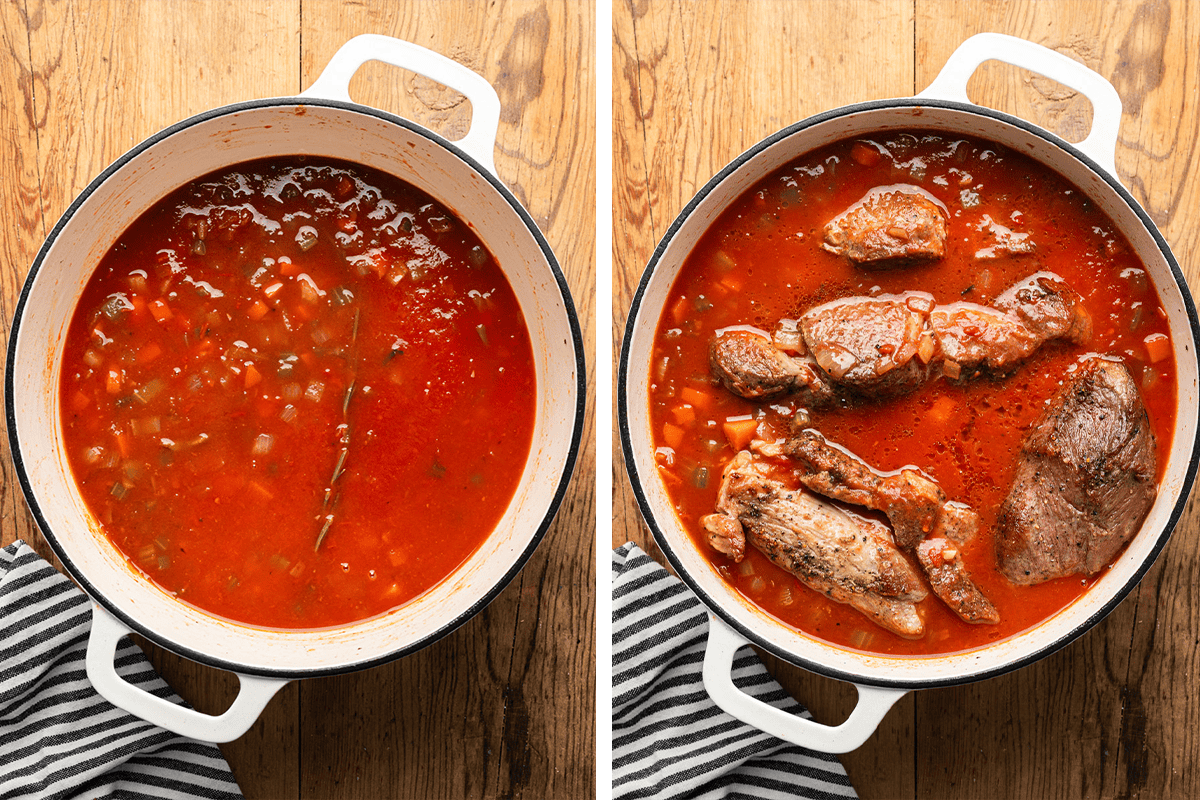
Braise the Pork: Return the pork and juices to the pot, cover, and braise in the oven for 3 to 3 ½ hours, or until the pork shreds easily.
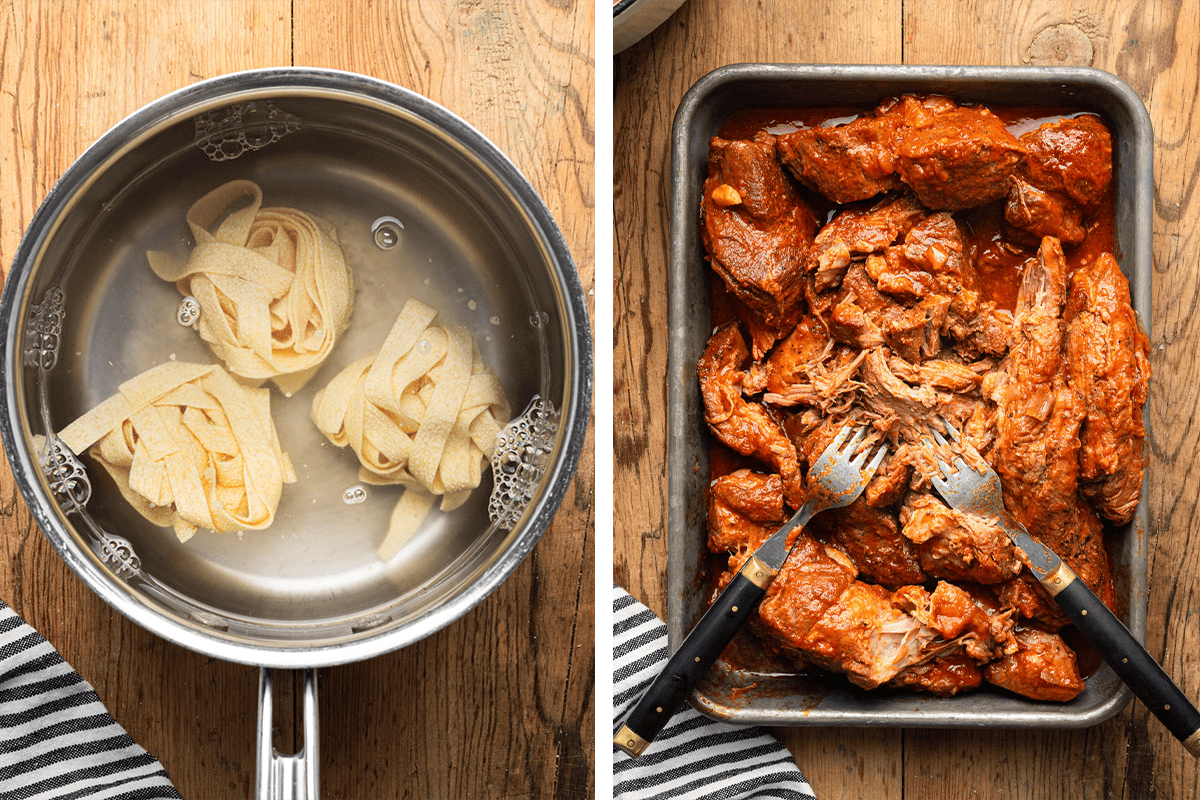
Cook the Pasta: About 15 minutes before the pork is done, cook the pasta according to package directions, reserving 1-2 cups of pasta water.
Shred the Pork: When the pork is finished, transfer it to a plate and shred to your preferred texture.
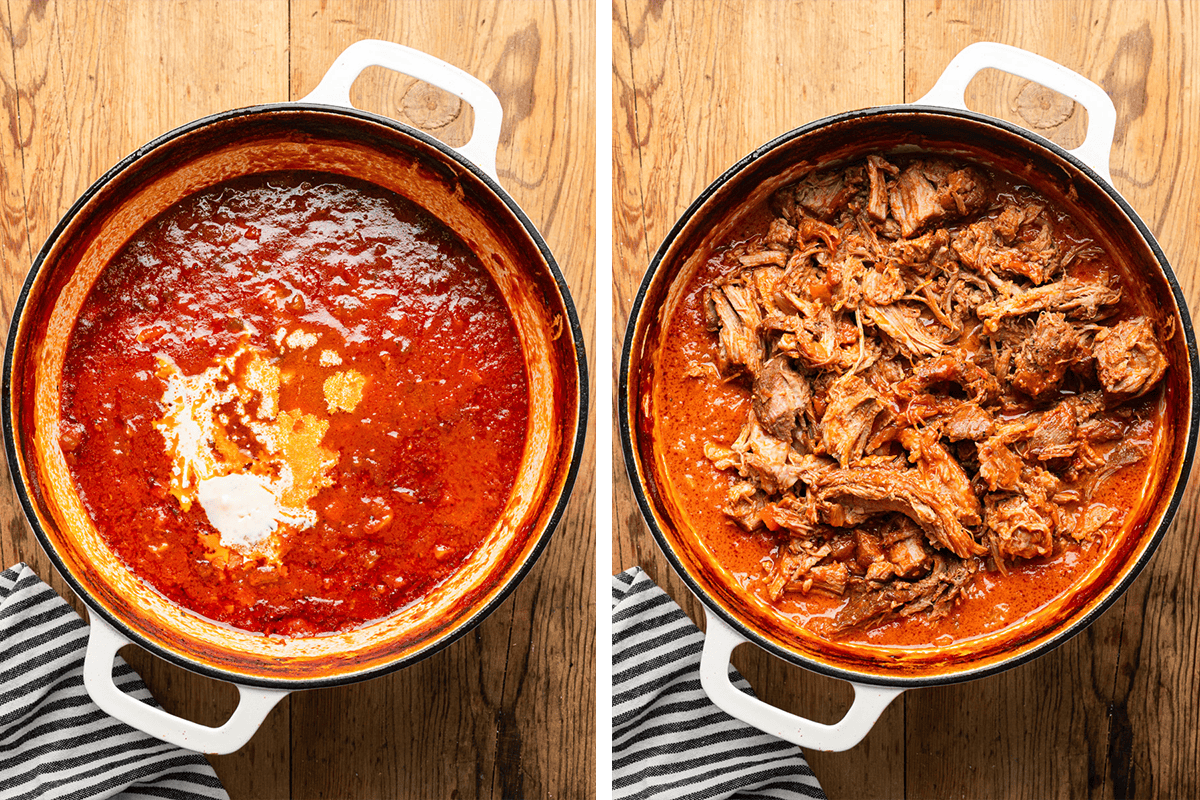
Make the sauce: Stir heavy cream and pasta water (½ cup at a time) into the sauce until it reaches your desired consistency, then return the shredded pork to the pot. Season if needed.
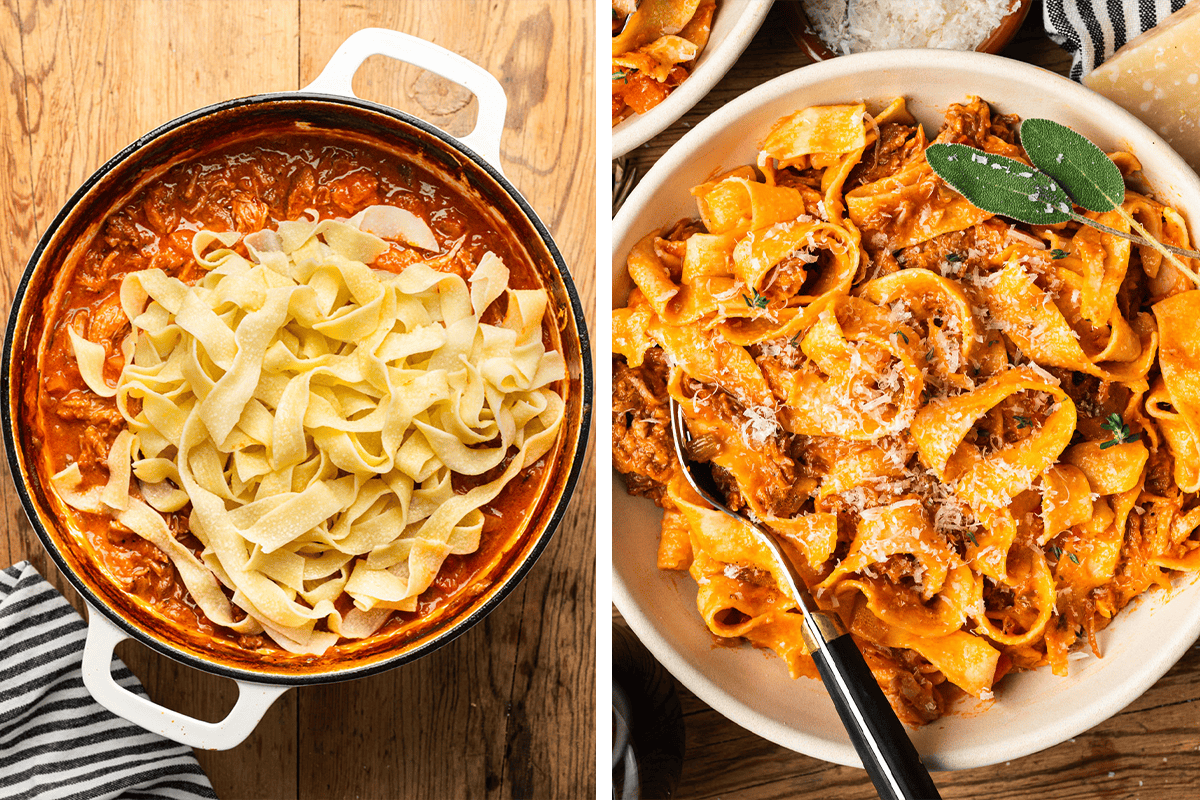
Toss pasta with the ragu until coated, then serve immediately with grated Parmesan and thyme leaves, if desired
Alternative Cooking Methods for Pork Ragu
- Stovetop Method - Follow the recipe through the deglazing step. Reduce heat to a gentle simmer, cover partially with a lid, and cook for 2½-3 hours, stirring occasionally and adding a splash of water or stock if the sauce reduces too much. Shred pork, add cream and pasta water, then toss with pasta as usual.
- Slow Cooker Method - Sear the pork to brown it in a skillet on the stovetop as in the original recipe, then transfer to the slow cooker. Sauté the soffritto (onion, carrot, celery) with garlic and herbs in the same pan, add tomato paste, deglaze with wine, and pour into the slow cooker. Cook low and slow: Add crushed tomatoes, chicken stock, and pork. Cover and cook on LOW for 8-9 hours or HIGH for 5-6 hours until the pork shreds easily. Stir in heavy cream and pasta water before tossing with pasta.
- Instant Pot / Pressure Cooker Method - Use the Sauté setting to brown the pork and cook the soffritto, garlic, herbs, and tomato paste. Deglaze with wine. Add crushed tomatoes, chicken stock, and pork. Lock the lid and cook on HIGH pressure for 60 minutes with a natural release (about 15 minutes). Shred the pork, stir in cream and pasta water, and combine with pasta.
I made this yesterday and it is the best thing I have ever cooked! Thank you so much for this recipe. It was such a success and everyone loved it.
April, your comment truly made my day! 🙂 🙂
My husband loves pork! This was easy enough to make as the prep is easy. I love wide egg pasta which is what we used. It's my husband's favorite meal now, and he took the leftovers to work the next day.
So happy to hear you both enjoyed it, Lisa! 🙂
I used your instant-pot instructions, and they worked perfectly! It made a lot, I served it first night with fettuccine, and then with polenta like you recommended.
So glad you were able to get at least 2 meals out of it, Greg! 🙂