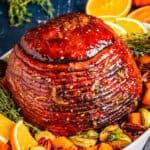
Brown Sugar Glazed Ham with Honey Orange Glaze
I bake this fully cooked smoked spiral ham low and slow, and brush it with a savory-sweet honey-brown sugar glaze made with orange marmalade, Dijon mustard, and fresh orange zest. It’s my go-to glazed ham recipe for Easter, Christmas, or any Sunday roast for a crowd.
Servings 12 people
Calories 734kcal
Equipment
- 1 Roasting pan with wire rack
- 1 Knife
- 1 cutting board
- 1 Measuring spoons
- 1 Measuring cups
- 1 Pastry or kitchen brush
- 1 Aluminum foil
Ingredients
For the Ham
- 6 lb fully cooked boneless spiral cut ham preferably smoked (ham should be between 6 and 8 pounds)
- 1 cup apple cider (NOT apple cider vinegar!)
- ½ cup low-sodium chicken broth
For Honey Brown Sugar Glaze
- 1 ½ cups orange marmalade
- ¼ cup honey
- ¼ cup brown sugar
- 3 tablespoons Dijon mustard
- 3 tablespoons unsalted butter
- 1 large orange (Zest and juice). I like Valencia or Cara Cara varieties.
- ½ teaspoon salt
- ½ teaspoon ground black pepper
- ½ teaspoon crushed red pepper flakes optional
- Handful fresh thyme sprigs optional
Instructions
- *NOTE: Let ham come to room temperature at least 1 - 1 ½ hours before cooking*
- Preheat the oven to 350°F (175°C).
- Place the ham flat-side down in a large unlined roasting pan fitted with a rack. Pour the apple cider and broth into the bottom of the pan (this keeps it juicy and helps create steam).
- In a small saucepan, combine orange marmalade, honey, brown sugar, Dijon mustard, butter, orange zest and juice, salt, black pepper, red pepper flakes, and thyme sprigs (if using).
- Simmer over low heat, stirring until smooth, glossy, and thickened, about 10-15 minutes. Remove from heat and let cool slightly, about 10 minutes.
- Remove the thyme sprigs and brush one third of the glaze over the ham, making sure some seeps between the spiral slices. Tent loosely with foil and bake for 1 hour and 30 minutes.
- Remove foil, spoon another third of the glaze over the ham, and bake uncovered for another 20–30 minutes, until the internal temperature reaches 140 degrees and the glaze is caramelized.
- OPTIONAL: If you want the ham to have a little char, remove the ham and flip it on its side. Broil on high for 2-3 minutes or until it’s browned to your liking. Make sure to watch it carefully so as to not burn the ham!
- Remove the ham from the oven, re-tent with foil, and let rest for 10–15 minutes before slicing and serving with the remaining third of the glaze. Feel free to combine the pan juices with the glaze and serve!
- Honey Orange Glazed ham goes perfectly with my Roasted Brussels Sprouts and Cinnamon Butternut Squash with Pecans and Cranberries side dish or with my Easy Parmesan Scalloped Potatoes!
Notes
- Let the ham come to room temperature before it goes in the oven. A cold ham straight from the fridge takes longer to heat through and often ends up with overcooked edges and a lukewarm center. Pull it out at least 1 hour before baking, and 1.5 hours is even better for a larger ham.
- Use a roasting rack. Elevating the ham above the cider and broth keeps the bottom from braising and getting soft. You want the moist heat from the steam, not the ham sitting in liquid. A rack also makes it easier to spoon the pan drippings over the ham if needed.
- Spoon the glaze between the spiral slices, not just over the surface. Use a pastry brush for the top and sides, but take a spoon to gently open the cuts and let the glaze work its way in. This is how you get flavor in every single slice, not just the exterior.
- Since spiral hams are pre-cooked, the goal is heating and glazing, not cooking. Aim for an internal temperature of 140°F (60°C) taken in the thickest part of the ham for the safest consumption.
- You are welcome to add any spices you love to the glaze! Cinnamon, nutmeg, ginger, or any other warming winter spices work great with this recipe.
- Pouring cider and broth into the pan creates steam and prevents drying.
- How long does it take to bake the ham? Depending on the size of your ham, it could take less or more time to reach an internal temperature of 140°F (60°C). In general, it’s best to cook ham for 10-15 minutes per pound.
Storage Tips
- Fridge: Let the ham cool completely, then store slices and any pan juices in an airtight container for up to 5 days.
- Freeze: Within 2 days of making, wrap tightly in plastic wrap, then in foil (or vacuum-seal) for up to 2 months. Thaw overnight in the refrigerator before reheating.
- Reheat: Warm slices in a covered baking dish with a splash of broth or apple cider (not vinegar!) at 300°F (150°C) in the preheated oven for 10–15 minutes, just until heated through.
Nutrition
Calories: 734kcal | Carbohydrates: 41g | Protein: 50g | Fat: 41g | Saturated Fat: 15g | Polyunsaturated Fat: 4g | Monounsaturated Fat: 19g | Trans Fat: 0.1g | Cholesterol: 148mg | Sodium: 2860mg | Potassium: 738mg | Fiber: 1g | Sugar: 38g | Vitamin A: 175IU | Vitamin C: 10mg | Calcium: 47mg | Iron: 2mg